
How to Remove Stains from Marble with a Homemade Poultice
Updated August 2026 We originally published this marble poultice recipe six years ago after using it on the Farmhouse marble countertops. And all these years later… it’s still our go-to stain treatment for anything on marble.
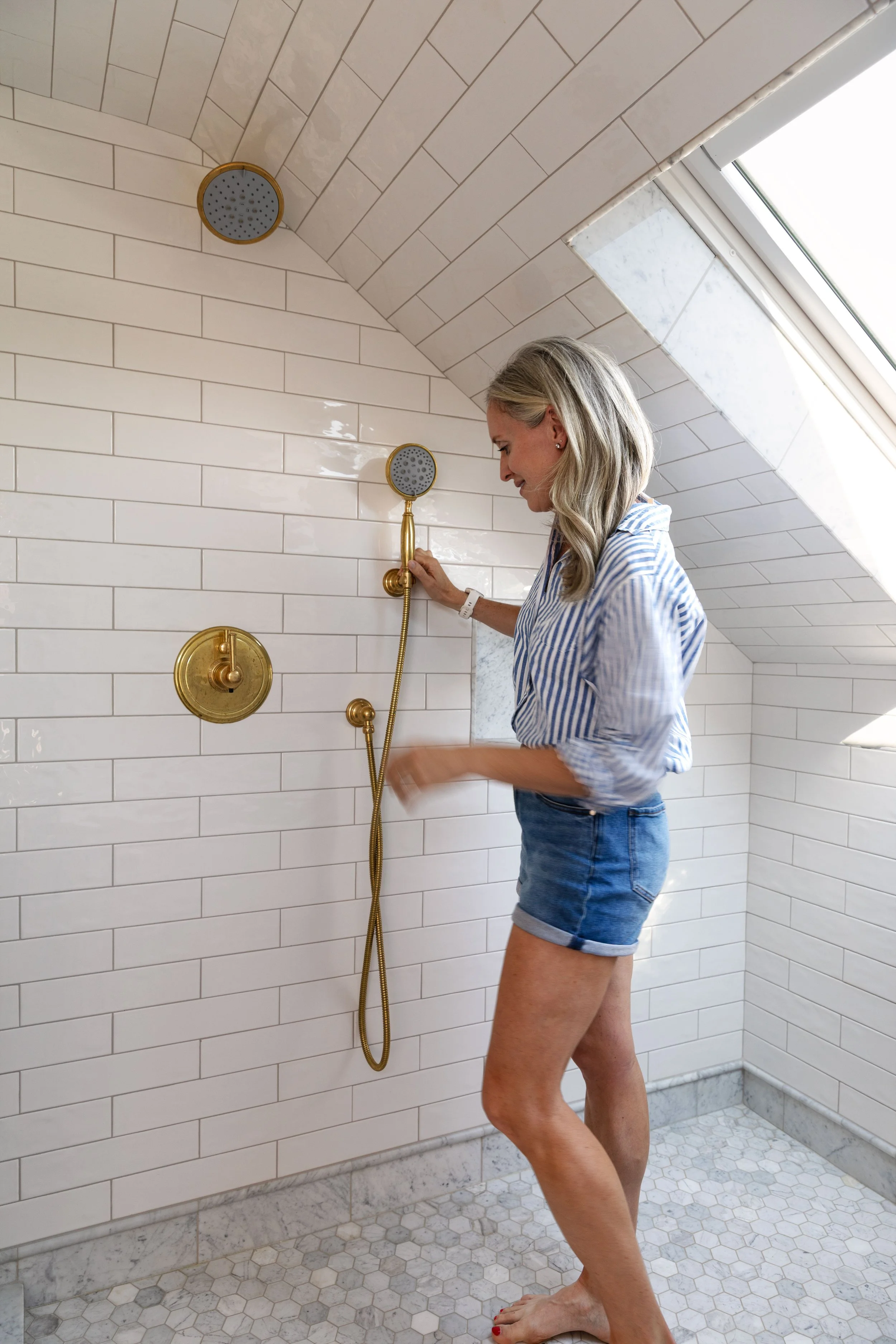
This summer we pulled out this simple recipe again to use on a piece of marble Garrett pulled out of our bone yard to use as a sil for the shower niche in our Hill House ensuite. And wouldn’t you know it, the stains are gone! Read on for this simple recipe…

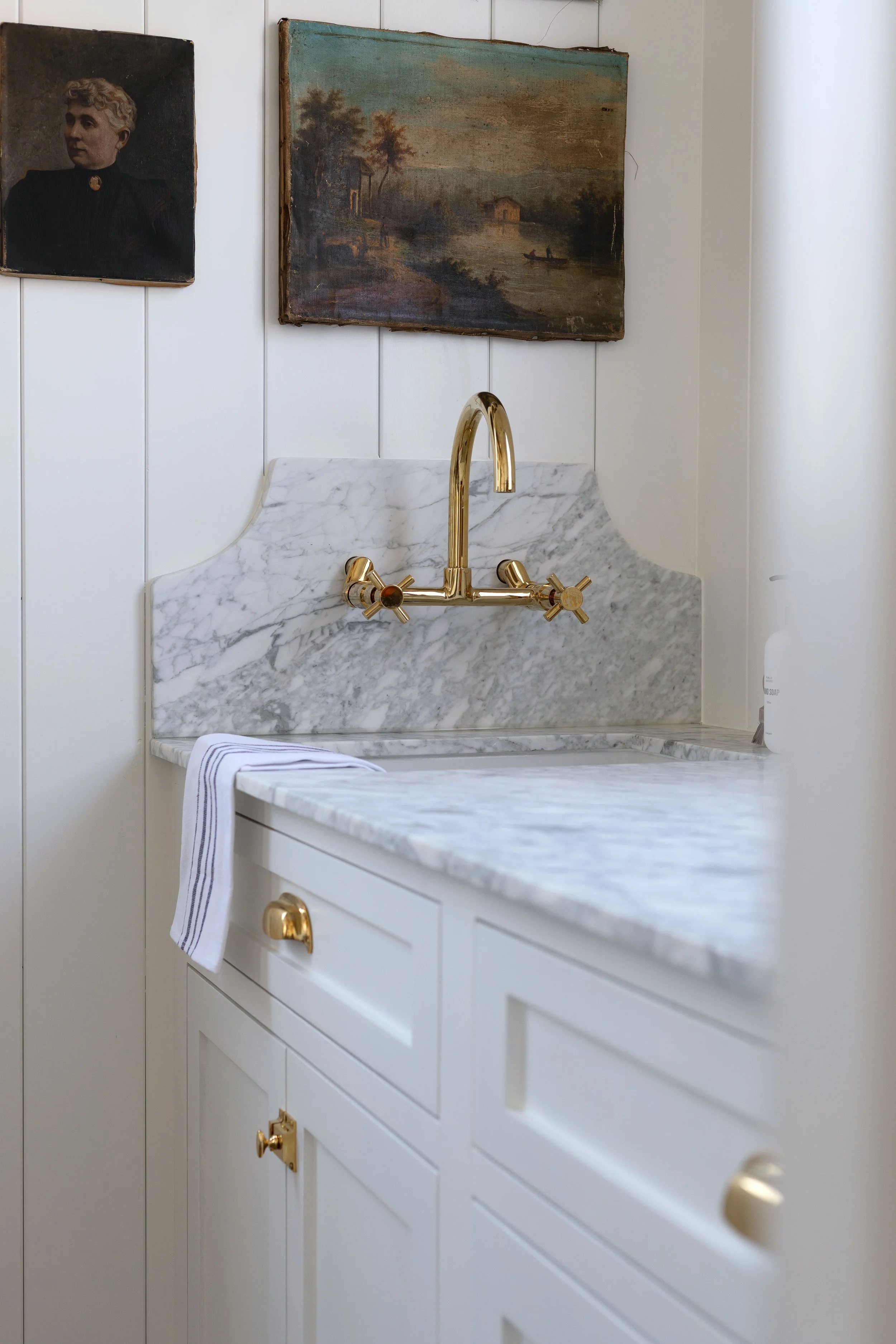
We’ve lived with a lot of marble over the years - in kitchens, bathrooms, on counters, floors, thresholds, and shower niches - and I remain firmly in the pro-marble camp. Marble ages. It develops a patina. And yes, sometimes it stains. But thankfully, stains are usually not that big of a deal.
Garrett’s a chemist by education and developed this homemade marble poultice recipe years ago. It’s super inexpensive, takes about two minutes to mix up, and uses ingredients you probably already have. Here’s the recipe we shared back in 2020 - the same one I’ve written on many a Post-it notes for friends :)
Our Homemade Marble Poultice
You need:
Baking soda
Water
Hydrogen peroxide (for stubborn stains - more on that below)
What to do:
Put a spoonful of baking soda in a mason jar or bowl.
Add just enough water to turn it into a thick paste.
Smear it over the stain.
Leave it overnight, or until completely dry.
Scrape it off with a plastic or metal scraper (be careful not to scratch your stone!) and wash the area with mild soap and water.
If the stain is still there, do it again.
That’s it!
You don’t need exact measurements. We’re looking for something roughly the consistency of peanut butter—thick enough to sit on the marble without running everywhere.
And as always with natural stone, test the poultice somewhere inconspicuous first if you’re nervous about the result.
For stubborn, organic-type stains, we’ve used hydrogen peroxide in place of the water for a little extra umph.

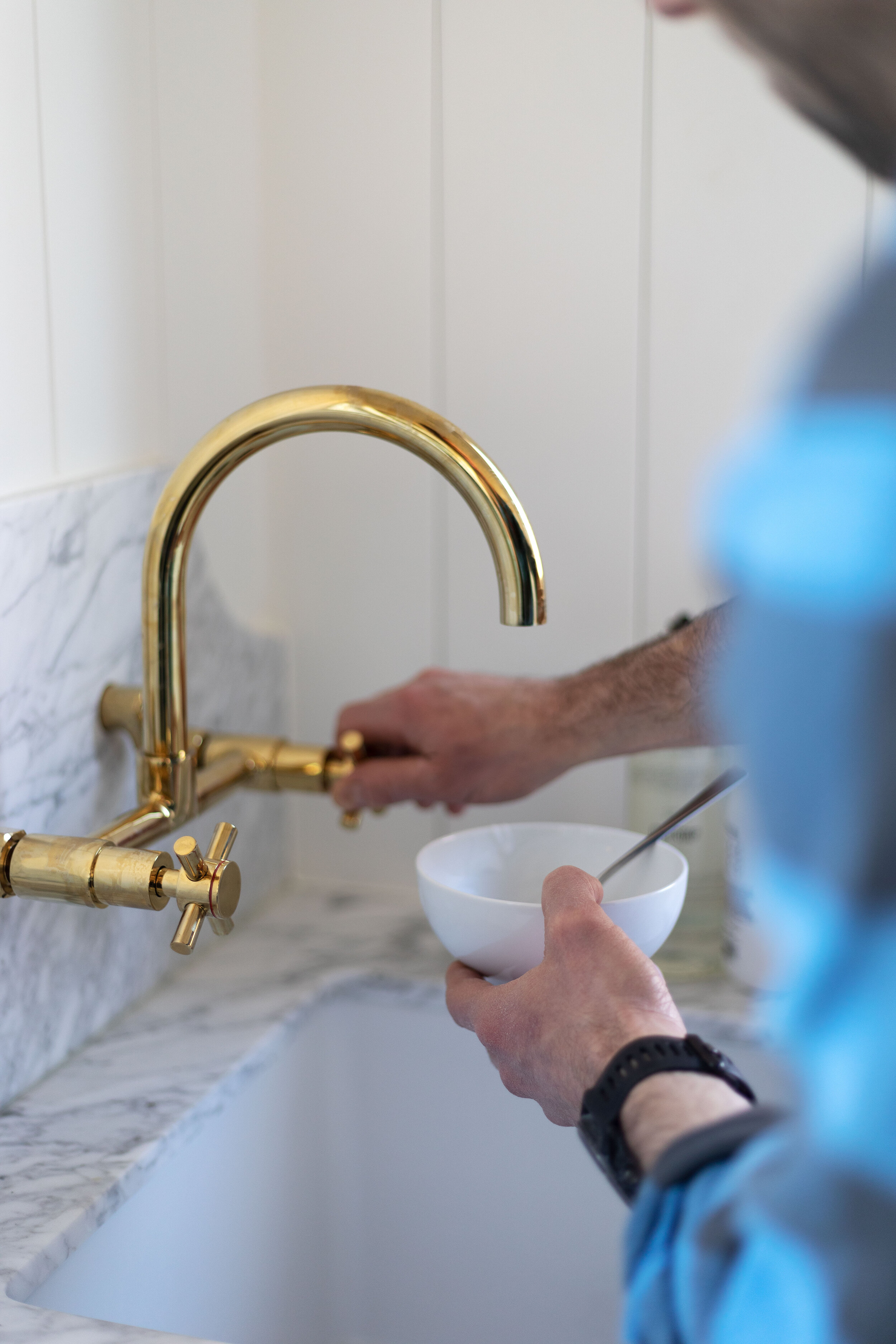


Look at that stain-free marble!


First: Is It a Stain or an Etch?
This is an important distinction because a poultice won’t fix everything that looks like damage on marble.
A stain has soaked into the marble and changed its color. It usually looks darker, discolored, or blotchy. A poultice works by drawing that absorbed material back out of the stone.
An etch is different. Acid - think lemon juice, wine, some bathroom products - reacts with the marble itself and changes the finish. An etch usually looks like a dull or lighter patch, especially when the light hits it. A poultice won’t fix that because there isn’t actually something inside the stone to pull out. To deal with these you either need to view it as patina and let it go or the surface needs to be refinished.
In general, if it’s darker it’s probably a stain and if it’s duller it’s probably an etch.
Using the Poultice at the Hill House
Our latest poultice patient was the marble niche sill in the Hill House ensuite. Garrett pulled the piece of leftover marble out of the bone yard and you better believe it was rough!
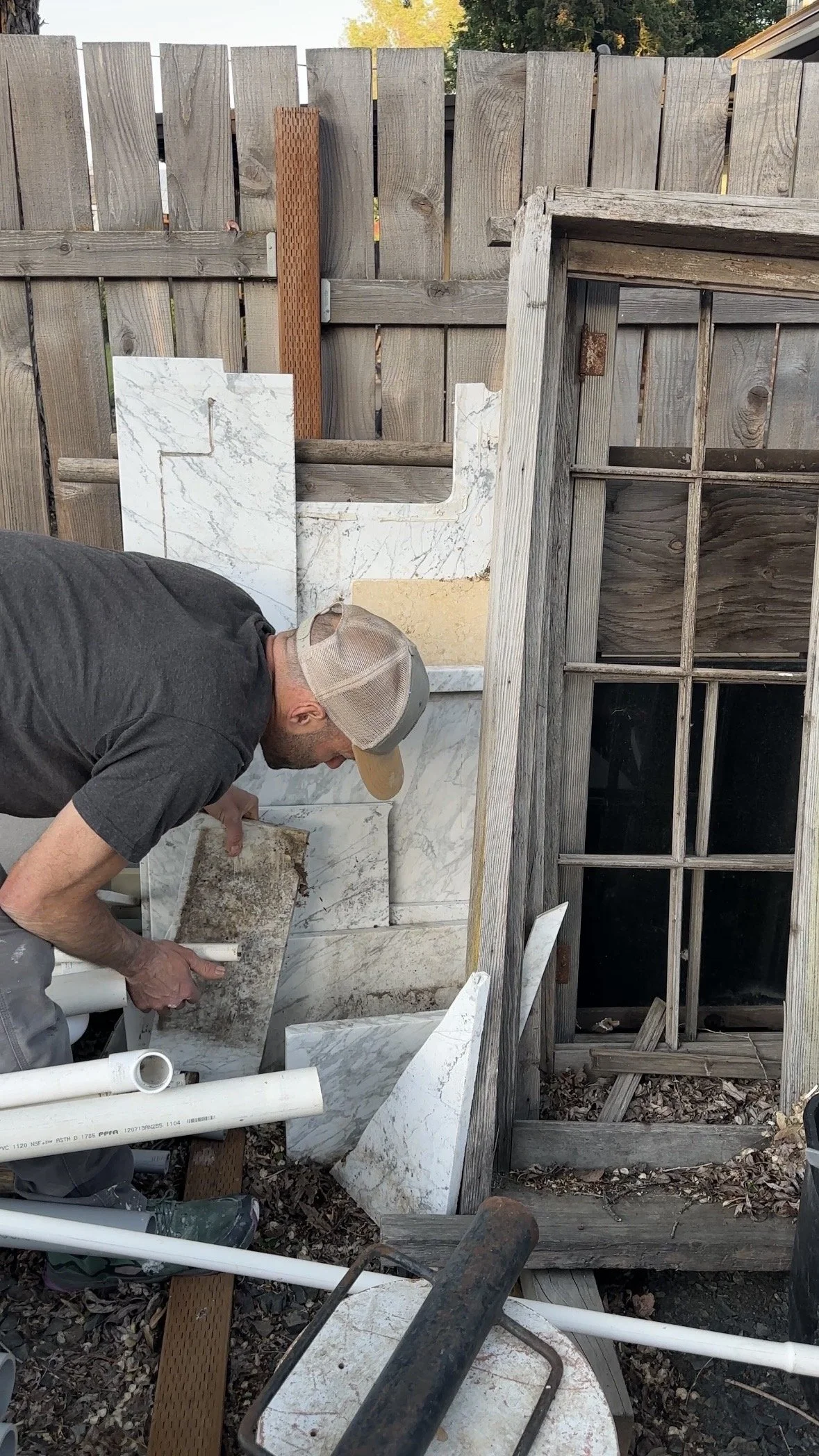
The marble piece we selected came dirty and stained. The dirt came off with a gentle cleaning (water and mild soap) but the stains were more stubborn. So Garrett mixed up a small batch of the poultice, spread it over the spot, and left it to dry overnight. And lik
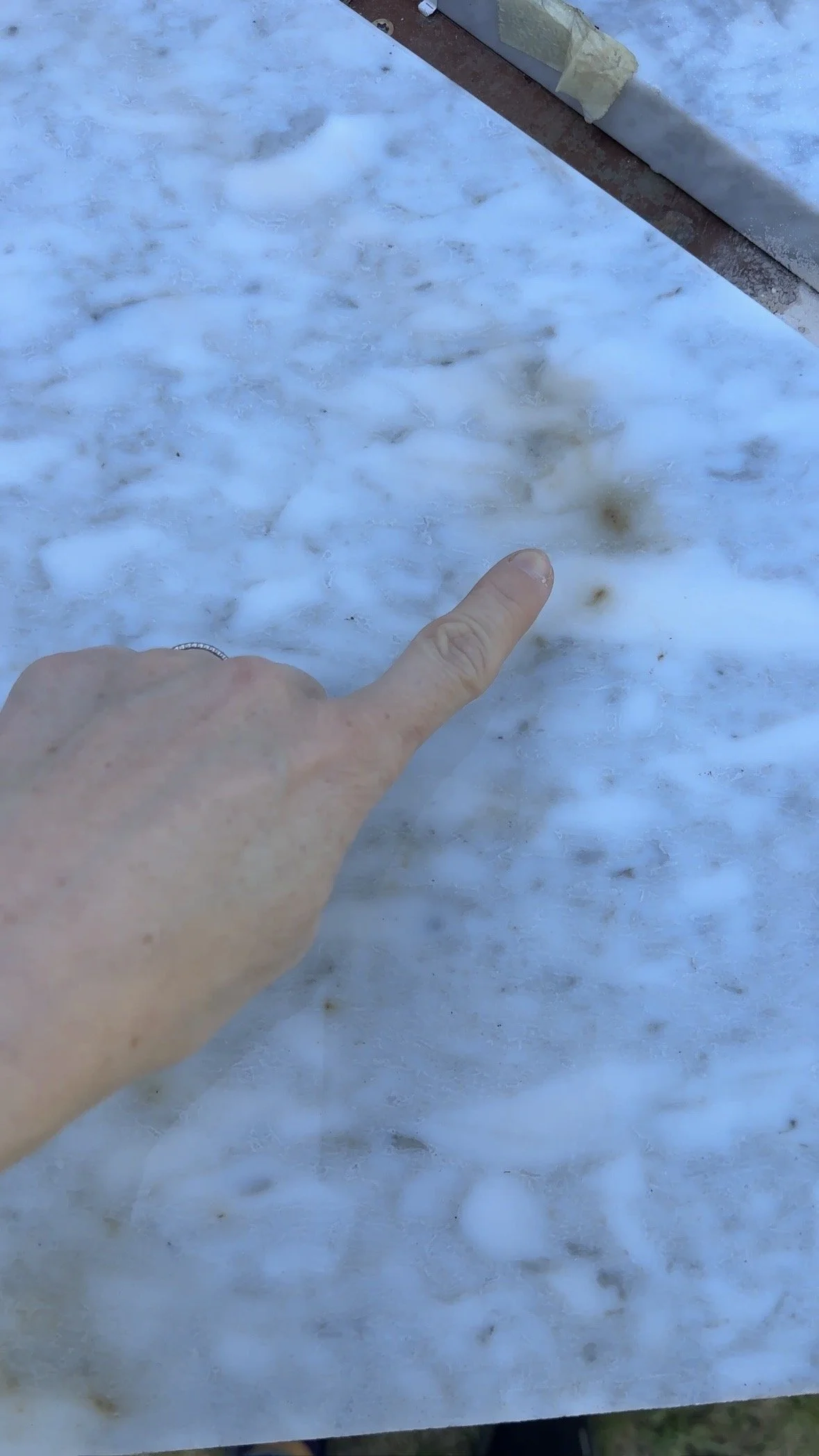
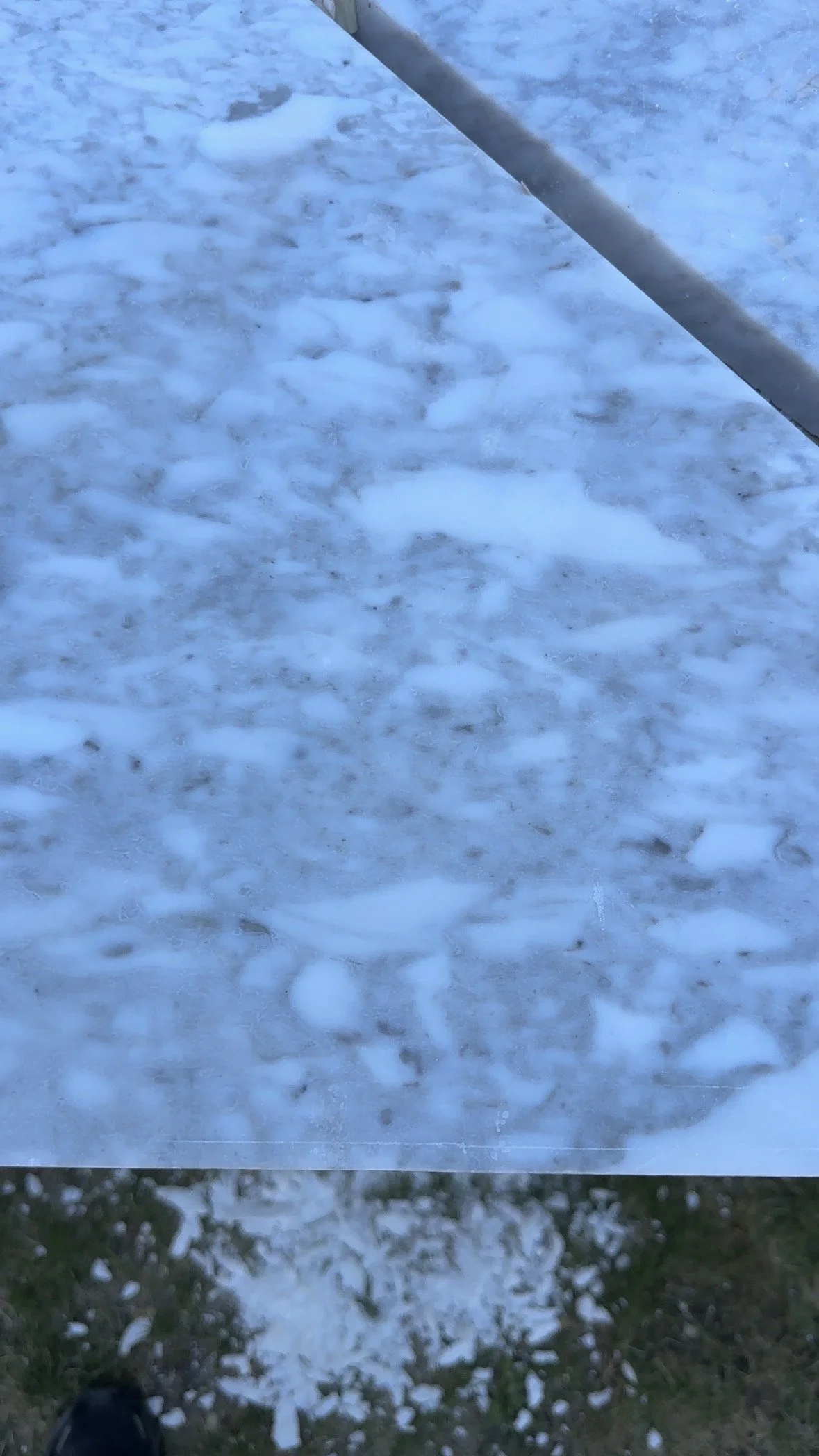
Look at that clean, stain-free marble.
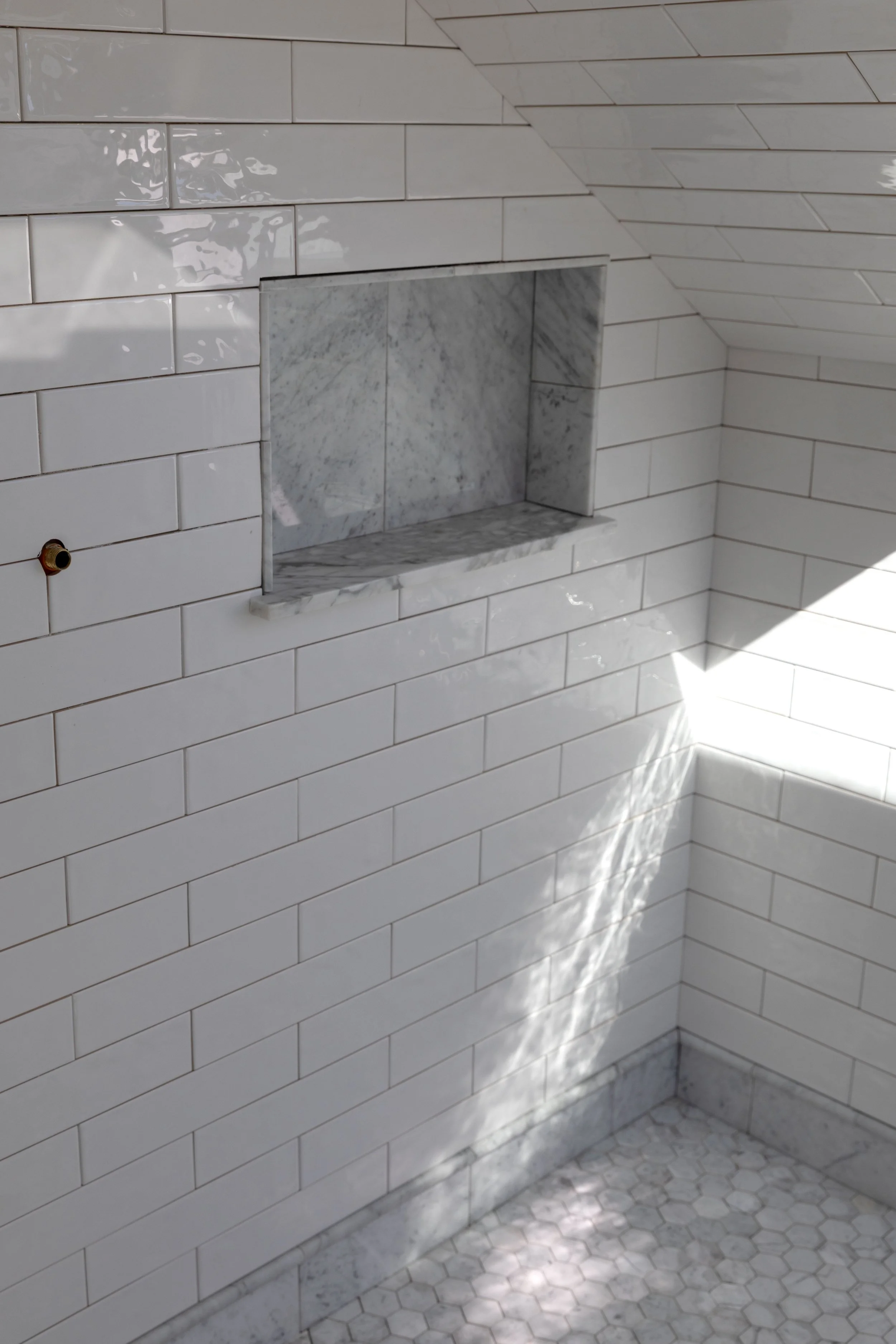
I love fixes like this. No special kit. No aggressive scrubbing. No panic over having chosen a natural material. Just a couple of basic ingredients and a little patience.
What If the Stain Doesn’t Come Out the First Time?
Do it again. Seriously.
A deeper stain may take more than one application, and professional stone-care guidance notes that some stains require repeated poulticing before they disappear completely. And personally, I’d rather repeat a gentle treatment a couple of times than immediately throw something aggressive at marble.
If several applications aren’t making any difference, though, that’s a good point to stop and figure out exactly what caused the stain. Oil, organic material, metal/rust, ink, and other substances can require different cleaning agents, and some stubborn stains are better left to a stone professional.
A Few Things We’ve Learned
After living with marble for years and using this poultice again and again, these are the things I’d tell a friend:
Start simple.
Try mild soap and water first. You may not need a poultice at all.
Try it out in an inconspicuous spot first. Seriously!
Marble is a natural stone - you just never know.
Know whether you have a stain or an etch.
A poultice can help pull out a stain. It cannot undo etching.
Don’t stress about measurements.
Baking soda + enough liquid to make a thick paste. That's really it.
Let it dry.
The drying is part of what helps draw the stain from the stone.
Repeat before escalating.
One application may not be enough for a deep stain.
Check your sealer afterward.
Once the marble is completely dry, sprinkle a little water over the area. If the water quickly darkens the stone instead of beading on top, it may be time to reseal.
Don’t be alarmed if the marble looks darker for a bit.
Natural stone can hold moisture after cleaning or poulticing. Give it time to dry completely before deciding whether the stain is still there.

Does Marble Really Require That Much Maintenance?
This is probably a good place for me to say, we really don’t baby our marble. After using it in many homes for years, our routine is pretty simple. We clean it with a stone-safe cleaner, wipe up obvious spills, seal it when water stops beading, and pull out a poultice if an actual stain shows up. The rest we let age.
Marble will etch, scratch, and develop a patina over time. Personally, I think that’s part of what makes it such a beautiful material, especially in an old house. Marble has been used in homes and buildings for centuries precisely because it can age and still be beautiful.
I’d much rather have the real material with a few signs of life than spend years worrying about keeping it perfect. And if we do end up with a stain? Well, now you know what we do :)
Our Marble-Care Basics
We keep marble care pretty minimal, but these are the products we reach for:
Stone safe neutral cleaner – for regular cleaning
Stone sealer – the sealer we’ve used on our marble
Scraper – useful for removing a dried poultice without scratching the stone
Baking soda
Hydrogen peroxide, when appropriate
No giant marble-maintenance arsenal required.
More Marble from Our Homes
If you’re considering marble, or already living with it, these posts might be helpful, too:
How to Care for Marble Countertops in a Bathroom
Our everyday cleaning and maintenance routine for the marble in the Hill House bathrooms.
Do You Need to Seal Marble Tile Before Grouting?
Exactly what we did before using epoxy grout on the honed marble hex in our ensuite.
The grout we keep reaching for, including the medium-gray color we paired with the white subway tile and marble in this bathroom.
How We Made Simple Bathroom Tile Feel Special in the Ensuite
All the little details that elevated basic subway tile and marble hex in our Hill House bathroom.
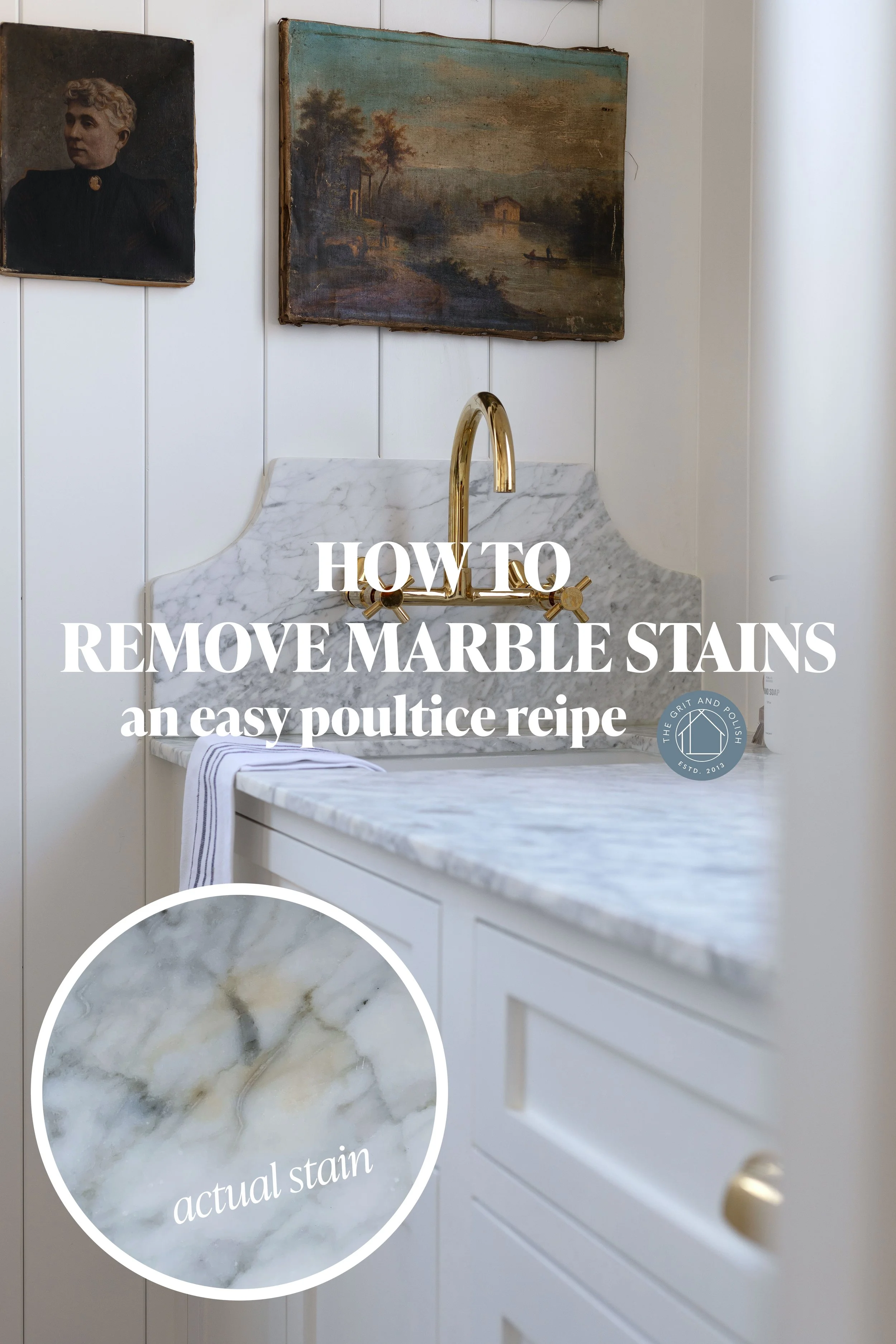
That’s it! Six years later, this is still one of those ridiculously simple DIYs that earns its keep around here. If you try the poultice on your own marble, we’d love to hear how it goes.
xx
ps This post contains affiliate links, meaning we may earn a small commission if you purchase through our links, at no additional cost to you. Thank you for supporting The Grit and Polish!

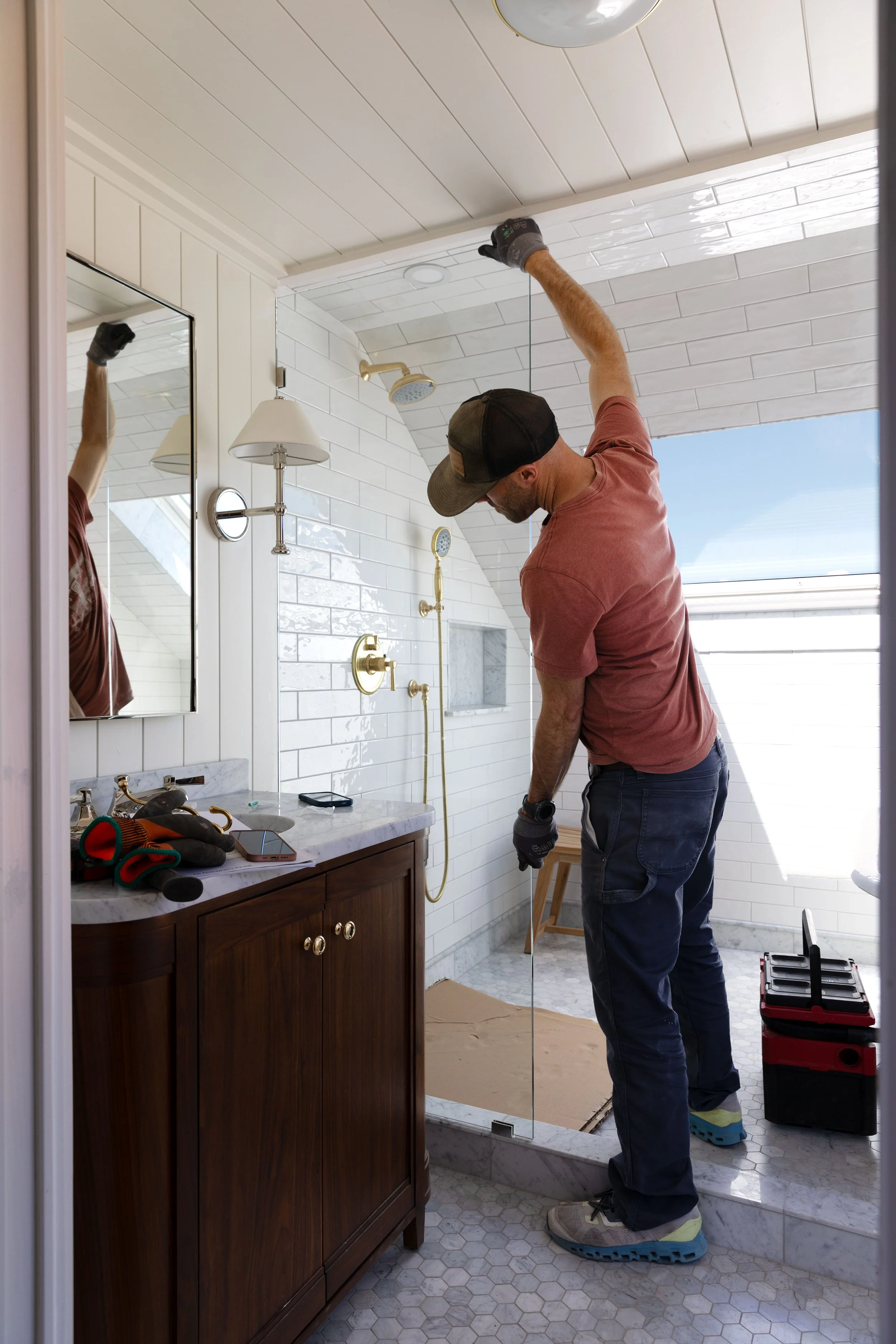

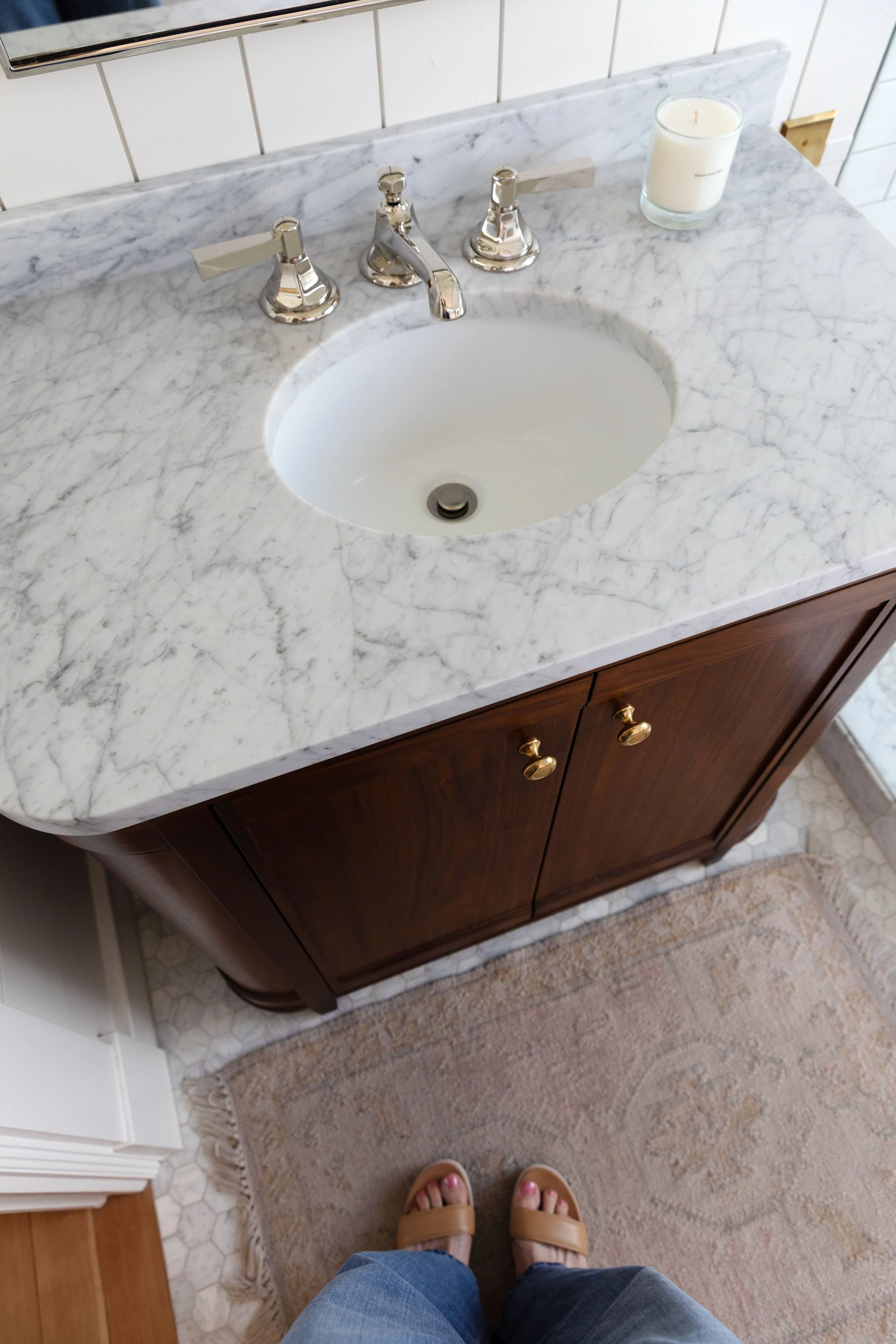




I’m obsessed with this before-and-after ✨