
Should You Buy a Fixer Upper?
Of all the questions people ask us, this one has the biggest consequences: should I buy a fixer-upper? We’re talking about the old house that needs everything. The worst house on the block. The one nobody else wants because of the roof issue or the foundation thing or the cat smell.
We bought our first real fixer back in 2008, a hundred-year-old Craftsman in Seattle with a slapped on porch-kitchen conversion, a wallpapered dungeon of a basement, and a smell that had us holding our noses. Since then we’ve renovated 8 more. So when someone asks us this this question now, they’re getting an answer we’ve earned through a lot of renovations, plenty of mistakes, and one very close call. Let’s get into it…
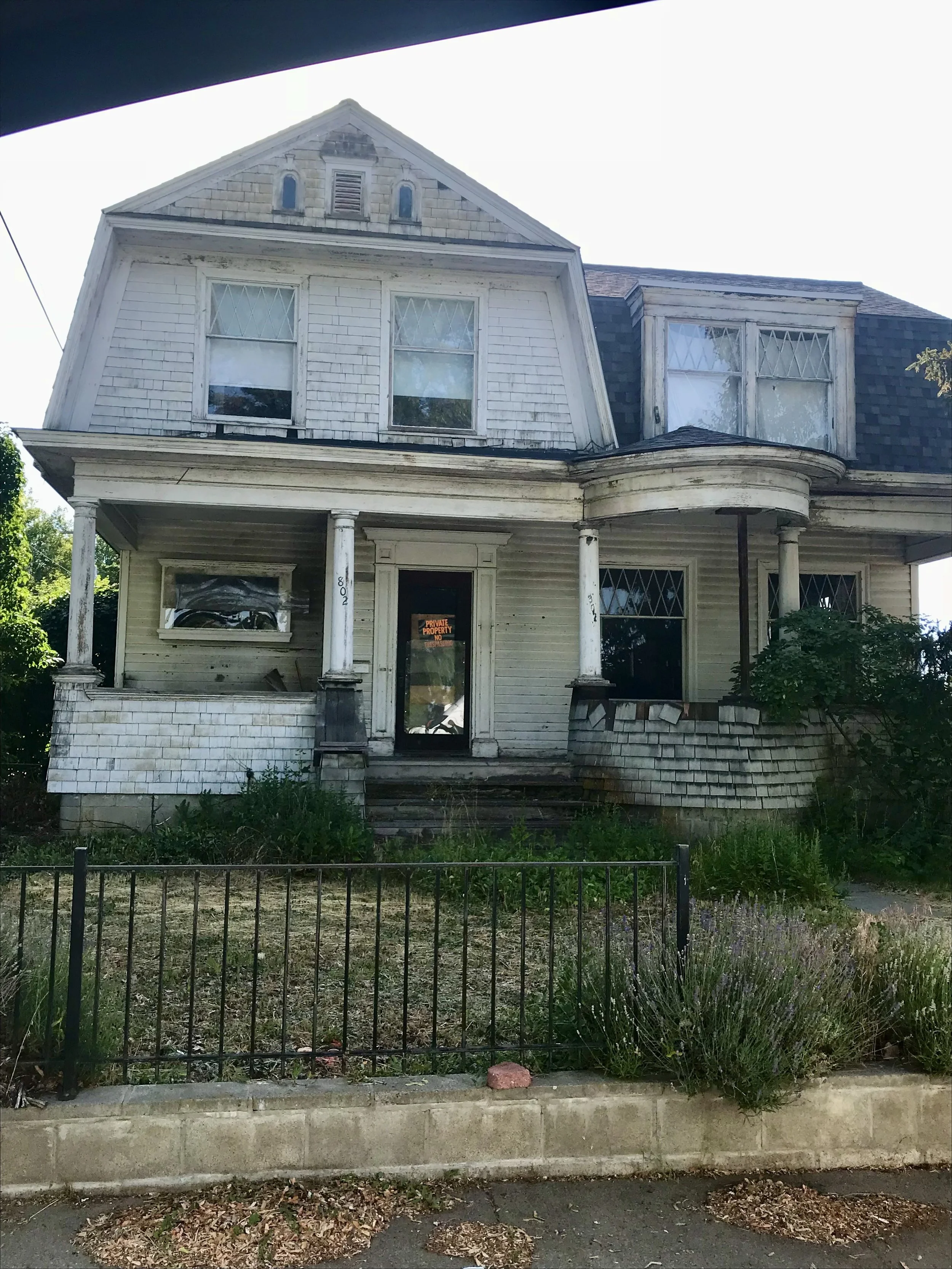
a fixer in our small town that we’ve always admired
The Case Against It
We’re not going to spend this whole post talking you into turning a 100-year-old charmer into a wonderful family home. If anything, we’d rather talk the wrong person out of buying a fixer-upper before they’re in over their head.
We’ve been at this 18 years now, but our first house nearly took us down with it.
Nine months after we closed in 2008, the Great Recession hit. House prices dropped, I got laid off of my engineering job and the income paying our mortgage disappeared almost overnight. Suddenly we were underwater, out of savings, and living in a house that still needed a tremendous amount of work.
The fixer-upper part mattered because we didn’t have many good options. A house requiring lots of updating is harder to sell in the best of markets, much less a terrible one. We couldn’t just put it on the market, walk away, and start over. It was in sore need of more work before it could reasonably rent or sell, and we needed somewhere to live.
So after some stewing and a lot of late-night conversations, we got busy. We renovated the main house just enough to rent it out, adding two bedrooms and a bathroom in the basement and giving the kitchen a gentle update. We didn’t own tools, so we bought the basics. We had no idea what we were doing, but we learned as we went (with lots of help from Garrett’s electrician father). We didn’t have any money but put materials on credit cards and eventually took out a small loan to pay them off.

our second renovation - the backyard cottage in Seattle
Three months later, renters moved into the main house, covering our mortgage, and we moved ourselves into the small backyard cottage, which we then proceeded to fix up. Both of those houses were so much work and quite honestly, it was a really stressful time in our lives. So that experience is why we take this question so seriously now. A house that needs everything can eat more time and money than you think, even when you plan carefully. And when life throws something unexpected at you - a job loss, illness, market downturn, anything - you’re left holding the bag.
There’s another piece of this, too. We’ve spent a surprising amount of our renovation efforts undoing bad renovations. Cheap materials laid over solid old ones. Original details ripped out unnecessarily. Problems covered up instead of actually fixed.
Of course not every old house needs a museum-quality restoration. Ours certainly aren’t. Houses need to work for the people living in them. But if your plan is simply to do everything as quickly and cheaply as possible, an old fixer may not be the best fit. These houses have already lasted a hundred years or more and there’s some responsibility in being the person who gets to care for one for a while. At least we think so.
And then there’s the day-to-day reality. You’ll live with unfinished rooms longer than feels reasonable. You’ll go to friends’ houses and feel genuine envy over a working kitchen or a bedroom without dust. Renovating can also be a pretty effective pressure test for a relationship - a plumbing leak, a failed inspection, or a surprise $20,000 problem tells you a lot more about how you make decisions together than picking a paint color ever will.
If what you really want is to move in and be done, a house that needs everything is probably the wrong project. That’s not a failure. That’s just knowing yourself!
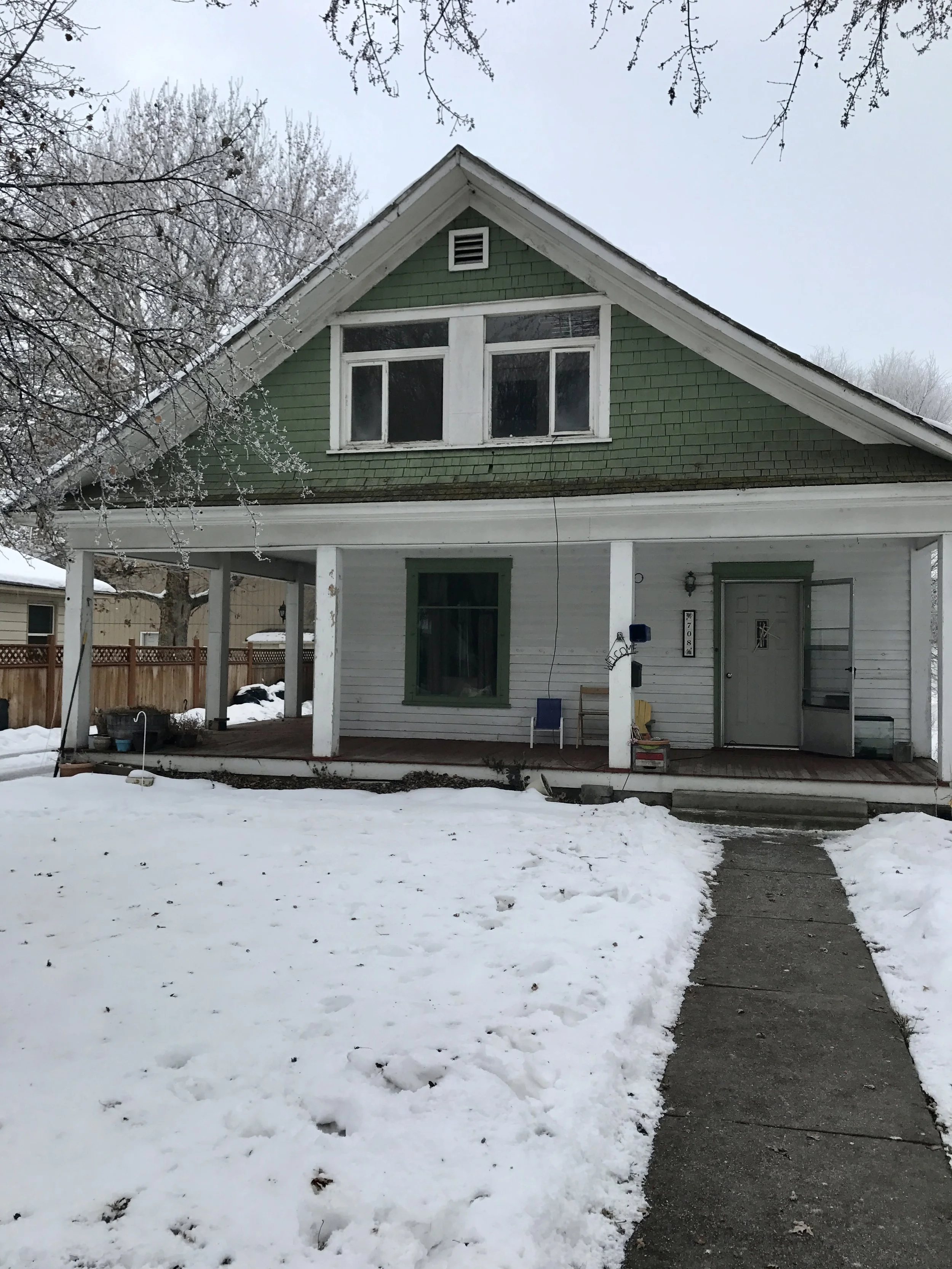
our 7th renovation, The Porch House (on the day we toured it)
The Case For It
And yet… We did it again. And again. Nine houses now. Because old houses can be incredibly special.
Ask Garrett what he saw when we walked into that first Seattle house and he’ll tell you about the old roof, animal smells, and wallpapered dungeon of a basement. Ask me and I’ll tell you about the light, the original windows, the tall ceilings, the potential! Same house. Two completely different reactions. And honestly, that’s a pretty fair preview of what buying a fixer-upper is like. You have to be able to see the problems clearly and see what might be hiding underneath them.
I still remember walking up to the Farmhouse for the first time and turning to Garrett and saying something along the lines of, I don’t just want to live in this house. I want to die in this house. A totally normal thing to say about a real-estate listing ;) But there really was something about it. Sometimes I think the old houses find us, not the other way around.
Old houses are just special. They have history - other families have raised kids in these rooms, celebrated holidays here, stood at these windows. And the materials and craftsmanship are hard or impossible to recreate today (without a small fortune). I really do think it’s true what they say: they just don’t make them like they used to. And after living in so many of them over the years, I really do feel that an old house can become part of the family. They are the backdrop to our lives, and in some strange way, they carry a little bit of everyone who lived there before us, too. There’s magic in that. And if you feel it, years of dust and inconvenience can somehow feel worth it.
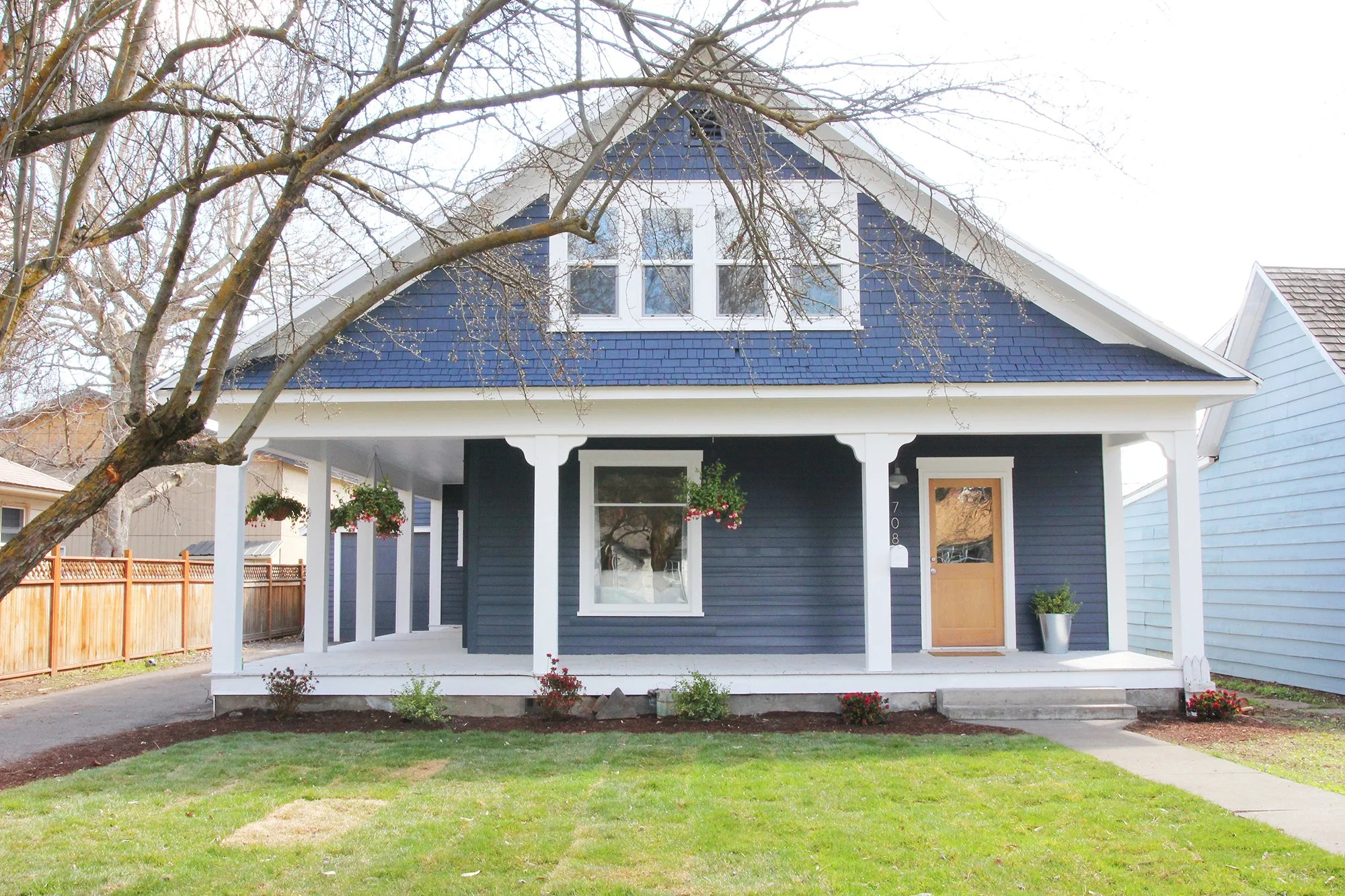
The Porch House after, paint color is BM Hale Navy
What We Actually Look For in a Fixer-Upper
Emotion matters, but it certainly shouldn’t be the only thing driving the decision. After eighteen years of doing this, these are the things we come back to every time:
Location, light, and flow. Those are some of the hardest things to fix later. You can change cabinets and flooring. Moving a house to a better street is trickier ;)
What’s still there. Original trim, doors, built-ins, windows, and floors are incredibly valuable to us. Peek under the carpet. Look behind later additions. Sometimes the best parts of an old house are hiding underneath decades of updates.
The bones. Foundation, roof, drainage, plumbing, electrical, heating. Those expensive, invisible systems can swallow a renovation budget before you ever get to pick a single finish.
The potential - not just the problems. Can awkward square footage work harder? Could a bad kitchen layout be improved without doubling the size of the house? Is there enough there to work with?
The numbers. Assume the renovation will take longer and cost more than you think. It always does.
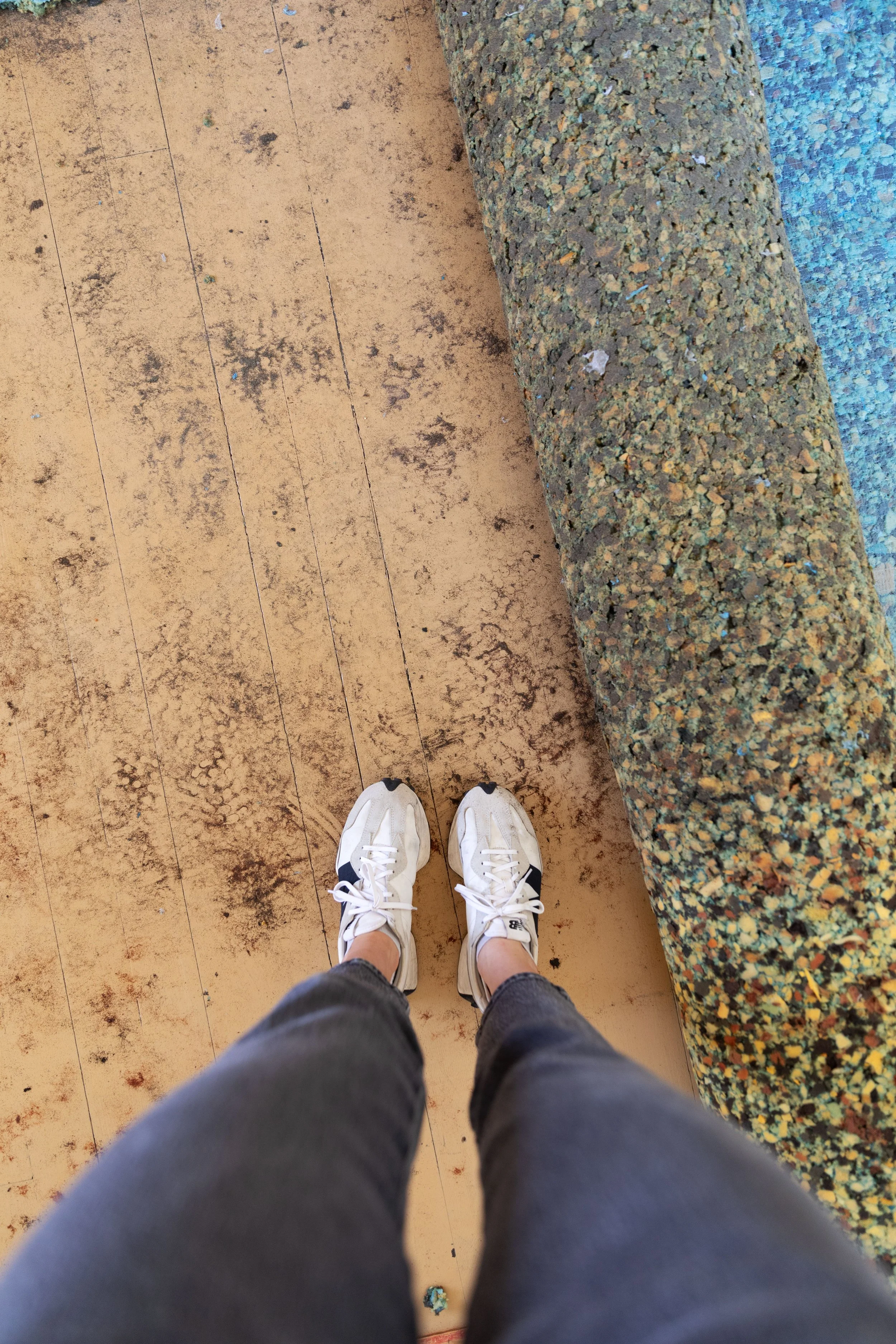
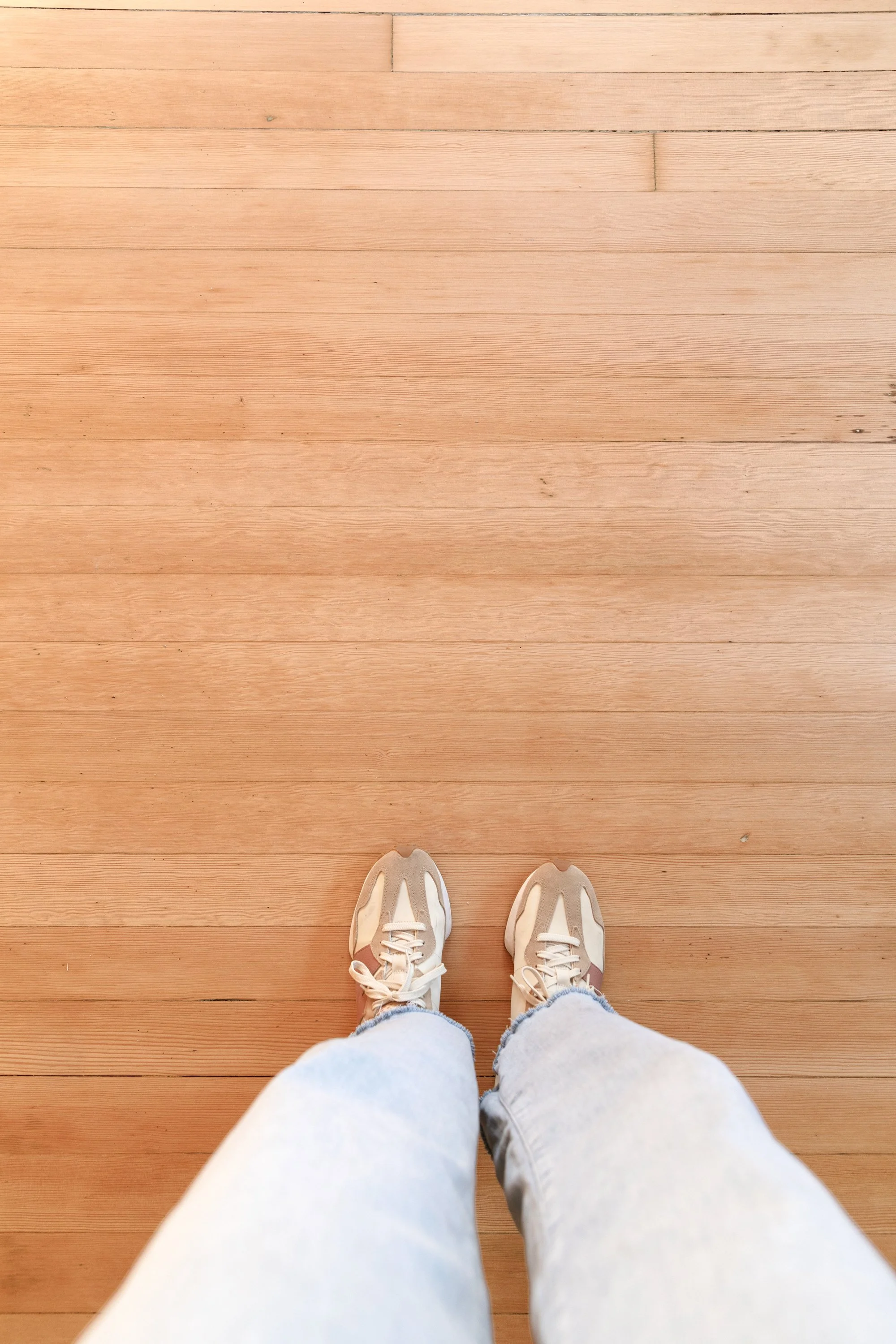
we often find wood floors under carpet (like at the Hill House!)
There Are Two Very Different Ways to Renovate a Fixer
One thing worth mentioning… there are two very different ways to renovate.
If you have the budget to hire an architect and a good contractor, and rent somewhere else while the bulk of the work happens - that can be a really beautiful way to bring an old house back. You’ll still answer approximately one million questions and make more decisions than you knew existed, but you don’t necessarily need to become the electrician/plumber/drywall hanger/project manager along the way. If that’s your route, wonderful. Build a good team, give yourself a healthy contingency, and take the time to understand the house.
But if you’re planning to live through the renovation, DIY significant portions, or renovate in phases because that’s what the budget allows. Well that’s a very different commitment.
You need to be comfortable with inconvenience. You need somewhere to cook when the kitchen is torn apart. You need enough functioning bedrooms and bathrooms to keep daily life moving. You need patience with dust and temporary solutions and projects that stop halfway because real life intervenes.
We’ve done a lot of our houses this way and it can absolutely work. But the process has to be something you can tolerate. And honestly, it’s much harder when you have kids in tow.

our 8th fixer, the Poplar Cottage
If You’re Seriously Considering an Old House
After doing this enough times we have a pretty solid list of items we assess as we walk through an old house.
Where does the water go when it rains? What kind of foundation are we looking at? How old are the major systems? What original details remain? Is that carpet hiding wood floors? Can the existing layout work harder before we start talking about additions?
We put all of that into our Old House Walkthrough Checklist so you can bring the same list with you when you tour a house. It’s free and you can get it below.
GET OUR OLD HOUSE WALKTHROUGH
A free two-page checklist of what we look for when we walk through an old house-from the bones and expensive systems to the original details worth protecting.
Highly recommend brining this two-page sheet to the showing, scribble it up with some notes, and ideally look at the house once with your heart and then once with your head.
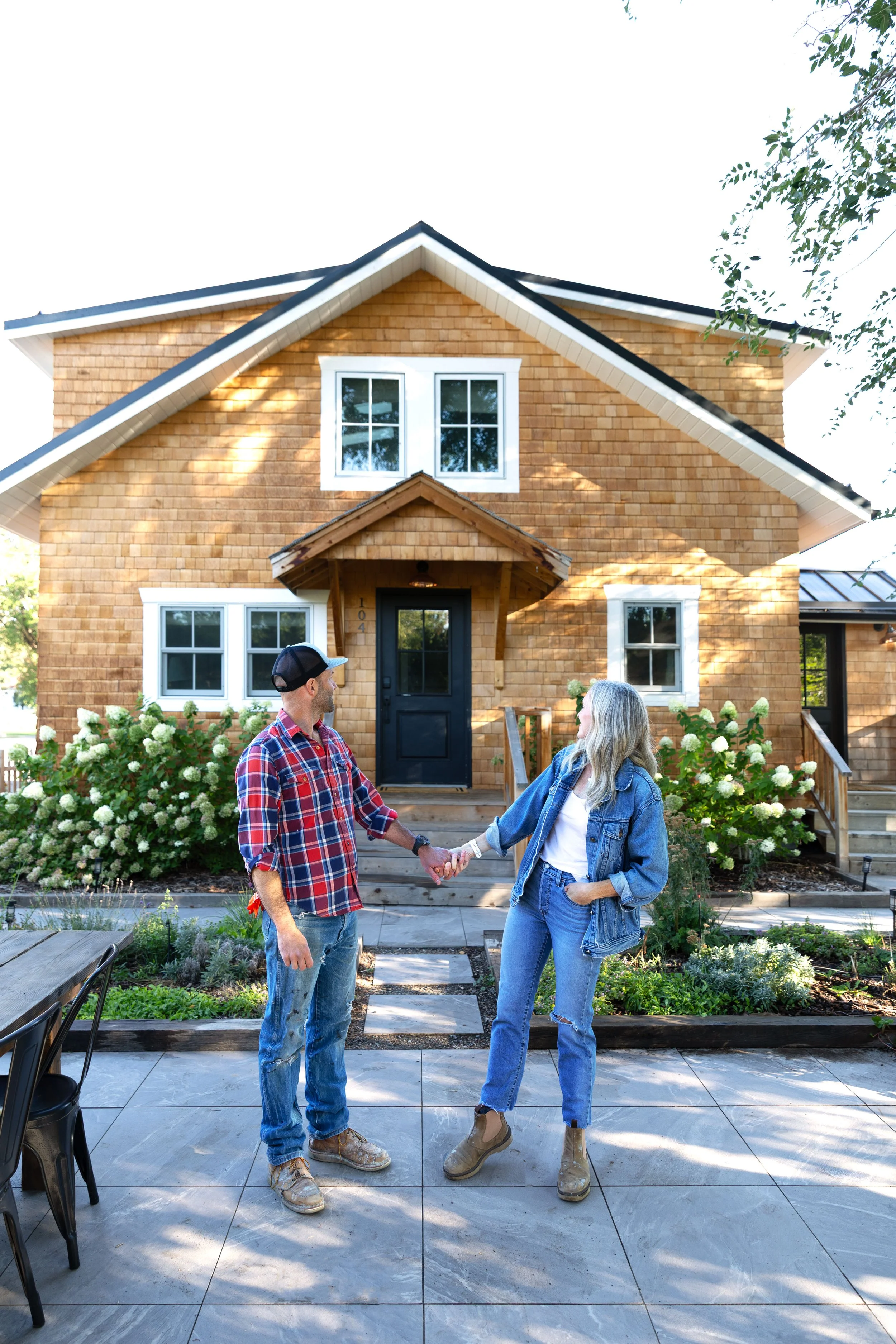
the Poplar Cottage after 5 years of renovating
So, Should You Buy the Fixer-Upper?
Here’s probably the simplest answer we can give you after nine houses: Yes! if you can imagine loving the house even while it’s unfinished. Buy it with clear eyes and a willingness to ride the ups and downs of the renovation process. Buy it if you see something worth saving, if the location and bones are good. Buy it if you have enough financial margin and mental fortitude for surprises.
And maybe don’t buy it if what you really want is the finished version. There are easier ways to get a beautiful home.
Either way, we’re rooting for you!
xx



After renovating 9 old homes, here’s what we look for…