
Epoxy Grout, Answered
THE HILL HOUSE
Last week I shared the things we’d do again in any house we renovate, and epoxy grout made the list. I was not prepared for the feelings you all have about grout ;)
So many questions! One comment in particular seemed to sum it up: “Grout has been the bane of my bathroom design.” Some of you had never heard of epoxy grout, while others wanted to know if you can use it over existing grout, whether it works with zellige, and exactly which brand we buy. Clearly, one line in an Instagram caption wasn’t going to cut it.
We’ve now used epoxy grout in several bathrooms, lived with it for years, tried more than one brand, made at least one mistake, and still keep choosing it. So consider this the post I’d send a friend before they grouted a bathroom. Let’s get into it…
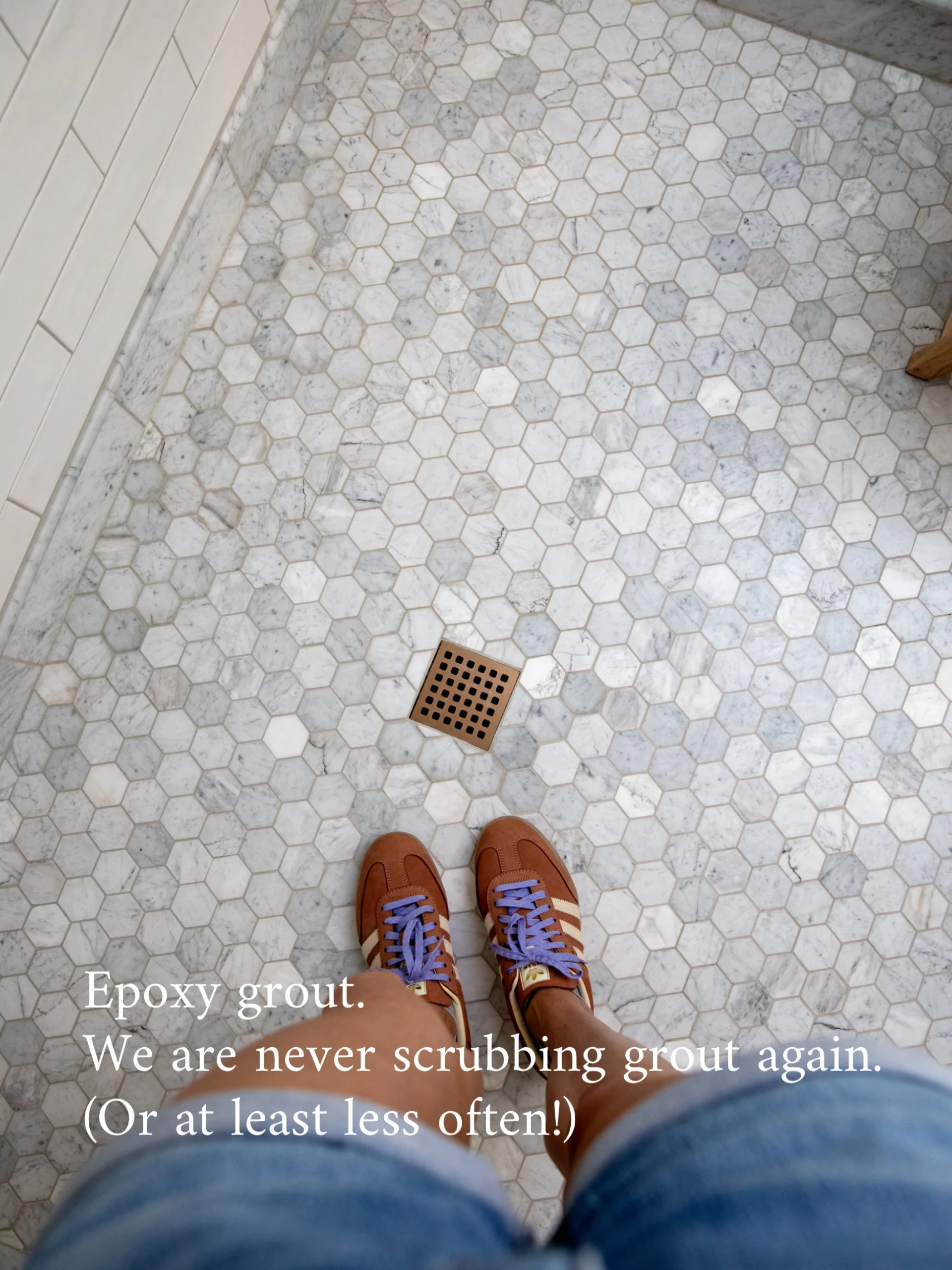
tile, epoxy grout (part AB) + color (part C) , sneakers
What Is Epoxy Grout?
Traditional grout is usually cement-based, which means it’s porous and can absorb moisture and stains. Epoxy grout is made with resin and hardener instead, so once it cures it has a very low absorption rate and doesn’t need to be sealed. So bacteria and whatever it is that grows on grout has a much harder time getting into the grout.
One important distinction: epoxy grout is highly water-resistant, but it does not waterproof a shower. You still need a proper waterproofing system behind the tile.
What Brand Do We Use?
We first tried true epoxy grout in the Farmhouse primary bathroom (Ardex). We had heard all the horror stories about epoxy being difficult to work with, so Garrett was a little nervous going into it, but we were pleasantly surprised. It was totally manageable, cleaned up well, and held up. I’d happily use it again.
For the Poplar Cottage upstairs bathroom we used Fusion Pro (from the Home Depot), which is actually a ready-to-use single-component grout rather than a true epoxy. It has many of the same stain-resistant, no-sealer benefits and was very convenient to use. The product was fine, though we’ve definitely seen buildup on it. My real complaint there is the Bright White color. White grout shows every single thing, and I would absolutely choose a darker neutral next time.
For both Hill House bathrooms we used Laticrete Spectralock Pro Premium, and this is the one we keep reaching for now. Spectralock comes in two parts and you have to mix them together: Part A B and Part C. It works on walls and floors, doesn’t need sealing, comes in a lot of colors, and has given us the durable, low-maintenance finish we wanted in both bathrooms. Plus you can buy it on Amazon, while a lot of other epoxy grout it quite hard to find.
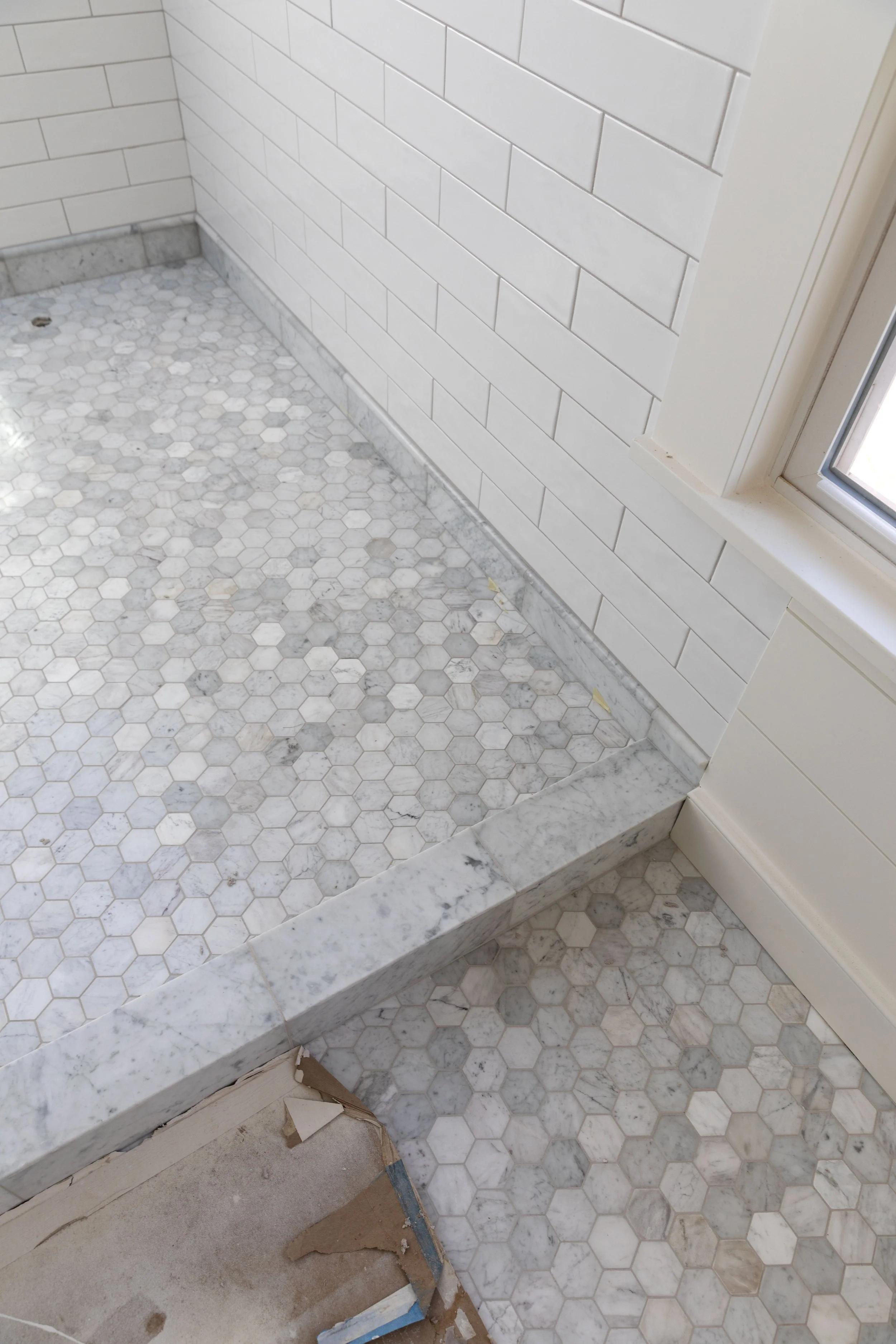
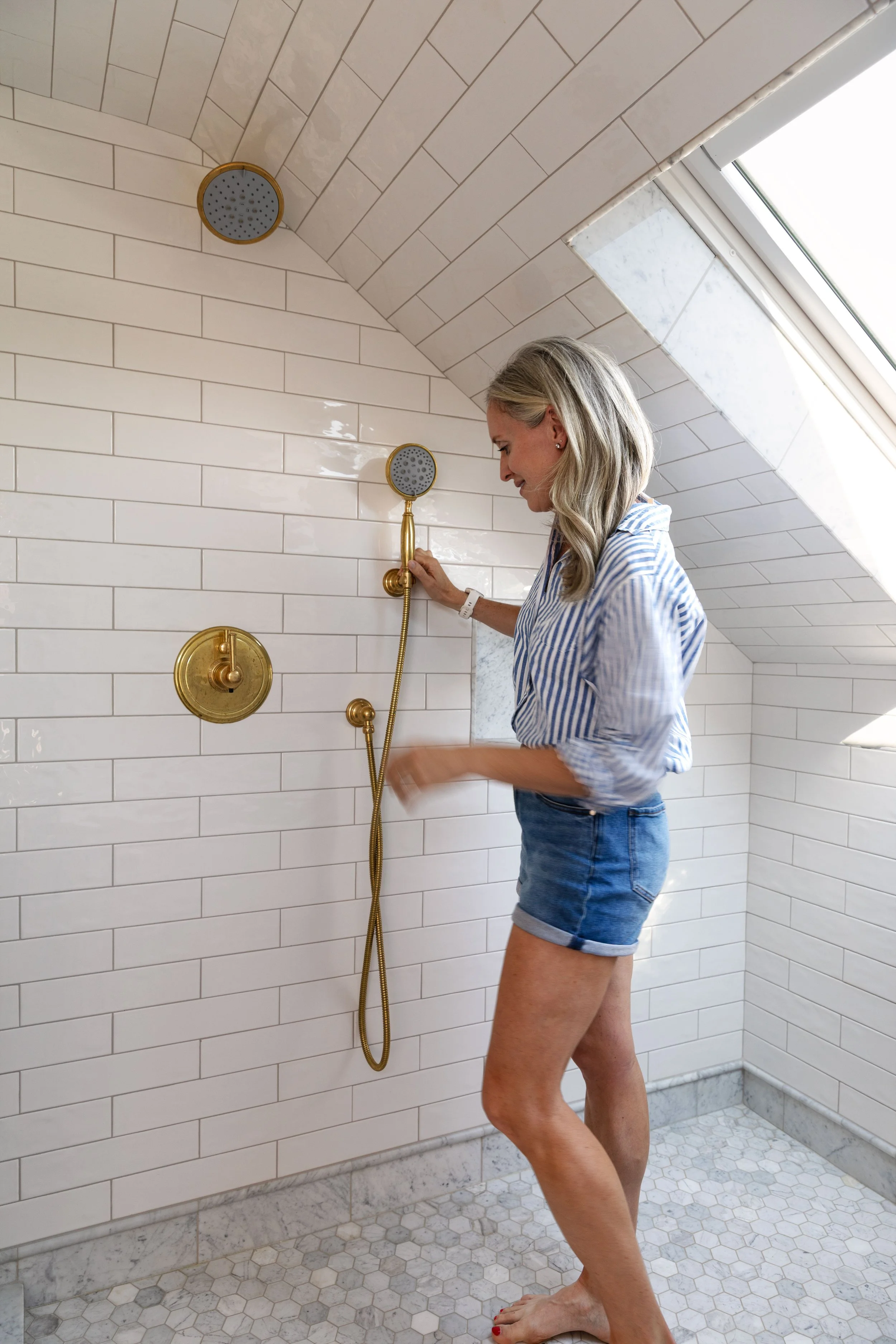
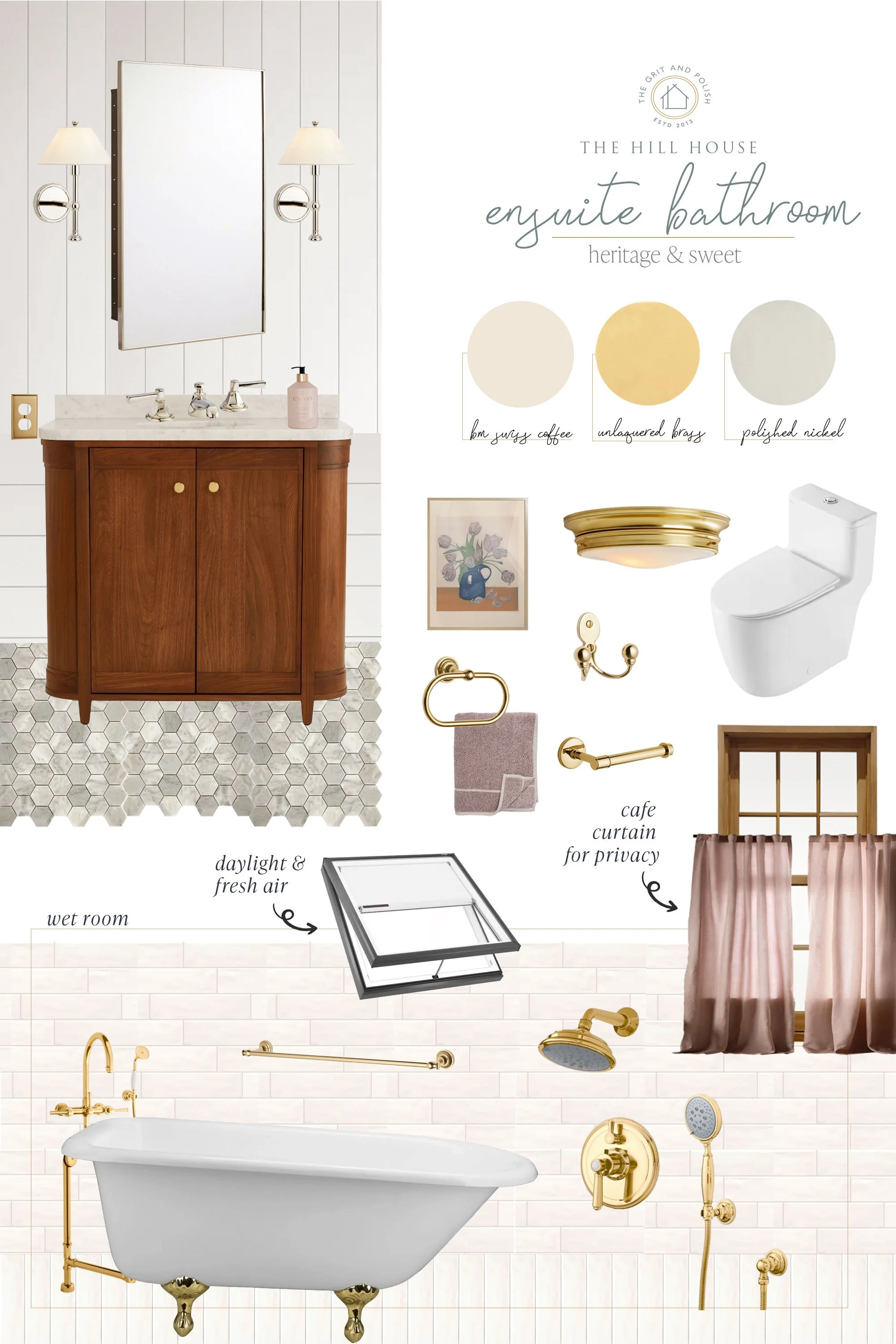
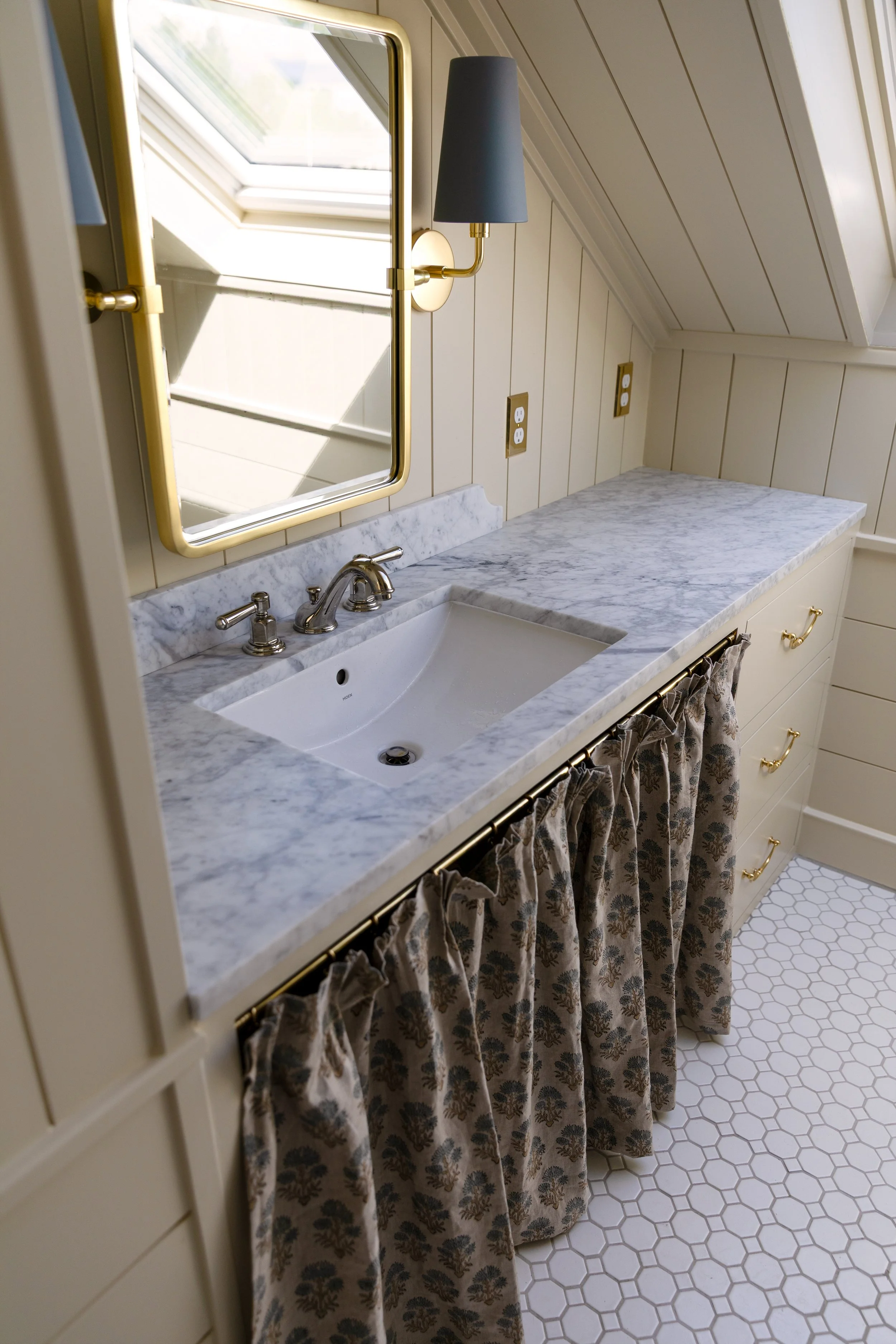
Our favorite color so far is Iron, which we used with the white subway tile and honed marble hex in the ensuite. It gives the tile enough definition without reading too dark and hides normal bathroom life much better than white grout ever did.
But the short answer is Spectralock. It’s become our go-to grout.
How Much Easier Is Epoxy Grout to Keep Clean?
Okay, I don’t want to oversell it as some magical grout that you never have to clean, but it really is easier than cements grout. Because the epoxy itself is so dense and non-porous, dirt and grime have a much harder time soaking into the joint and permanently discoloring it. Sure soap scum, hard-water minerals, shampoo, dirt, and the occasional pink bathroom funk can and will still collect on the surface, but there’s a lot less scrubbing to get rid of it.
The difference, in our experience, is less “we never clean grout” and more “when we clean it, it actually comes clean.”
Laticrete recommends cleaning with a neutral-pH soap and water, and says any mold or mildew that does show up stays on the surface rather than penetrating the grout. For stubborn buildup you may still need a nylon scrub brush or stronger cleaner, but this should be an occasional deep clean rather than the constant battle we’ve had with porous grout in other bathrooms.
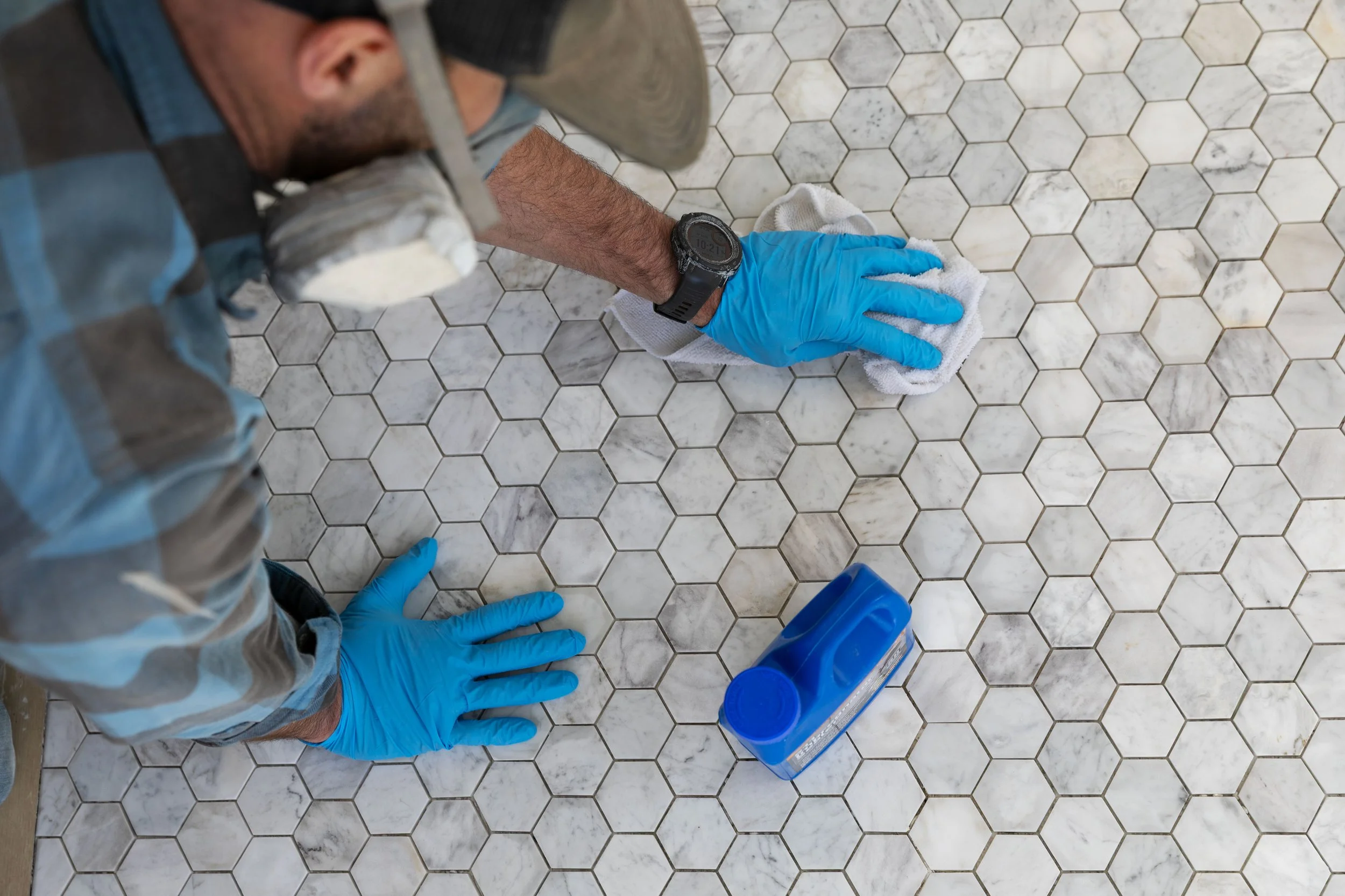
And that is probably the best way I can describe the appeal: less scrubbing, less staining, and a much better chance that the grout will still look like the color you picked years from now. Here’s the routine cleaner we use:
Is Epoxy Grout Hard to Install?
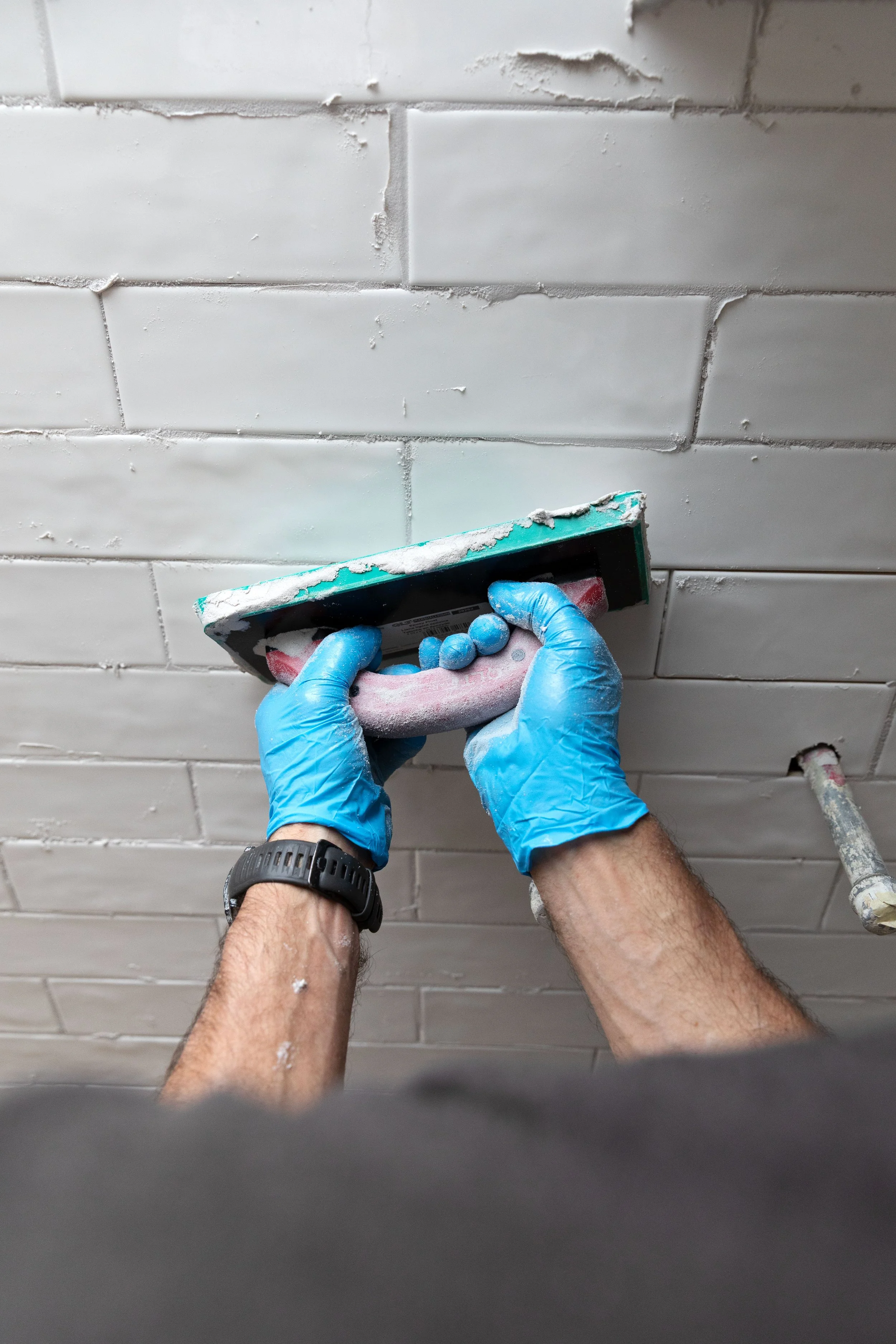
Yes and no. The actual skill isn’t wildly different from other grout. The hard part is that epoxy has a clock. Once the components are mixed, you need to keep moving. The wash timing matters, and getting the tile faces really clean before the epoxy cures is probably the most important part of the whole installation.
Our general routine is simple: pre-seal porous natural stone if needed, compare all of the color components, measure partial batches precisely, mix only what we can reasonably use, pack the joints with an epoxy grout float, and then follow the manufacturer’s initial and final wash timing exactly.
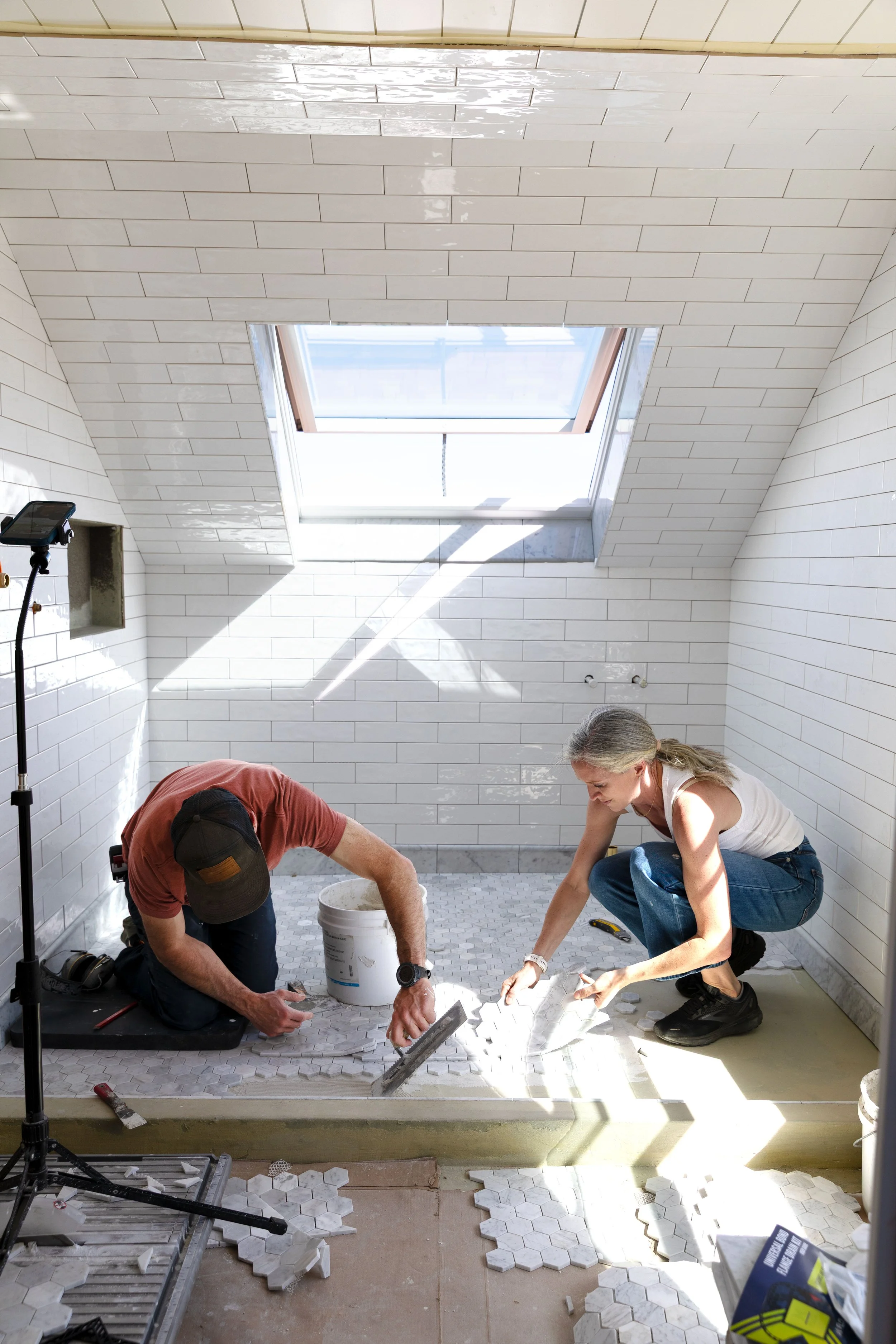
We also strongly prefer to do this as a two-person job. Garrett usually handles mixing the grout and then we apply it together keeping an eye on the clock, water, sponges, and cleanup. Get a babysitter because you can’t just stop and put a kid down for a nap. It’s all hands on deck until that batch is done. Could one person do it? Sure. Do I want to? Nope.
The other thing to know is that epoxy haze becomes much harder to remove once it cures. If you see a film after the first wash, deal with it before the curing window ends or you’ll be staring at it forever.
Here are the tools we use for install:
Mixing paddle (drill attachment)
Marble sealer (if using on stone tiles)
The One epoxy Lesson We Learned the Hard Way (color variation is a thing!)
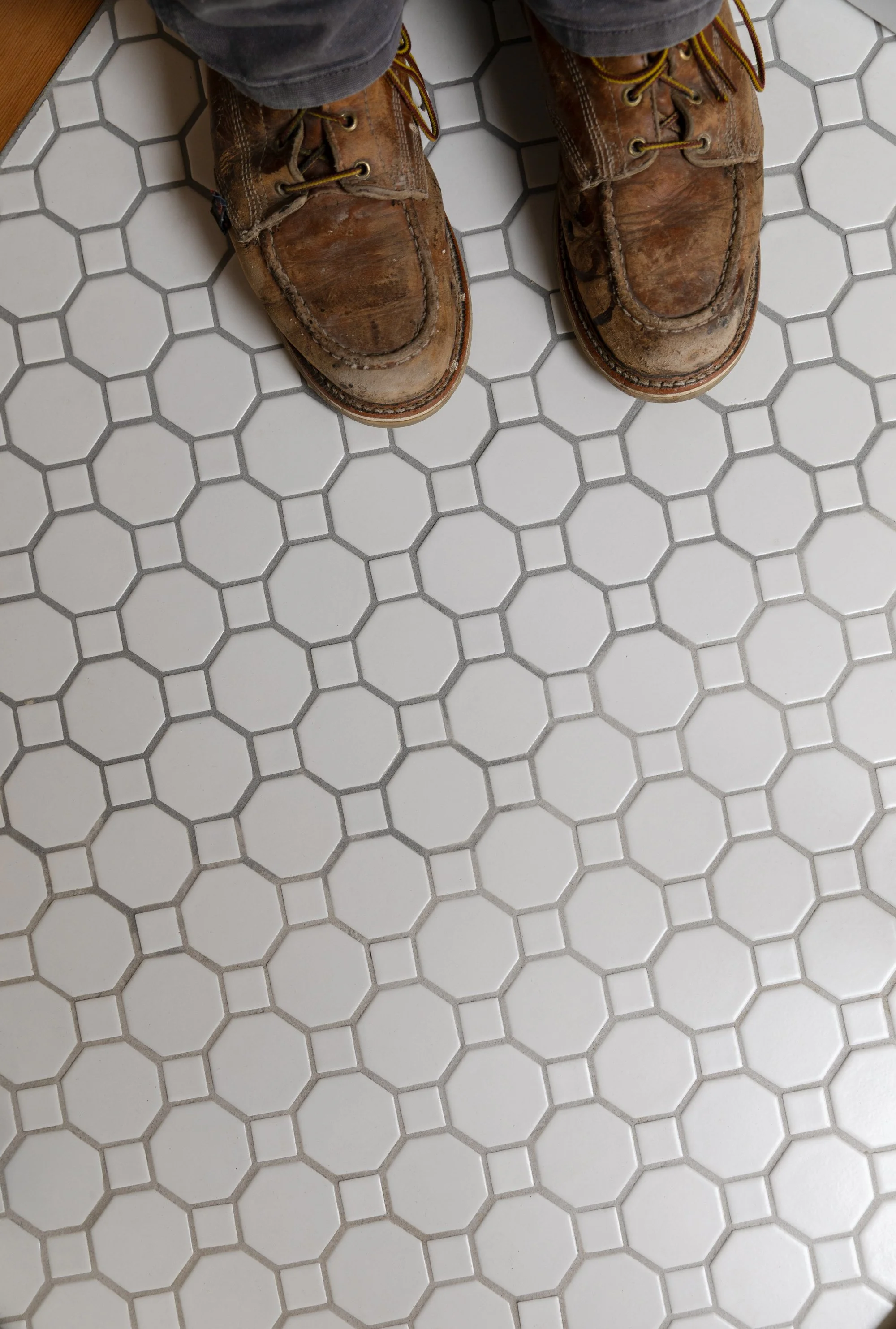
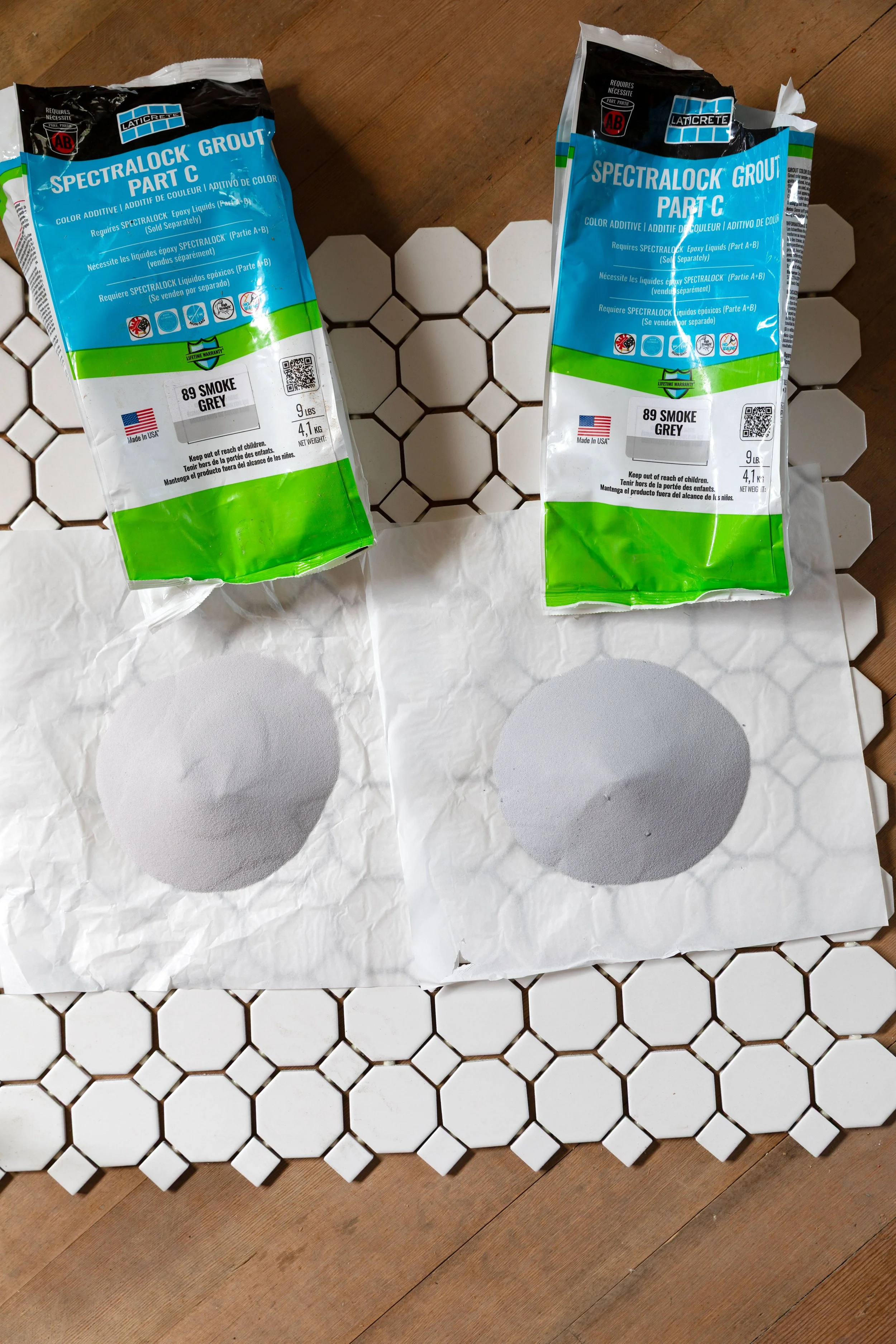
There is one big caveat. In the Hill House hall bathroom, we ran out of Smoke Gray with about two square feet left to grout. We bought another unit of the exact same product and color from the exact same supplier. It even had the same batch number. It cured noticeably darker. When we compared the leftover Part C color powder from the two units, we could see a difference before it was ever mixed.
Eeek. We shared that whole story already (in the post: ‘A Hard Lesson in Epoxy Grout Color Variation at the Hill House’), but the lesson is simple: open and compare every color component before you start. But honestly, it’s been a year now and I just don’t ever notice or think about it.
For the ensuite, we checked all of the Iron first and had zero issues. We still love the product. We just inspect the powder before using it now :)
Can You Put Epoxy Grout Over Existing Grout?
So I did some sleuthing and was surprised to hear that yes, you technically can. BUT this is not some magical skim-coat situation. You need to remove a significant amount of the existing grout first so the new grout has enough depth to properly bond. For Spectralock, the manufacturer calls for removing at least half the depth of the existing grout joint, then thoroughly vacuuming and cleaning everything before regrouting. And gosh, that sounds like a tough job! So yes, you can upgrade an existing tiled surface to epoxy grout without removing the tile. But I would not pretend it’s an easy Saturday-afternoon project.
If your existing grout is structurally sound and you simply dislike the color, a grout colorant might be a much easier solution. If the grout is cracked, failing, stained beyond saving, or otherwise needs replacing anyway, that’s when I’d consider switching to epoxy. But we’ve never replaced or altered grout color before, so I really can’t offer any first-hand experience here.
Does Epoxy Grout Work With Zellige?
This is something I would definitely check with the tile manufacturer about. Zellige is handmade, irregular, and often textured, which is exactly why it’s so beautiful, but that could make epoxy cleanup much more difficult. Epoxy leaves residue on the tile face during installation, and you need to get that residue off during the proper wash window before it cures. On a smooth glazed subway tile, that’s fairly straightforward. On imperfect, hand-made zellige? Less so.
After checking your manufacturer’s instructions - some zellige manufacturers specifically recommend cement-based grout - you could make a sample board before committing to the entire shower. I know, that sounds like a lot of extra work, but it’s a lot less than regrouting later.
At the Poplar Cottage, we actually installed our zellige very tightly and let the thinset squeeze into the narrow joints rather than adding a separate grout afterward. It created the handmade, old-world look we wanted, but it wasn’t really planned and I would not turn that into a blanket recommendation for every zellige installation.
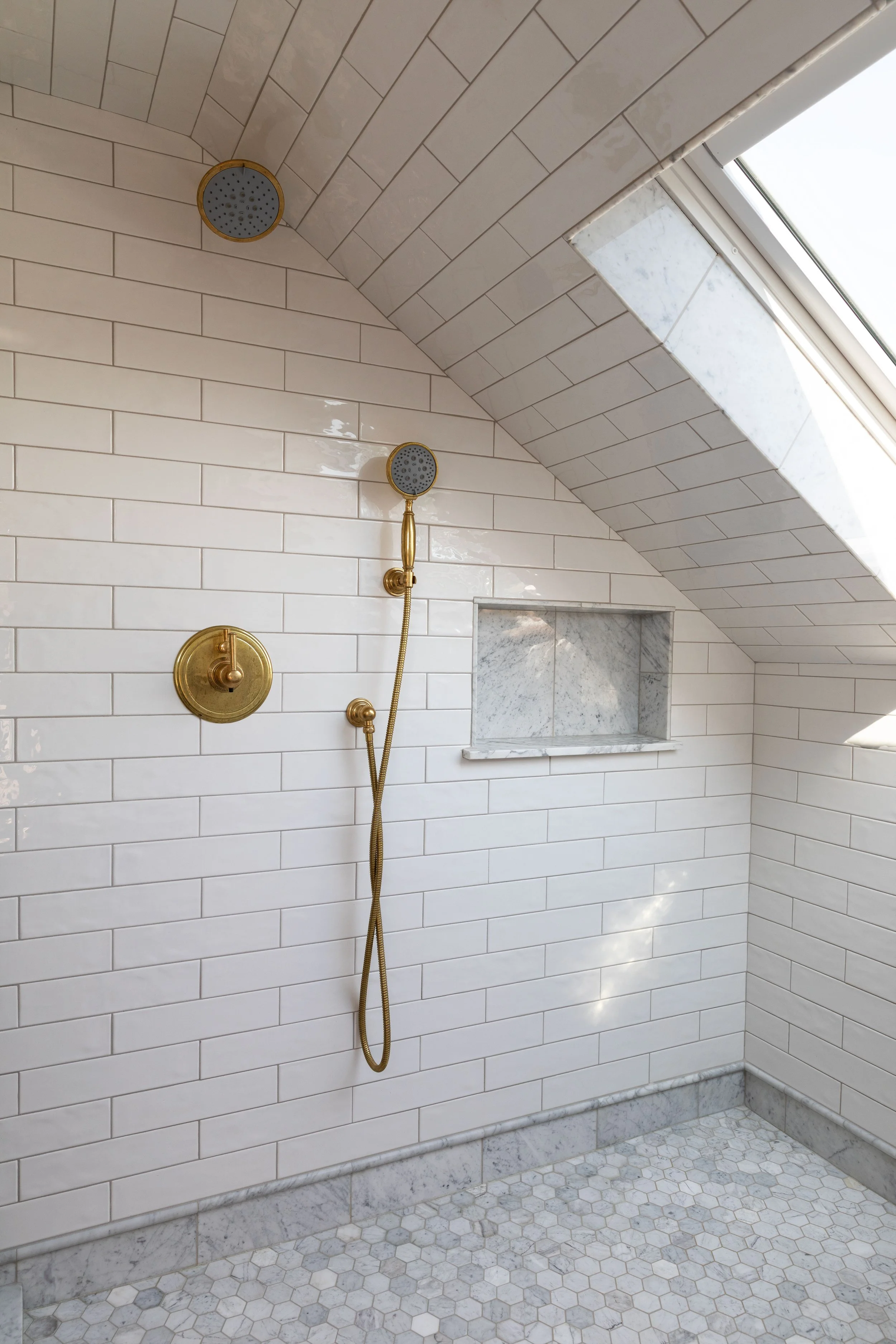
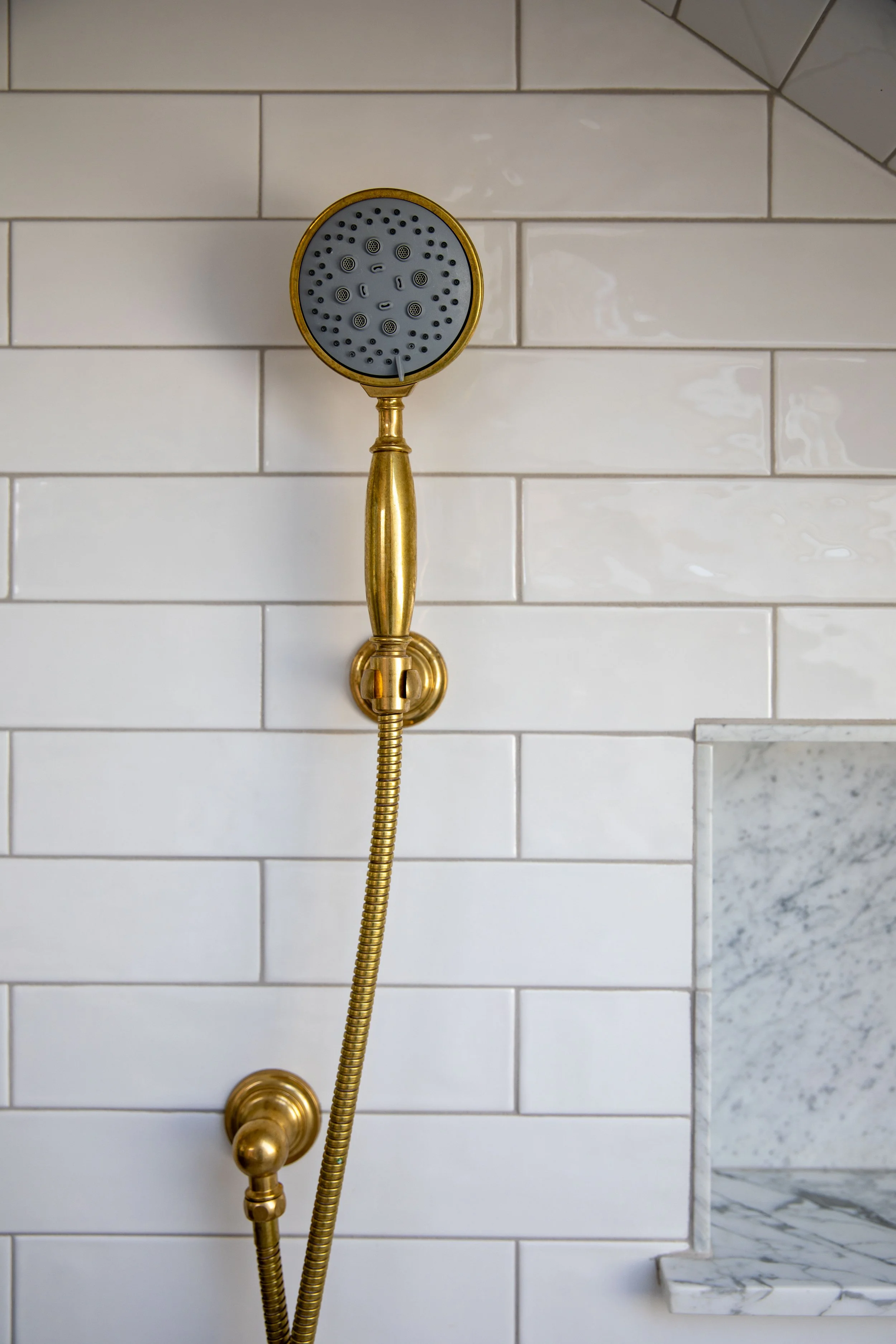
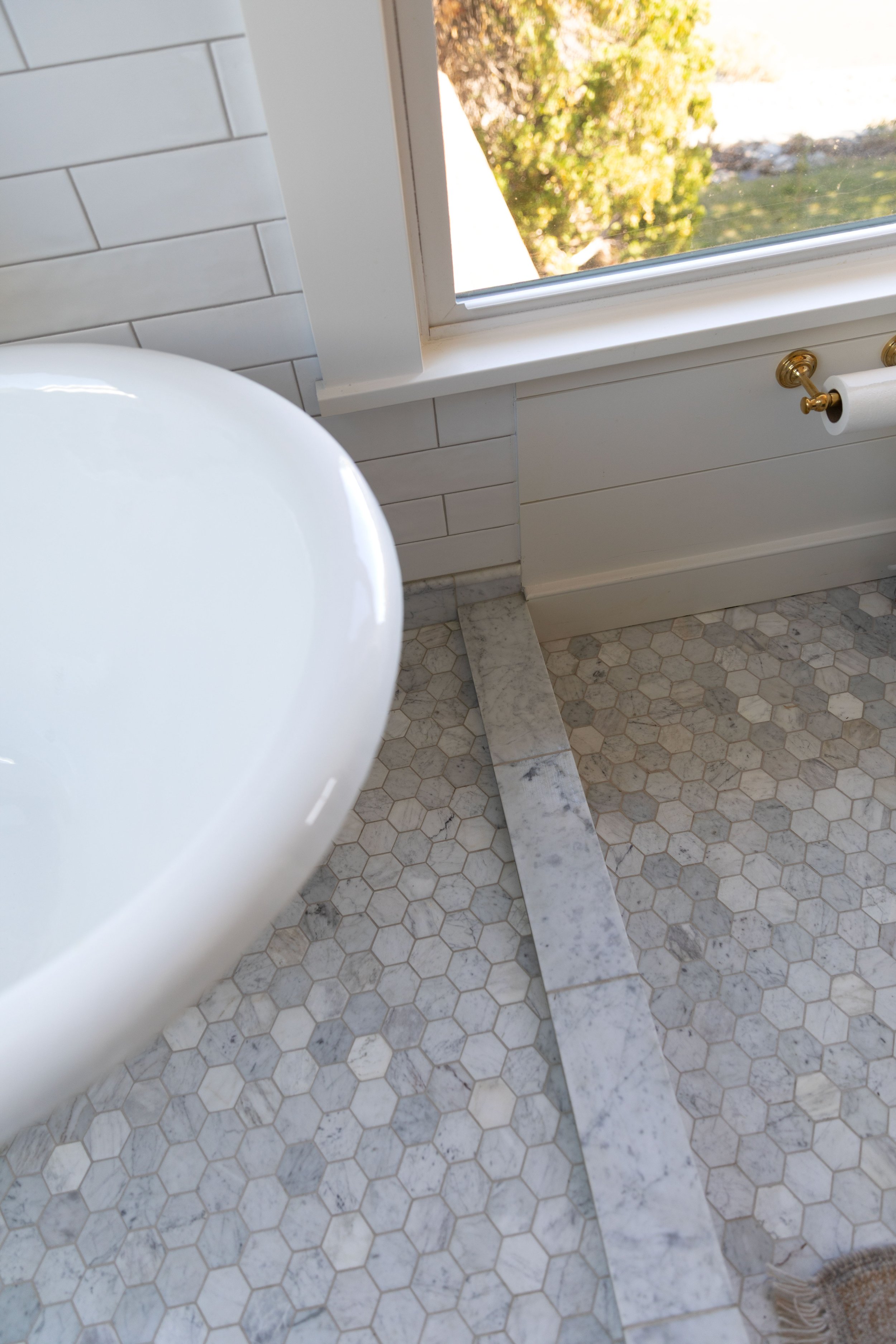
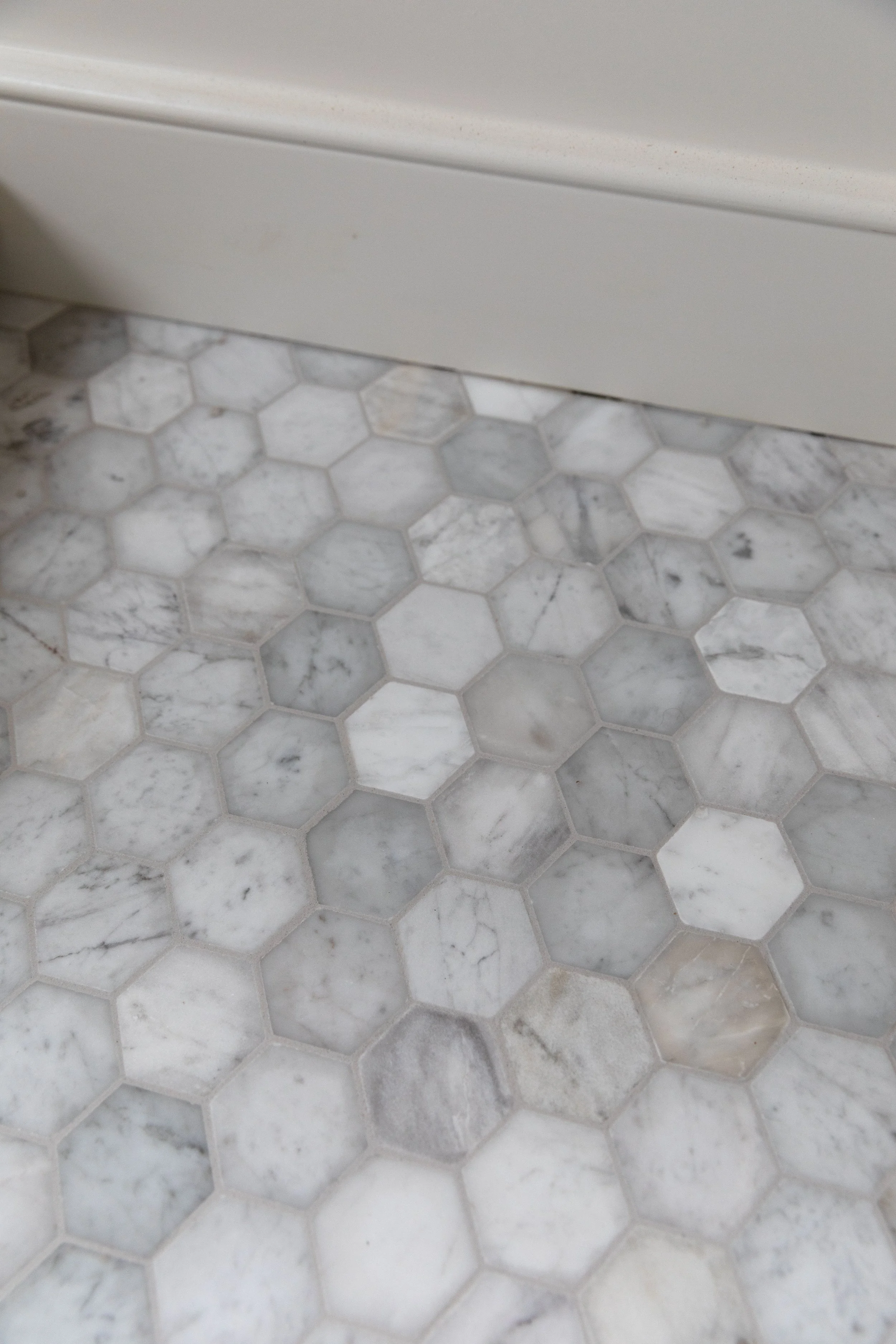
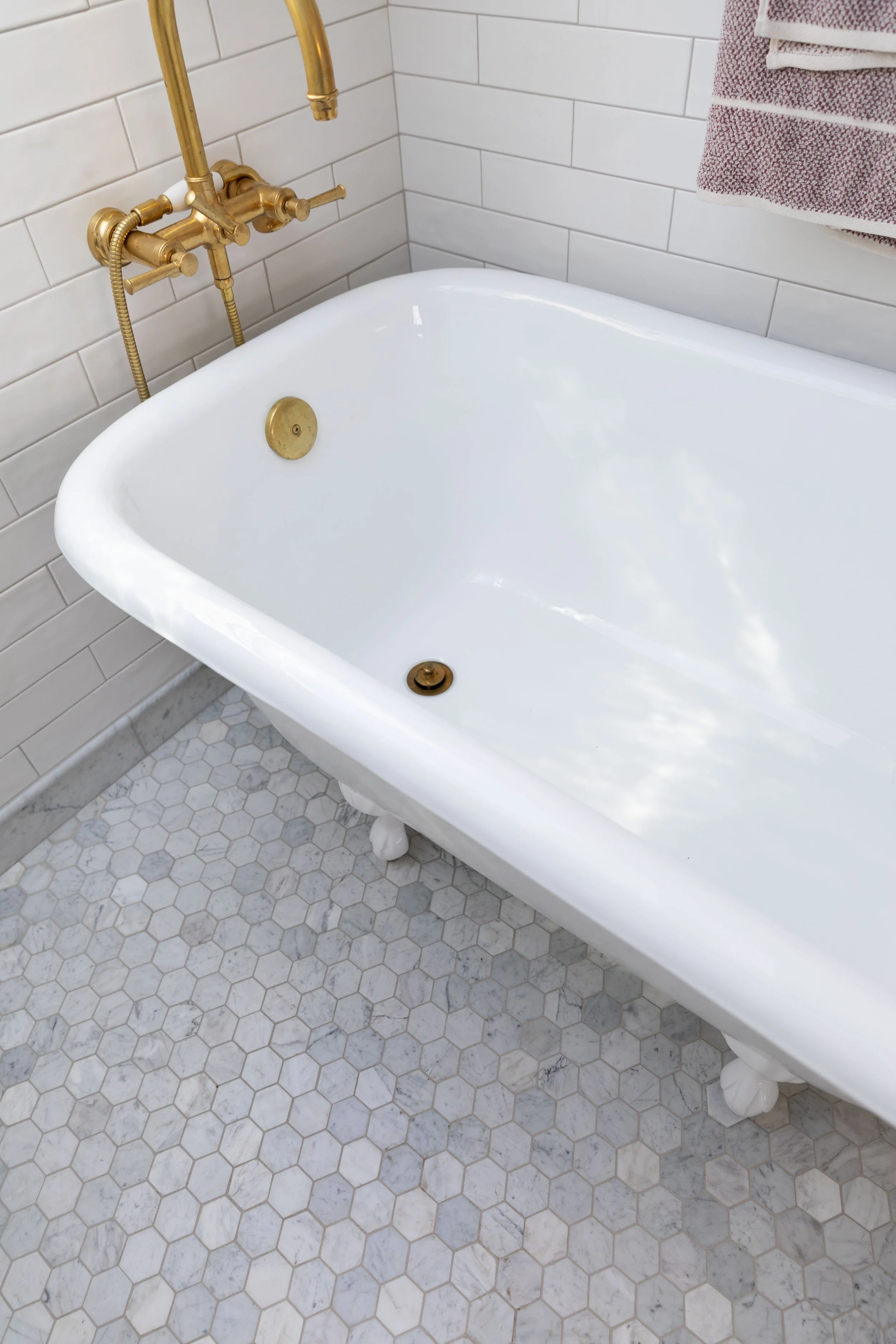
tile, tub + tub filler, shower set, brass hook, cafe curtain rod
So, Is Epoxy Grout Worth It?
For us, yes - especially in showers, wet rooms, and hardworking bathroom floors. It costs more than basic cement grout. It is less forgiving during installation. And you need to pay attention while you work.
But after living with both kinds, I’d rather spend a little more money and effort during installation than spend years trying to keep porous grout looking clean. For a low-traffic powder room? I would be perfectly happy using a good cement or ready-to-use grout and saving the money. For a shower floor where five people are going to stand barefoot every single day? Give me the epoxy.
Quick Answers
Does epoxy grout need to be sealed?
No.
Can it replace existing grout?
Technically yes, but you have to remove a substantial amount of the old grout first.
Can you DIY it?
Absolutely. Read the instructions before mixing anything and recruit a second set of hands. Youtube is your friend.
Does it work with marble?
Yes. We’ve used it successfully with honed marble, but we pre-seal porous stone before grouting.
What color do we like?
Something in the middle. Not bright white, not too dark. With white tile and gray marble, Spectralock’s Iron is our favorite so far.
What brand would we buy today?
Laticrete Spectralock PRO Premium, hands down.
Grout isn’t exactly the glamorous part of renovating a bathroom. Nobody pins a bathroom because they’re swooning over the joints between the tiles ;) But grout covers a surprising amount of visual space and then spends the next couple of decades dealing with water, dirt, soap, shampoo, kids, renters, and whatever else real life throws at it. So it’s definitely worth thinking about.
We’ve made mistakes with epoxy, learned how to install it better, and lived with enough different grout products to know what we want. And what we want is to spend less time scrubbing grout. That’s enough to earn epoxy a permanent spot on our “we’d do it again” list.
xx
ps we may receive a small affiliate commission if you purchase something through our links, at no cost to you. Thank you for supporting the Grit and Polish!
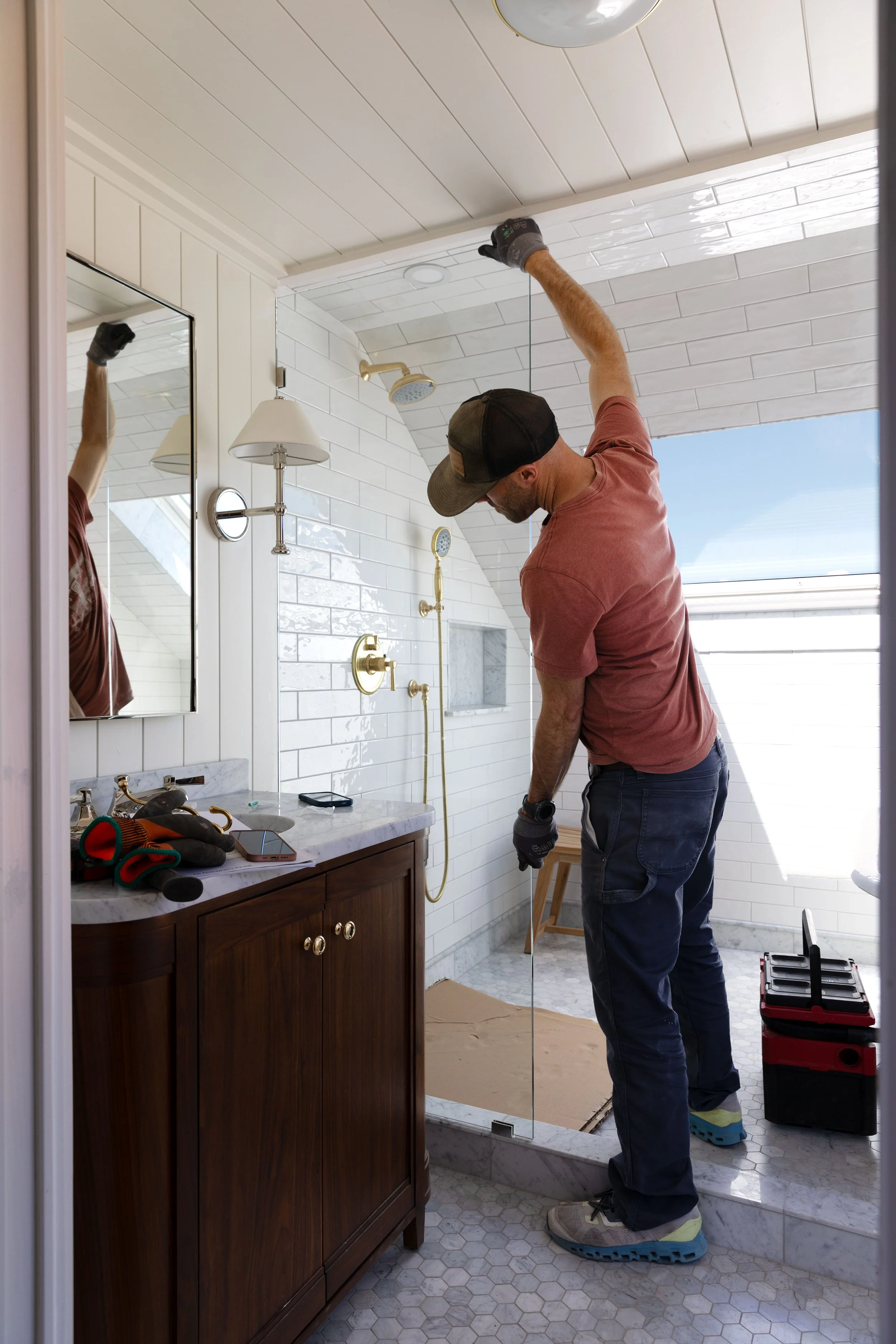
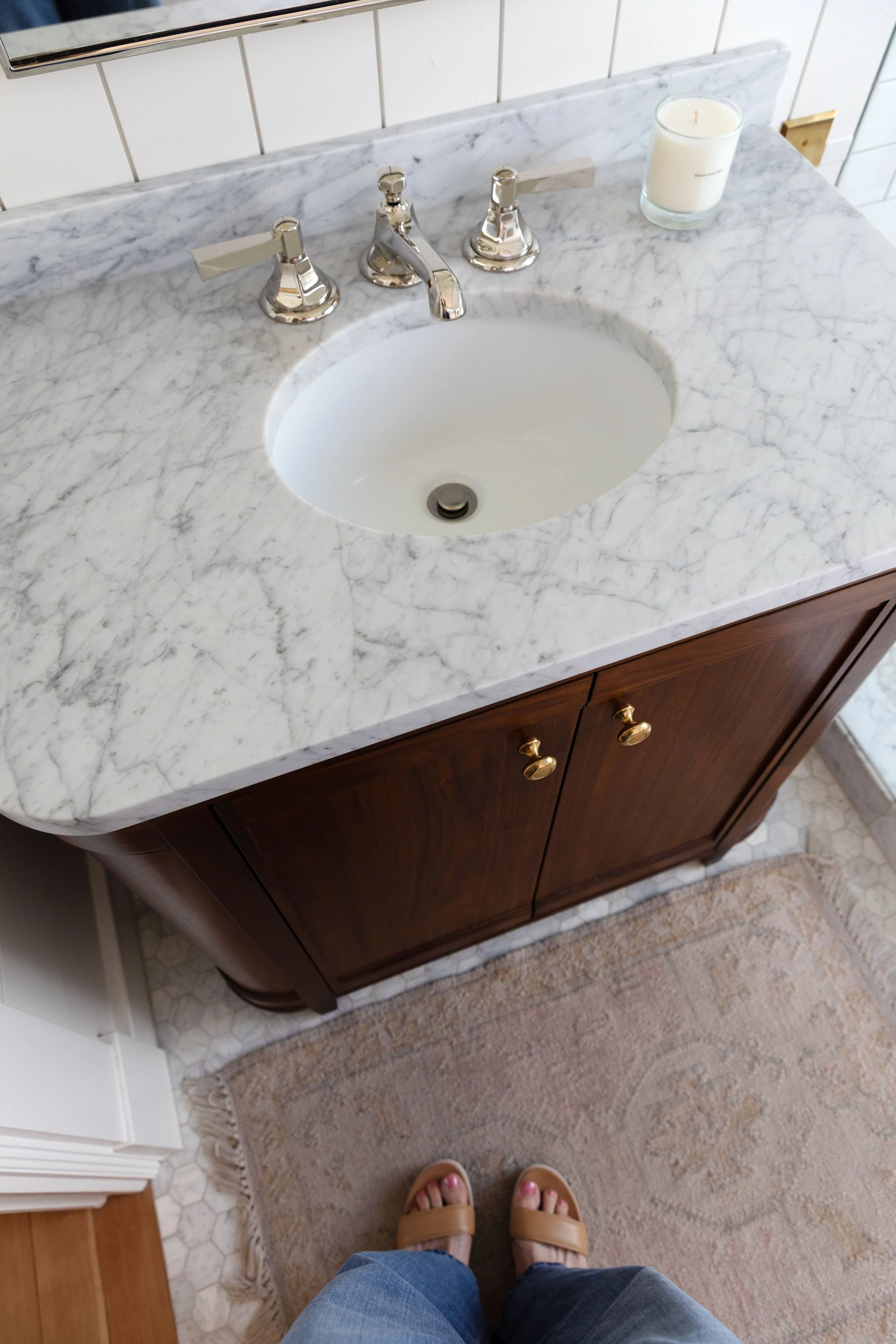

Every question you sent us, answered.