
Do You Really Need a Bathroom Backsplash? What We Considered for Our Hall Bath Vanity
THE HILL HOUSE
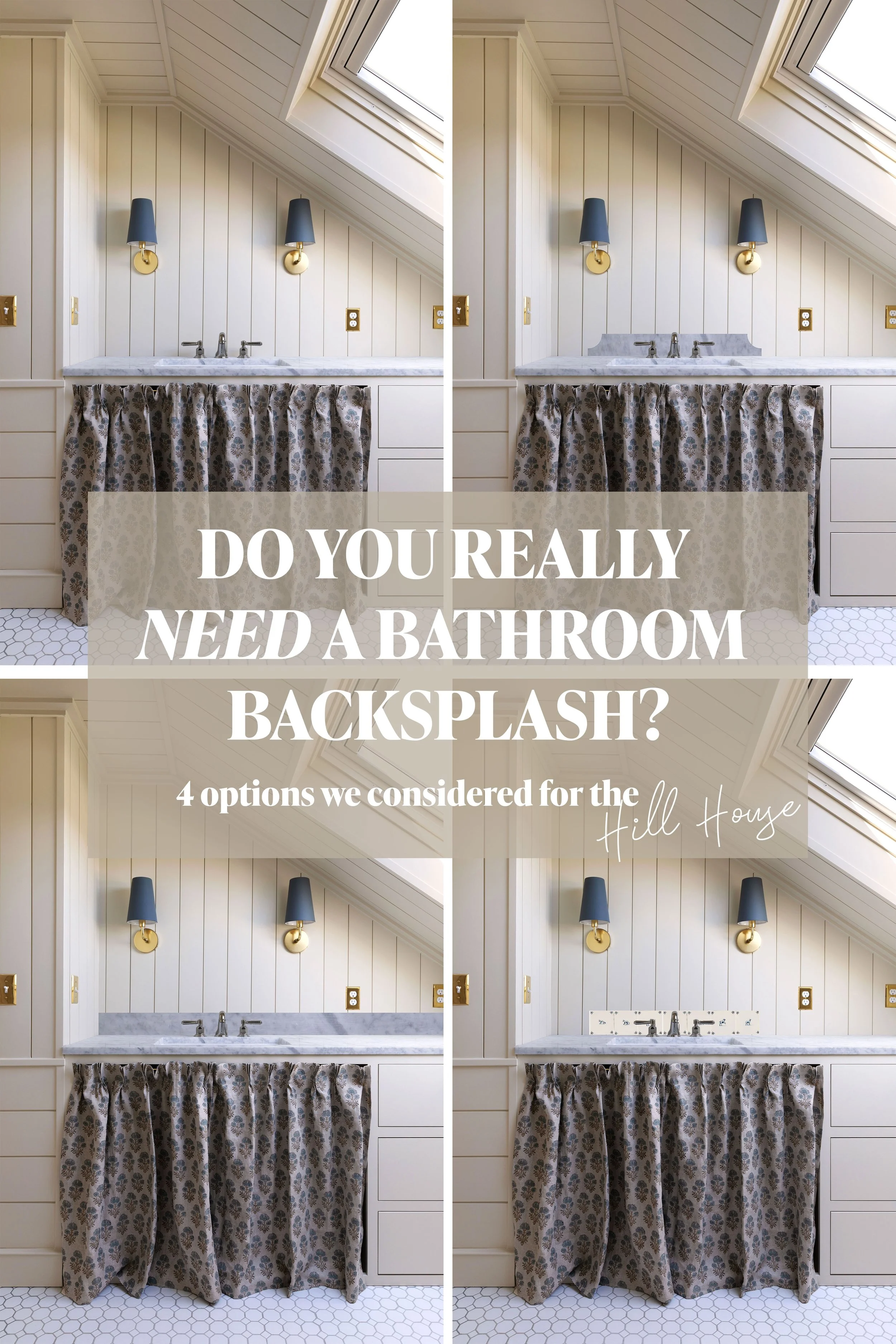
I didn’t expect the backsplash to become one of the trickier decisions in our Hill House hall bathroom, but here we are. At first we wondered, do we even need a backsplash? But with three kids using this bathroom, and all the daily handwashing, toothpaste splatters, and other glamorous things, the answer was probably yes. So I mocked up a few classic and simple options to help us think it through. Today I’m sharing our four favorite options, along with the pros and cons of each one. Because if you’re renovating a bathroom, this is one of those small decisions that can have a surprisingly big impact. Let’s get into it…
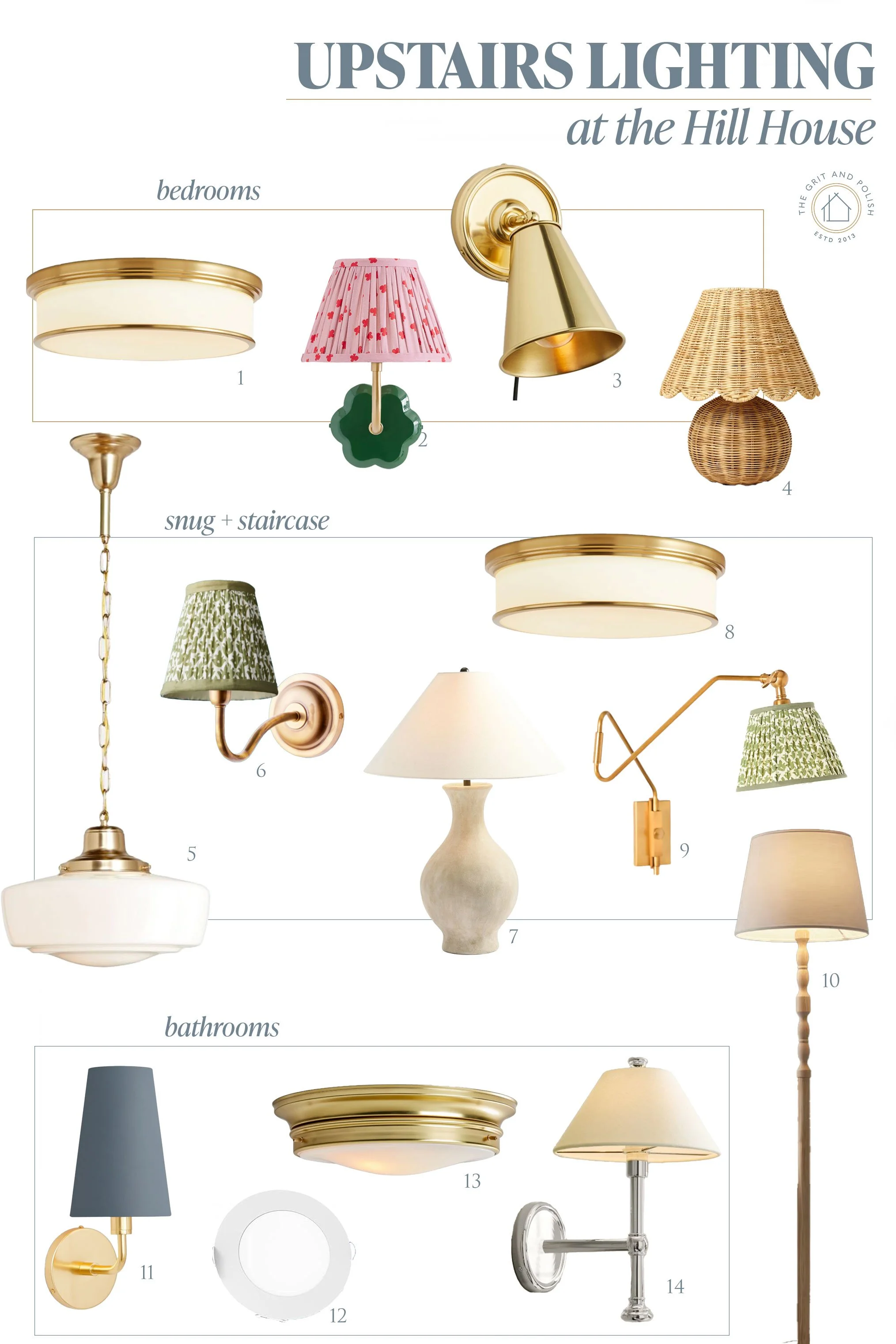
skirt fabric, faucet, sconces, tile, paneling, outlet covers
Do You Actually Need a Bathroom Backsplash?
The answer, of course, is, it depends.
In some bathrooms, especially powder rooms or very lightly used spaces, you can absolutely get away without one. A good caulk line, durable wall finish, and careful users may be all you need. But in a hardworking bathroom, especially one used by kids, the equation changes a little. Here’s how I’d think about it:
You probably DO want a bathroom backsplash if:
the sink gets heavy daily use
kids are the primary users
your wall finish needs a little protection
your faucet throws more splash than expected (tall faucets are notorious for this)
you want easier wipe-downs behind the sink
You may be able to SKIP it if:
it’s a powder room, rarely used guest bath, or for careful adults
the wall is easy to clean and repaint
the countertop around the sink doesn’t get especially wet
you love a clean, minimal look
For our hall bath, I landed pretty quickly in the “yes” camp. This room may be charming, but it’s also going to be very heavily used and honestly, my kids just aren’t that clean.
Why This Bathroom Made the Decision Tricky
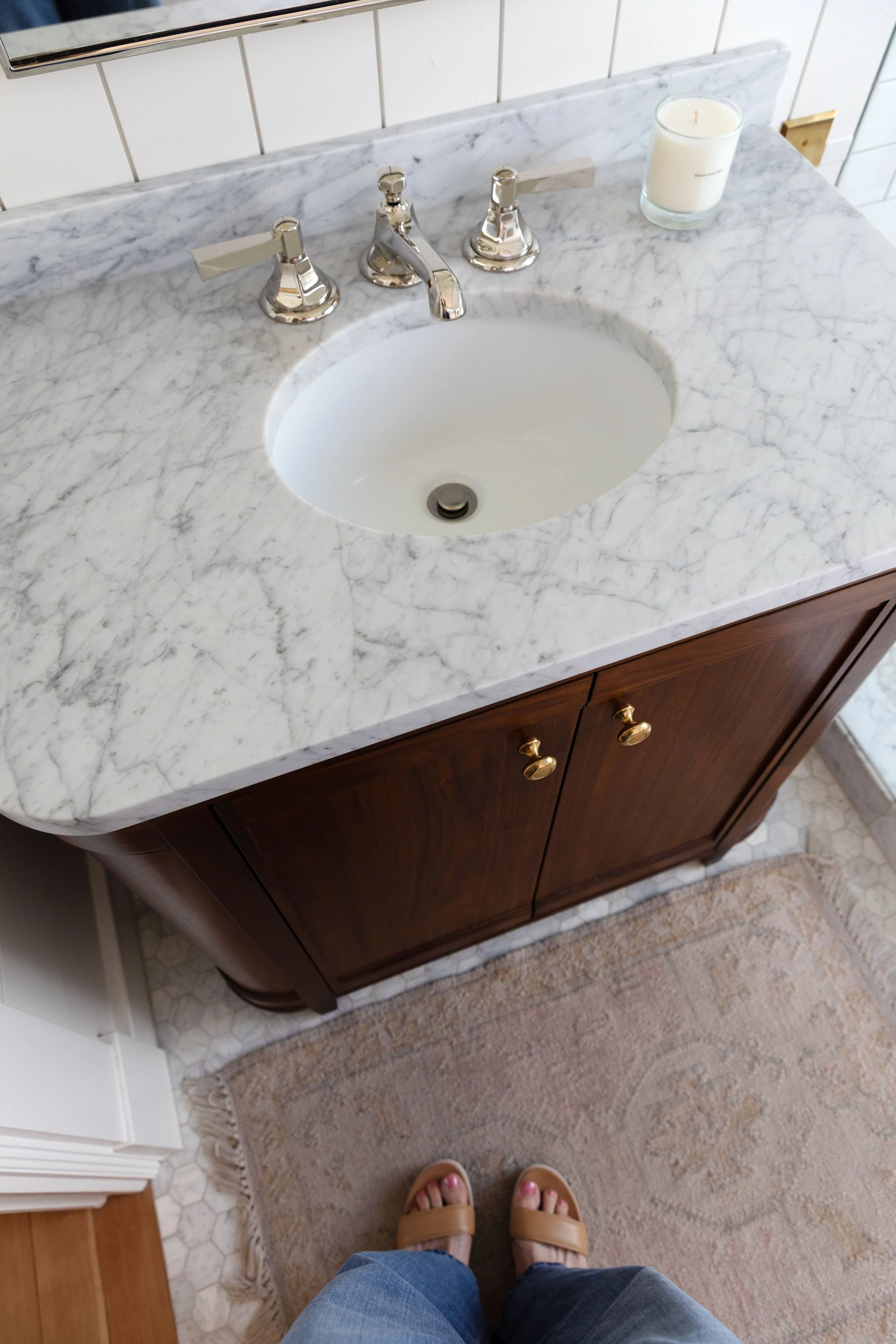
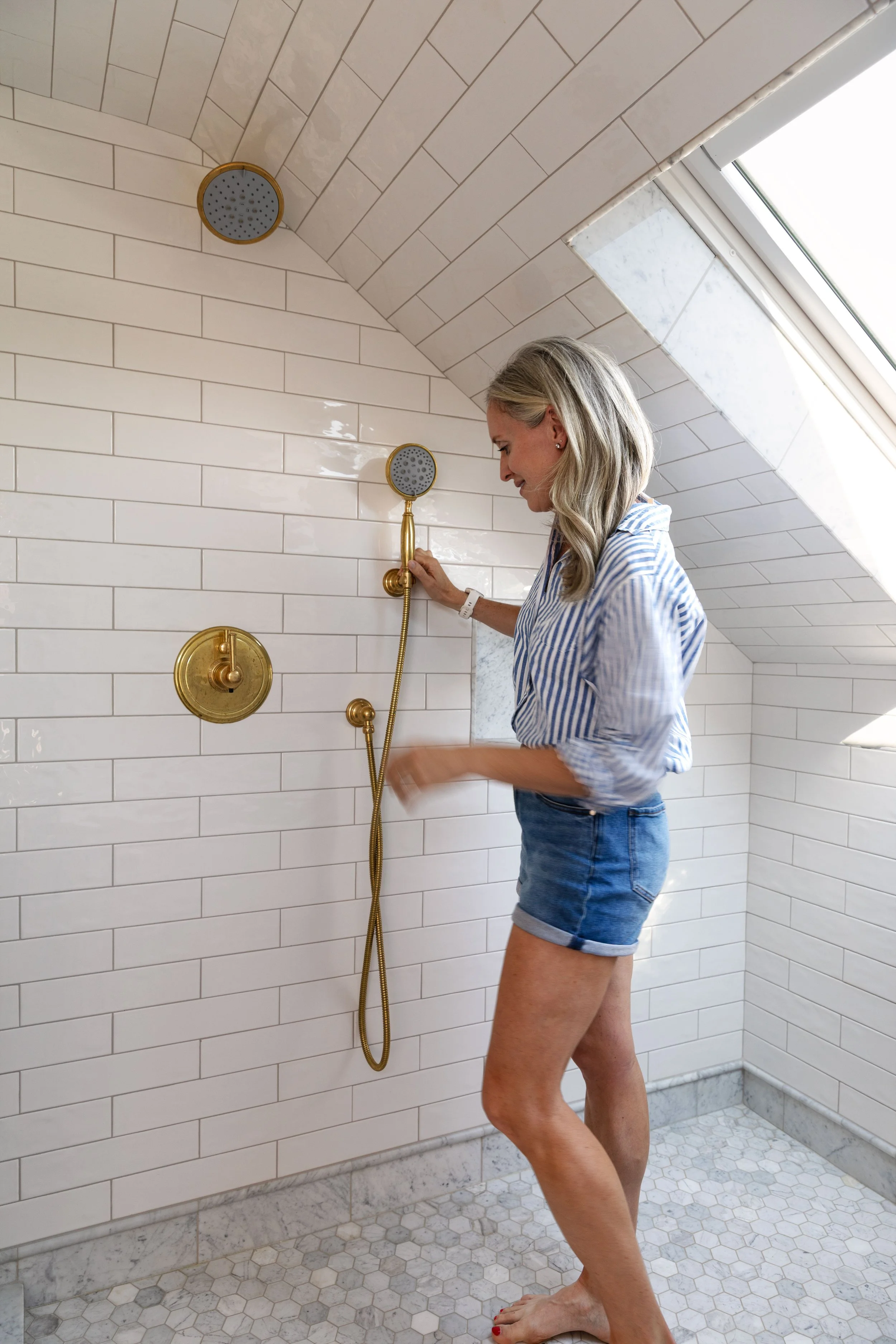
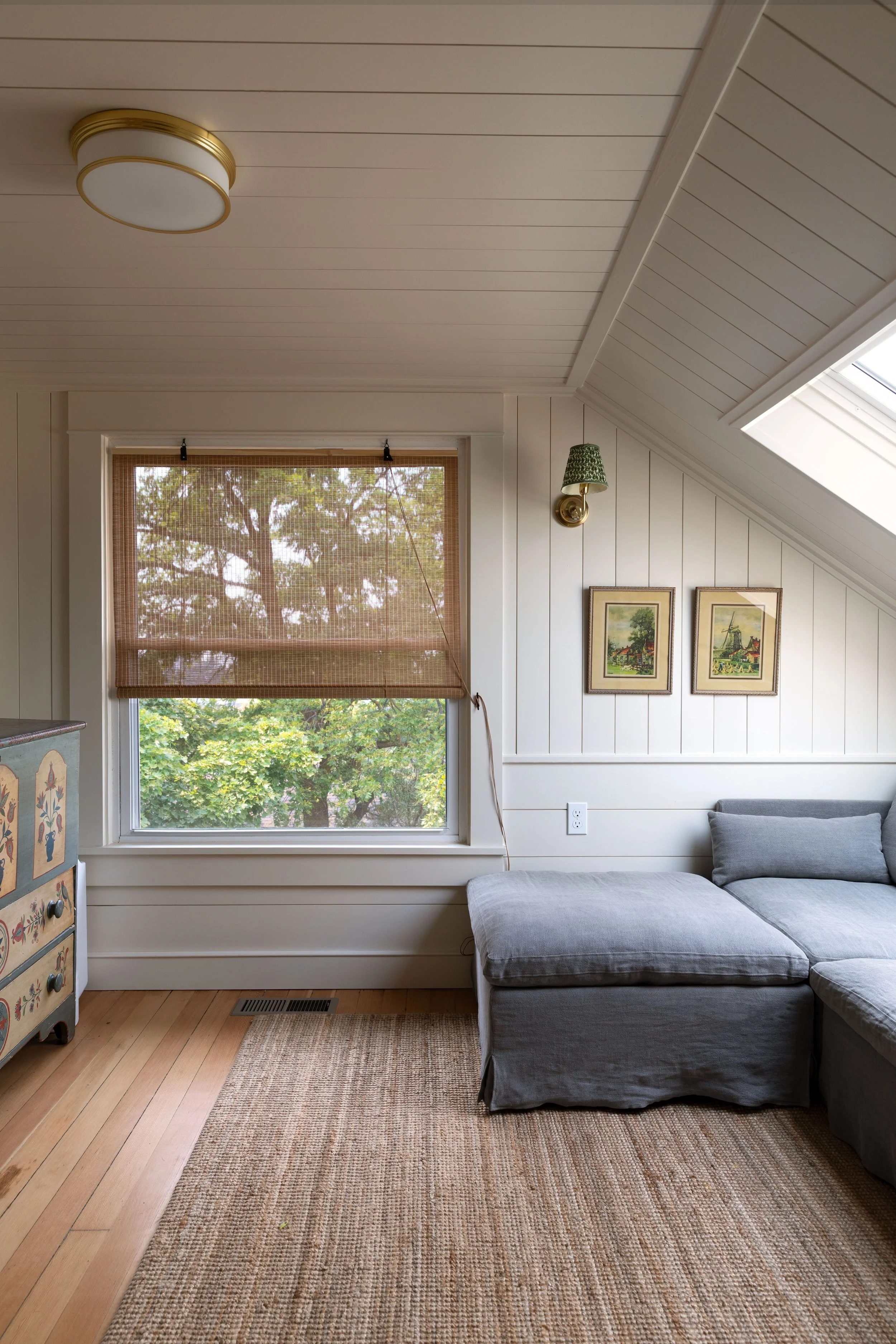
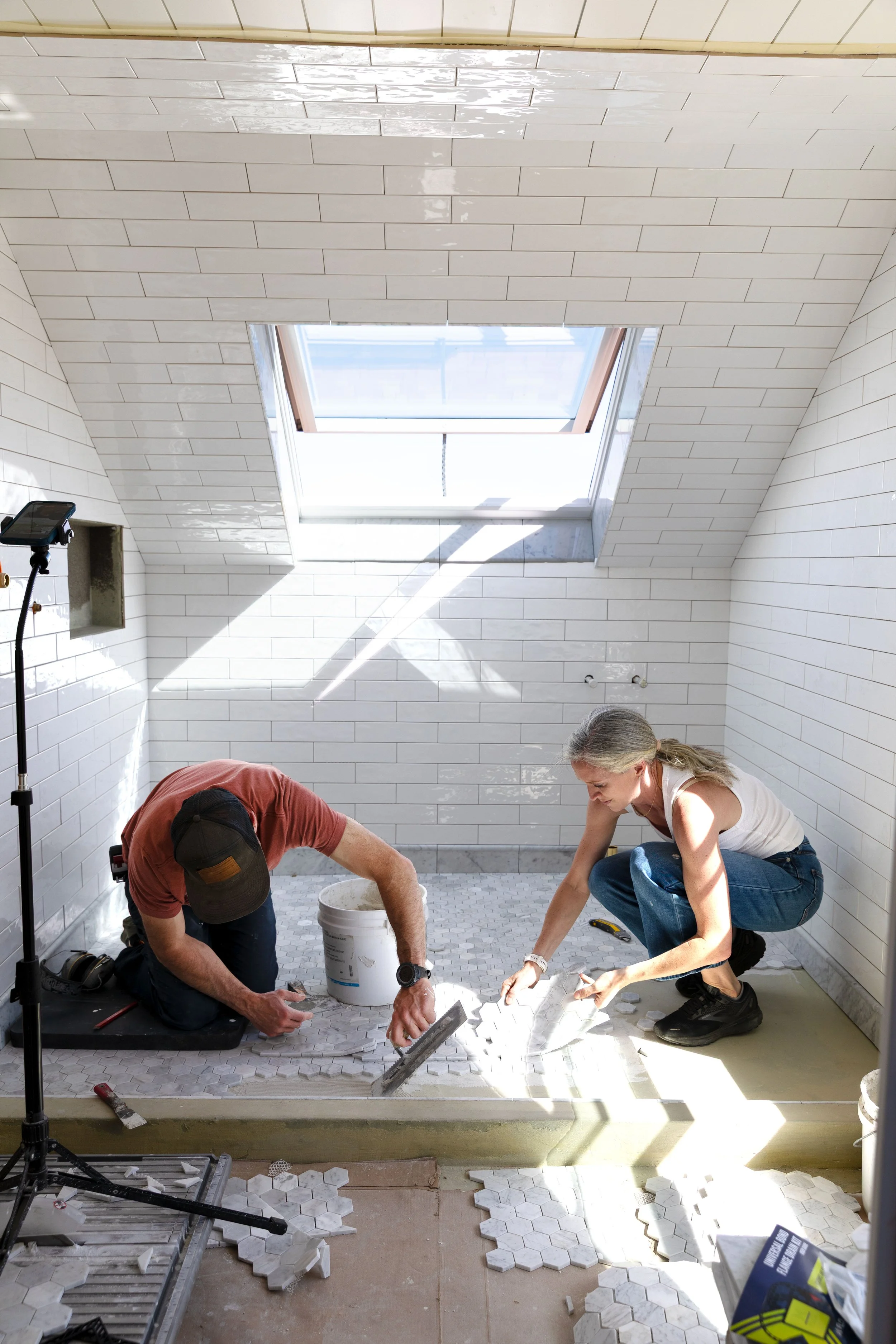
Part of what made this question hard for me is that the vanity itself is already doing a lot. There’s the salvaged marble countertop, the cabinet skirt, the sloped paneled ceiling, the skylight, the blue sconces, and lots of brass details. It’s a small space with a lot of carefully considered elements, which means the backsplash has to fit in. Something too small could feel unfinished. Something too loud could tip this space into ‘busy’ territory.
Mocking up some options (in photoshop) really helped me get comfortable with the decision. Here are the options we looked at…
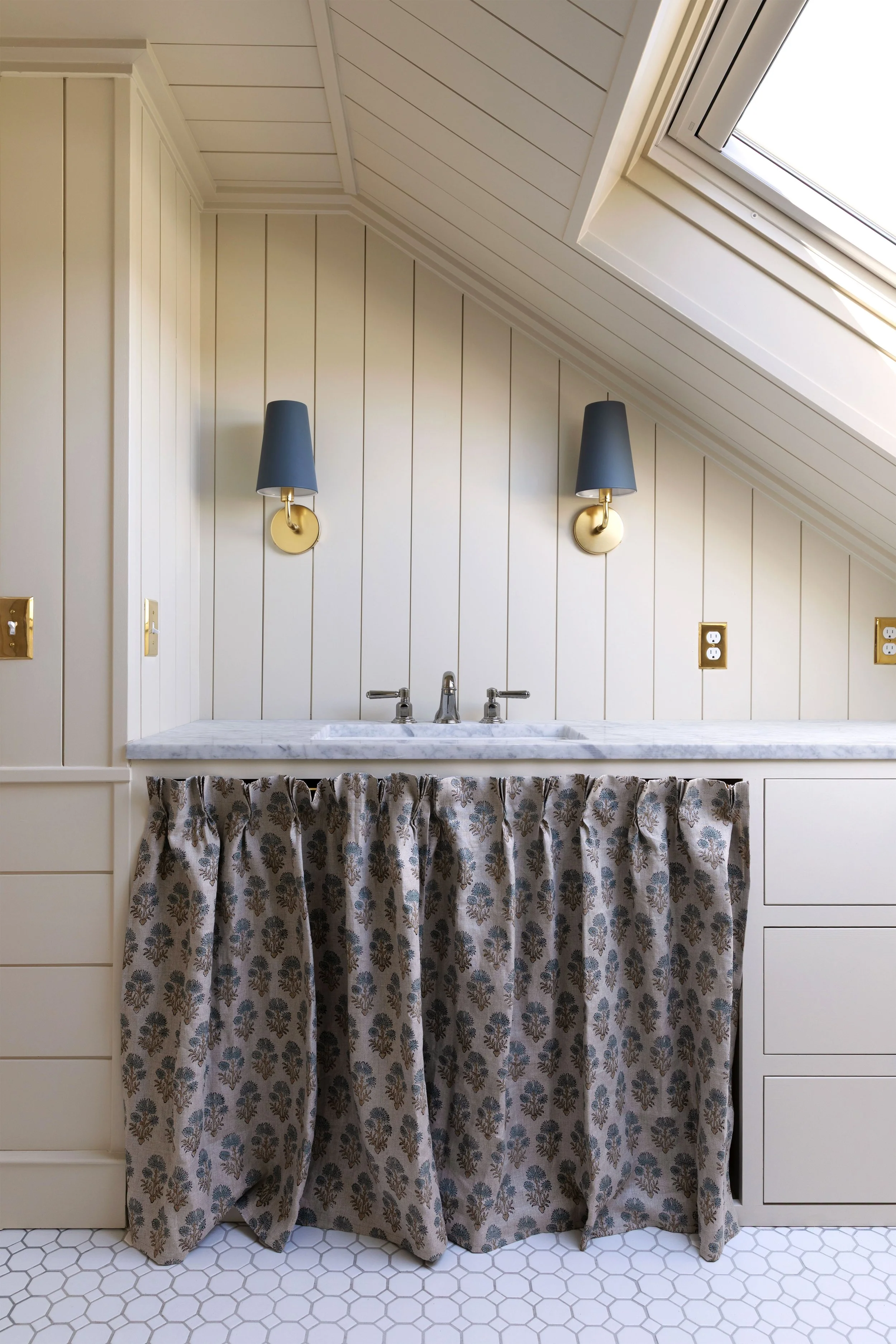
Option 1: No Backsplash
This was the simplest option and, honestly, the one I was most drawn to at first. There’s something very clean and fresh about a vanity with just countertop and paneling. No extra layer. No visual interruption. It lets the stone be the star and keeps everything feeling a little quieter. We did this in the Farmhouse kitchen and I loved it!
Why I liked it:
It’s minimal, classic, and lets the marble countertop really shine. In a bathroom with paneling, pretty sconces, and a lot of old-house character already happening, that simplicity is appealing.
Why I hesitated:
Real life. More specifically, my kids. If this were a powder room or an adult bathroom, I’d be much more tempted to leave it alone (or say it’s good for now and we can always add it later if need be). But a bathroom my kids use, water has a way of getting everywhere. And while I don’t mind a little patina, I also don’t want the wall behind the sink to pay the price.
Best for:
Powder rooms, grown-up bathrooms, or anyone who wants the cleanest look and doesn’t need much splash protection.
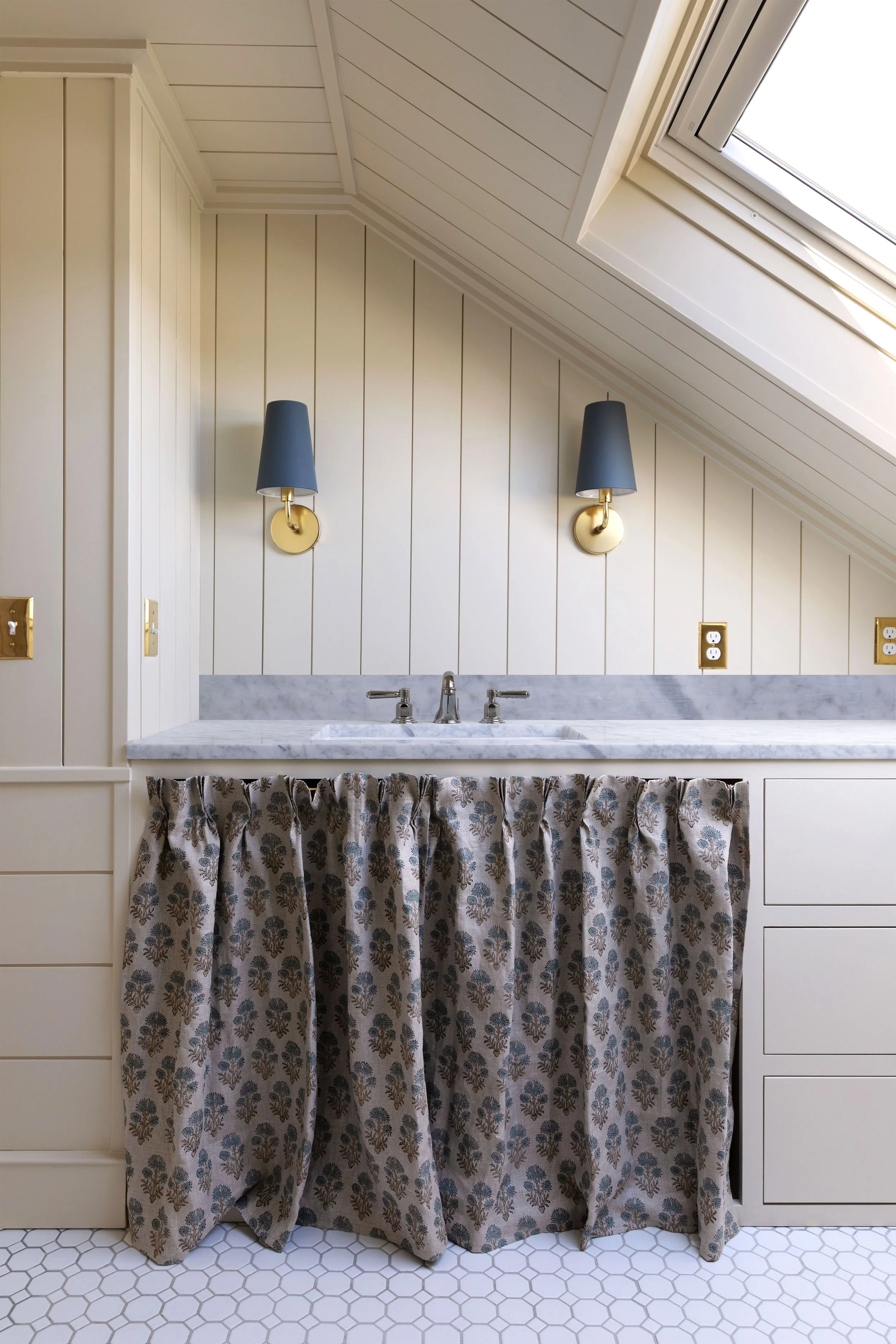
Option 2: A Simple Marble Backsplash
This option feels like the most straightforward answer: carry the countertop material up the wall 4” and call it good. It’s simple. Practical. Easy to wipe down. And because it matches the countertop, it doesn’t add another material or pattern into the mix.
Why I liked it:
It solves the functional problem without making a huge visual statement. It also feels appropriate here. The salvaged marble already has so much softness and soul, and a little backsplash in the same material would read as subtle and classic rather than flashy.
Why I hesitated:
A straight slab backsplash can sometimes veer a little builder-basic. With Garrett willing to add swoops and create something really custom (he’s gotten really good at stone fabrication!), this feels a bit boring. That doesn’t mean it’s wrong - simple is rarely wrong - but it can be hard to pick the simple black dress when a colorful, ruffle option is available. Simple does add extra emphasis on the details and we’d need to make sure we got the thickness, height, and edge profile just right.
Best for:
Bathrooms where you want function first, but still want the result to feel timeless and tailored.
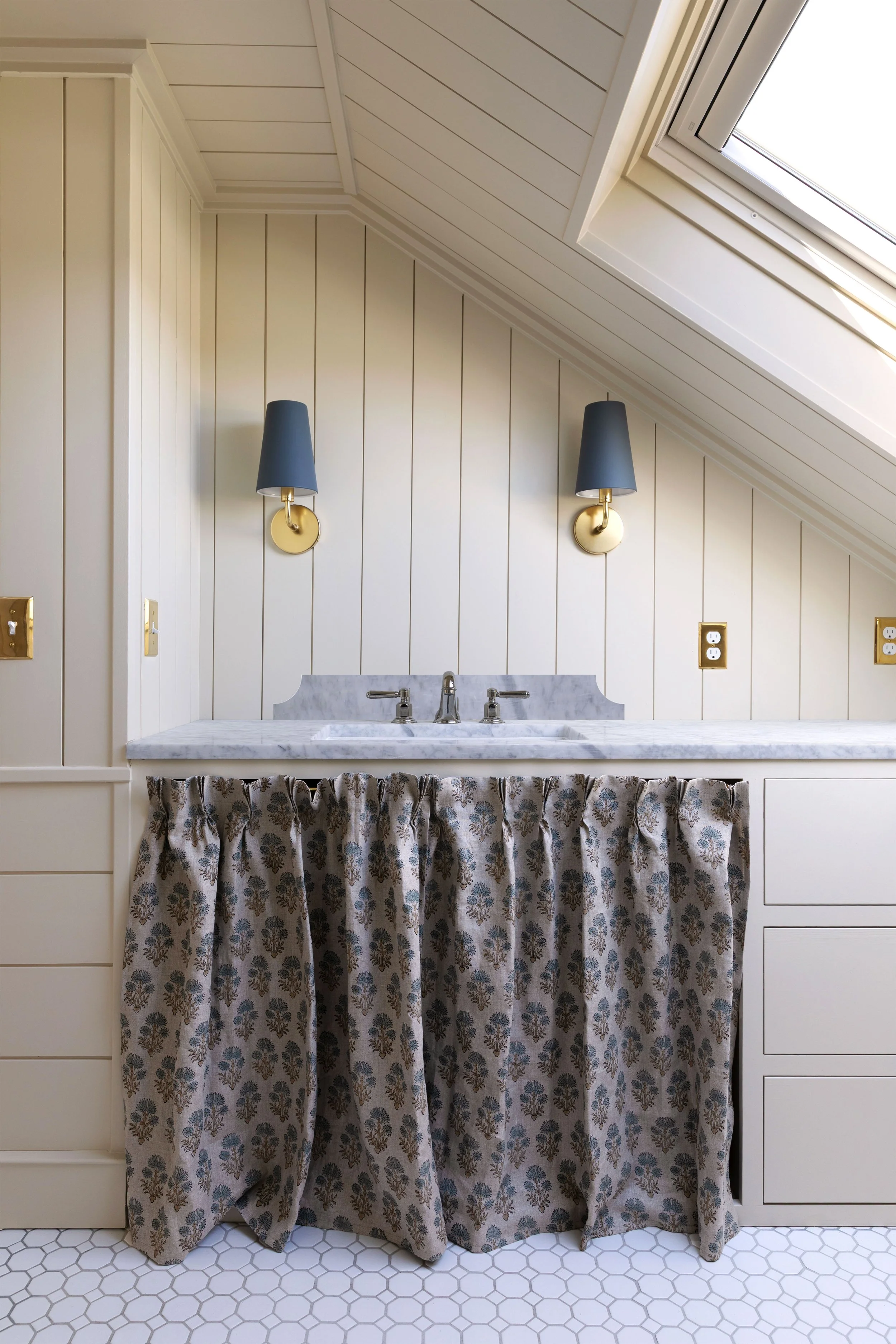
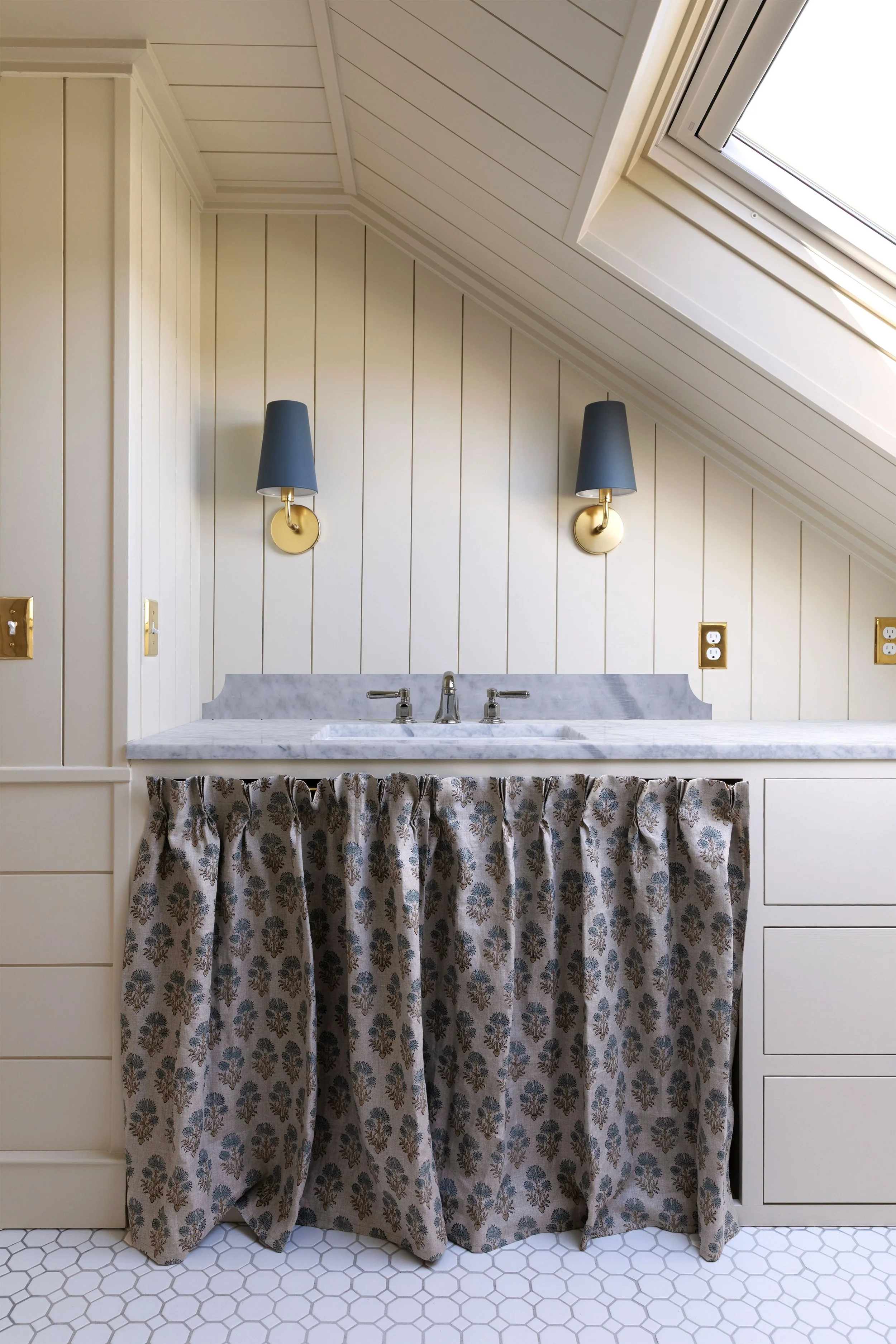
Option 3: A Shaped Marble Backsplash
You guys know I love a good curved backsplash (see here, here, and here)! It’s the same basic idea as the simple slab, but with a little more charm and delicate touch. A shaped backsplash can soften all the straight lines in a bathroom and make the vanity feel more custom. It’s still restrained, but it has a little more personality.
Why I liked it:
This option feels very “old house” to me in the best way. It nods to history, adds a touch of shape, and makes the vanity feel more considered. It also pairs nicely with the skirt and paneling, both of which already bring softness and detail to the room.
Why I hesitated:
Any time you add shape, you’re making more of a statement. That can be lovely, but also just ‘more’. It could start to compete with the other pretty things in this room.
This smaller backsplash could also leave room for water on the left side of the vanity. You know what, we’ll mock up a longer version just for fun.
Best for:
Bathrooms that want a practical backsplash with a little extra charm and custom feel.
Here’s that longer version…
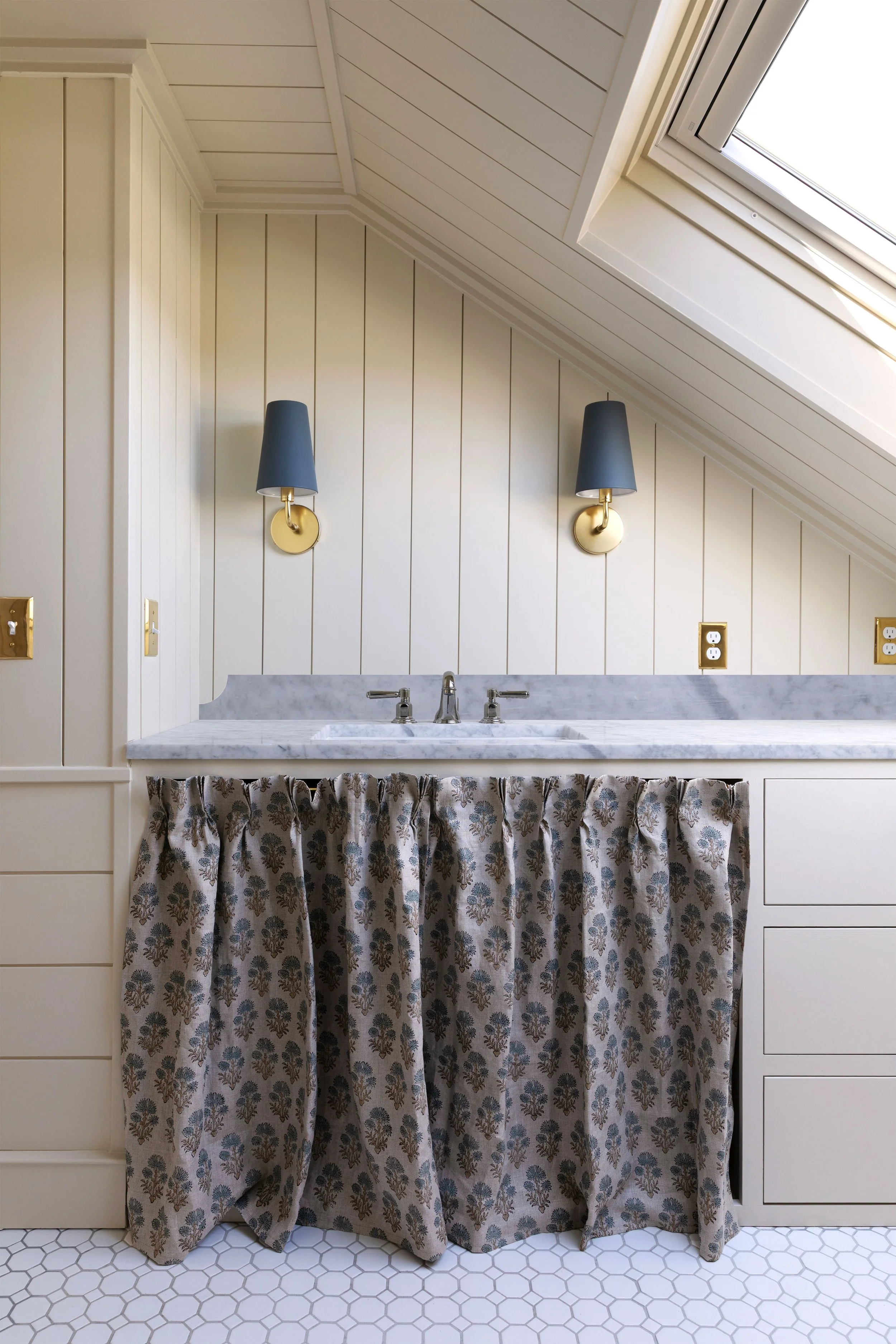
And here’s an in-between length that Jenny recommended in a comment. It matches the length of the sink skirt and is a real contender…
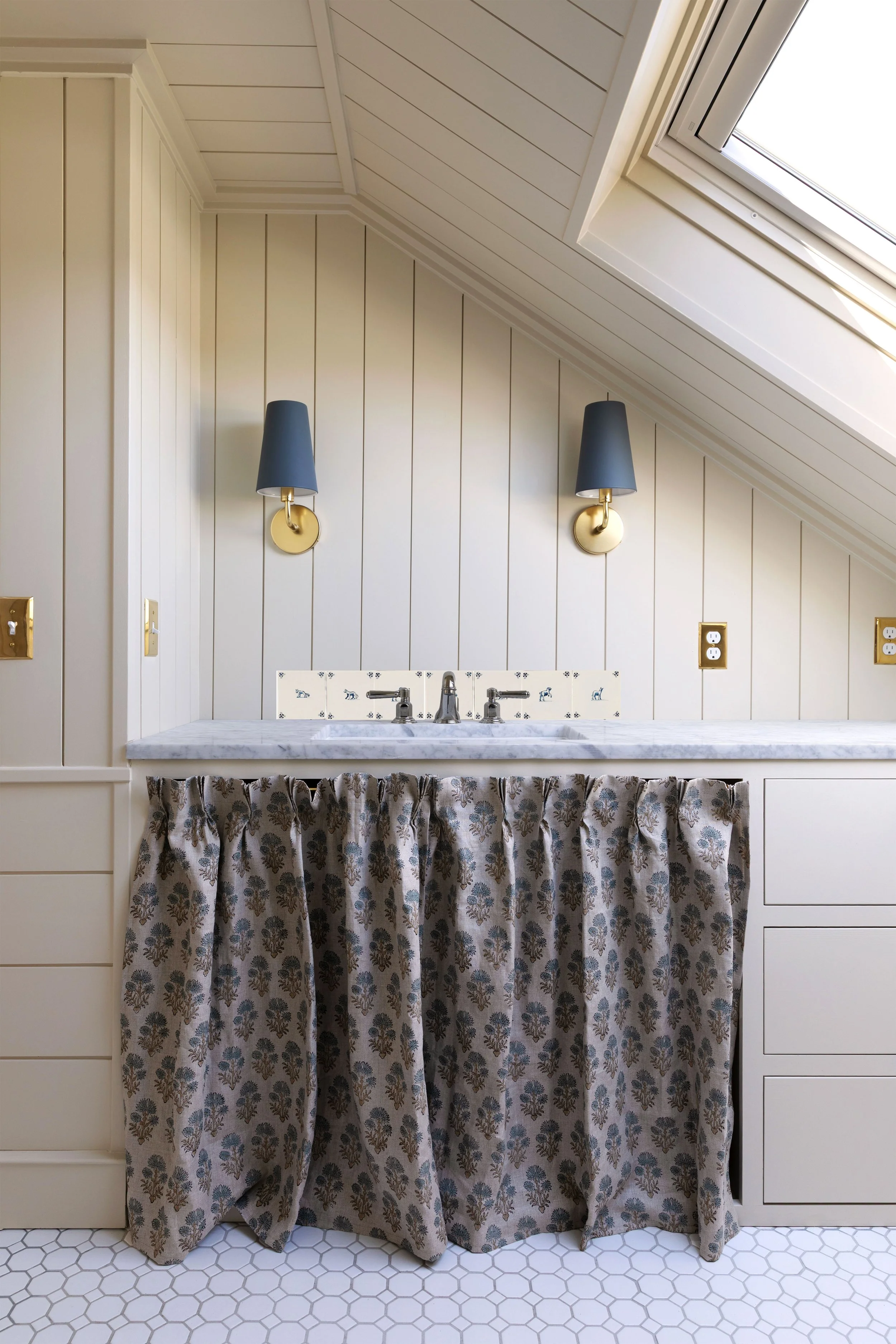
Option 4: Delft Tile
This is a fun one! I’ve had Delft on my mind for a while now and this bathroom, with all its blue details, feels like a great spot to try them. Yes, Delft tiles are having a bit of a moment right now, but they’re also genuinely beautiful and deeply rooted in history. A little tile backsplash behind the sink could add a layer of pattern and personality that feels collected and special.
Why I liked it:
It’s lovely! Decorative tile can take a very practical part of the bathroom and make it feel thoughtful and a little unexpected. We could even get (or make!) custom tiles that bring in our family / homes / personal moments. In a room meant for kids, I love the idea of adding just a touch more whimsy and history!
Why I hesitated:
Pattern adds visual weight. And this bathroom already has blue shower tile, octagon-and-dot floors, paneled walls, a skirted vanity, and pretty sconces. Decorative tile might be the perfect finishing touch… or it might be one lovely thing too many. Like Chanel said, it’s good to take off one accessory before finishing an outfit (or bathroom!).
This is also the only backsplash that wouldn’t be free for us and Delft tiles - the historic, reproduction, or custom ones - are quite expensive and can have a long lead time.
Best for:
Bathrooms that need protection but also have room for one more layer of pattern and personality.
So… What’s the Best Bathroom Backsplash?
As unsatisfying as this may sound, the best bathroom backsplash is the one that fits how the room is actually used. If this vanity were in a powder room, I’d be much more tempted to skip the backsplash entirely. If it were a very plain bathroom, I might push harder for tile to add character. But because this is a hardworking family bathroom with a lot of thoughtful detail already built in, I keep coming back to the idea that the right answer may be the simple one.
At the moment, I’m most drawn to a marble backsplash, either simple or softly shaped. It protects the wall, plays nicely with the salvaged countertop, and lets the skirt, paneling, and lighting keep doing their thing. The decorative tile still tugs at my heart, though. We’ll see where we land.
My Advice If You’re Choosing a Bathroom Backsplash
If you’re stuck on this decision too, here’s my best advice: don’t just ask what looks best. Ask who uses the room and how often, and then ask how much visual activity is already happening.
A backsplash is one of those details that seems small until you realize it can affect both the mood and the maintenance of a bathroom. In a space that gets used hard, practicality matters. In a room with lots of beautiful finishes already, restraint matters too. As with so many renovation decisions, the answer usually isn’t the trendiest or the prettiest in isolation. It’s the one that makes the most sense when layered on top of all the other bathroom finishes.
And that, of course, is what makes these little decisions so maddening and so satisfying.
More soon.
xx
ps This post contains affiliate links, meaning we may earn a small commission if you purchase through our links, at no cost to you. Thank you for supporting the Grit and Polish!
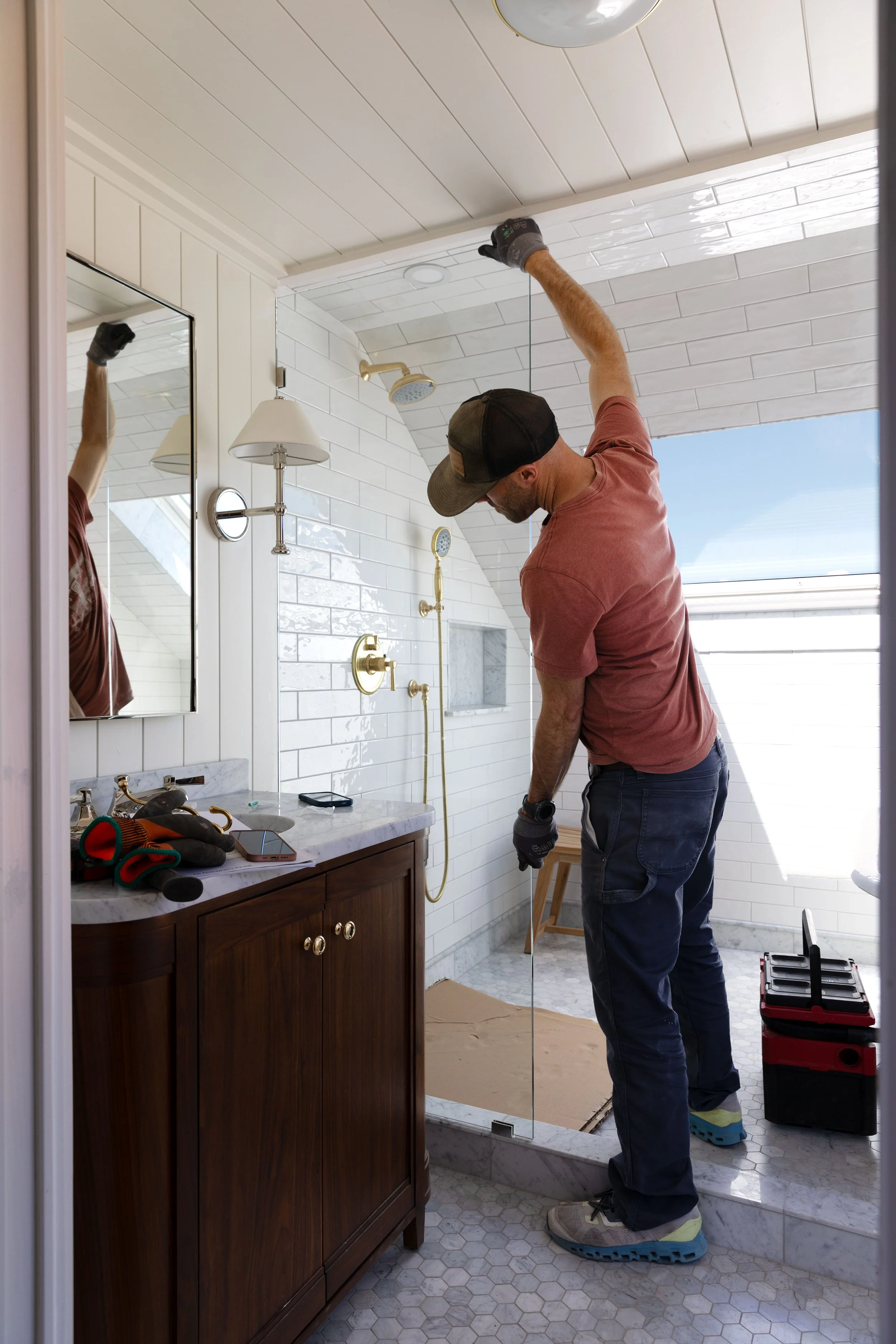
I’m obsessed with this before-and-after ✨