
What to Do When a Bathroom Vanity Doesn’t Fit (Our Charming Cabinet Skirt Solution!)
THE HILL HOUSE
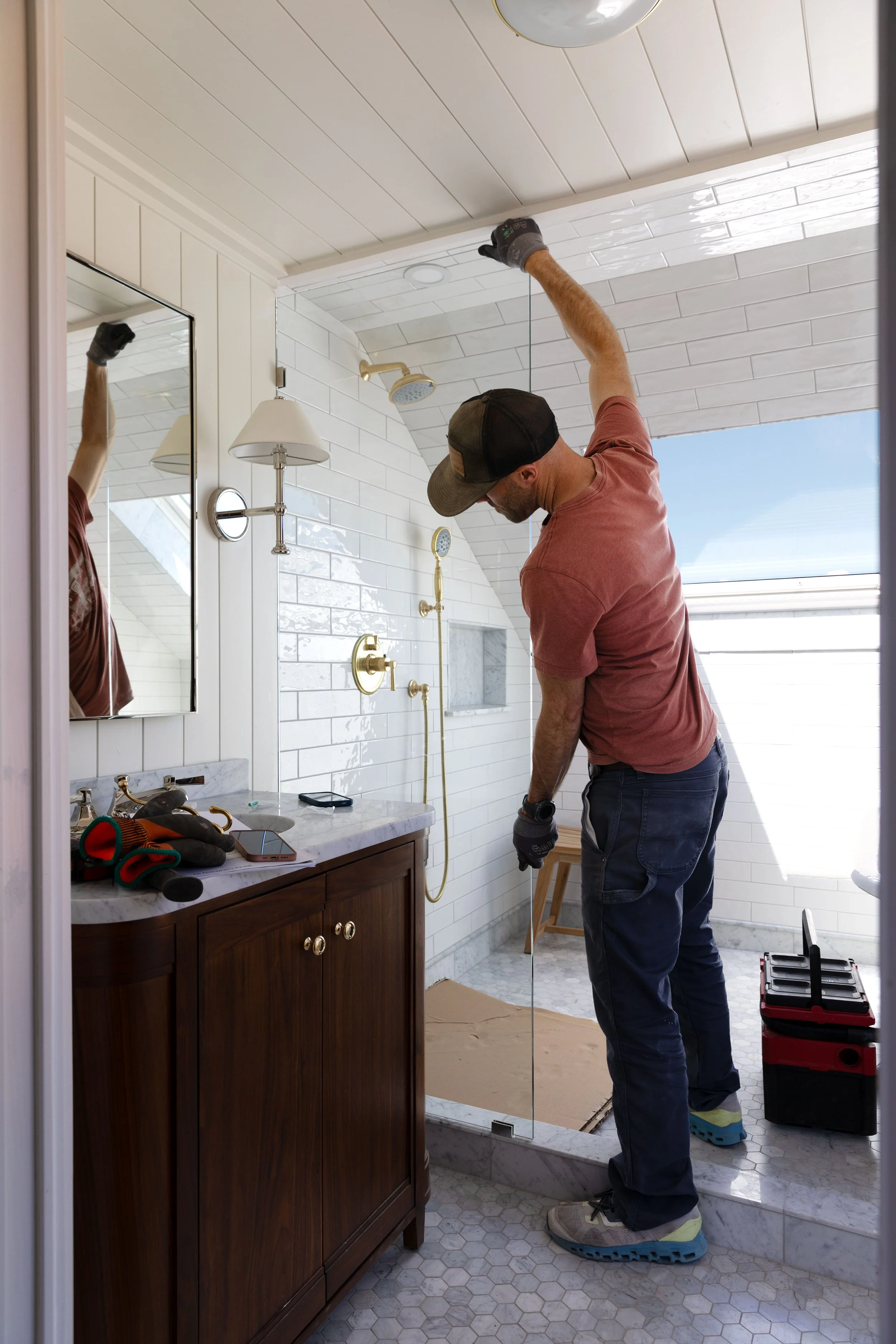
If you’ve been following along with our Hill House hall bathroom renovation, you know this room has been a bit of a puzzle from the start. To make the upstairs layout work, we had to slide the hall bathroom partly over the stairs. That move gave us room for a second bathroom next door, but it opened a whole new can of worms when it came to the hall vanity. The floor slopes, the ceiling angles down, and the sink sits right along the main walkway. So we had to ask ourselves: what do you do when a standard bathroom vanity just won’t fit? For us, the answer turned out to be one of my favorite details in the room: a cabinet skirt! And now that it’s hung, I’m convinced a sink skirt is one of the smartest and most charming ways to handle an awkward bathroom vanity, especially in an old house. Today we’re sharing why we went this route and all the details behind our little skirted vanity. Let’s get into it…
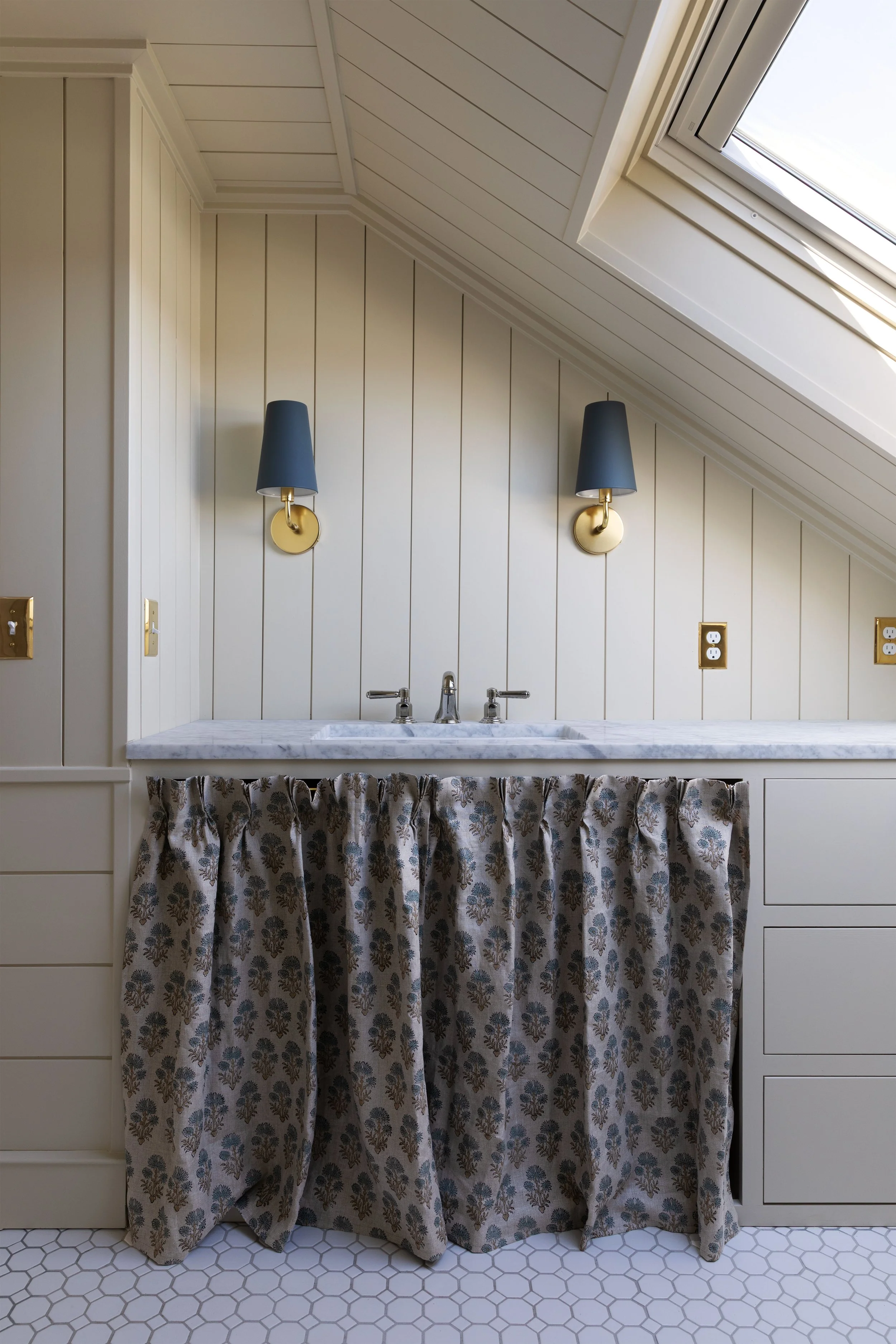
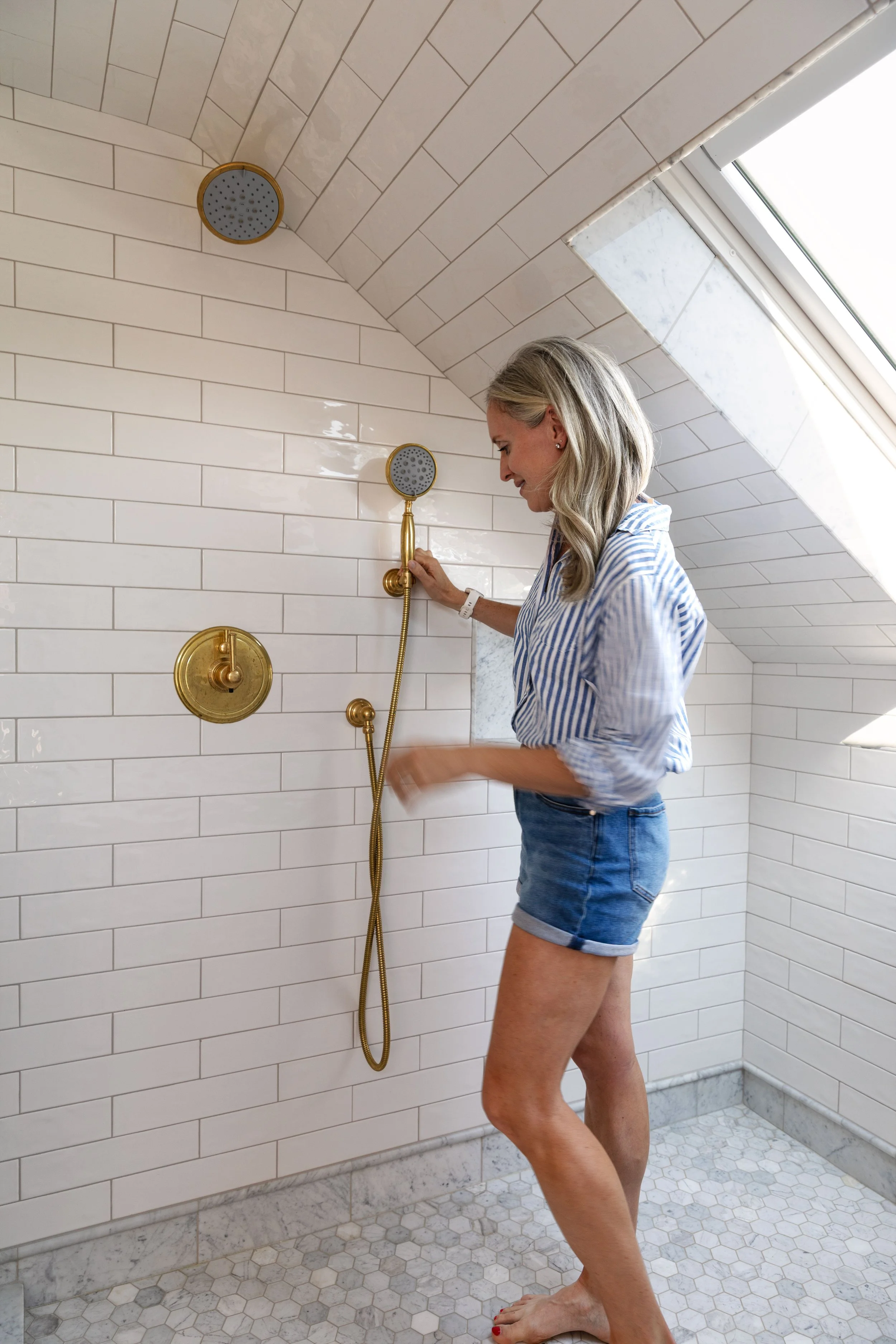
skirt fabric, faucet, sconces, tile, paneling, skylight
psst: here are some posts we’ve shared about this project, in case you want to get caught up…
Why a Traditional Vanity Didn’t Work in here
In a newer home, this problem of ours probably would have been straightforward: install a prefab vanity, hook up the plumbing, and call it done. Honestly, even in an older home, that’s often our preferred route. But this bathroom had a few things working against that plan.
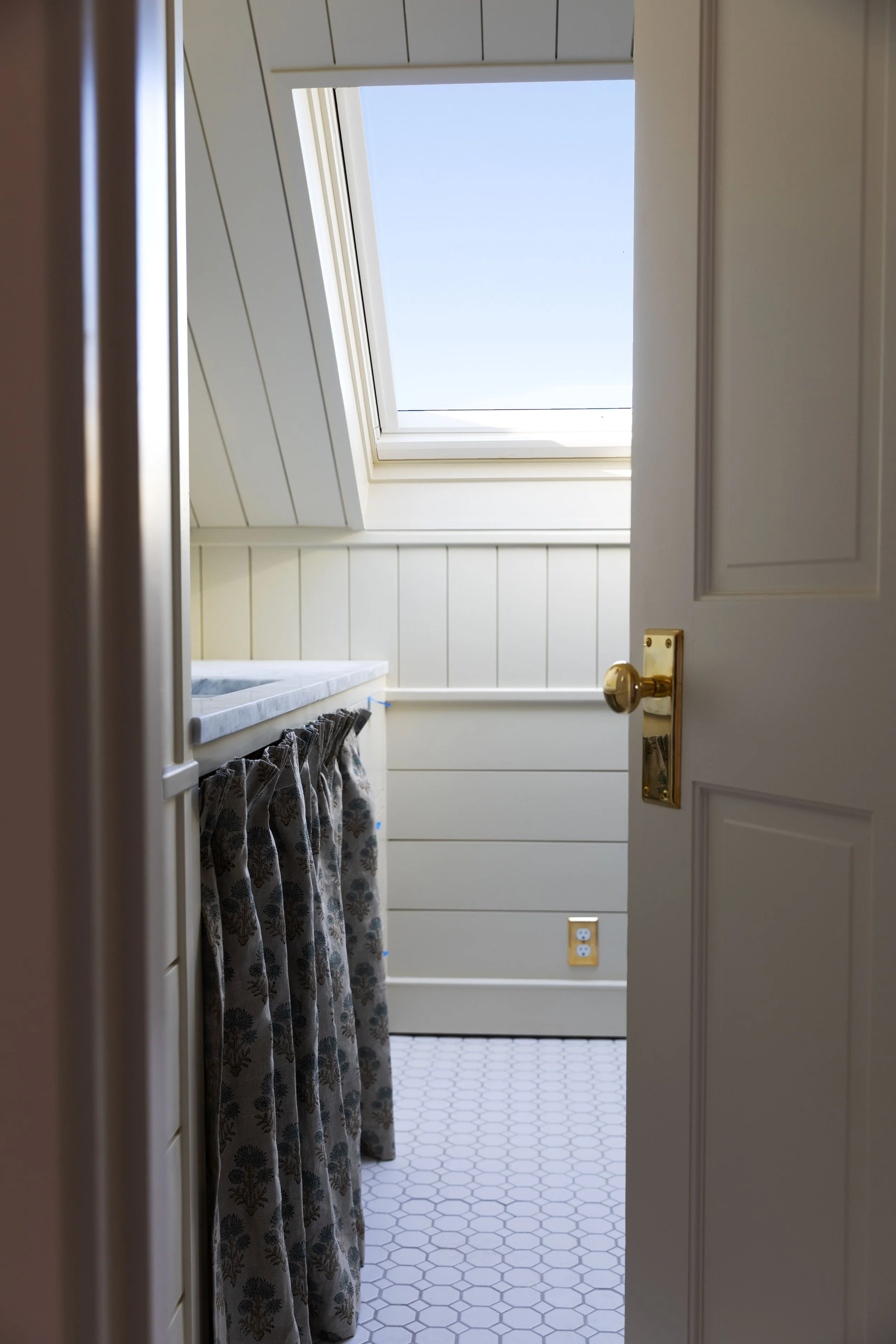
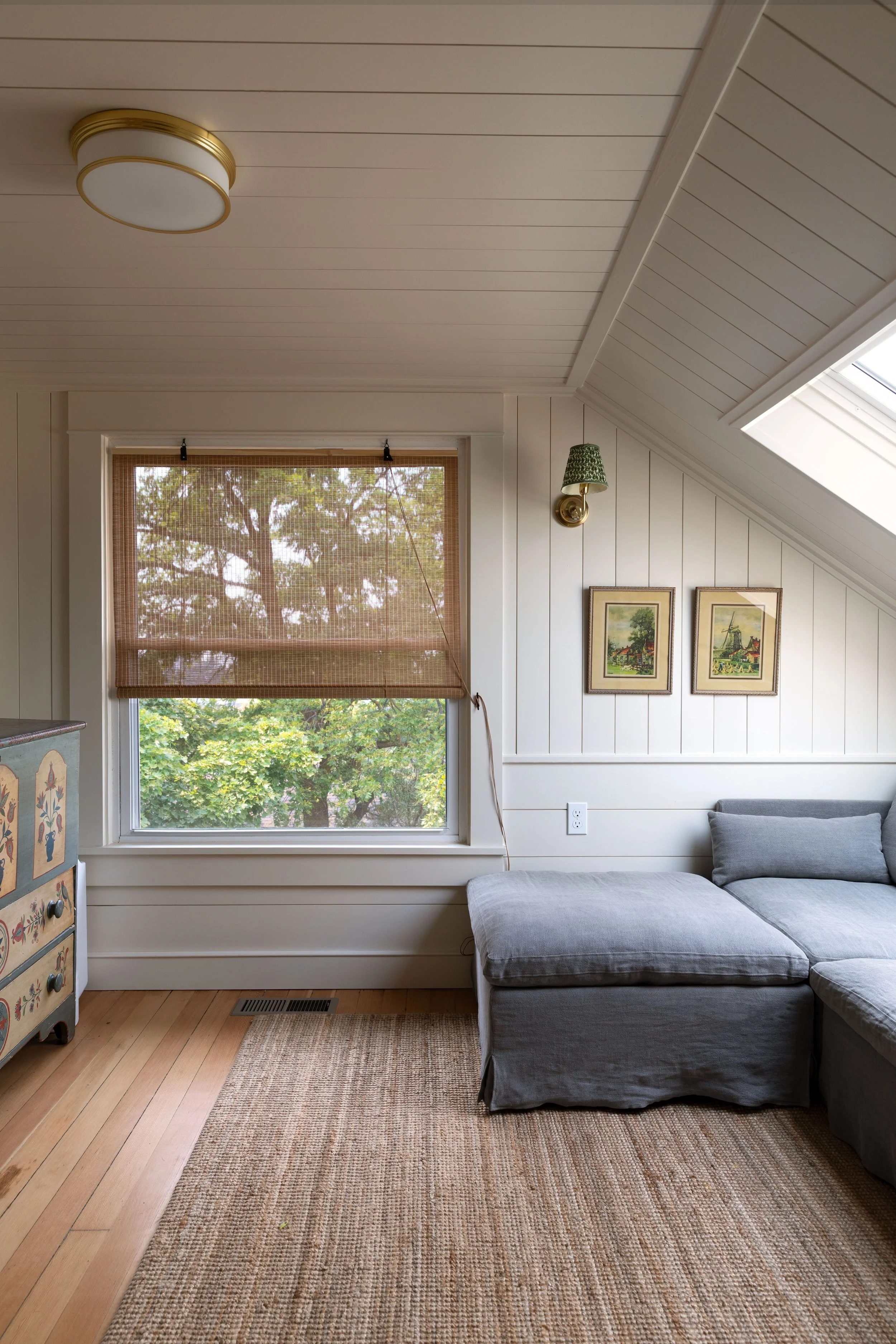
For starters, the layout was really tricky! We had to slide the vanity over the staircase in order to get this bathroom to work, meaning the floor slopes where the vanity would sit. The vanity also sits in a nook and had to be a very specific custom width, ruling out most standard options right away. Then there’s the angled ceiling, which meant we only had comfortable head height on the left side of the vanity and only wanted one off-center sink. Things were complicated!
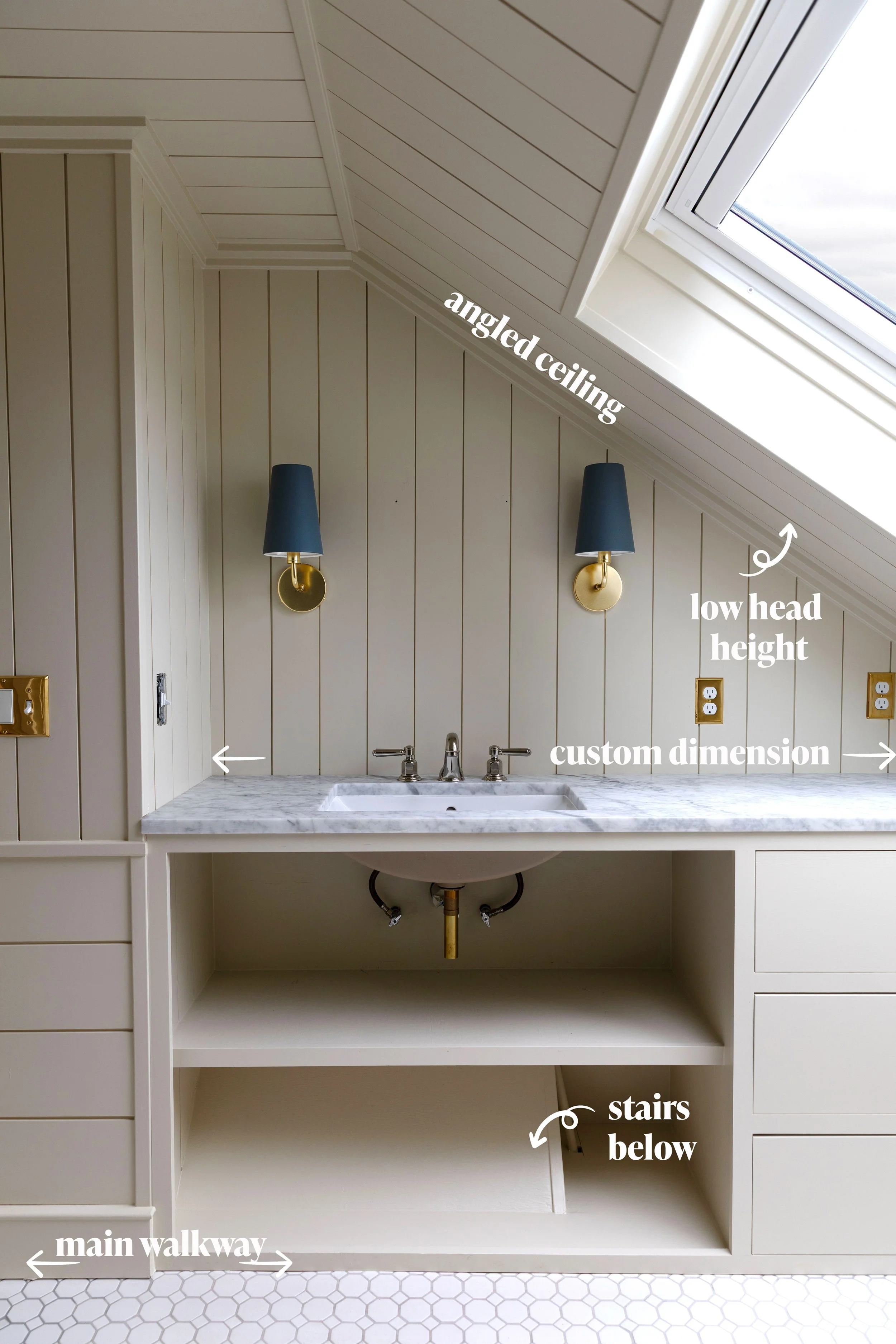
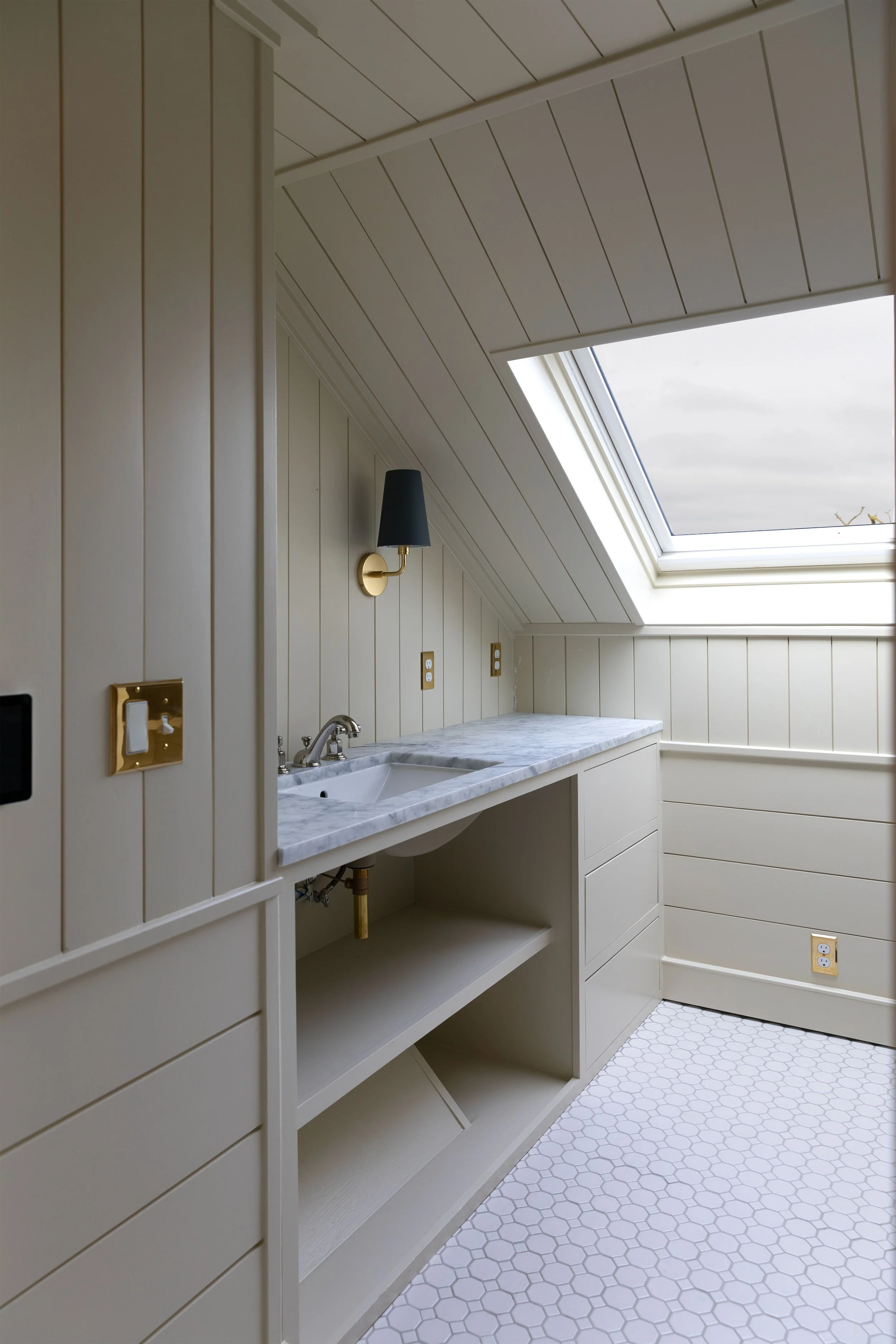
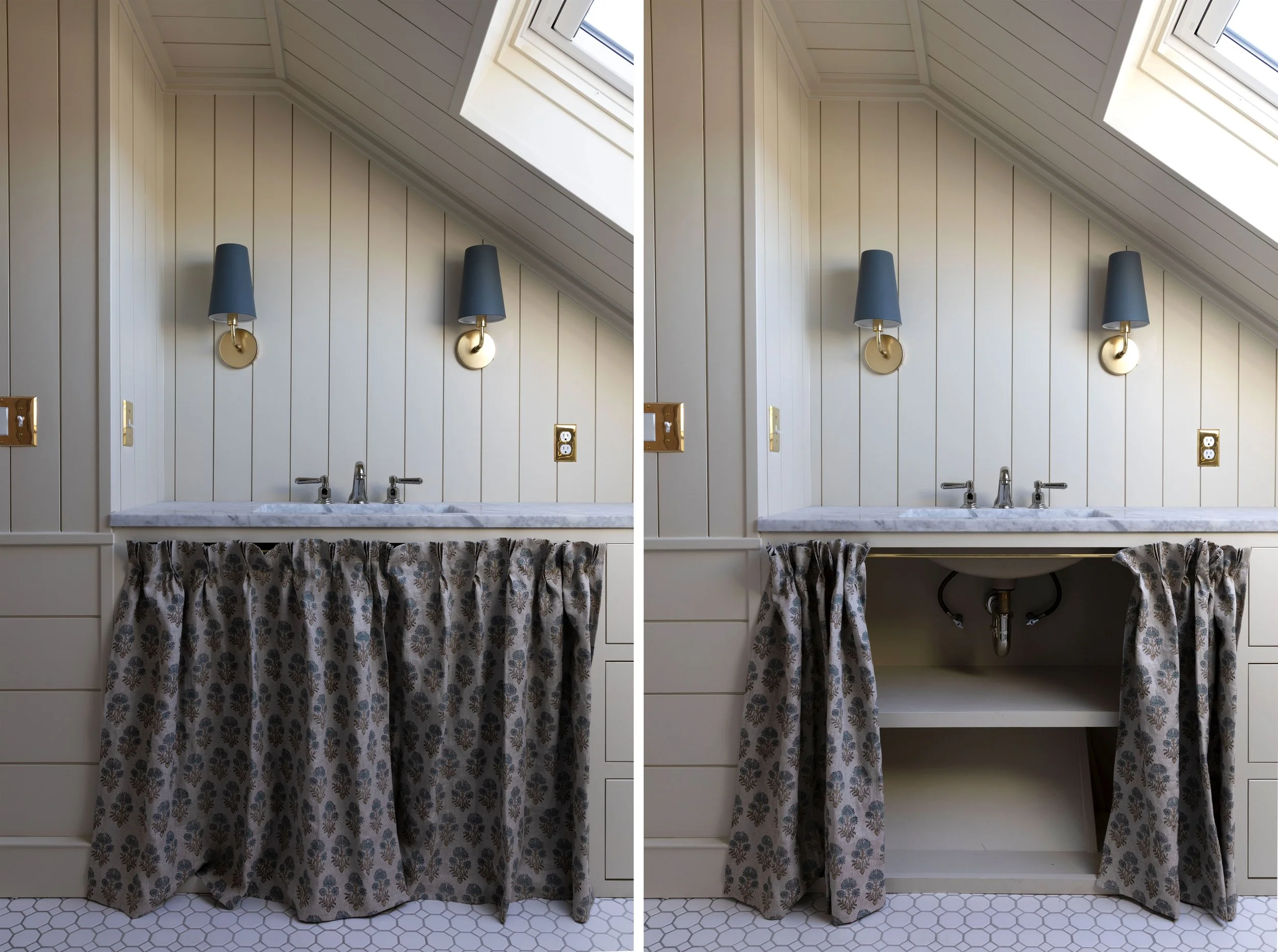
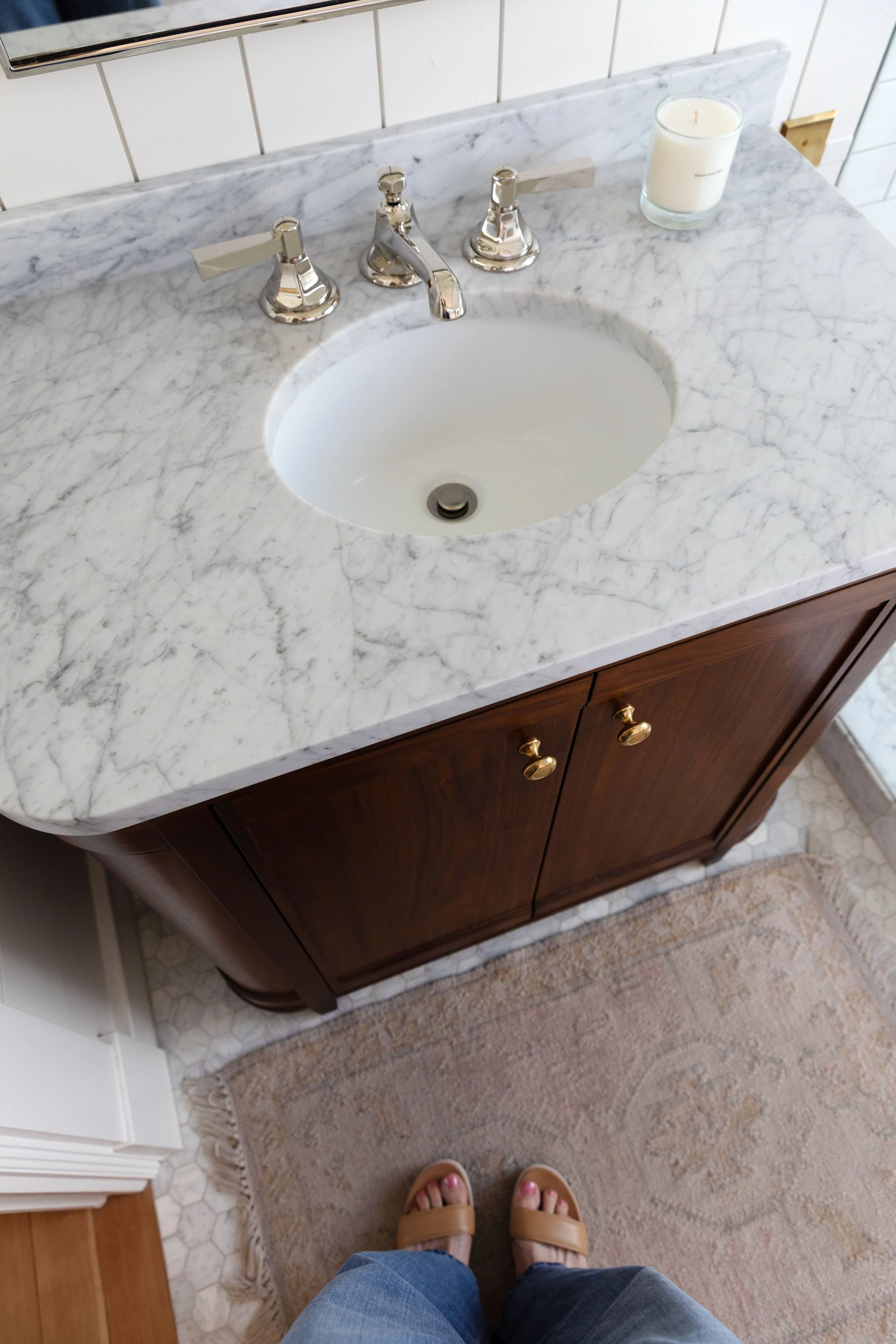
Maybe we could have forced a more traditional cabinet in here, but it would have required us to fully customize it anyway. So we started from scratch and Garrett built a vanity frame that would allow for drawers on the right, where the cabinet is full depth, and an open section below the sink where the plumbing sits. But once the frame was in, another problem became obvious: the cabinet doors we were planning to add under the sink would swing directly into the walkway and block traffic. In a bathroom that three kids will be using every morning and night, that didn’t feel especially smart.
Psst: a sink needs the same 21 inches of clear space in front of it that a toilet does - most people only know the toilet rule. And a round-front toilet buys you two inches if you're tight. We put every number like that on a two-page card. It's free and you can get it here…
The Solution: A Cabinet Skirt
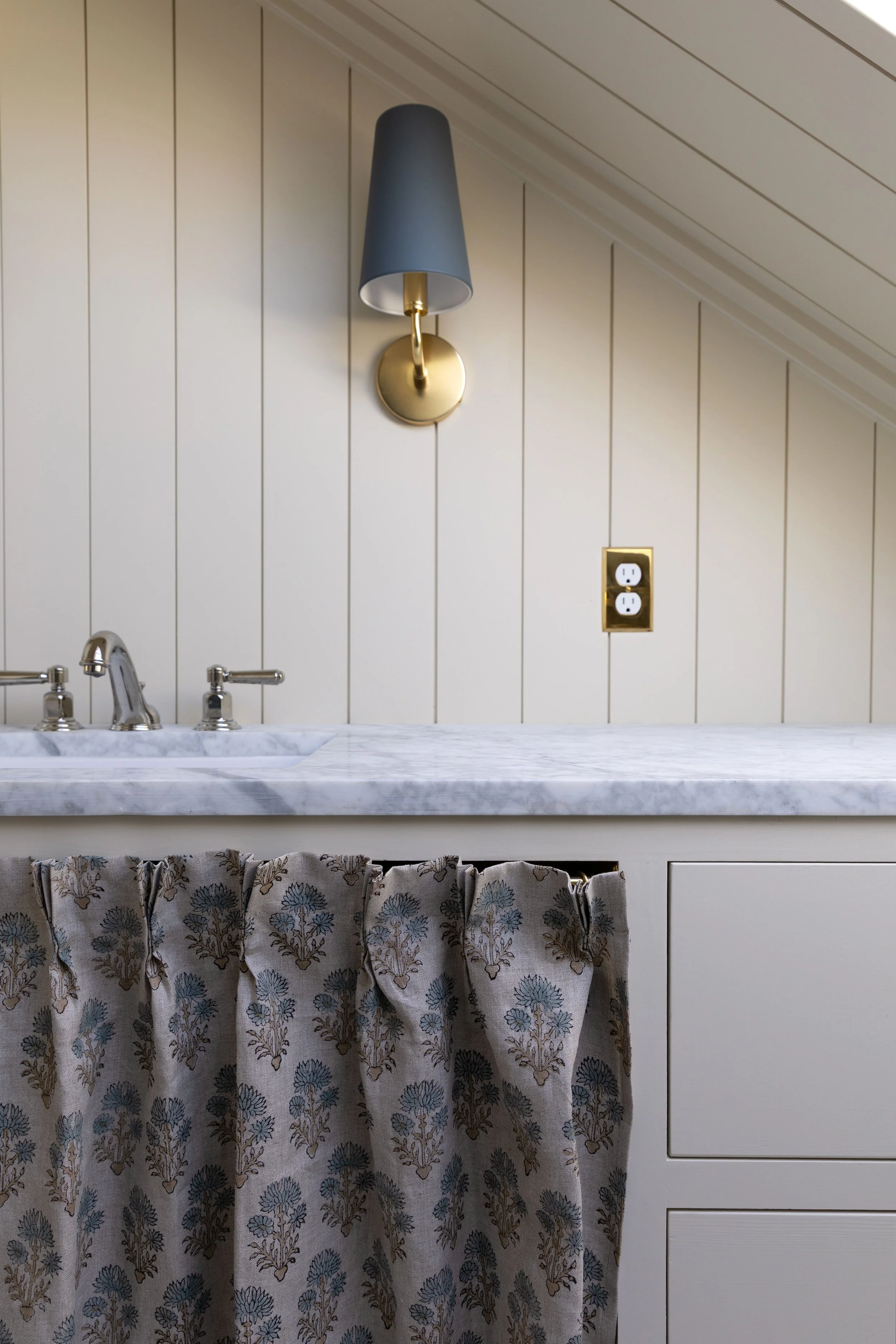
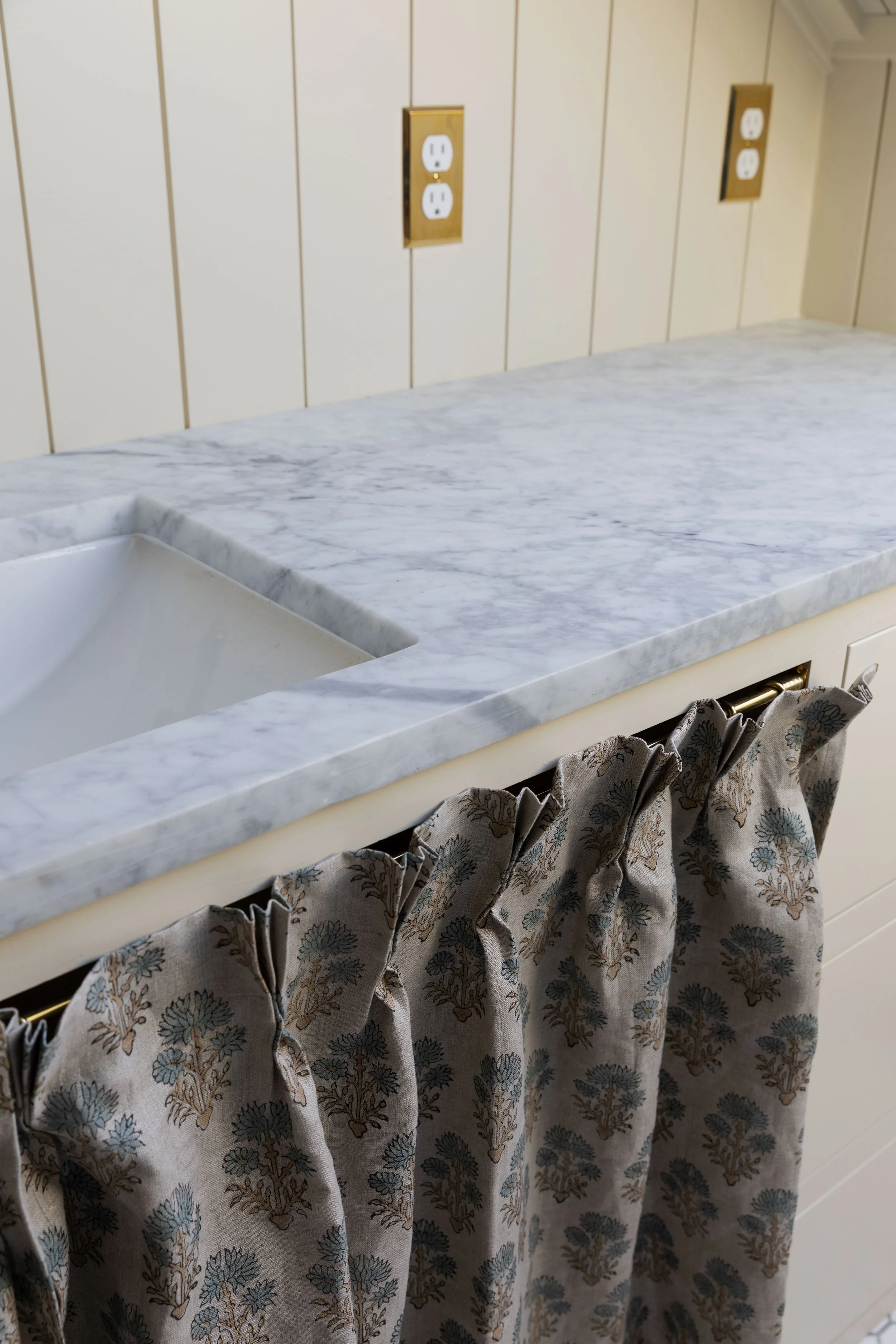
A cabinet skirt solved all of our problems. It hides the plumbing, works with the sloped floor, and doesn’t interfere with the walkway. Instead of rigid doors swinging out, the fabric simply collapses to the side when we need access.
Functionally, it’s such a simple solution. But what I love just as much is what a skirt adds visually. Bathrooms are full of hard materials like tile, marble, metal, and glass, and a skirt softens all of that. It brings in movement, texture, and a little old-house romance that makes the whole space feel more layered and lived in. Sometimes the simplest answer is the best answer.
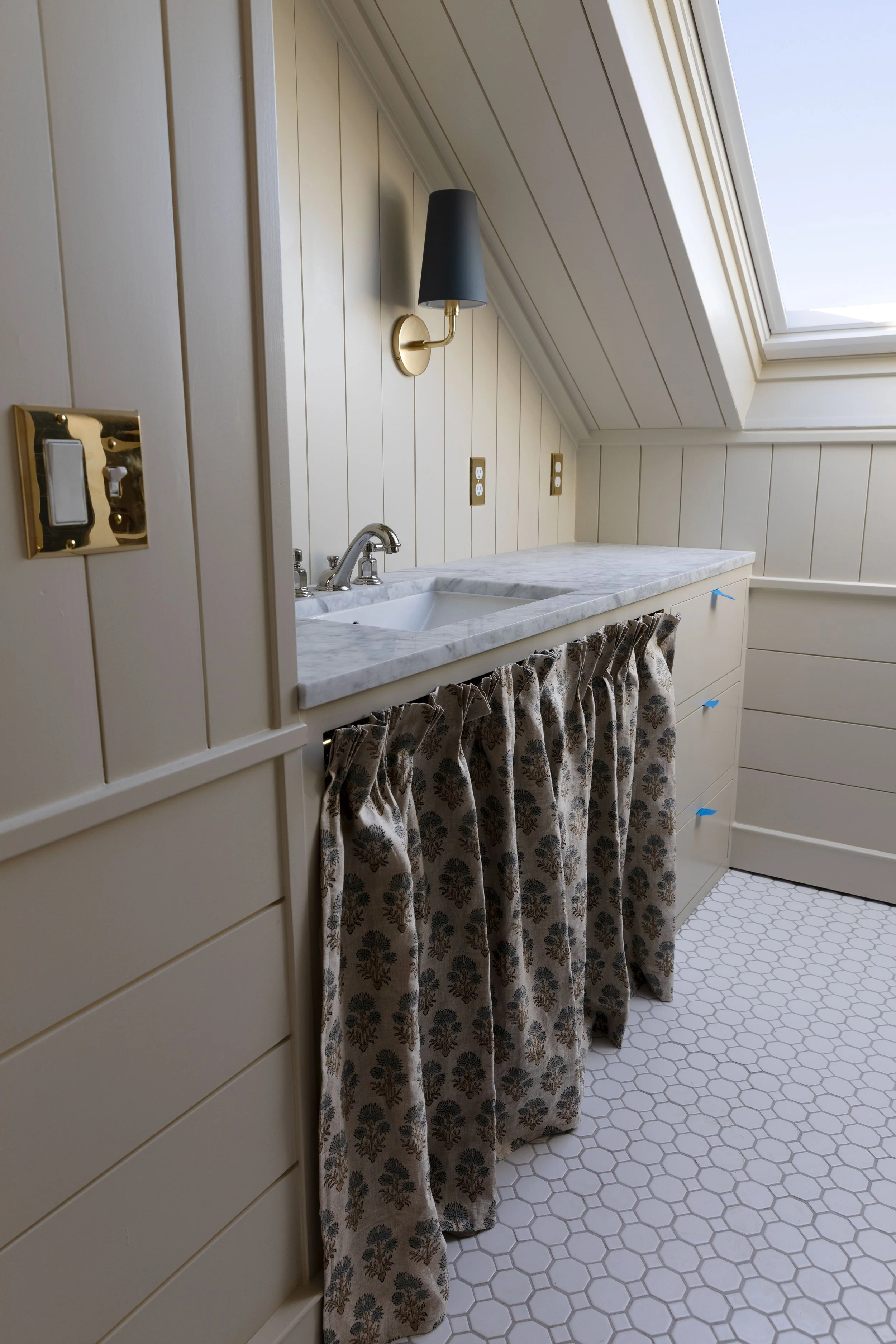
How We Made the Cabinet Skirt
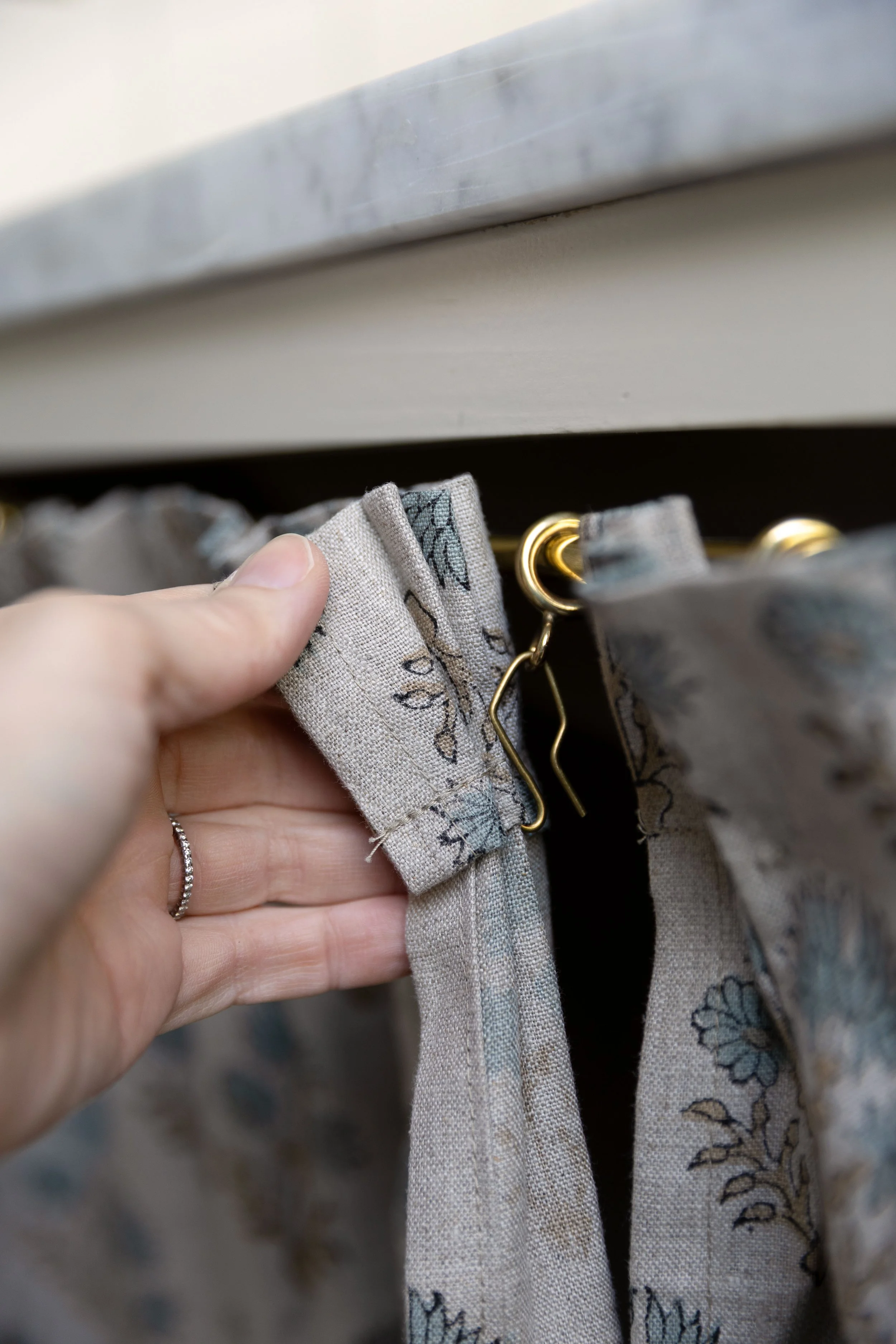
My mom sewed two curtain panels for us using fabric we had left over from the Poplar Cottage kitchen project (THANKS MOM!). Then I installed a small café rod inside the vanity opening and hung the panels using café curtain rings and drapery hooks. Once the curtains were hung up, I pinch pleated them by hand. And then my mom will hem them to length. Here’s what we used:
Curtain rod (this was the only one I could find that was long enough)
Curtain rings (I removed the hooks)
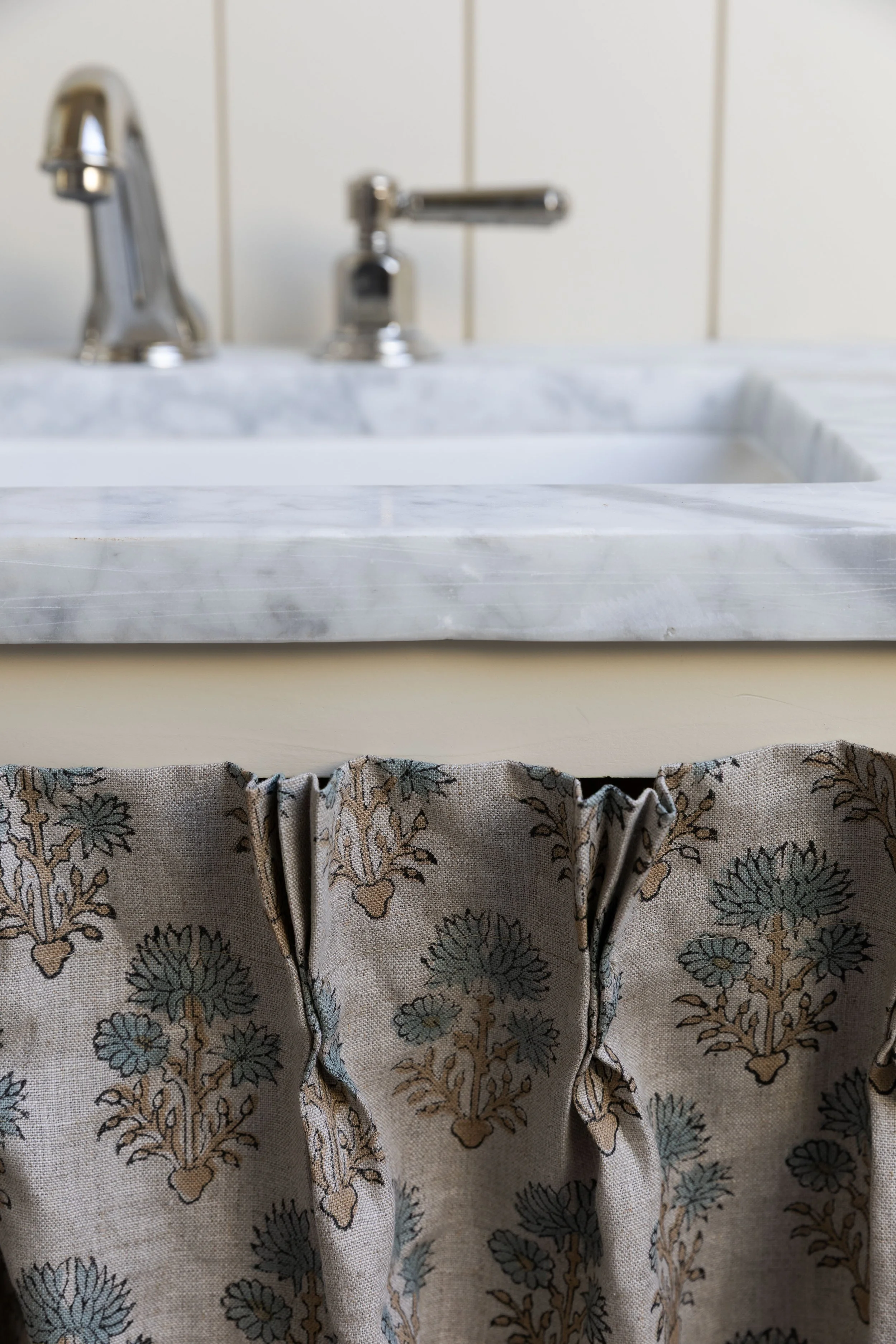
If you’ve never pinch-pleated curtains before, don’t let that part scare you. It’s easier than it sounds! Here’s a tutorial using pleater tape. I didn’t have any on hand so just gathered the fabric, ironed the pleats in place, and secured with a couple stitches at each pleat.
Dimensions and details
A few details from our curtains:
Enough fabric for fullness
Our vanity opening is 42.5” wide, and each curtain panel is 40” wide. That gave us enough fabric to add pinch pleats and still get a soft and gathered feel. A good rule of thumb for the fabric width (if you plan to pinch pleat) is 1.75-2x the opening width.Pinch pleats
I added 7 pleats to each panel because that’s what looked right to me. Each pleat takes up about 2 to 2.5 inches and that left enough fabric for a soft feel (rather than pulled taut). It’s worth planning ahead before cutting fabric.A longer hem to start
I had my mom sew the panels a little long, then waited until everything was hung and pleated before deciding on the final length (I have yet to hem them). Our floor slopes slightly from left to right, so this gave us some flexibility.Good fabric
We used linen, which is my favorite. Ideally you want something washable, especially in a bathroom.An inside-mounted rod
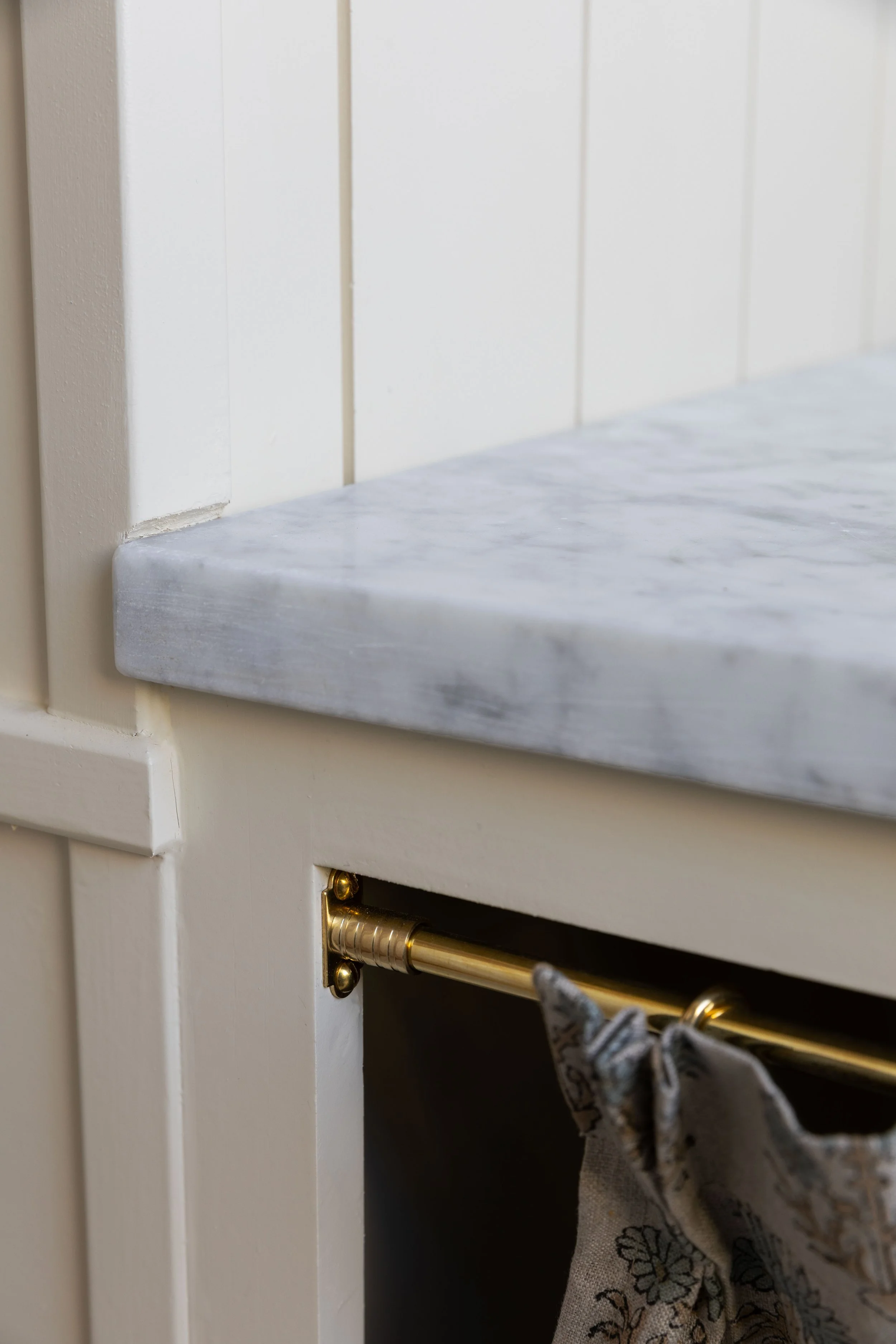
We liked the cleaner look of keeping the rod tucked inside the opening rather than mounted on the face of the vanity.
One thing I especially love about this solution is how forgiving it is. Because the floor slopes a bit, the fabric naturally adjusts without calling attention to it. Cabinet doors would have been much harder to finesse.
I’ll probably still tweak the hem a bit, but I wanted to let the skirt hang for a while before making that final call. One of the luxuries of having a sewing mom just a few blocks away ;)
How to Hang a Cabinet Skirt
There are two main ways to hang a cabinet skirt:
1. Inside mount- an inside-mounted rod, which is what we did, sits inside the vanity opening so the fabric hangs neatly within the frame. It feels cleaner, quieter, and a little more built-in.
2. Face mount - the rod sits on the front face of the cabinet or just outside the opening. This can be useful if you need more clearance or want the skirt to feel more decorative and gathered.
For a bathroom vanity, I usually prefer the inside-mounted version if the opening allows for it. It feels simpler and a little more tailored, which was exactly what we wanted here.
Why a Sink Skirt Makes So Much Sense in an Old House
Sink skirts can solve all sorts of old-house problems. If you’ve ever loved a home that’s older than you are, you know they rarely come square, level, or plumb. That’s part of the charm, of course, but it also means off-the-shelf bathroom solutions don’t always work.
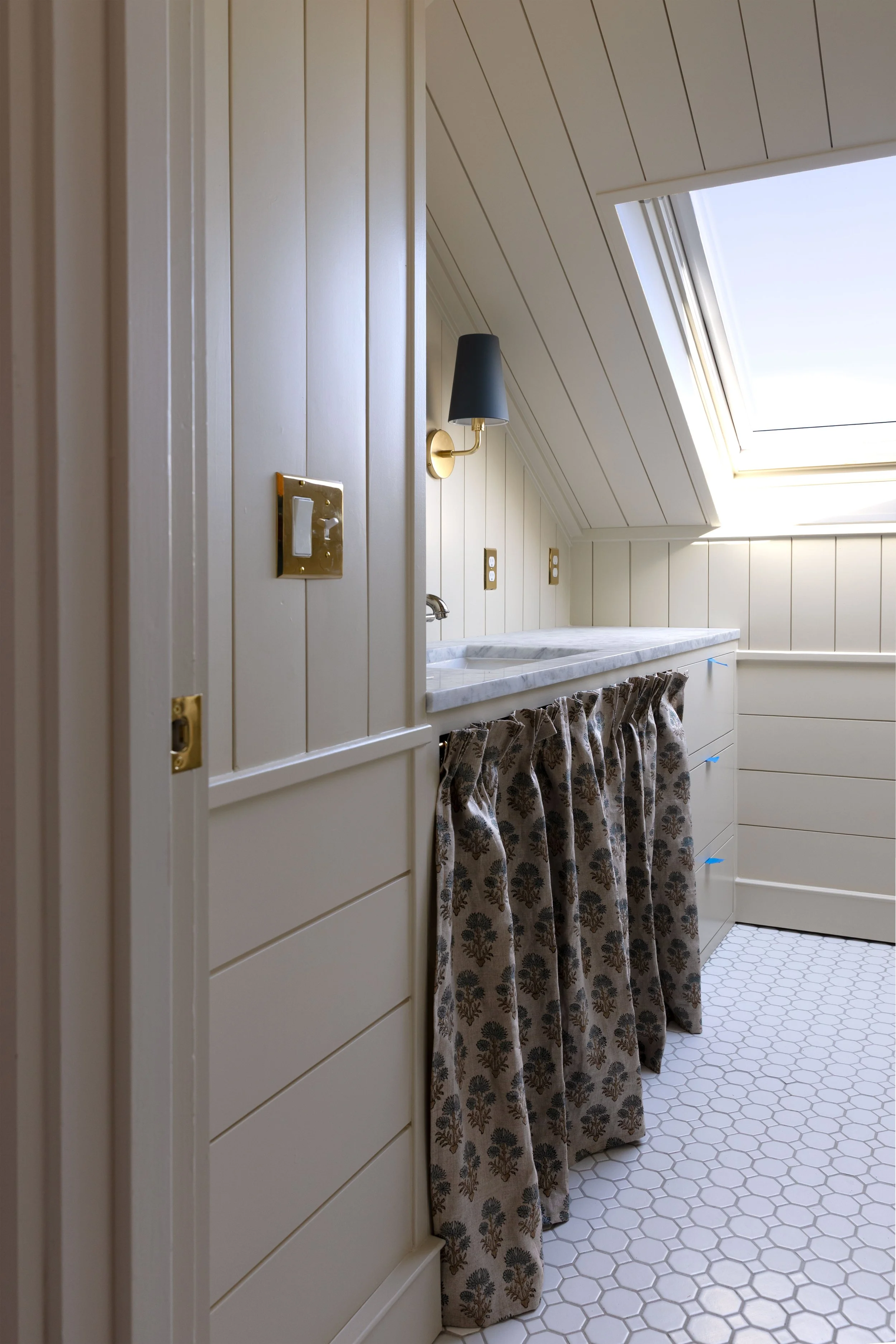
A sink skirt is especially good at adapting. Have a tiny bathroom that just doesn’t have the room for a swinging cabinet door? A skirt can help. Have a sloping floor, a narrow walkway, or a vanity tucked into an awkward nook? A skirt can work with that too. It can adjust to a space that’s a little quirky without making the whole room feel compromised.
That flexibility is a big part of why I love it here. This bathroom already has plenty of custom elements, from the salvaged stone countertop to the skylight and paneled walls, so the skirt feels practical, yes, but also very in keeping with the house.
Are Cabinet Skirts Just a Trend?
Cabinet skirts are definitely having a moment, but like many of my favorite “trends,” this one feels more like a return of something old than something brand new. What I love about this revival is that it brings back a little humanity to interiors.
A designer I follow recently said something along the lines of human-touched is the new luxury, and that really stuck with me. In a world full of machine-perfect finishes, there’s something especially appealing about details that feel measured, gathered, and stitched by hand. A cabinet skirt brings that softness in a way flat cabinet doors just can’t, even if you don’t actually stitch it with your own two hands ;)
When does a Cabinet Skirt Make Sense?
We’ve already talked about old house, but a skirt works great in all houses when you need to hide plumbing below a sink, if the floor is sloped or the space is awkward, if you want to keep a small bathroom feeling open, if cabinet doors would interfere with the layout, or if you’re after a softer, more layered look.
It may not be the best fit if you need a lot of concealed storage or if you prefer a very crisp modern look, or if you’re worried about constant water.
Are Cabinet Skirts Practical in Bathrooms?
Yes, more practical than most people think!
That doesn’t mean they’re for everyone, but in the right bathroom they make a lot of sense. With washable fabric, easy access, and no doors swinging into tight clearances, they can actually be more functional than a traditional vanity. In our case, the skirt makes this vanity easier to use, not less.
A Note for Old Homes
If you’ve renovated an old house, you already know not everything fits the way it “should.” Between sloped ceilings, uneven floors, old framing, and quirky layouts, the best solution is not always the most built-in one. Sometimes it’s the one that solves the problem with a little more grace and a little less force.
This felt like one of those moments. We didn’t set out to do a skirted vanity. We were simply trying to solve a tricky layout in a way that felt functional, simple, and true to the house. But in the end, I think it gave us something better than a traditional cabinet would have: more flexibility, more ease, and more charm, too.
xx

I’m obsessed with this before-and-after ✨