
How to Design a Small Living Room with Low Ceilings (aka Our Hill House Snug!)
THE HILL HOUSE
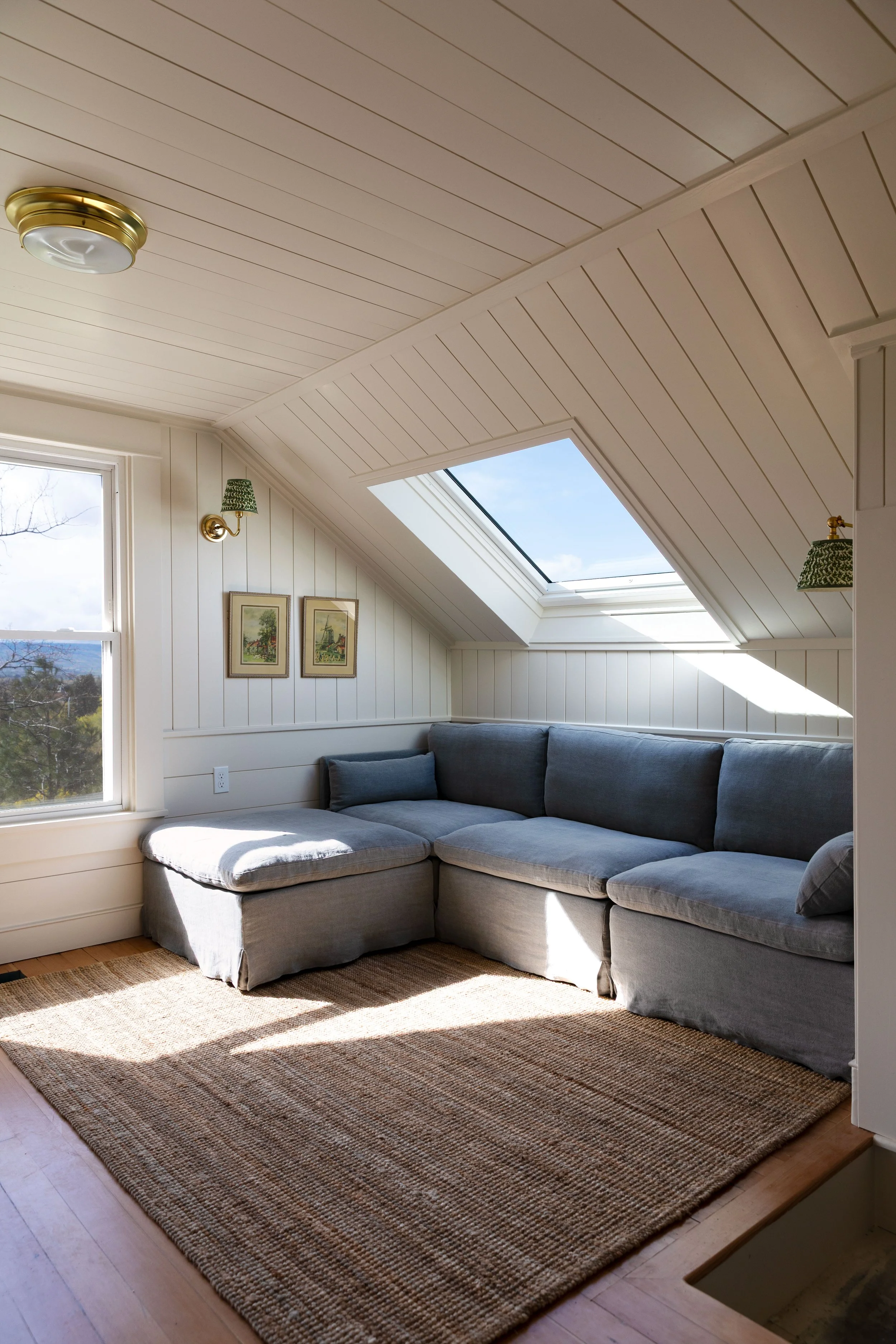
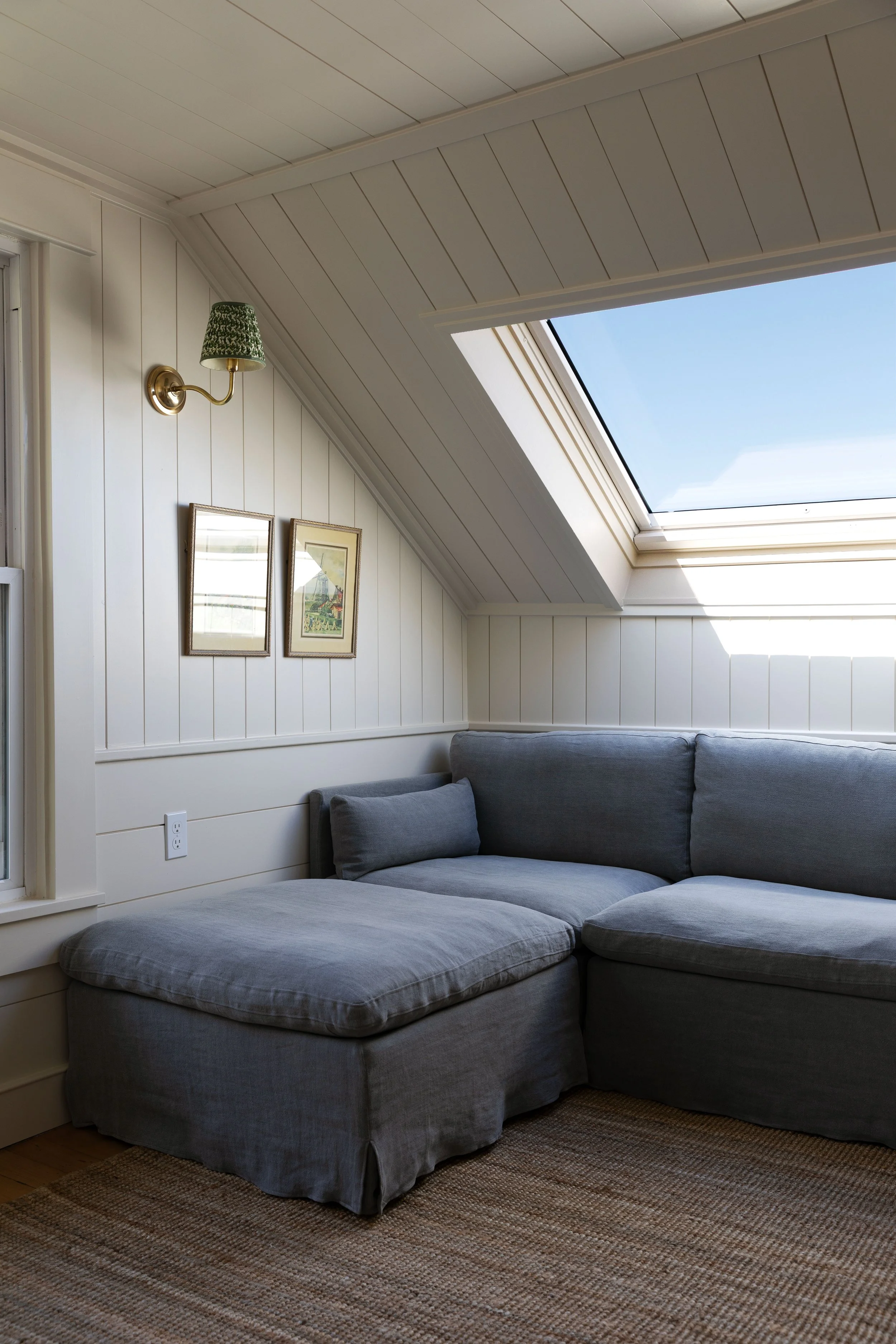
Designing a small living room is one thing. Designing one with 7-foot ceilings, sloped walls, and a pass-through layout is another! When we bought the Hill House, this upstairs space was actually part of a bedroom. But as we reworked the layout, we realized it could become something far more useful: a small upstairs snug. We’re not quite at the full reveal stage yet, but the reframing is done, the skylight is in, the paneling is up, paint is on, and enough of the furnishings have come together that you can really see the vision. So today I’m sharing where we’re at, what’s working, and the design decisions that have helped this low-ceiling, slightly awkward space start to feel comfortable, functional, and worth spending time in. If you’re working with a small room, short ceilings, or tricky angles, these are the choices that made the biggest difference for us.
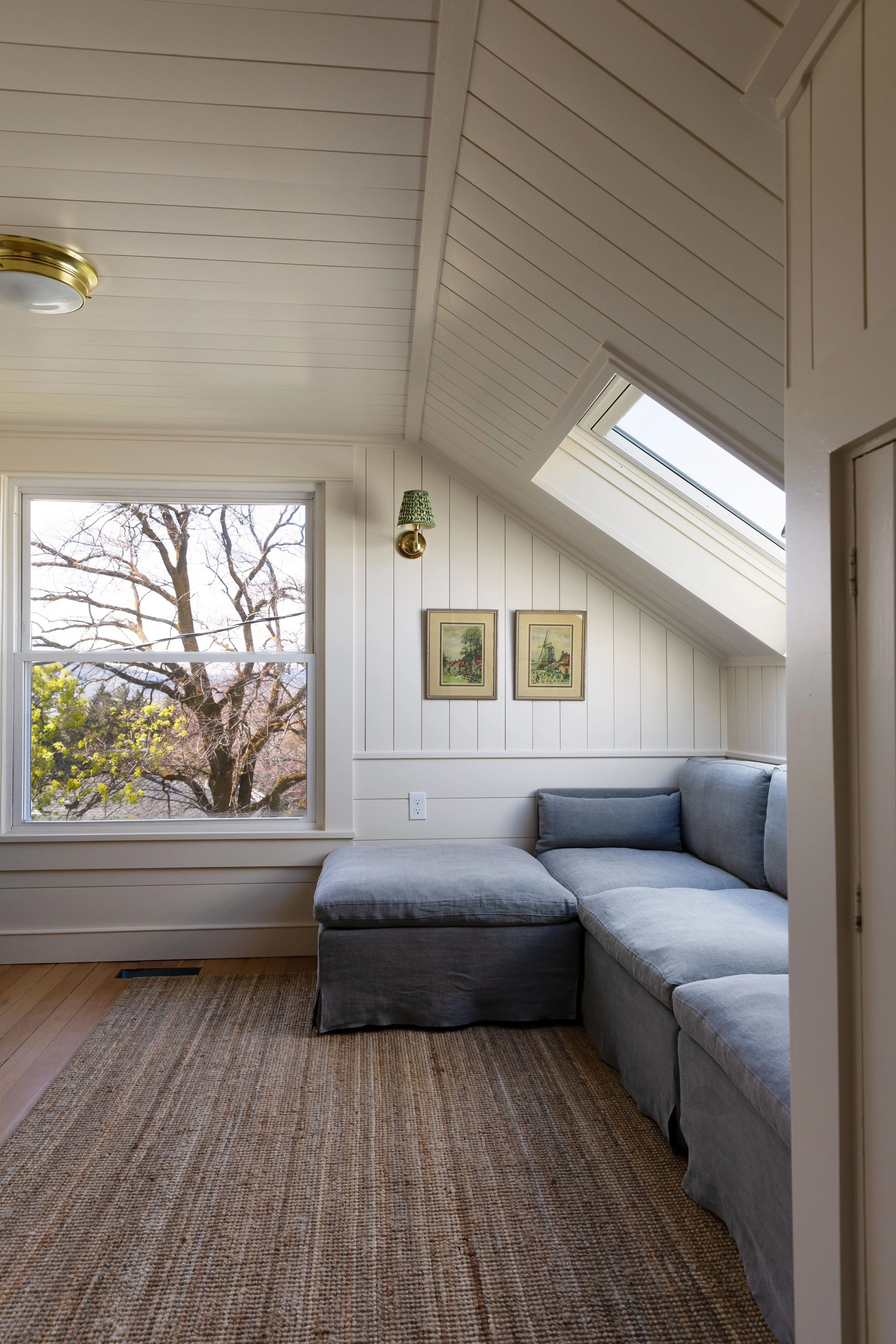
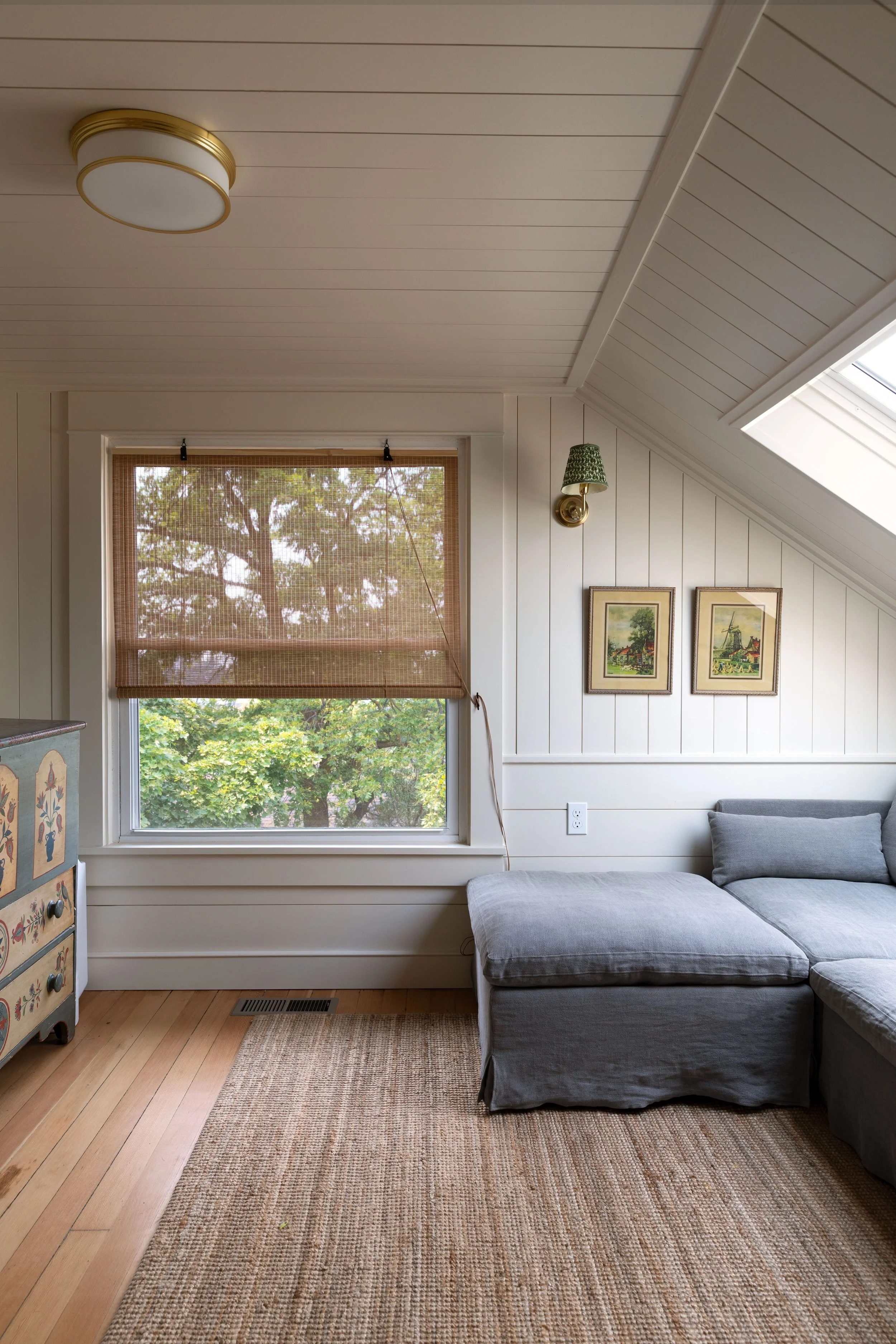
couch (ink cap), rug, flush mount, sconce , paneling, skylight, more sources below
That’s the view from the top of the stairs. Cozy, right?! Before I share more progress, let’s back up and talk about the constraints we were working with in this space. Because there were many!
The Constraints
Old houses rarely give you easy, straightforward spaces, and the Hill House was no exception. This one came with:
7’ ceilings
Sloped ceilings
A small footprint (8’7”x 11’2”)
A staircase that lands directly into the room
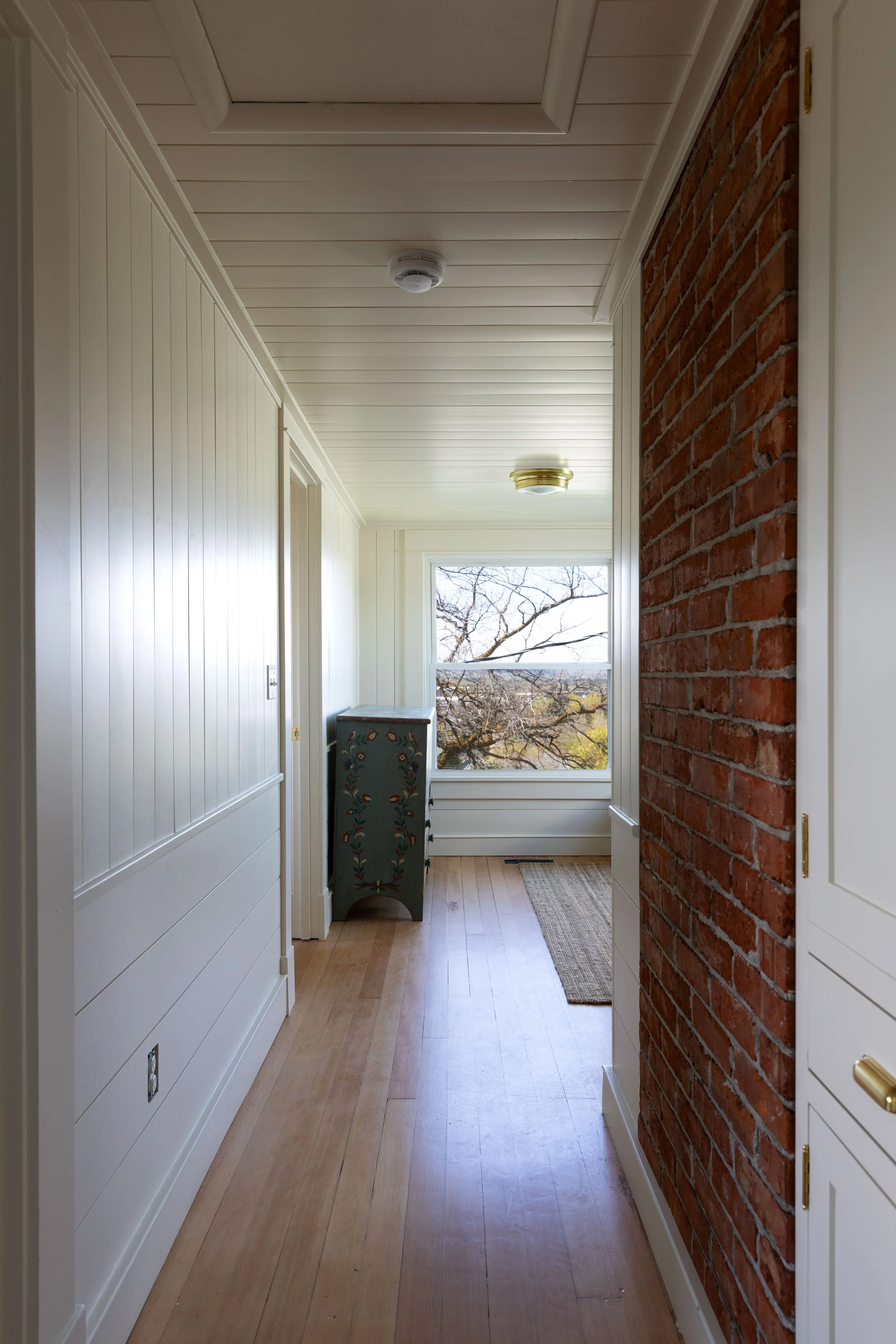
A pass-through layout connecting multiple bedrooms
Each of these constraints really shaped how we approached the design. Instead of fighting them, we tried to lean in - short ceilings and sloped attic walls can make for instant charm and coziness, if you do it right. What made this room, though, was the natural light: a west-facing window and a skylight we added early in construction. That combination changed everything!
Here’s what this space looked like before…
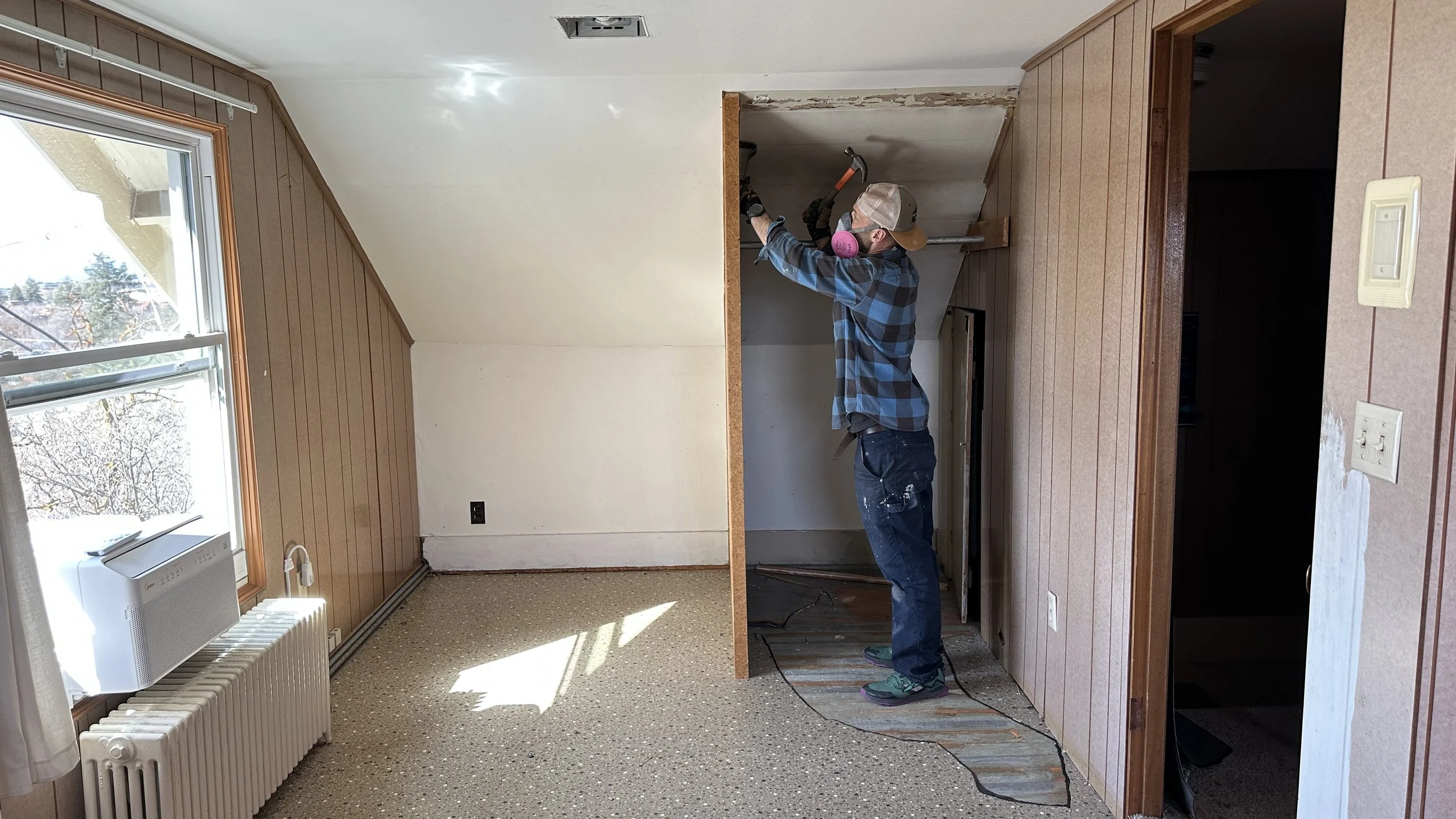
Before: An Awkward Landing with Potential
This space originally held a small closet that mostly went unused (here are pictures from our very first tour). That dark doorway on the right is actually the staircase ‘landing” which made a dark, awkward turn at the top. It felt just kind of muh. But one thing we’ve learned with old houses is that the awkward spaces are often the ones with the most potential… if you can find the right layout.
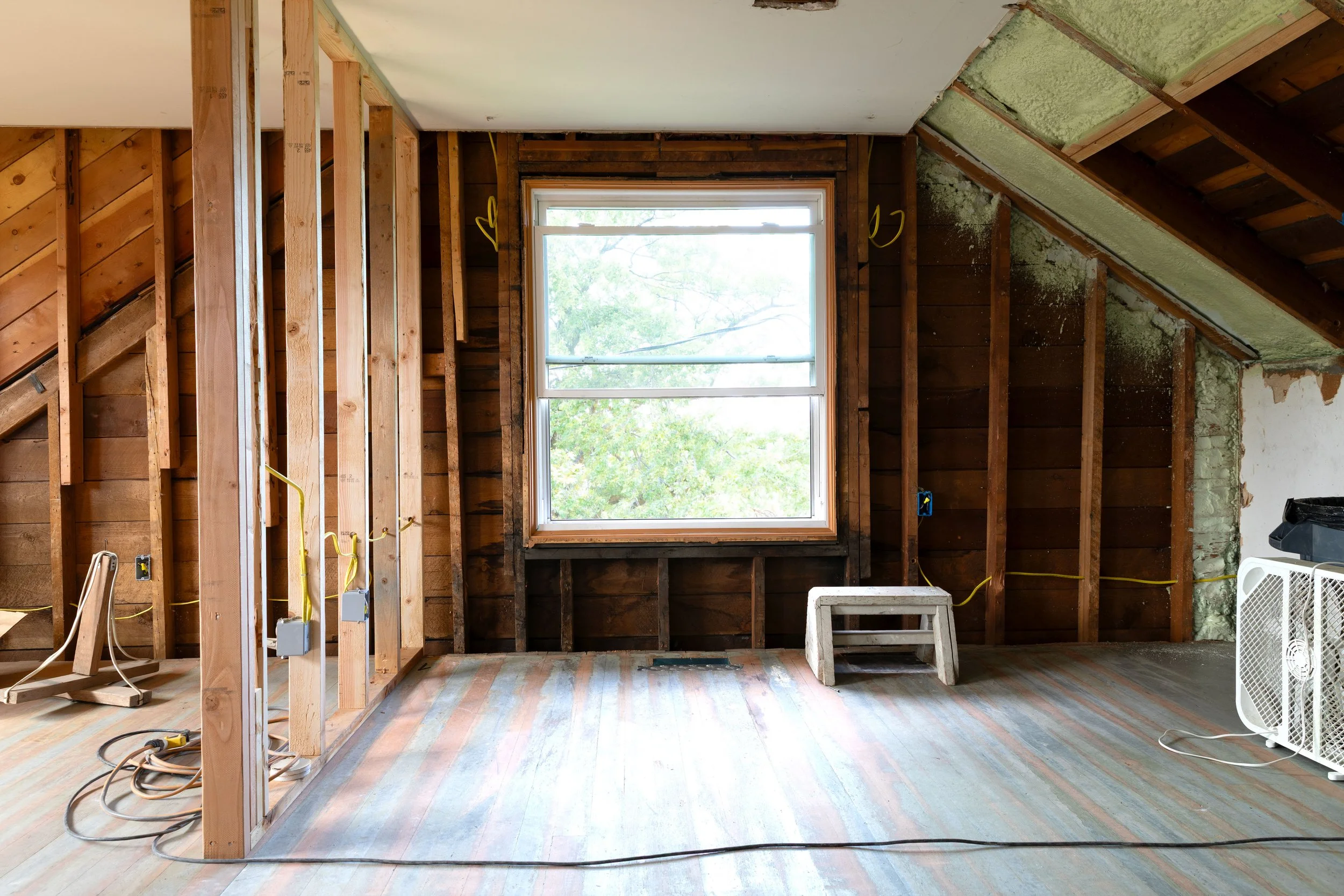
We spent close to two years playing with options before landing on the floor plan we have today. You can see the iterations here and here and here. Once we removed the wall at the top of the stairs, shrunk the bedroom, and simplified the layout, it started to click.
The snug was taking shape!
What Is a Snug?
A snug is traditionally “a small, comfortable public room in a pub or inn” (according to Oxford). In a home, I think of a snug as a small, comfortable space that is designed for comfort and lingering. Less formal living room, more everyday living. A hug for the home. In practice, that means a place to read and play and cozy up for movie nights - somewhere soft to land.
What This Room Needed to Do
Before choosing anything, we defined what we wanted this room to look and function like. Here’s what made our list:
Comfortable seating for five
Clear pathways to bedrooms
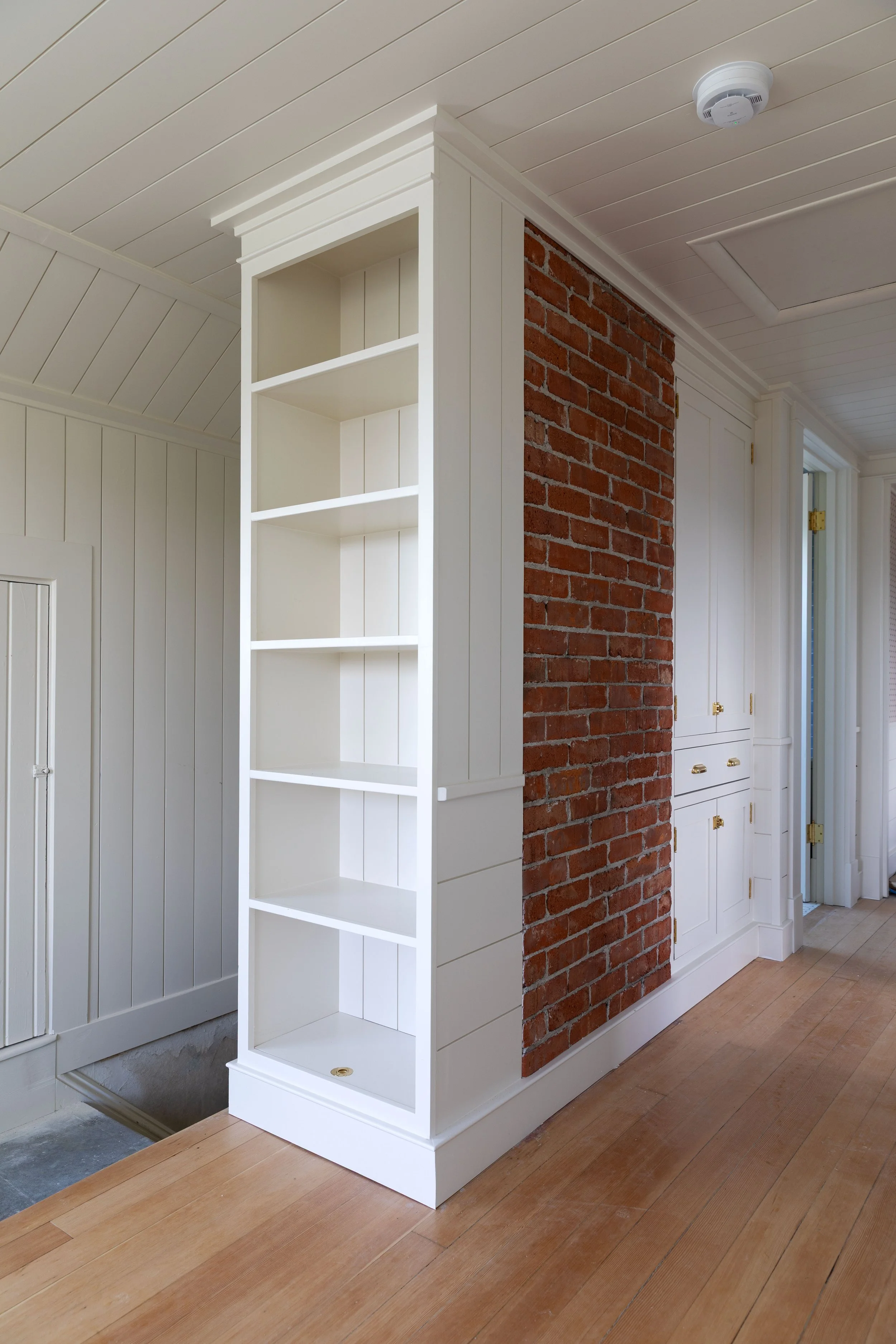
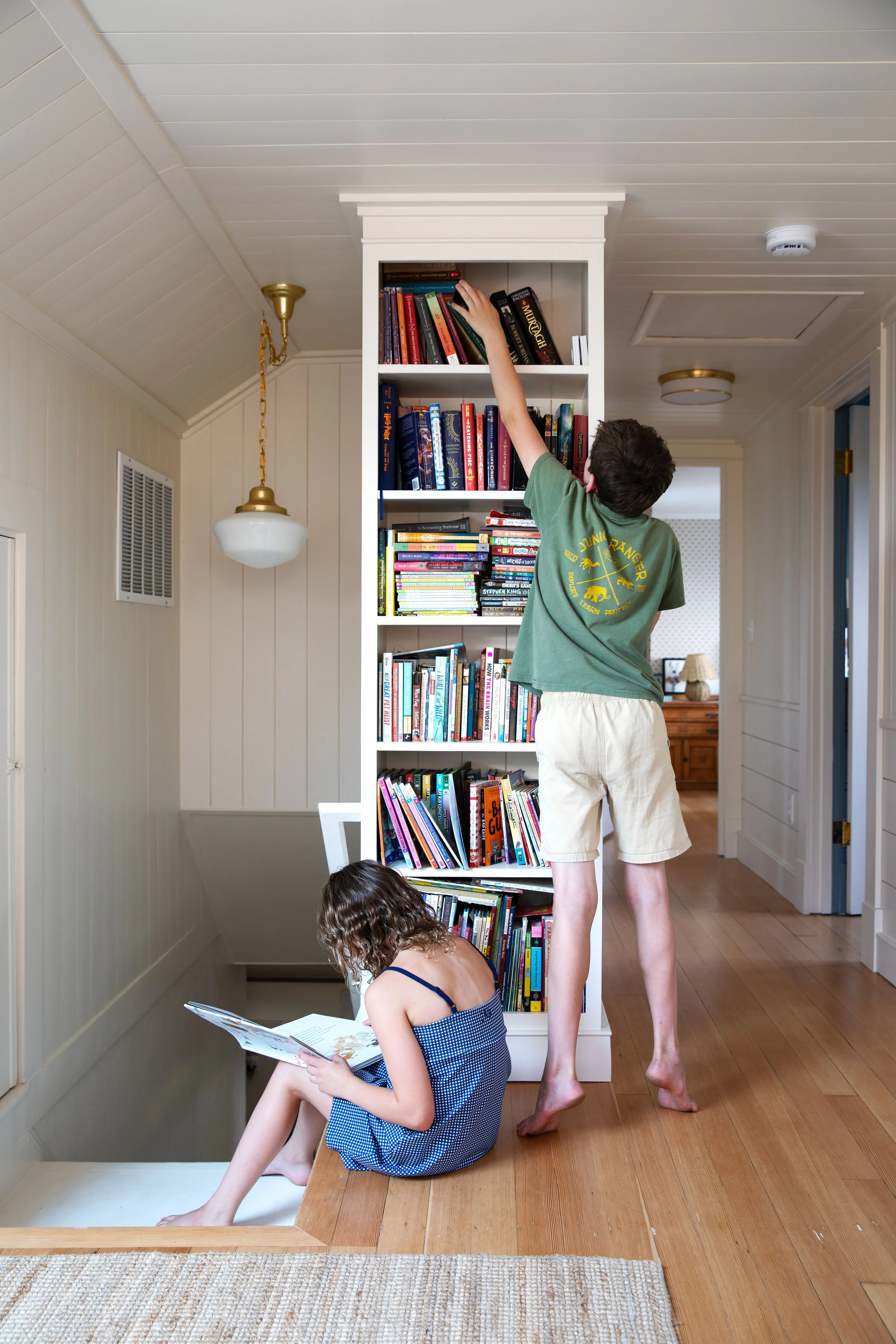
Built-in storage
Good lighting for day and night
A cozy feel without crowding
Possibly a TV (jury’s still out, but probably yes)
It’s a lot to ask of a small room, but I’m a firm believer that small spaces can work hard when they’re thoughtfully designed.
The Biggest Decision: Seating
We started with seating, because that was the largest piece of furniture. I briefly considered a built-in couch (ala Jessica Helgerson), but ultimately wanted the future flexibility of furniture. After a lot of searching (FB Marketplace, all the usual suspects), I found the beautiful Gabriel sectional chaise from Sixpenny and it fit the space down to the inch. It was the one.
Why a Sectional Works in a Small Room
There’s this idea that sectionals are only for big, open rooms, but I’ve found the opposite can be true, too. Multiple small pieces can feel cluttered and disjointed, while a sectional:
uses corners efficiently
creates a single, cohesive zone
reduces visual noise
The key is scale, size, and placement. In a room with sloped ceilings, your tallest furniture needs to sit where ceiling height is highest. So that meant tucking our sectional under the slope so it stays visually low, not to mention out of the main walkway. Another benefit to the Gabriel’s low stature (it’s only 32” tall, 28” to the frame) is that it could just squeeze up our narrow staircase when turned sideways. Old houses keep you humble.
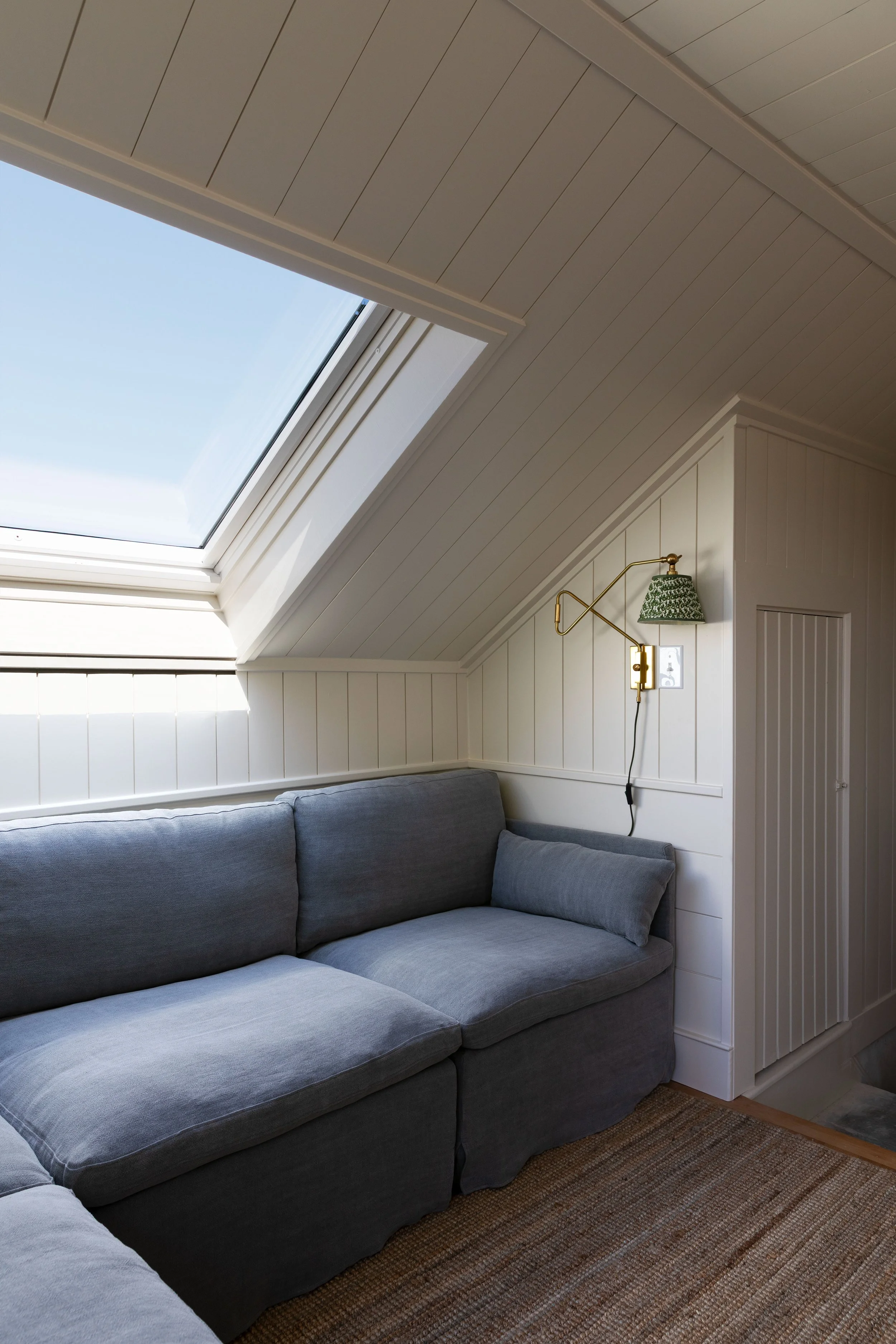
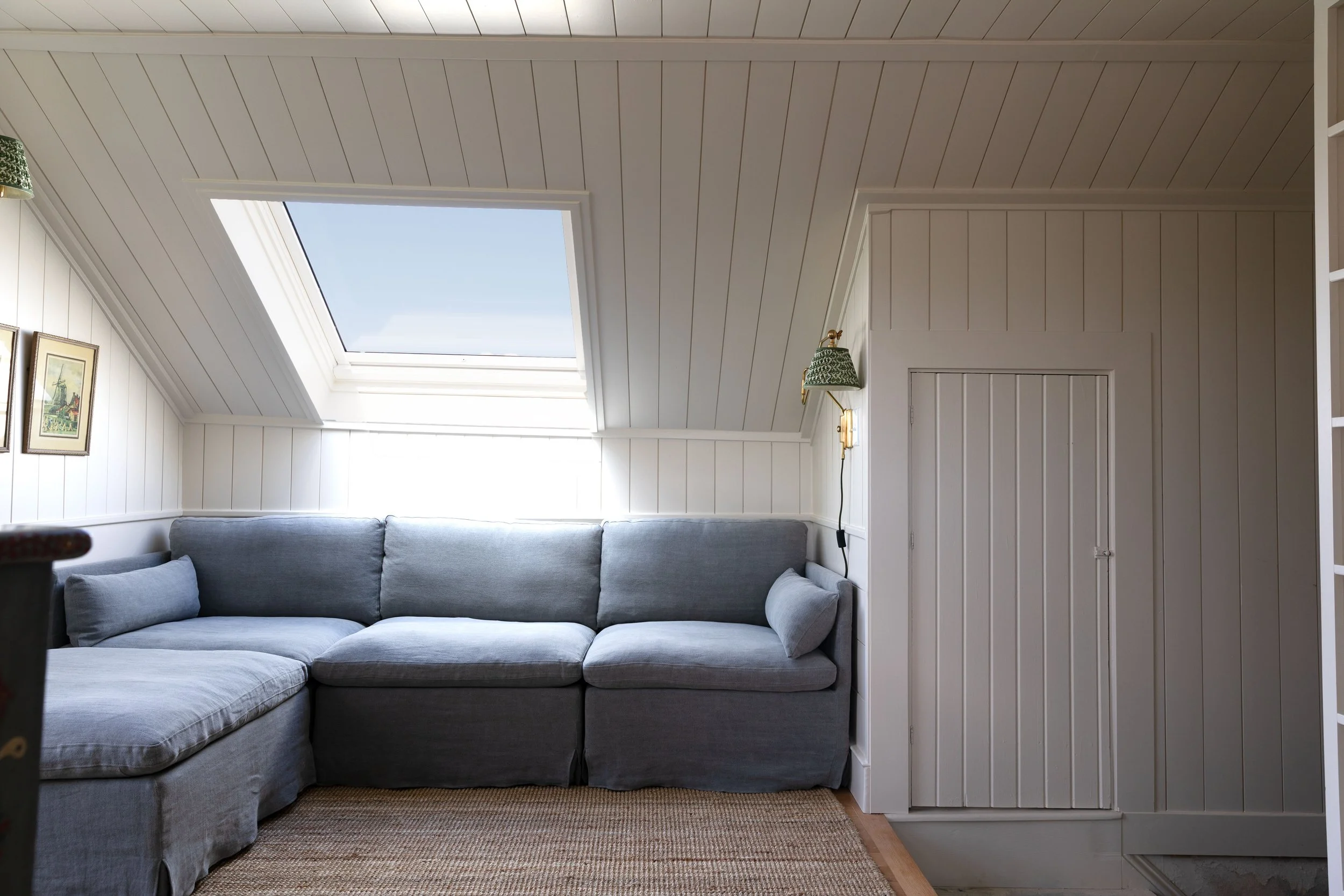
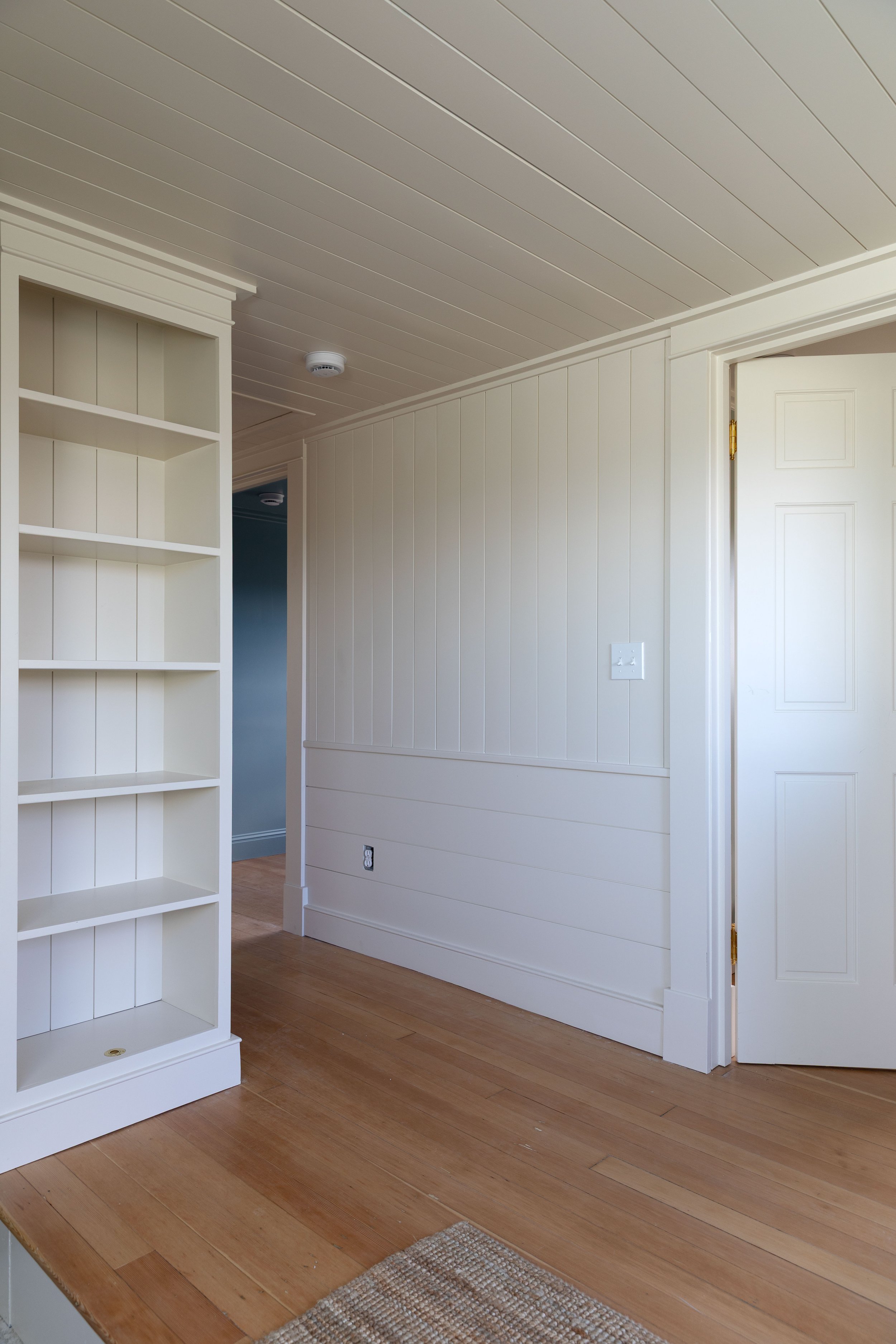
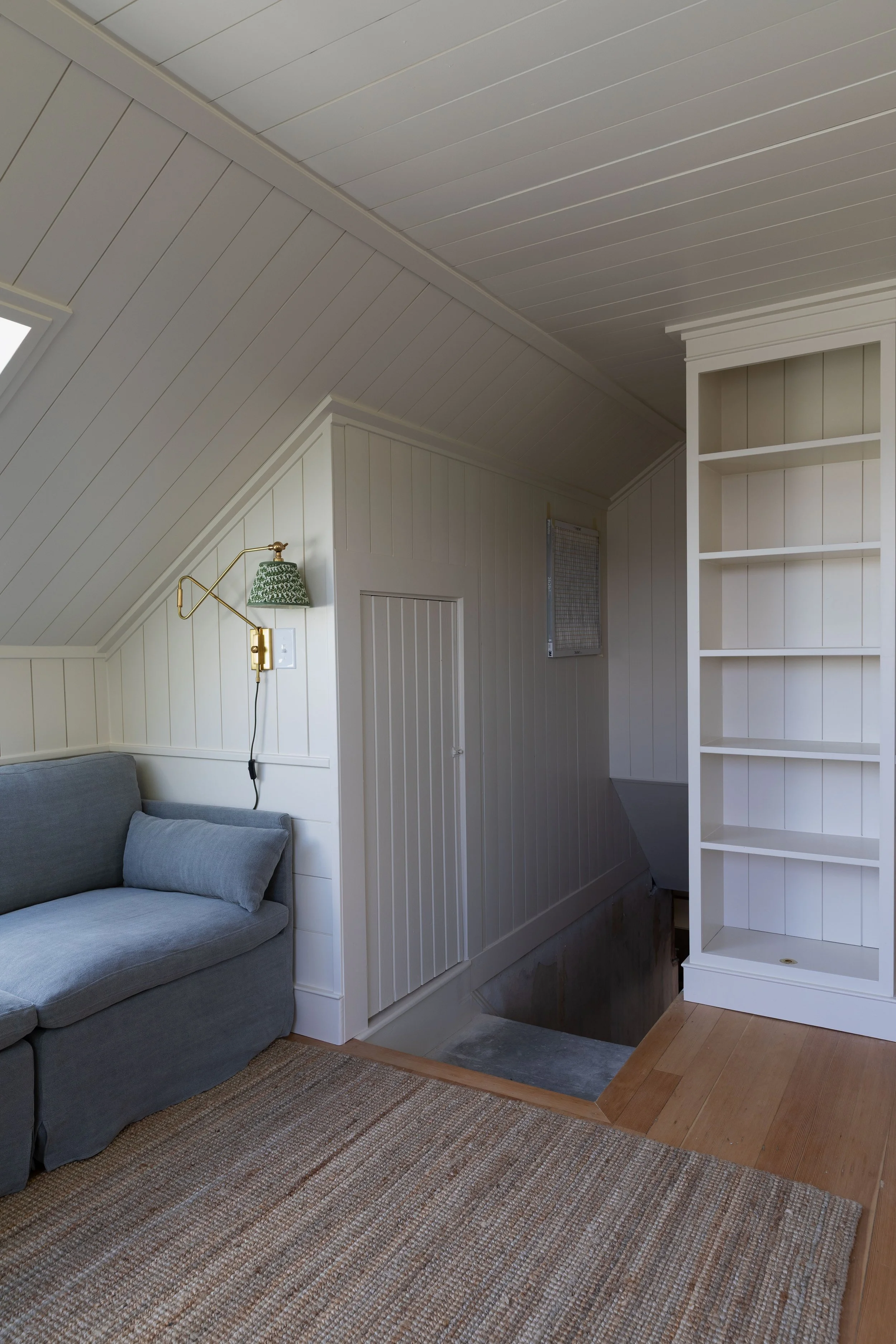
It’s probably obvious but construction stopped at the stairs. We’re planning to paint the staircase and panel or paint or do something with the walls before moving back in (and add a handrail back in!). The stairs are narrow and steep so maybe some fun paint to make it a little quirky - we’ll see. Downstairs construction will happen after all of that. Here’s the construction phasing plan for our whole-house renovation if you’re curious.
Layout: Letting the Architecture Lead
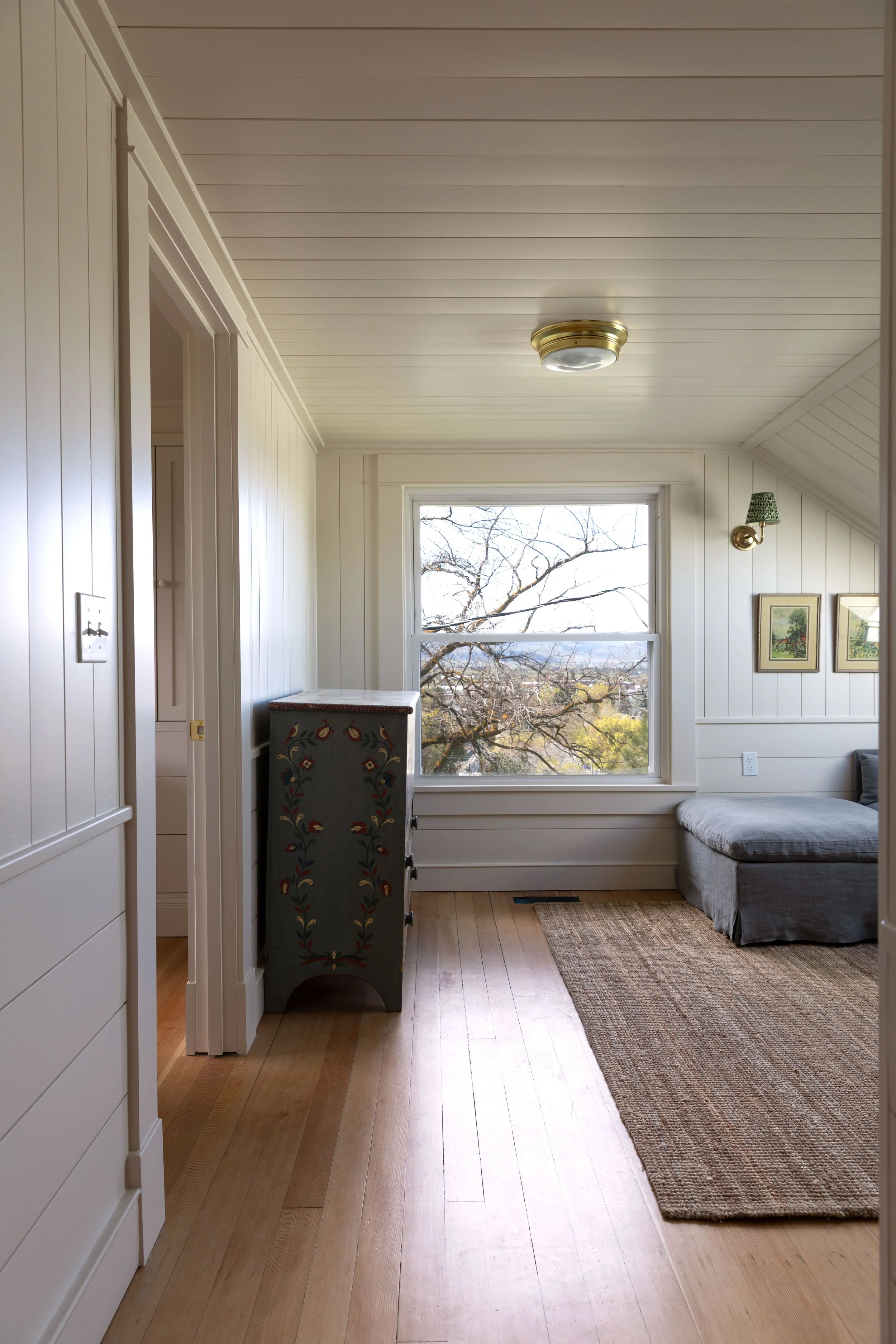
With a staircase landing into the snug plus a hallway and bedroom, we didn’t have much flexibility in the furniture layout. So we didn’t fight it and leaned in. The sectional is anchored under the slope and tucked up along the wall. The main walkway is clear. And we added furniture along the full-height walls. It works!
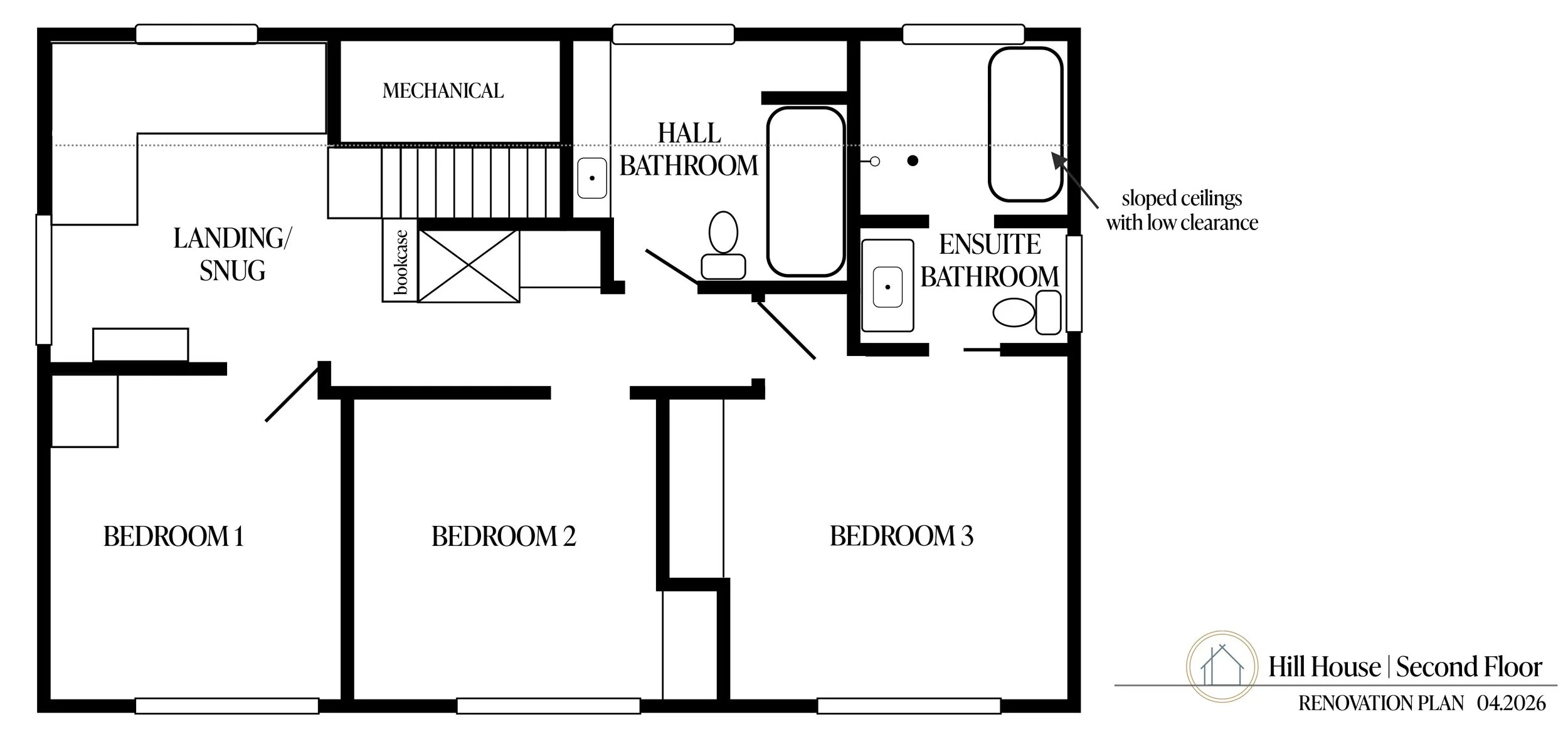
BTW our snug is just 8’7”x 11’2”, measured from the stair landing - quite small!
BEFORE: here’s what the second story looked like when we bought the Hill House for reference:
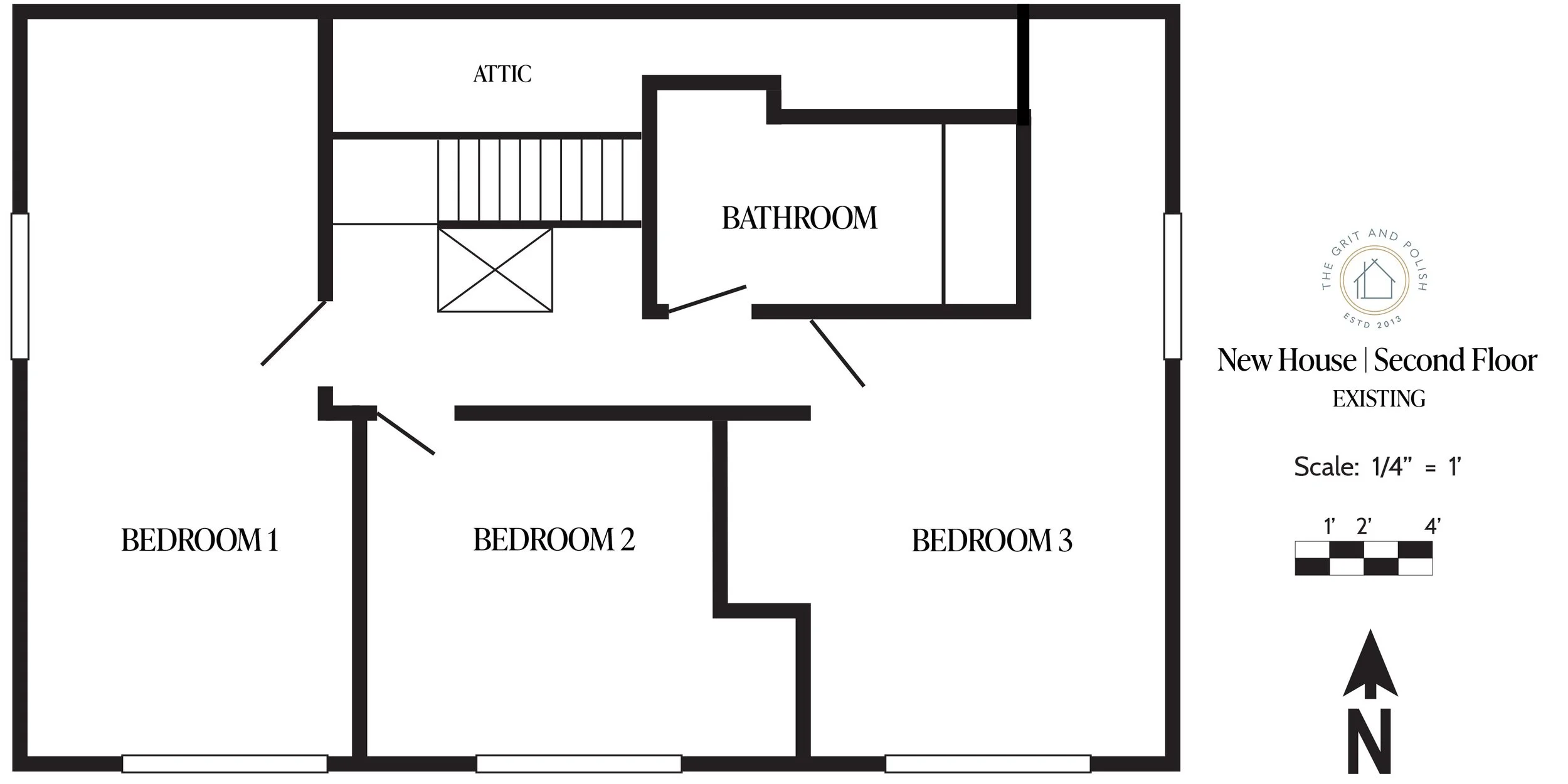
Getting two bathrooms upstairs was tricky but used the leftover closet space from bedroom 3 mush better. You can see exactly how we added the second bathroom in this post. Pretty pleased with our layout trick :)
Lighting a Low Ceiling Room
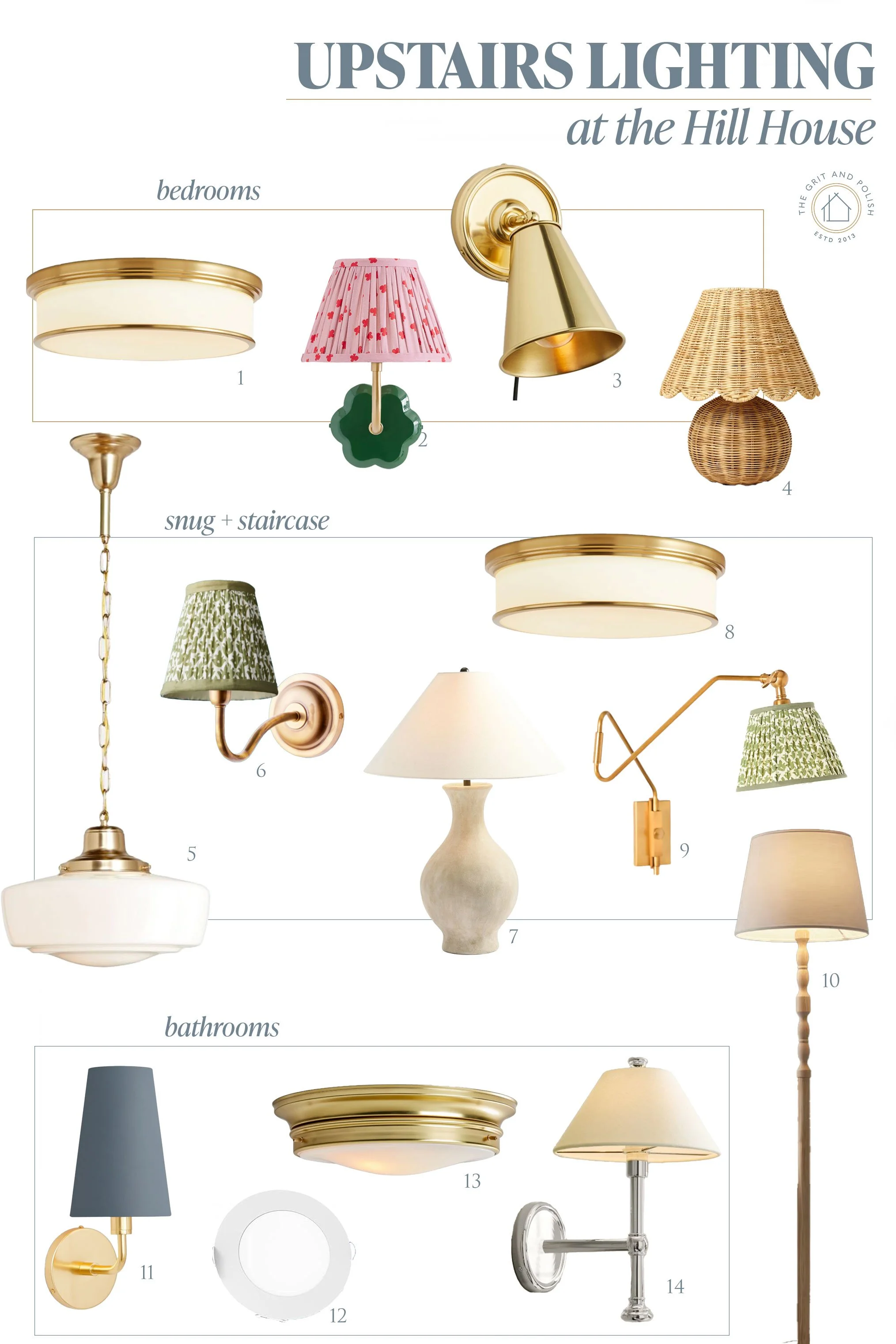
Lighting was one of the most thought-through decisions in here. With 7’ ceilings, anything bulky immediately makes the room feel smaller, so we kept lighting low-profile, small, and layered. Here’s what we used:
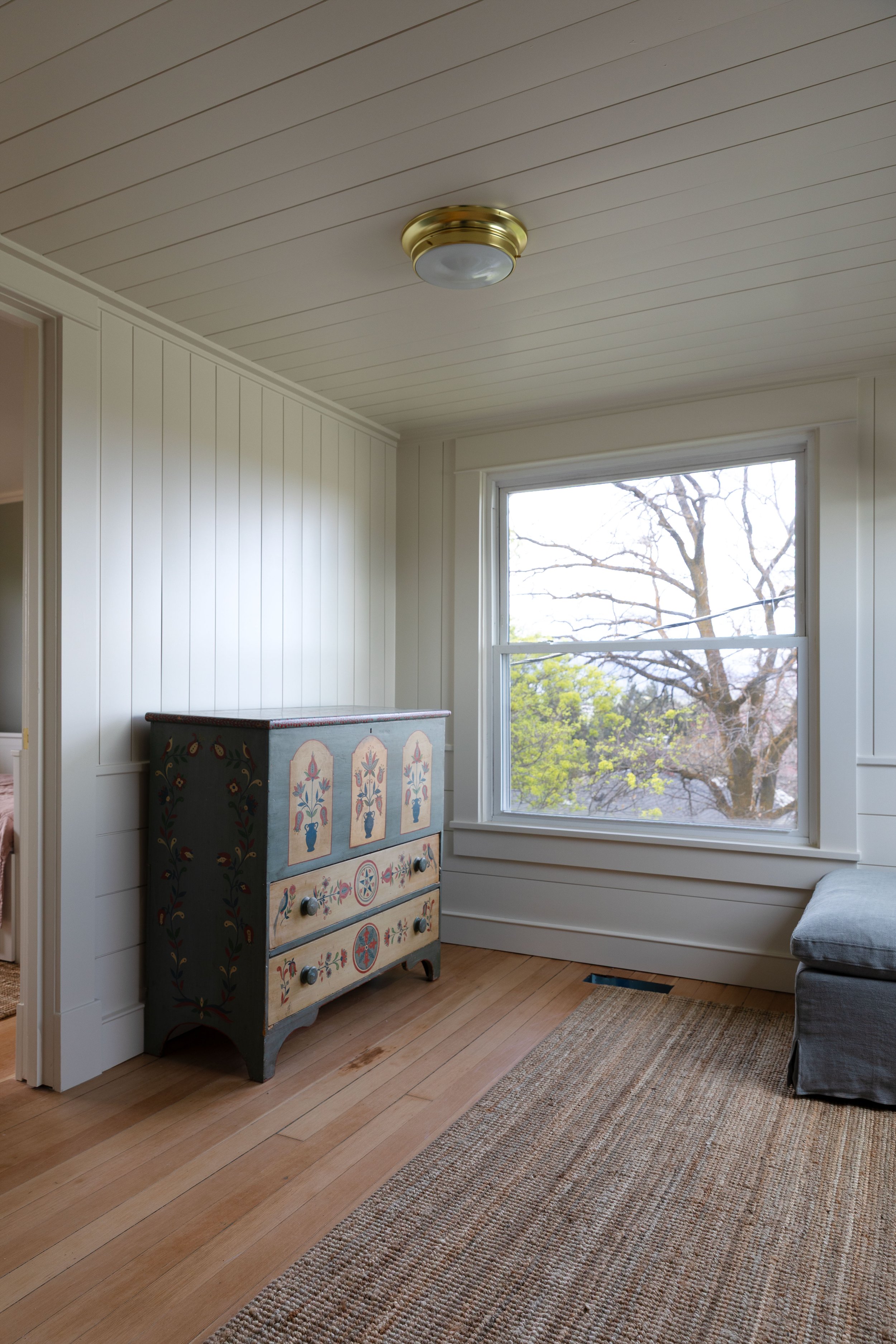
A shallow flush mount for general light (under 4” tall!)
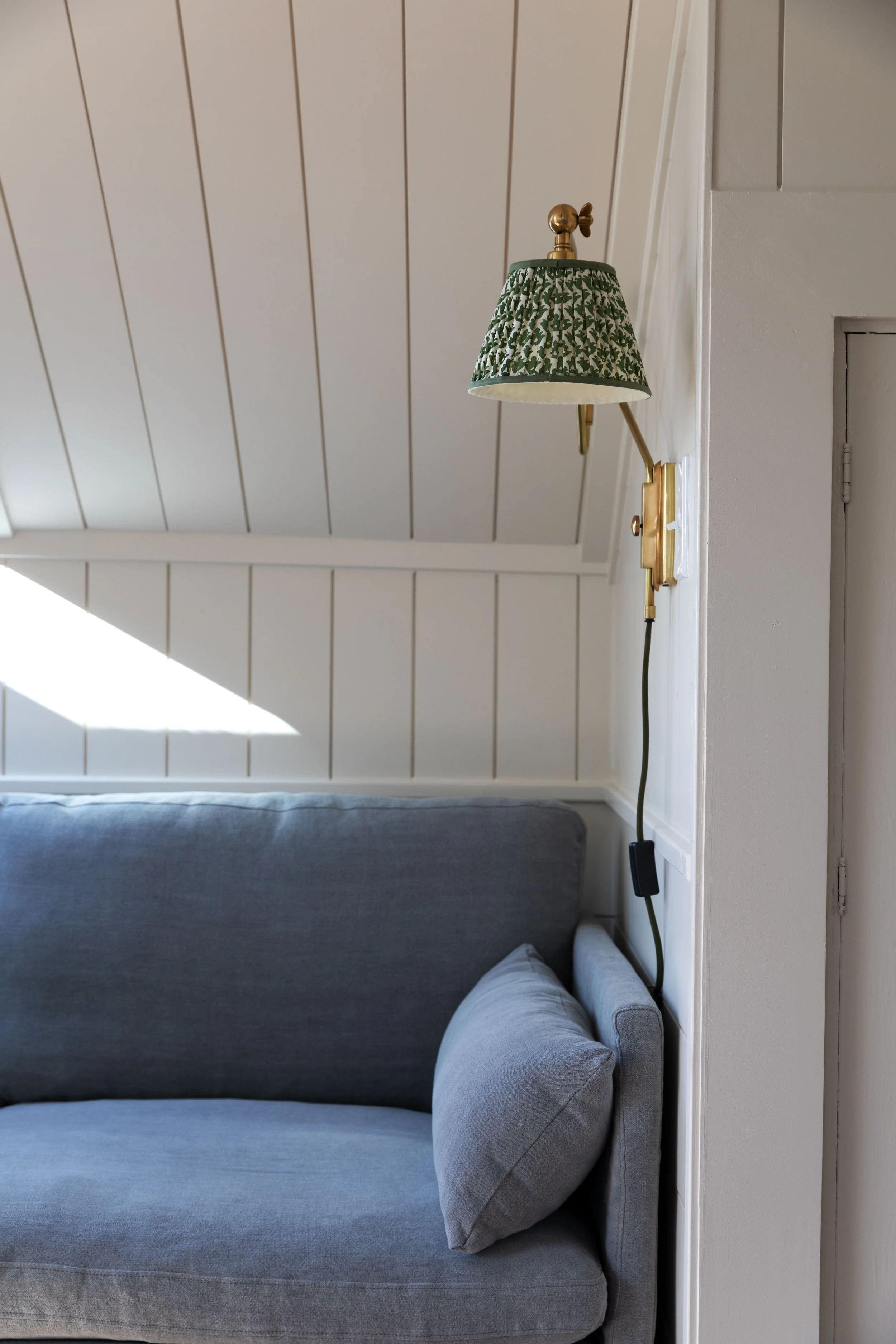
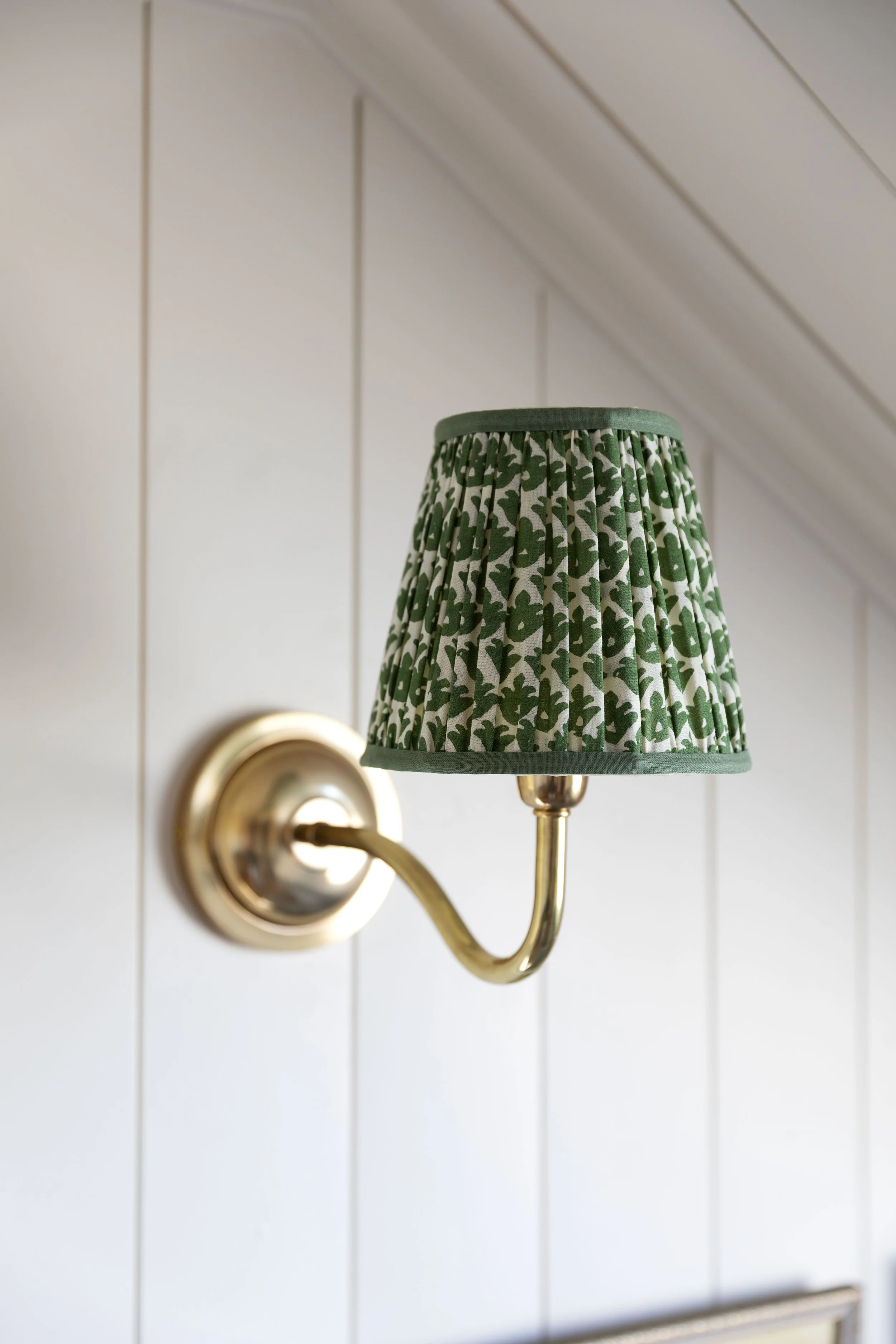
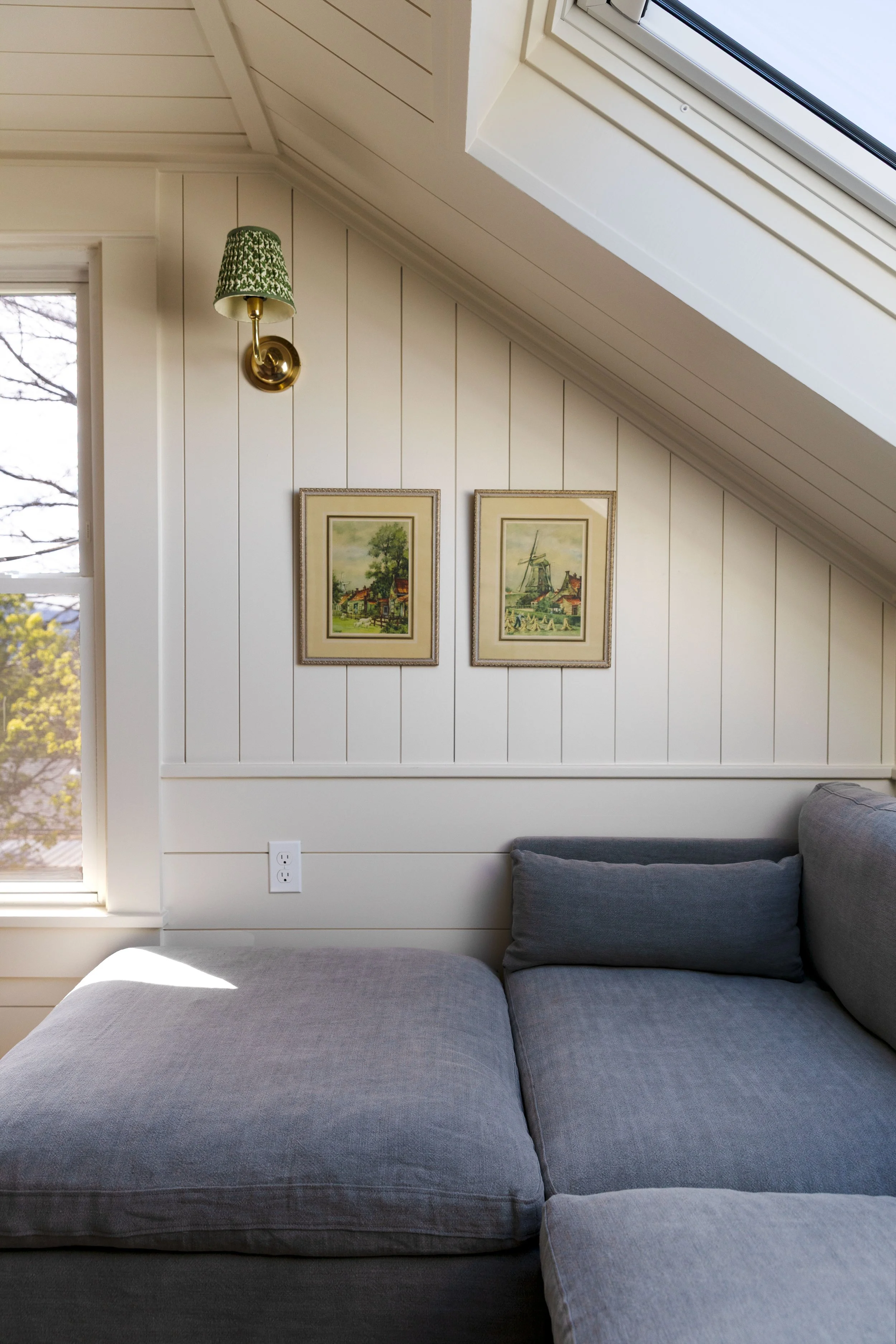
A sconce at the top of the stairs
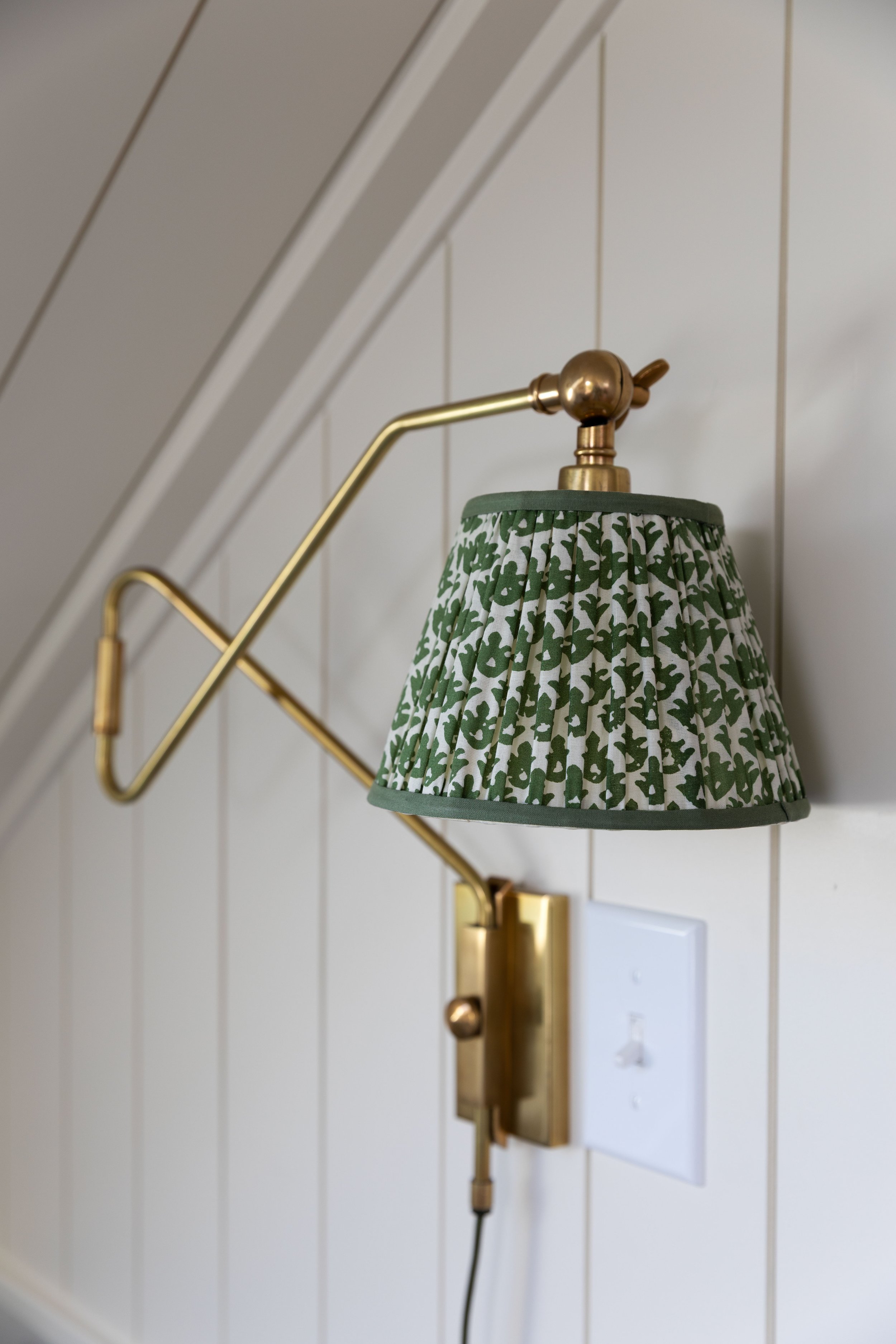
A plug-in swing arm sconce for reading
That second sconce, the one with the swing arm, ended up being one of the most functional pieces in the room. It pulls out right over the sectional, making it actually usable for reading at night without needing the overhead light.
Why This Setup Works
The skylight + window give us strong natural light from two directions during the day, which means we didn’t need heavy or dramatic fixtures to compensate. And at night, layered lighting keeps the room feeling soft instead of flat. This is especially important in making small spaces feel cozy and comfortable - one overhead light just won’t cut it.
A Trick to make ceilings Feel Taller
One subtle detail that helps so much in here is the paneling. Running the boards vertically draws your eye up, and because it continues onto the sloped walls and ceiling, it helps blur where one plane ends and the next begins. The result is a room that feels taller and more expansive than it actually is. It’s a simple move, but a powerful one in a room with low ceilings.
Adding Character Without Adding Clutter
In a small room, character has to be intentional. There isn’t space for filler. We brought in a vintage hand-painted dresser for storage and personality, then layered in a simple piece of artwork that belonged to my great grandmother. Those pieces give the room soul and help it feel collected without over filling it. That’s usually my goal in small rooms: fewer things, but better ones.
The Design Direction
I wanted this room to feel soft, classic, and easy to live in. We kept the palette grounded with warm neutrals and natural textures like linen, wood, and jute, then chose pieces that feel collected rather than overly matched or styled. Nothing in here is trying too hard. It just feels comfortable, which is always the goal. Especially in a room that I hope will hold three teenagers and all the hanging out that comes with them :)
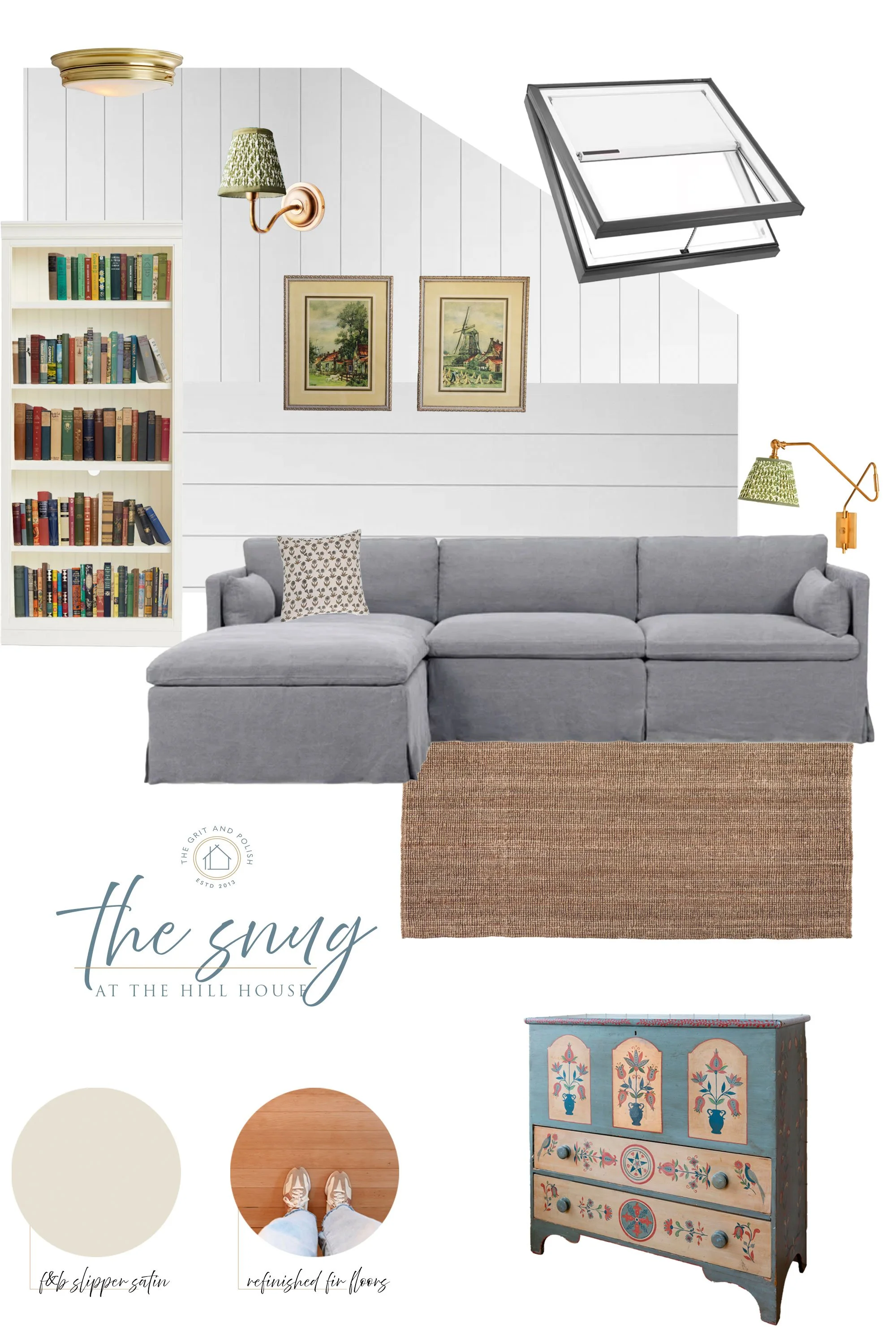
Paint color: F&B slipper satin (matched by SW) - more in this paint post
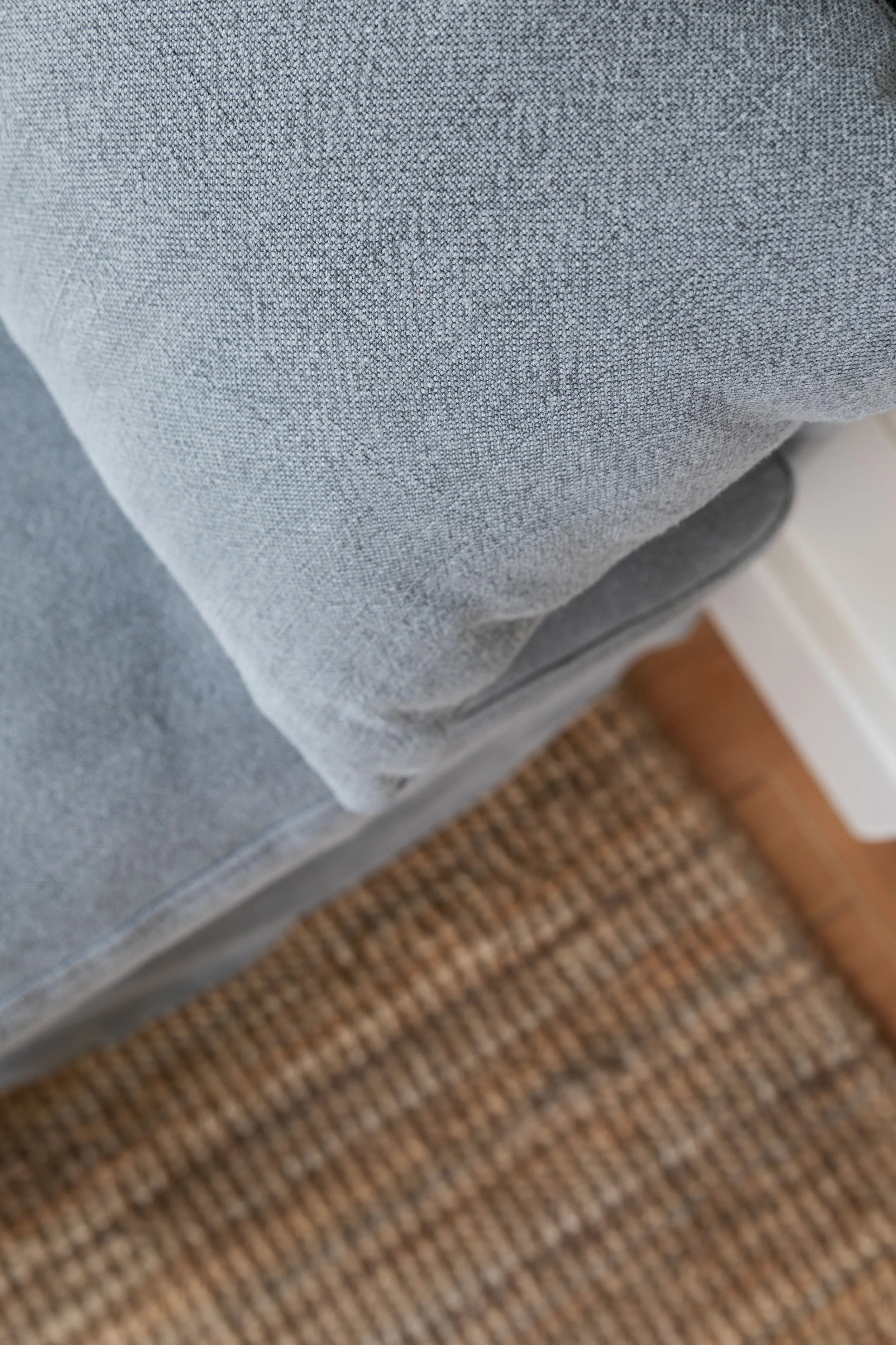
Couch in lightweight linen, ink cap
Paneling (design, dimensions, and details here)
Flush mount light fixture in aged brass, 10”
Sconce in antique brass, 7” temple green shade
Floors are original fir with this wood finish
Artwork is vintage (a gift from my great grandmother)
Now that the big pieces are in, we’re letting the rest come together slowly.
What Actually Makes a Small Living Room Work
We’ve lived in a few small spaces now, from a 400sf backyard cottage to the 1000sf Poplar Cottage, and the biggest lesson has been this: small rooms work best when they’re thoughtfully laid out, edited down, and asked to do just enough. The rooms that feel best aren’t necessarily the biggest, they’re the ones that are clear, flexible, and easy to live in every day. Here are our best small-space tips for living rooms and snugs…
Layout is everything. In a small room, every inch counts. Keeping the traffic flow clear, resisting extra furniture, and giving awkward leftover space a purpose makes a room feel bigger than it is.
Rooms should do double duty. Some of the hardest-working spaces in our homes have been the ones that do more than one job. A small living room can double as a reading room, movie spot, and homework space as long as the layout supports it.
Fewer pieces usually work better. Small rooms don’t need more furniture. They need the right furniture. We’ve found that when every piece earns its keep, the whole room feels calmer and more useful.
Scale matters. Low ceilings especially call for low-profile choices. When furniture and lighting fit the architecture, the room feels easy instead of crowded.
Less stuff helps more than more storage. Storage is helpful, of course, but the bigger shift is editing what you own. Small spaces work best when they’re holding the things you use and love, not everything you can jam fit.
When a room has clear purpose, enough breathing room, and pieces that work hard, even a small living room can feel generous. That’s always the goal.
Practical Tips
If you’re working with a similar space:
Measure everything (including stairs)
Keep lighting shallow
Use corners intentionally
Let one piece anchor the room
Leave breathing room
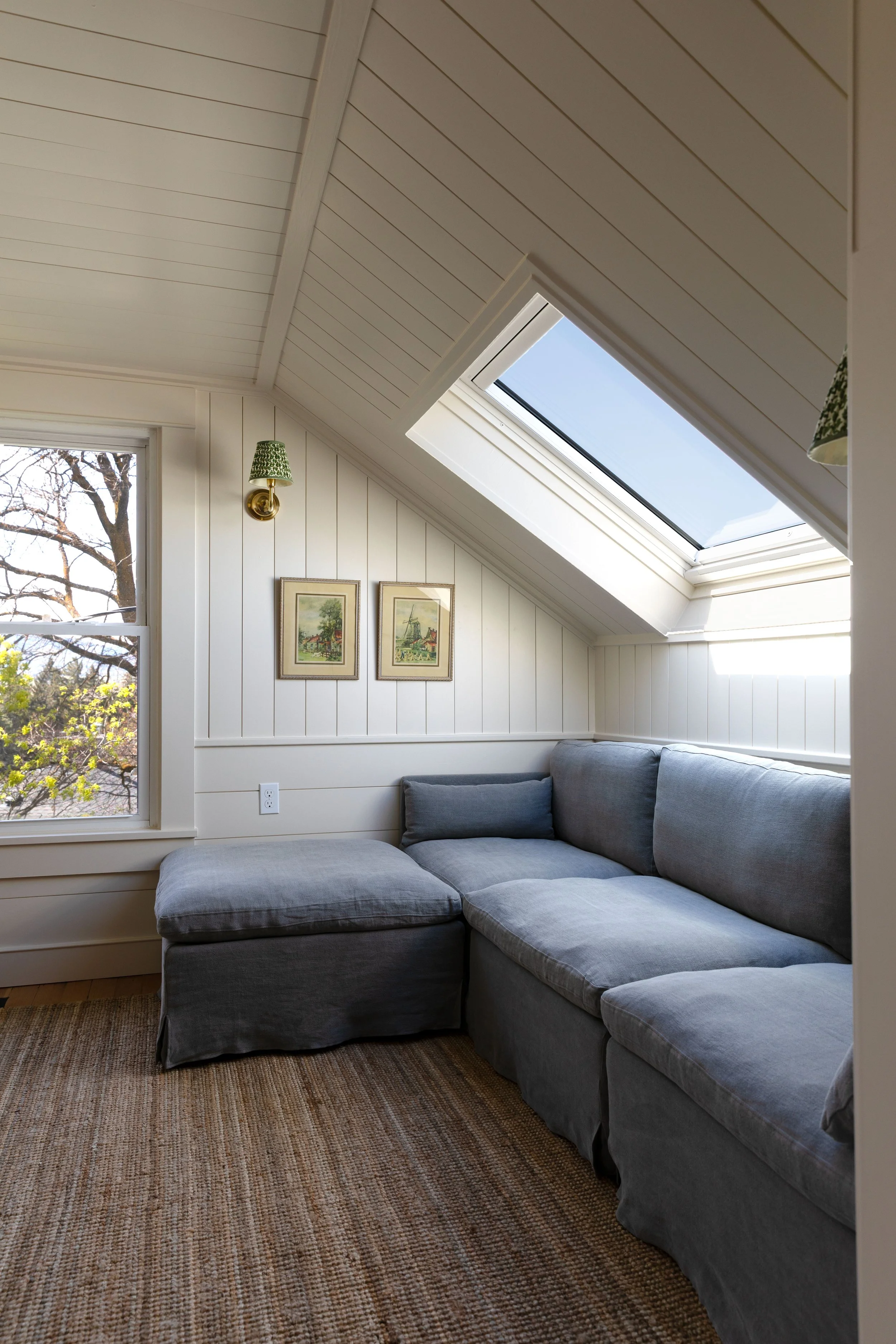
What started as leftover bedroom space is now a full-fledged snug! It’ll be where we read, hang out, and (hopefully) host a lot of teenage movie nights in the years ahead.
And like most things in an old house, it’s still evolving.
More soon.
xx
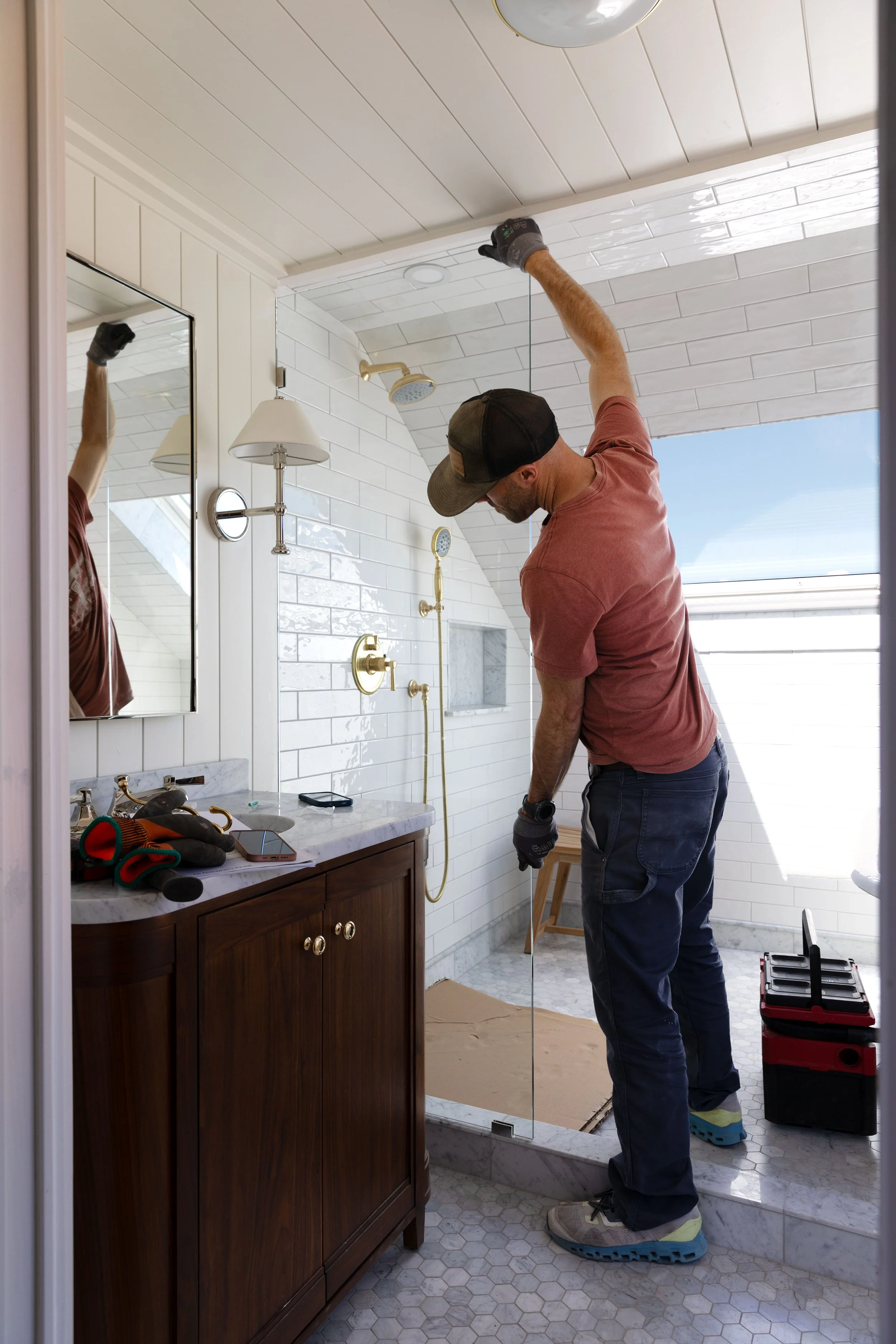

a little brass experiment