
How to Care for Marble Countertops in a Bathroom
THE HILL HOUSE
If you’ve been around here for a while, you know I’m firmly in the pro-marble camp. We’ve used it in a number of houses now and written about why we love it, how it wears, how to remove stains, and why I still think it’s worth it even though it’s not the most bulletproof material on the planet. But most of that marble experience has lived in kitchens, where the spills are bigger and the messes are more dramatic. Bathrooms are a little different.
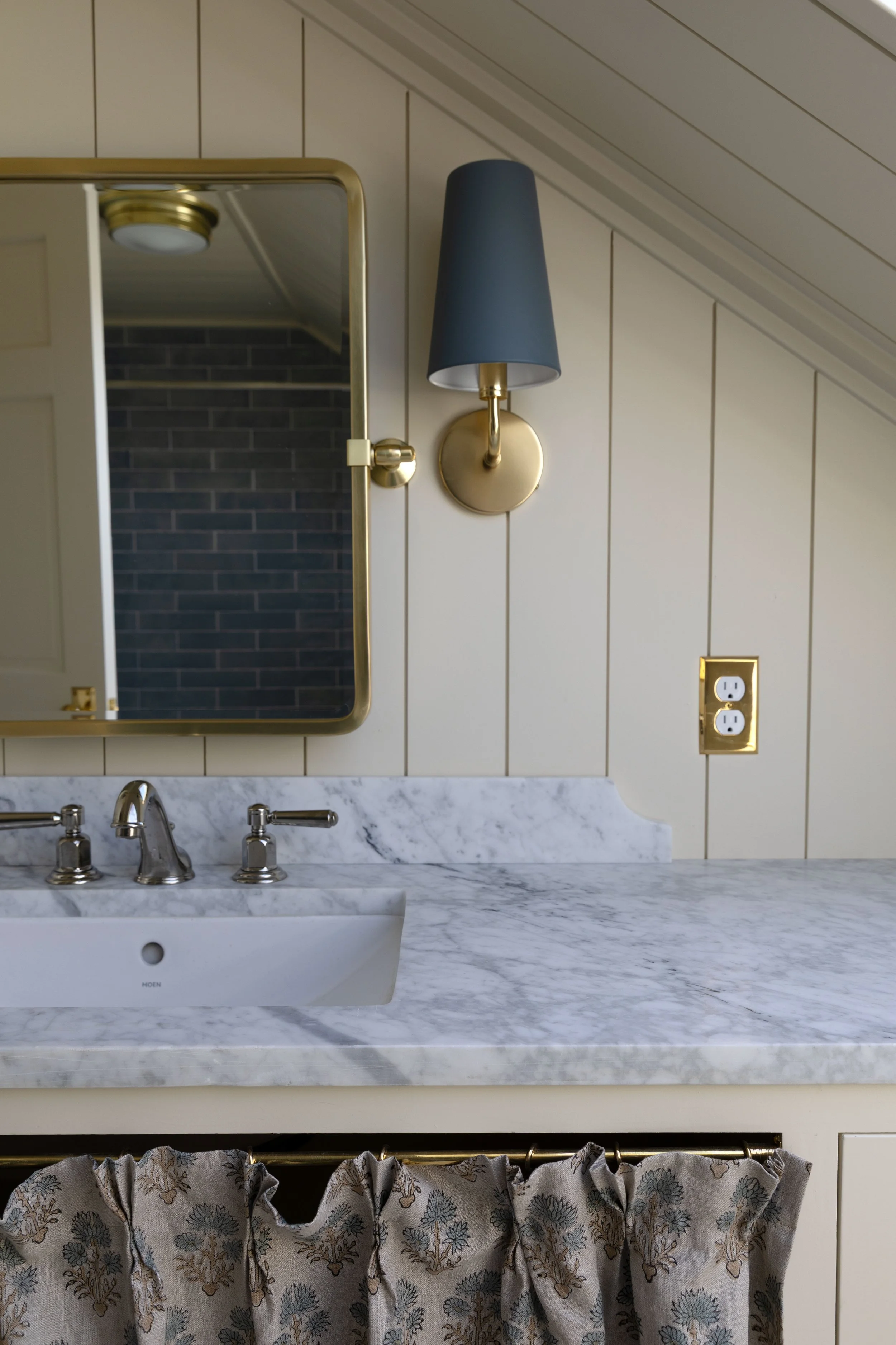
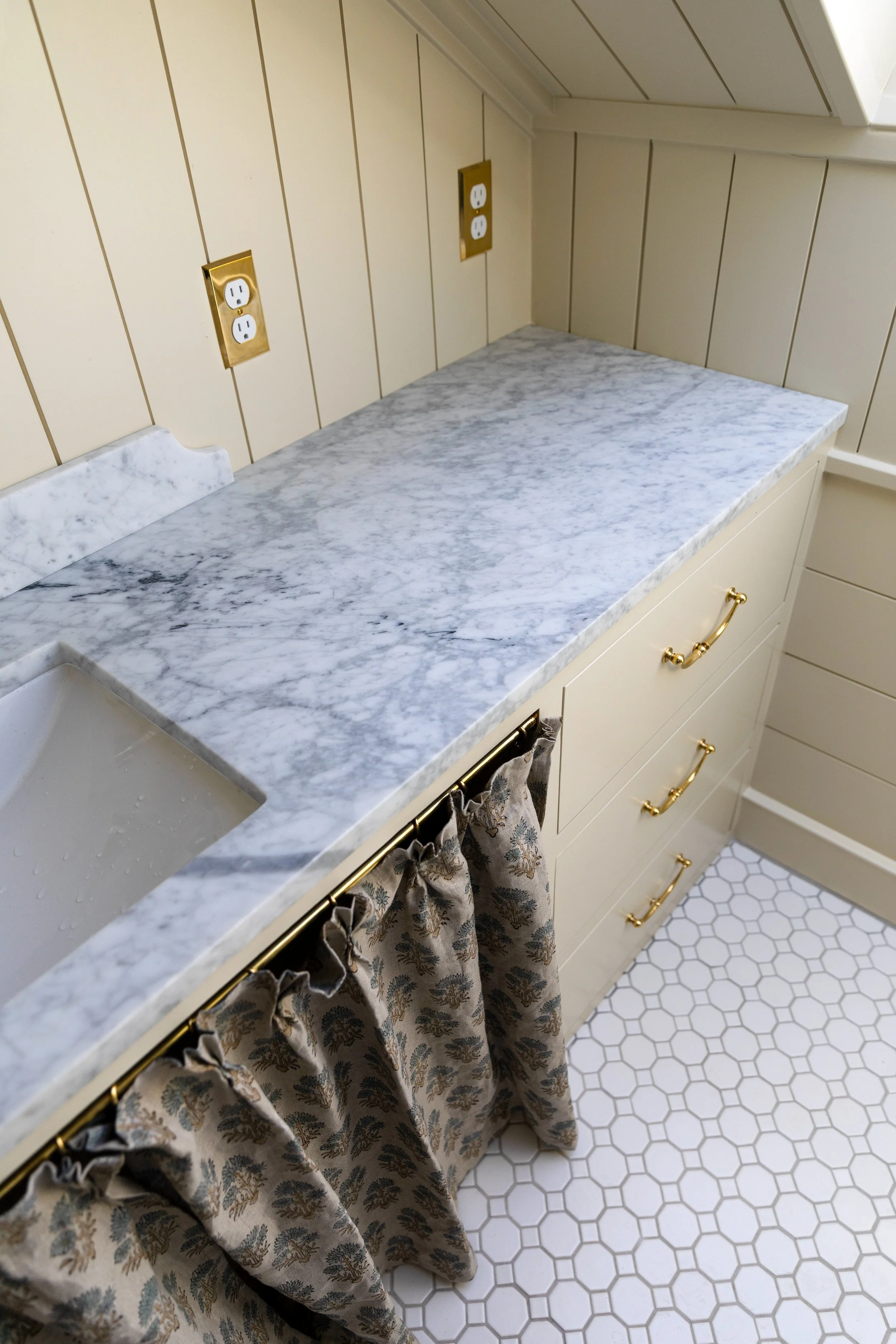
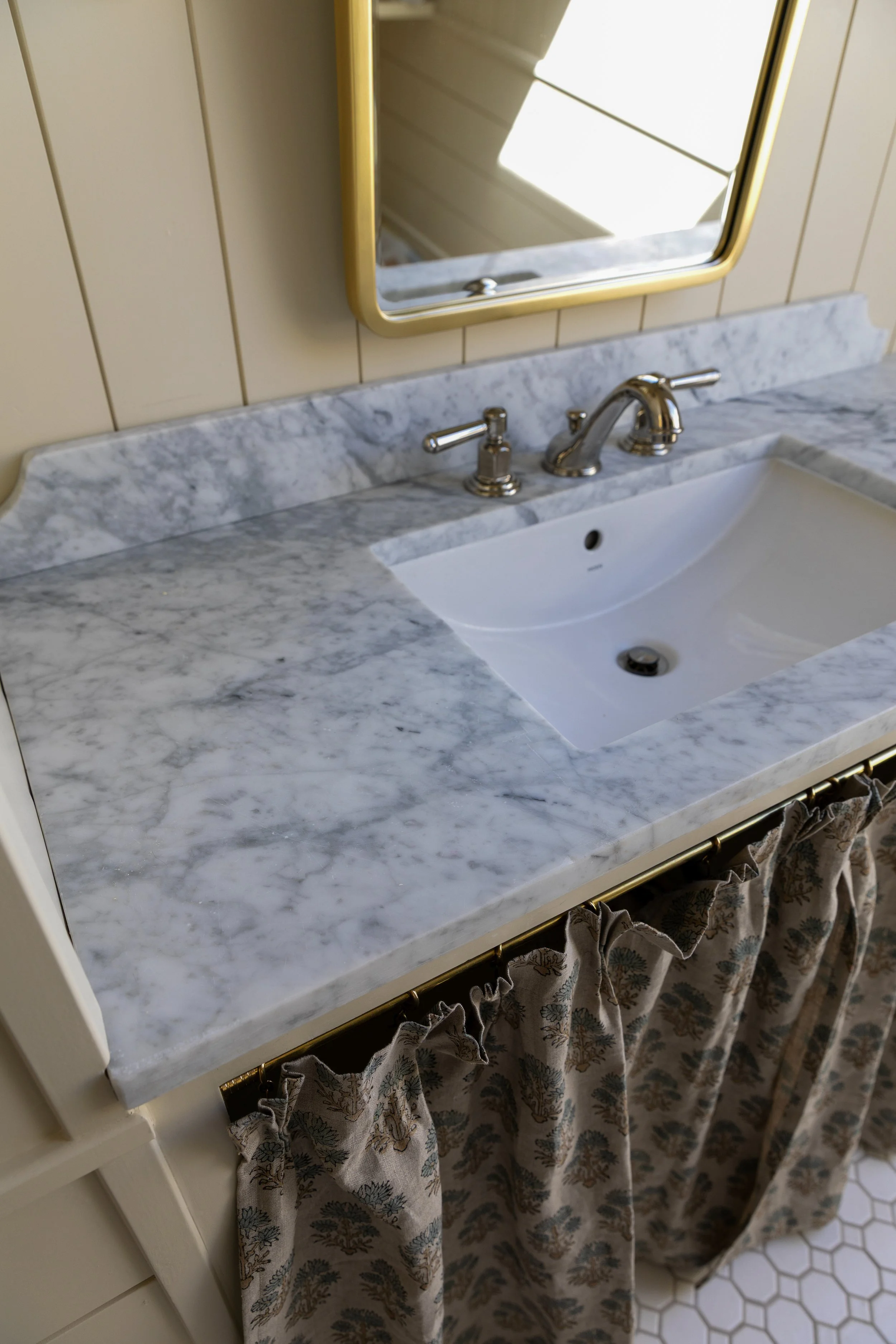
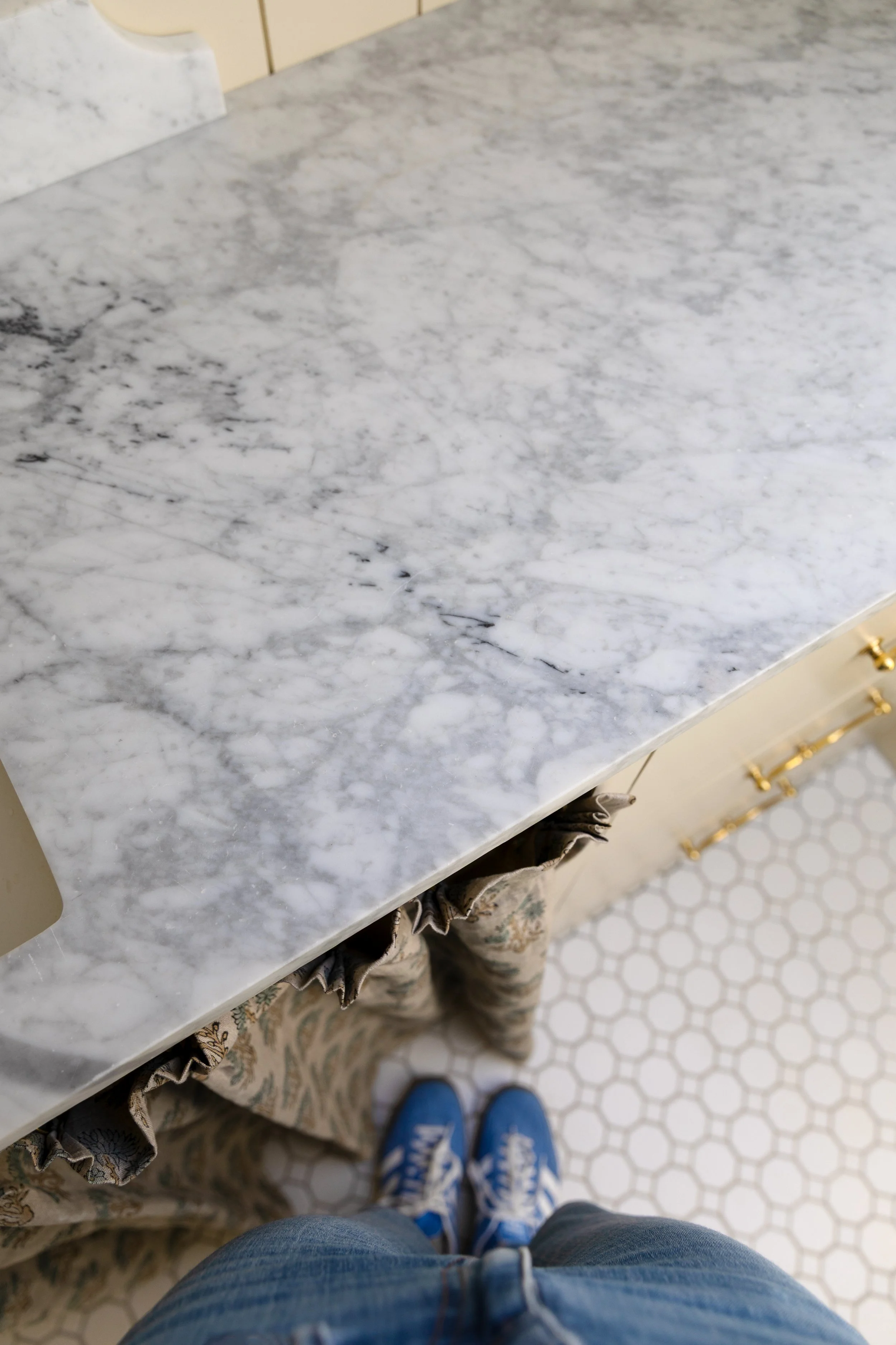
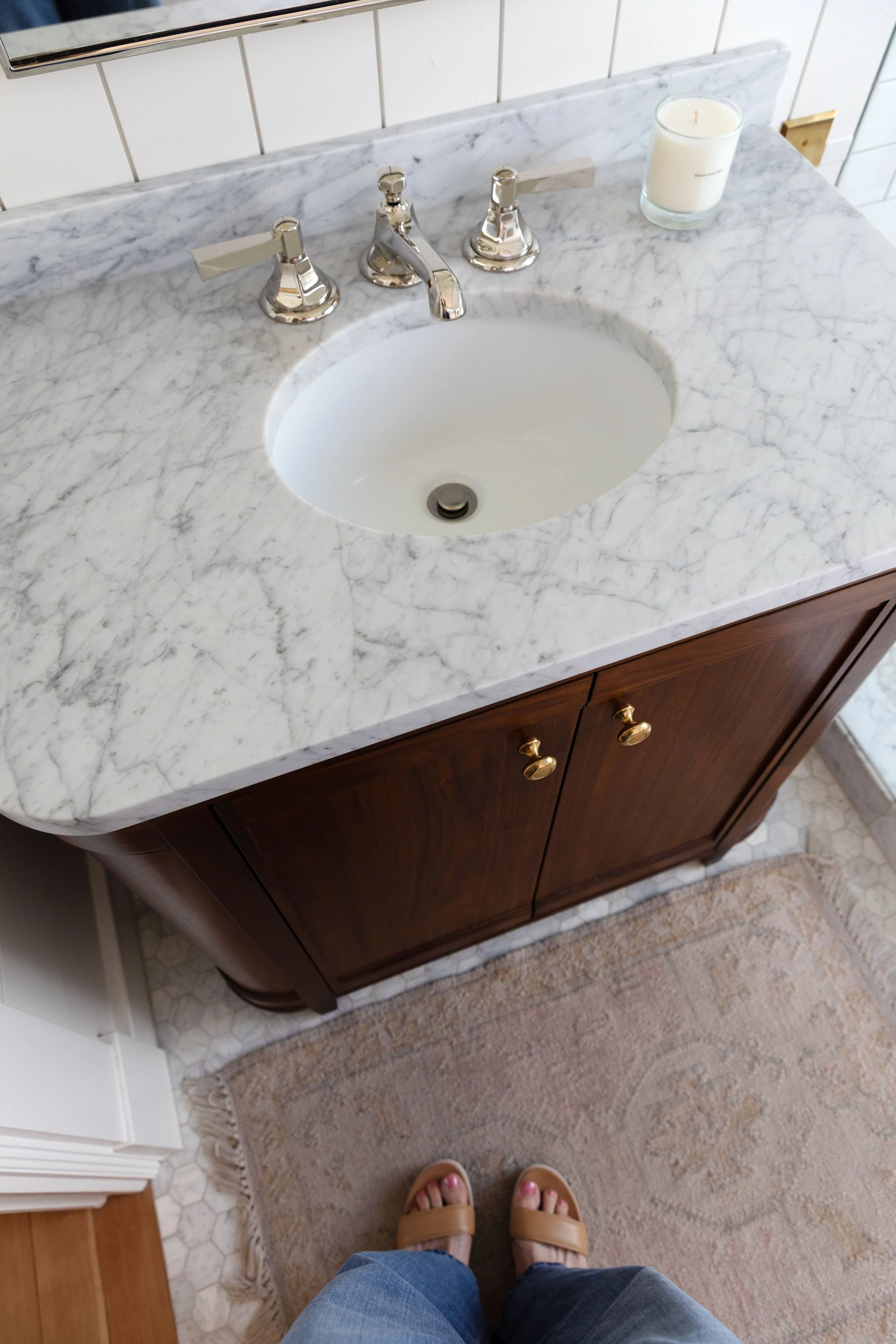
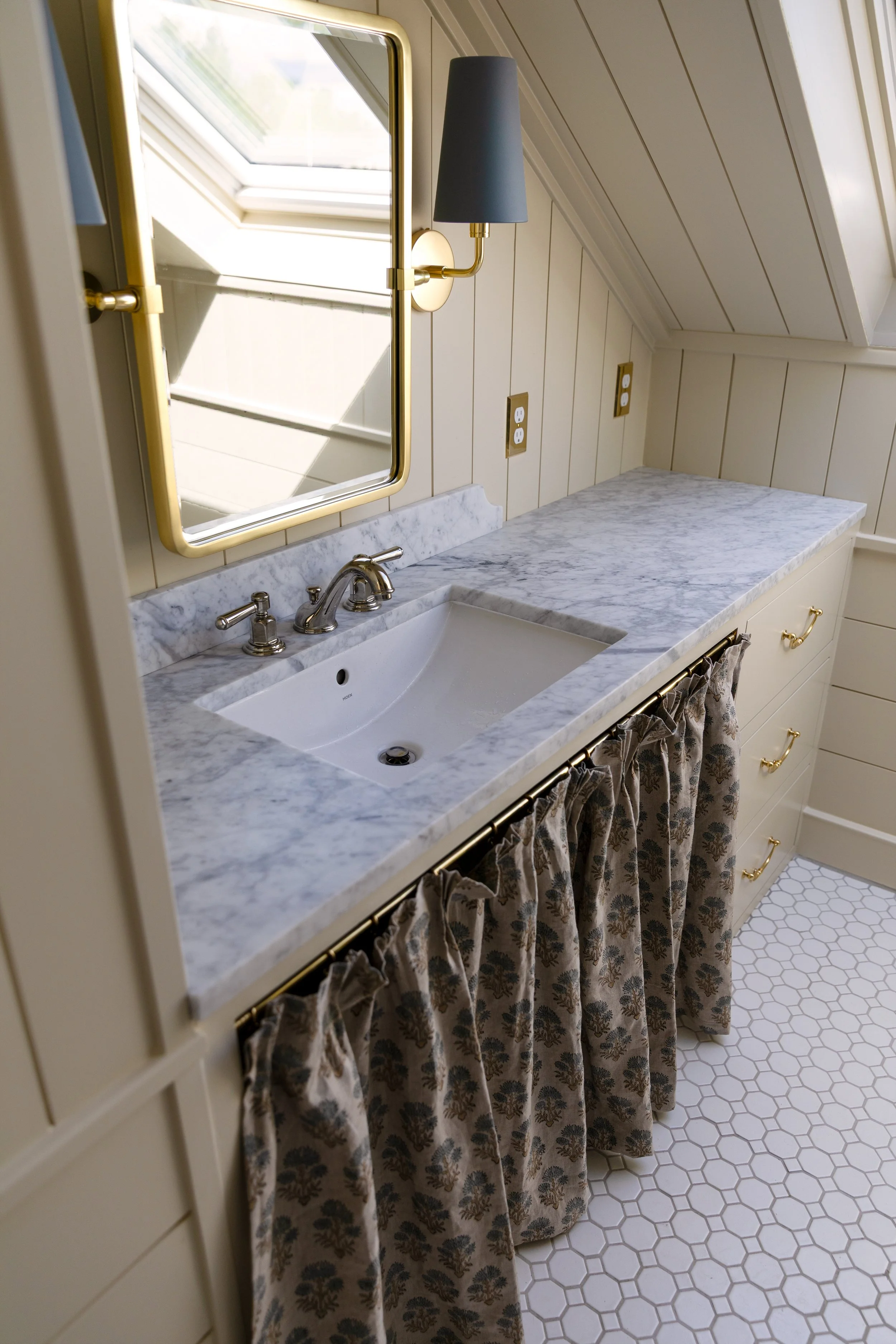
Our Hill House hall bath has a salvaged honed marble countertop that we found at a local architectural salvage shop, and I’m completely smitten with it. It brings so much softness and soul to the room. But because this bathroom will be used heavily by our three kids, I’ve also been thinking about the practical side of it - what marble maintenance actually looks like in a bathroom, what I’m watching for, and whether marble is still worth it in a hardworking space like this. Spoiler: I still think yes! Today I’m sharing how we care for marble in a bathroom, the exact product we seal it, how honed marble differs from polished, and what to expect over time, wear-wise. Let’s get into it…
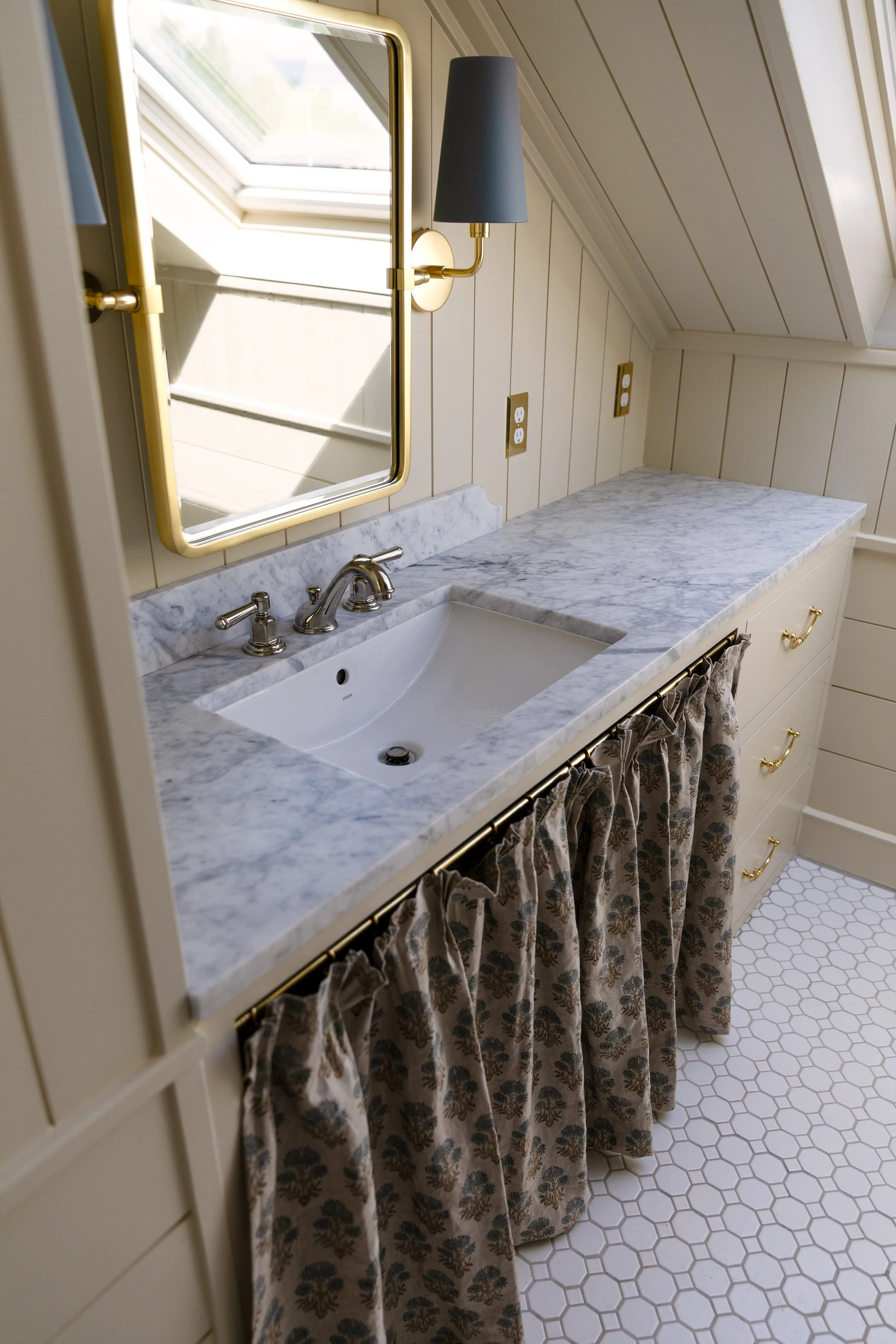
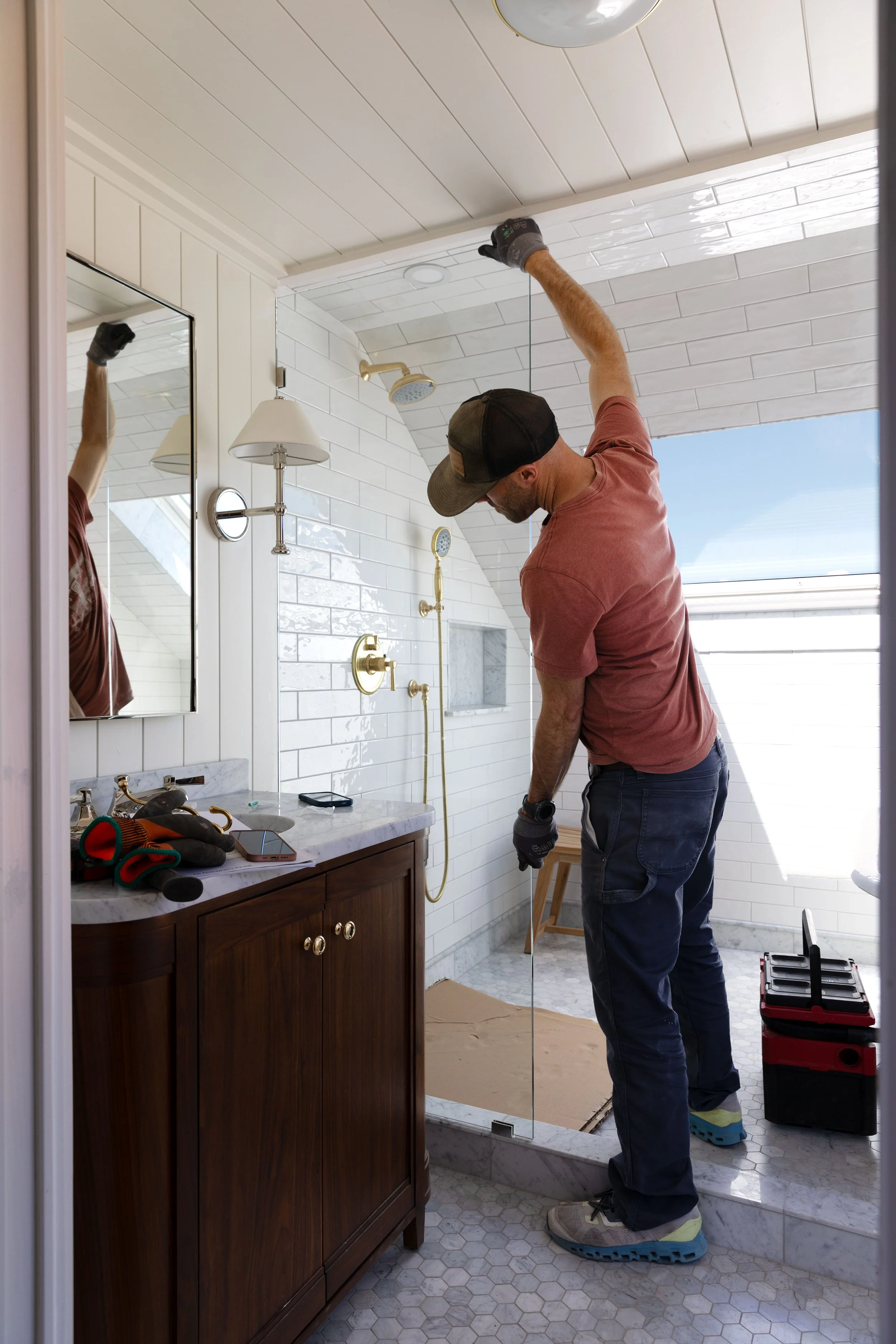
mirror, skirt, faucet, sconces, ceiling light, floor tile, paneling, skylight, sink, outlet cover, wall tile, color: F&B off white
Our Hill House Marble Countertop Backstory
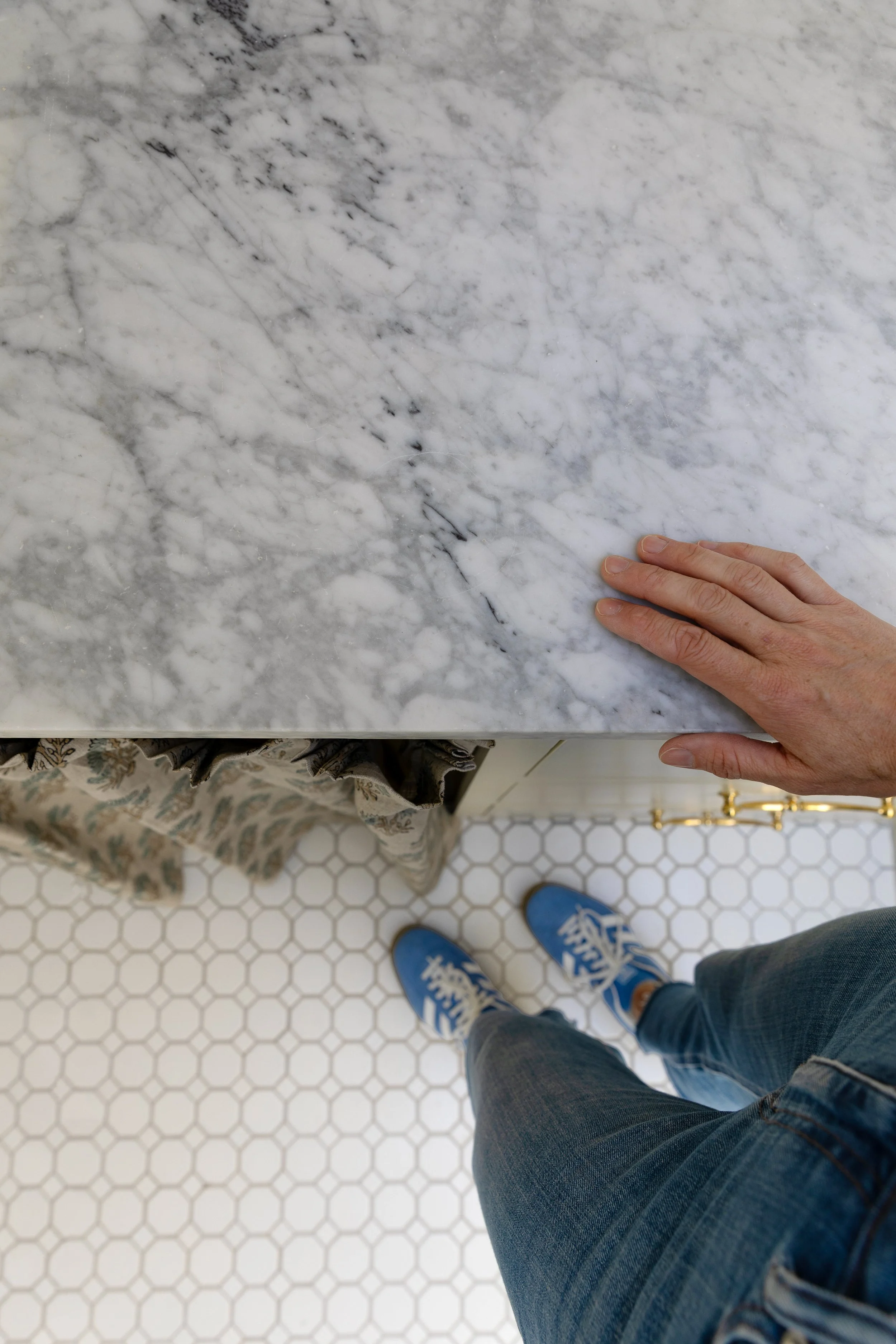
This countertop has a bit of a story, which makes me love it even more :) We sourced the remnant from an architectural salvage shop in Seattle after looking at multiple stone yards. This piece of marble had been previously used in a kitchen as a island countertop, and we picked it up for just $179. It was labeled as quartzite, but after bringing it home and working with it, we’re about 99% sure it’s marble.
Garrett fabricated our vanity countertop himself and the final result is SO good! The marble is incredibly beautiful by itself but add in the signs of it’s previous life - subtle scratches, chips, etchings, and character! - and it’s even more beautiful. I couldn’t love it more.
Another nice thing about it being a piece of salvaged marble that’s not perfect is that I’m even more relaxed about the maintenance side of things. This isn’t a precious, untouchable slab. It’s a well-loved stone, in a real family bathroom, in a very real old house. The expectations are lower.
Is Marble a Good Choice for a Bathroom?
In my opinion, yes!
In fact, I think bathrooms are one of the best places to use marble if you love the look but feel a little nervous about the upkeep. A bathroom vanity usually sees a gentler kind of wear than a kitchen counter. There’s still toothpaste, hand soap, makeup, standing water, hair products, and the occasional mystery mess, of course. But it’s not usually getting lemon juice, tomato sauce, oil splatter, hot pans, red wine, and dinner prep thrown at it all day long.
That doesn’t mean marble in a bathroom is maintenance-free. It still needs a little thought. But the risk level feels lower, and the reward is very high if you also love the warmth and softness marble brings to a space.
Do Marble Bathroom Counters Need to Be Sealed?
Yes - especially in a hardworking bathroom!
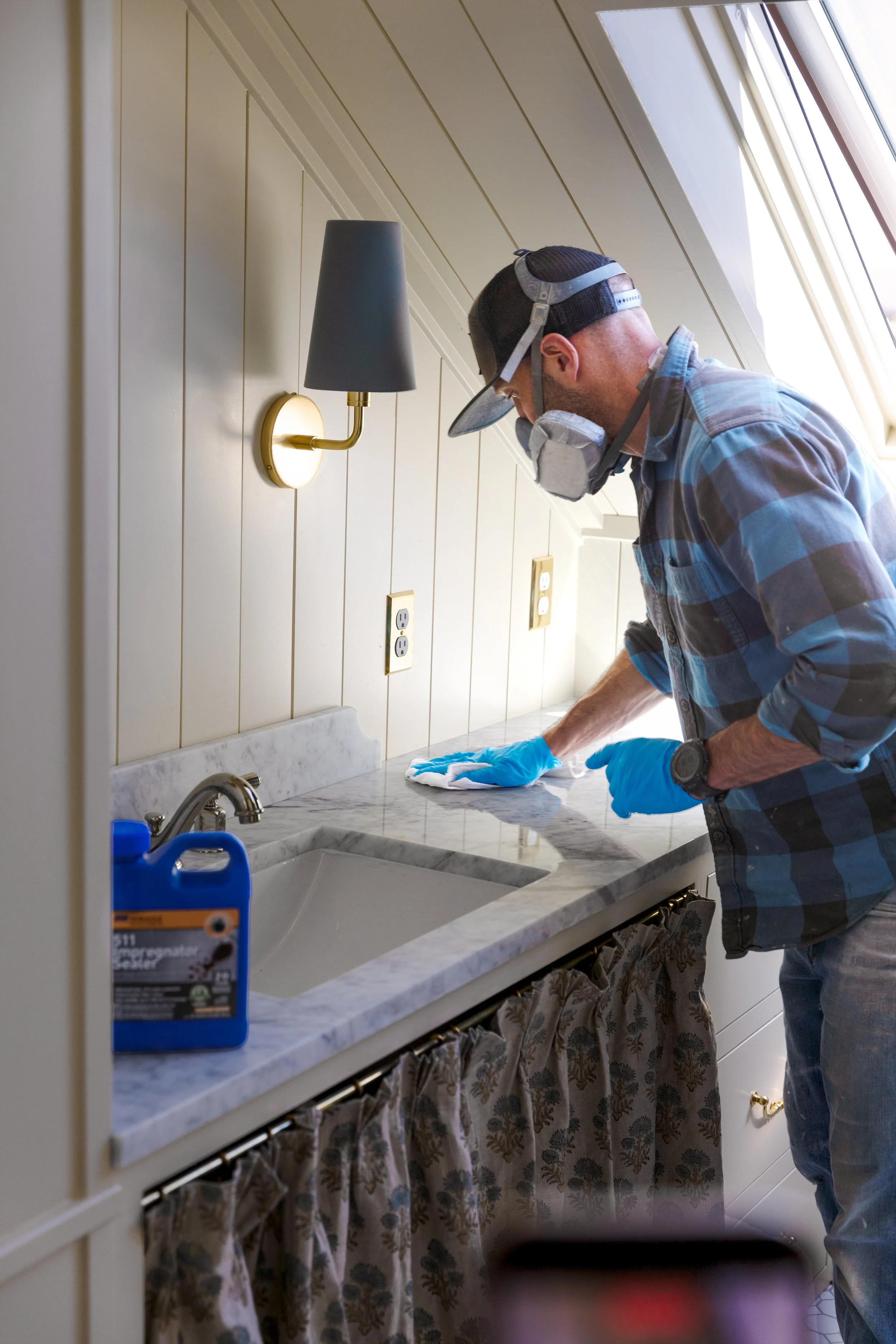
Sealer doesn’t make marble invincible, but it does help buy you time. A good penetrating or impregnating sealer is designed to slow down how quickly water and oil-based messes soak into the stone, which makes everyday maintenance a lot easier. It will not prevent etching from acidic products, but it can help with staining.
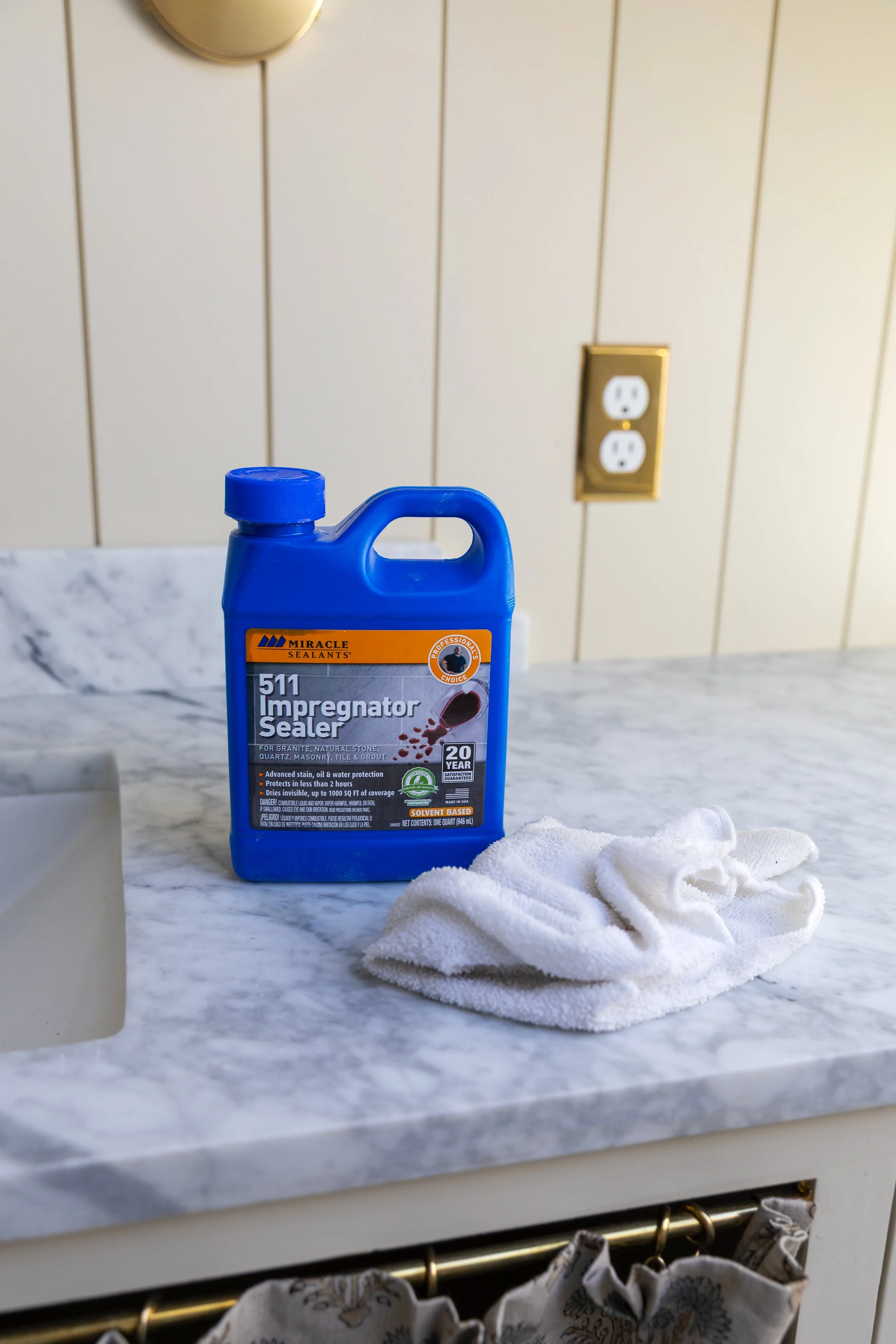
This is the sealer we use and recommend:
It’s a penetrating sealer made for countertops, stone, tile, and grout. I wanted something that would soak into the marble and help protect it without leaving a coating on the surface or changing the look of the stone. We’ll use this same product for the marble tile in the ensuite bathroom to come.
Is the Best Sealer Different for Honed vs Polished Marble?
We use the same type of sealer whether it’s for a honed and polished countertop - a penetrating or impregnating sealer (NOT a topical finish!). What changes when we’re talking honed vs. polished is the stone’s absorbency.
Polished marble is less absorbent than honed marble because the polishing process closes up more of the surface pores. Honed marble has a more open, matte finish, so it tends to absorb faster and usually benefits from more frequent sealing. MSI’s marble guidance notes that polished marble is significantly less absorbent than honed marble and suggests honed marble may benefit from a stronger sealer approach.
That lines up with what we’ve seen in real life, too. Honed marble is a little more forgiving visually, which I love, but it does ask for a little more attention on the sealing side.
How Often Should You Reseal Marble in a Bathroom?
This depends on the stone, the finish, and how hard the bathroom is being used, so I would not treat any one timeline as gospel. But a reasonable starting point is:
honed marble: often every 3 to 6 months
polished marble: often every 6 to 12 months
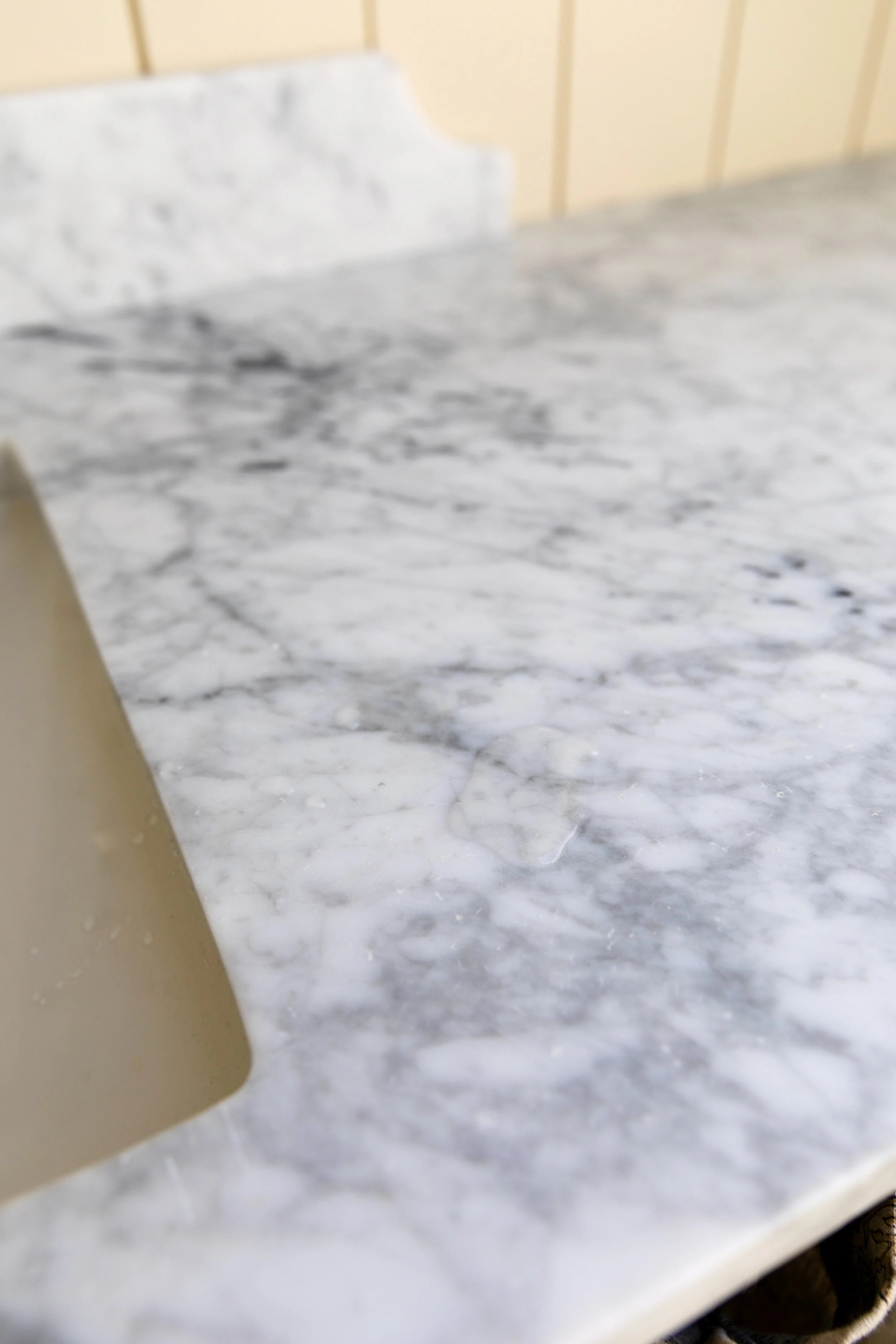
Start there, and then watch your stone. You’ll know it’s time to seal again when water no longer beads up on the surface very well or the stone seems to darken quickly when it gets wet. Fabricator guidance commonly recommends more frequent sealing for honed marble than polished for exactly that reason.
For our hall bath, since it’s honed and will be used by kids, I’d rather start a little more cautiously and see how it behaves We sealed it last week and I’ll plan to do it again in the summer, but sooner if need be.
What Marble Maintenance Looks Like in a Bathroom
The good news is that caring for marble in a bathroom is actually pretty simple day to day. It mostly comes down to a few habits…
1. Wipe up standing water
This is probably the biggest one in a bathroom. Water pooling around the faucet base or sitting along a caulk line isn’t great for any countertop, but marble is happier when moisture doesn’t linger too long.
To be clear, I’m not over here polishing the sink after every hand wash. But if the counter is really wet, I’ll give it a quick wipe. And I’ll encourage my kids to do the same.
2. Use gentle cleaners
Marble does not love harsh, acidic, or abrasive cleaners. We keep things simple and stick to mild soap and water or a stone-safe cleaner. This is not the place for random all-purpose sprays just because they happen to be under the sink. For example, Seventh Generation’s own guidance says its all-purpose cleaner is not safe for marble, sealed or unsealed - so don’t assume any “natural” cleaner is automatically marble-friendly.
3. Expect a little life
This is less of a maintenance task and more of a mindset. Marble will not stay factory-perfect forever. It is not quartz. And that’s a huge part of why we love it. It will likely etch a bit. It may pick up some softening around the sink over time. It may get a spot now and then that needs attention. Chips, scratches, dents - these are all possibilities. Mable will age and show wear and that’s just part of living with it.
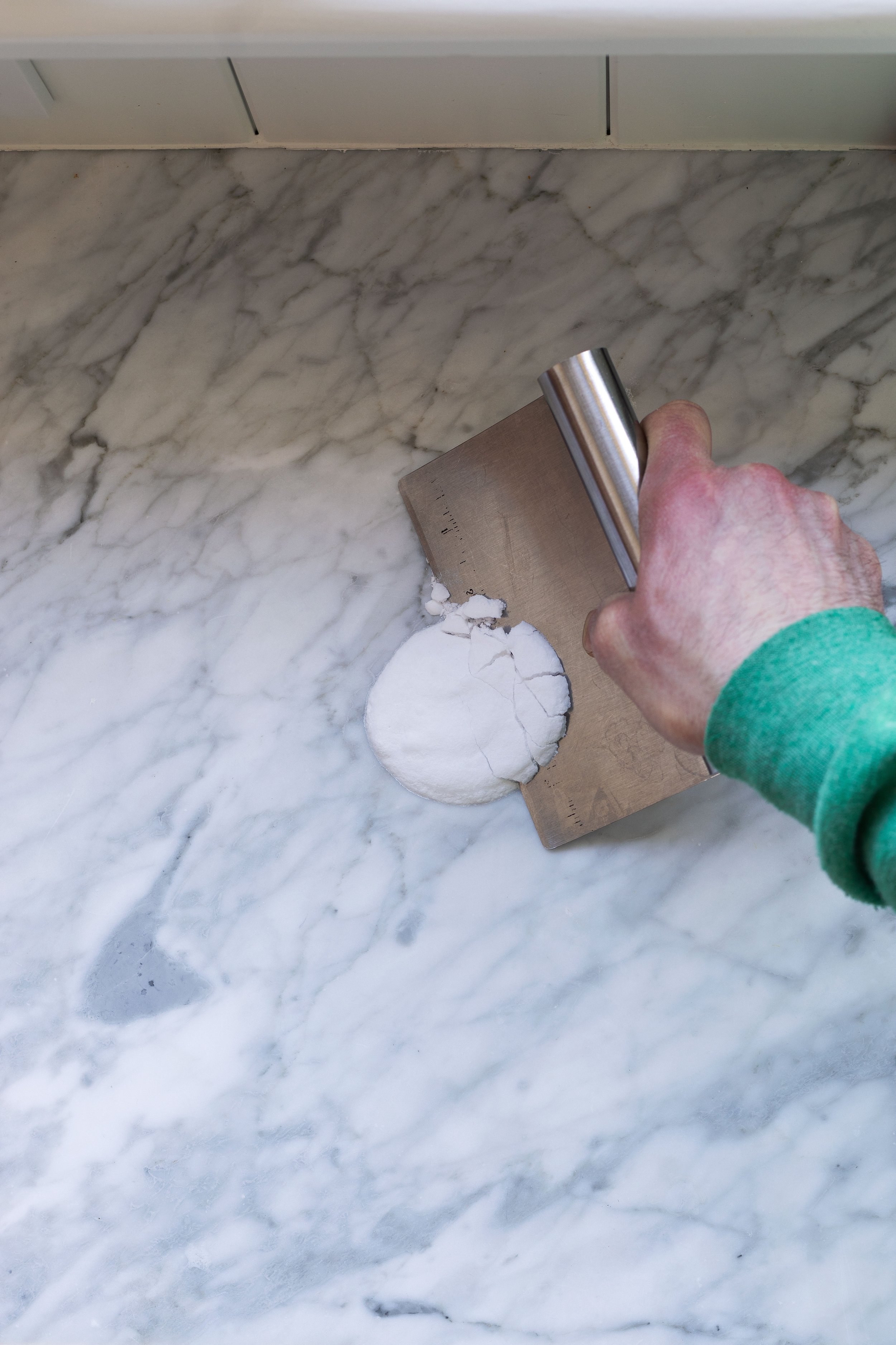
4. Deal with stains when they happen
If marble gets stained, it’s not automatically ruined. We’ve shared how we lift stains out of marble with a homemade poultice before - we’ve had great luck with stains that looked pretty set in! The recipe utilizes basic household ingredients and I think you’d be amazed at the stains that can come out of marble! It’s one of those good little house tricks to keep in your back pocket. If you’re dealing with a stain, I’d start there.
What I’d Watch for in a Kids’ Bathroom
Since this hall bath will be used mostly by our kids, these are the things I’m most aware of:
toothpaste blobs sitting too long
puddles around the faucet
brightly colored soaps or bath products
the general chaos of children doing literally anything near a sink
None of that has scared me off marble, but it does make me more realistic about how the counter will age. I’m not expecting it to stay pristine. I’m expecting it to live alongside us, which feels like a much healthier expectation anyway :)
My Honest Thoughts on Marble Maintenance
I think people sometimes talk about marble in one of two extremes: either it’s impossibly fussy and you’ll regret it forever, or it’s carefree and you’ll never notice a thing. For me, the truth lies somewhere in the middle.
Marble is pretty low maintenance but you do need to pay a little attention. It rewards you with warmth, softness, depth, and a kind of natural beauty that manufactured materials just can’t quite replicate. That tradeoff feels well worth it to us, especially in an old house where the slightly imperfect, gently-aged look feels right at home.
Would I choose marble again for a bathroom? Absolutely.
Would I choose it expecting it to stay exactly the same forever? Nope.
Our Simple Marble Care Routine
If it’s helpful, here’s what our marble care routine generally looks like:
seal the stone with a penetrating sealer meant for dense natural stone
reseal based on how the surface behaves, not just the calendar
wipe up standing water when you can
clean with mild soap and water or a stone-safe cleaner
skip harsh, acidic, or abrasive products
use a poultice if a stain shows up
accept changes as part of the aging process
That’s really it. Nothing too difficult. Just a little common sense and a willingness to let natural materials be natural materials.
Final Thoughts
One of the reasons I keep coming back to marble is that it doesn’t feel sterile. It feels natural and alive. In the Hill House hall bath, the salvaged slab adds exactly the kind of depth and old-house charm I was hoping for. It grounds the room, softens all the painted paneling and tile, and makes the vanity feel a little more storied and a little less brand new. And while yes, it will need a little care, I don’t think that care is unreasonable at all, especially in a bathroom.
More soon!
xx
ps we may receive a small affiliate commission if you purchase something through our links, at no cost to you. Thank you for supporting the Grit and Polish!


a little brass experiment