
Are Heated Bathroom Floors Worth It? What We’d Do Again, What Failed, and What We Learned
THE HILL HOUSE
Let me just start by saying, I love heated bathroom floors! Walking into a bathroom on a cold morning and feeling warm tile under your feet is just one of those little luxuries that makes life a little better. We live in a true four-season climate, so maybe this is more of a northerner thing, but I will happily make the case for heated floors every chance I get! Sowhen it came time to renovate the two upstairs bathrooms at the Hill House, we added them to both: the hall bath and the ensuite. But this round taught us a few things the hard way and one bathroom’s floors failed (after all that work 😭). So today I’m sharing the heated floor system we used, where I think radiant floor heat is most worth it, what happened when one of ours failed, and what we’d absolutely do differently next time. Let’s get into it…
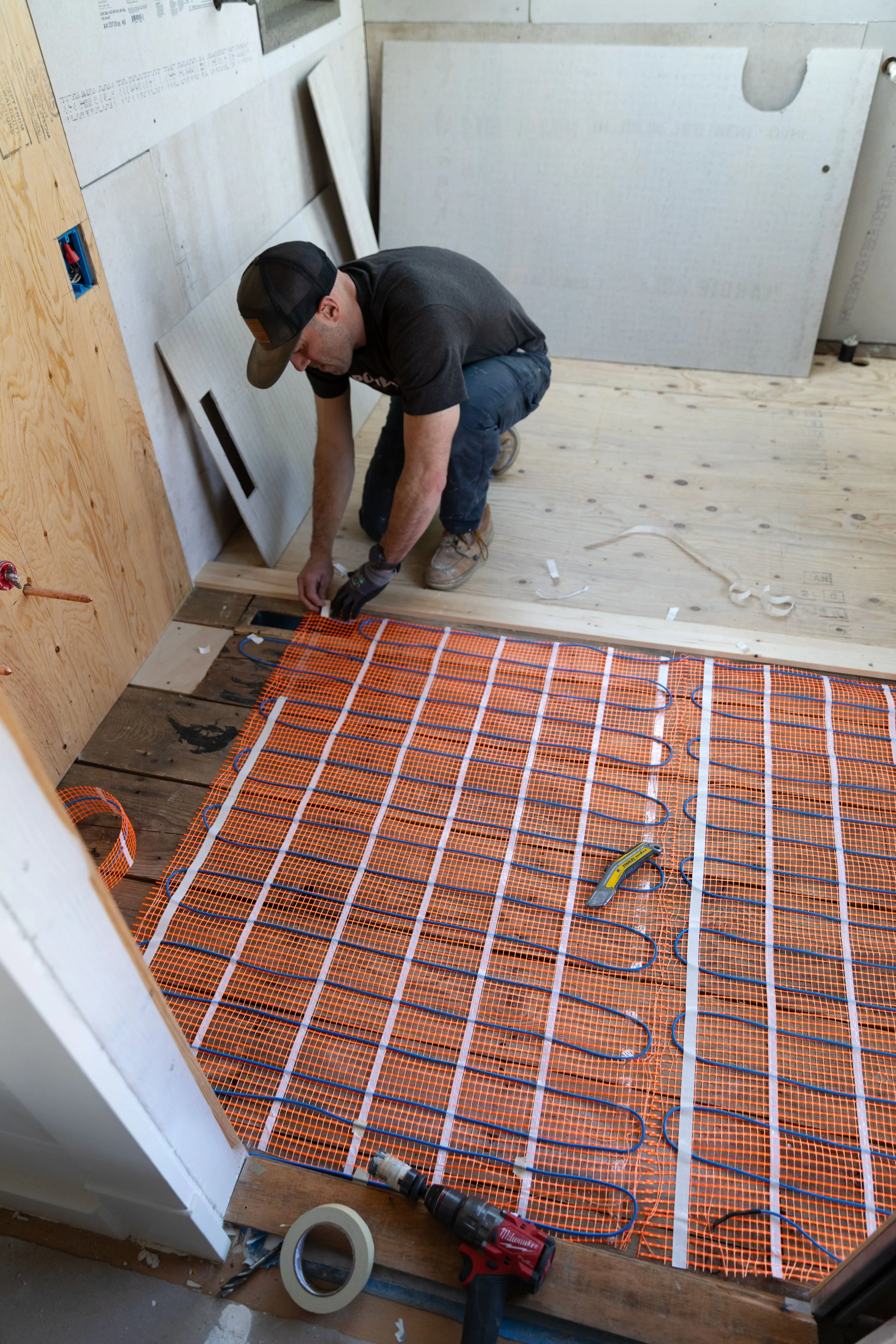
What are heated floors & how you install them
Heated floors are exactly what they sound like - a system installed beneath your finished floor to warm it, which in a bathroom mostly means much happier bare feet on cold mornings :) There are two main types of heated flooring, electric and hydronic. Electric systems, like the one we used at the Hill House are made of cables or mats that warm up using electricity, and hydronic systems run warm water through tubing (these are more common in larger whole-house builds). We used an electric floor heating mat, which we’re sharing all about today.
The heated floor system we used
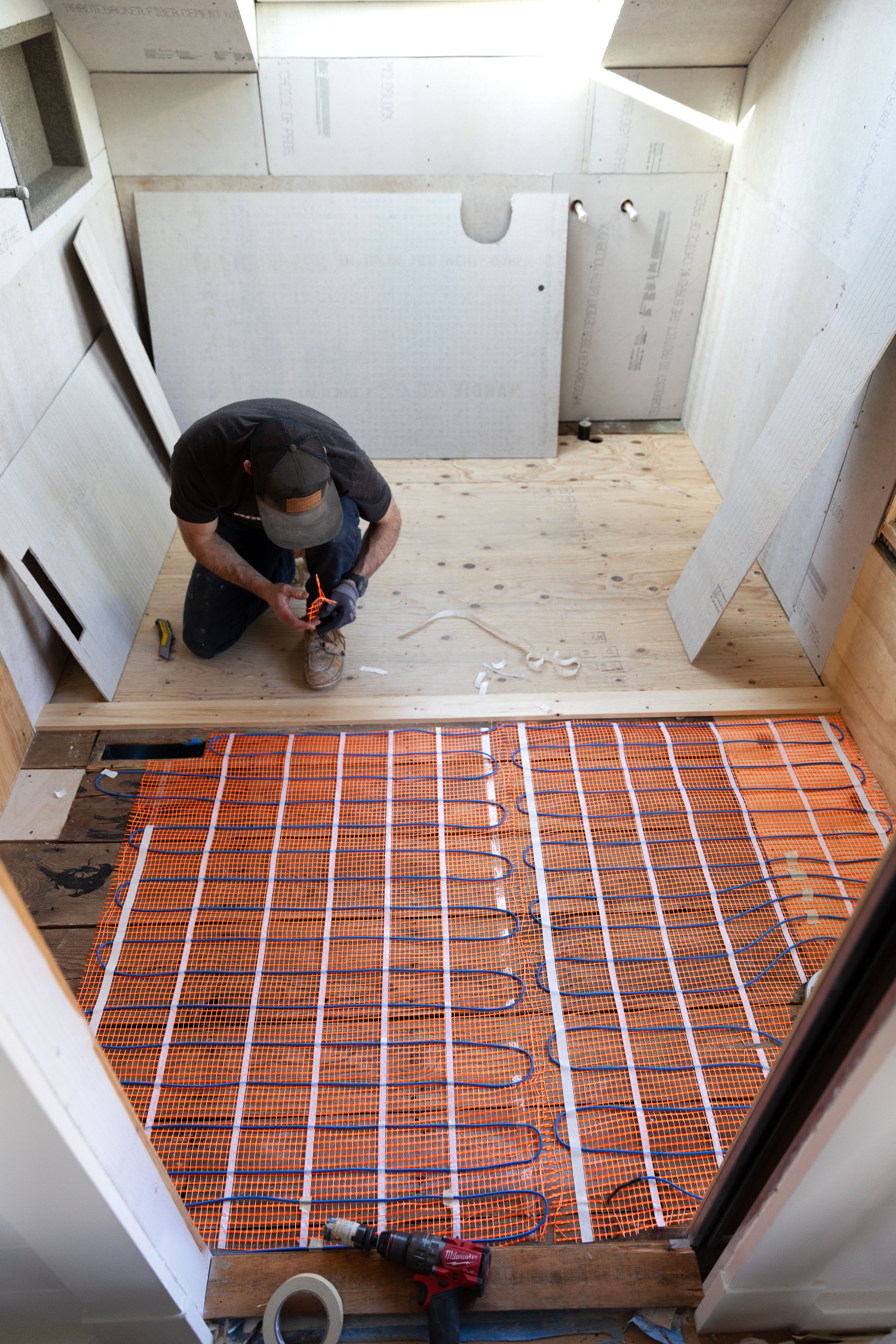
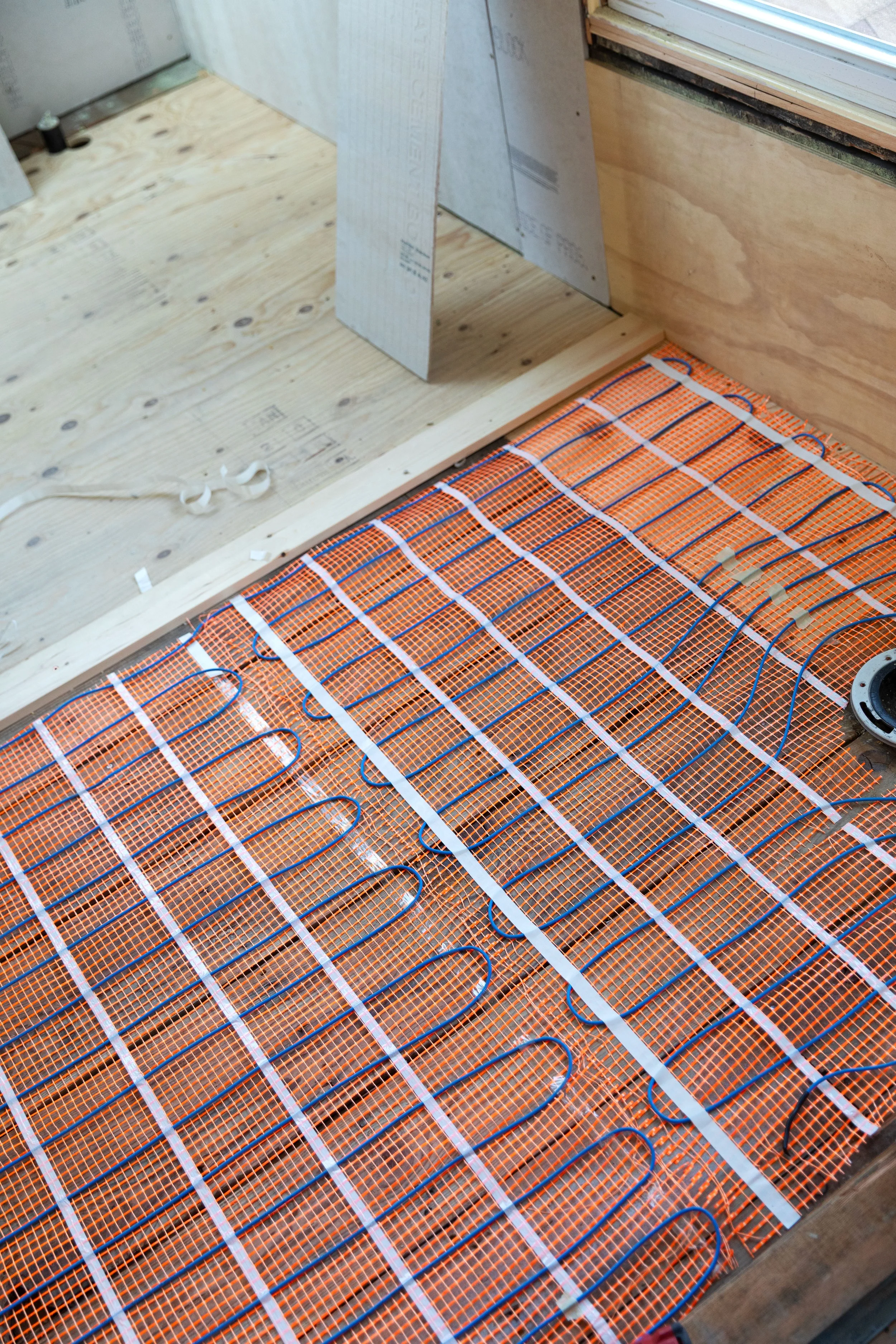
We used electric mats in both of the upstairs bathroom floors. Garrett bought the SunTouch TapeMat-style electric floor warming mat, which is designed to be installed over plywood, backer board, or concrete and then embedded in mortar beneath the finished floor. Garrett likes that they’re low-profile and relatively easy to add over wood subfloors with a peel-and-stick style install. They’re pretty slick!
Here’s how our install went for us:
lay out the heating mat over the existing wood subfloor / plywood patches
Add a layer of thinnest and cover with hardibacker
tile over the top as usual
BTW we did not run it under the shower/wet room area in the ensuite - I’m just a little nervous mixing electricity directly under shower pans.
As far as DIYs go, this is a very approachable project. It adds a little extra electrical work (they require their own dedicated circuit) and planning but the install is really straightforward.
Are heated bathroom floors worth it?
For us folks who live in a four-season climate? Absolutely!
Bathrooms are one of the best places to splurge on this kind of comfort. They’re small enough that the cost and work feels manageable, and the payoff is immediate. Cold tile on bare feet in January? No thank you. But warm tile? It just makes winter a little bit better :)
And because electric floor heat is really more of a slow-and-steady warmth than an instant blast of heat, I think it’s best thought of as a comfort upgrade, not a primary heating source (though we did use it as the primary heat in the tiny Poplar Cottage bathroom, which is located near the upstairs mini split, and it’s been plenty). SunTouch’s system is intended for electric floor warming beneath hard surface flooring, and like most radiant systems, it works best when treated as background comfort rather than instant heat.
It’s worth noting that our upstairs bathrooms are over finished space so the floors don’t as cold as they would if they were over unheated basement or a crawlspace. But if anything, they’re even more worth it over unconditioned space.
Now if we lived in Hawaii or Southern California, I might feel differently. But for us northerners, heated floors are 100% worth it.
What it cost us
Materials were easily ordered online and here’s what they cost us for each bathroom:
~$400 for the floor heating mat ($350 for the smaller bathroom and $450 for the larger space)
$150 thermostat
$550 Total/bathroom
For toasty toes, $550 per bathroom feels totally worth it in my opinion! Of course we added our’s during a complete gut remodel so we were already demoing, rewiring, adding new floors, etc and I’m not including any of those expenses here.
Did heated floors change the floor height?
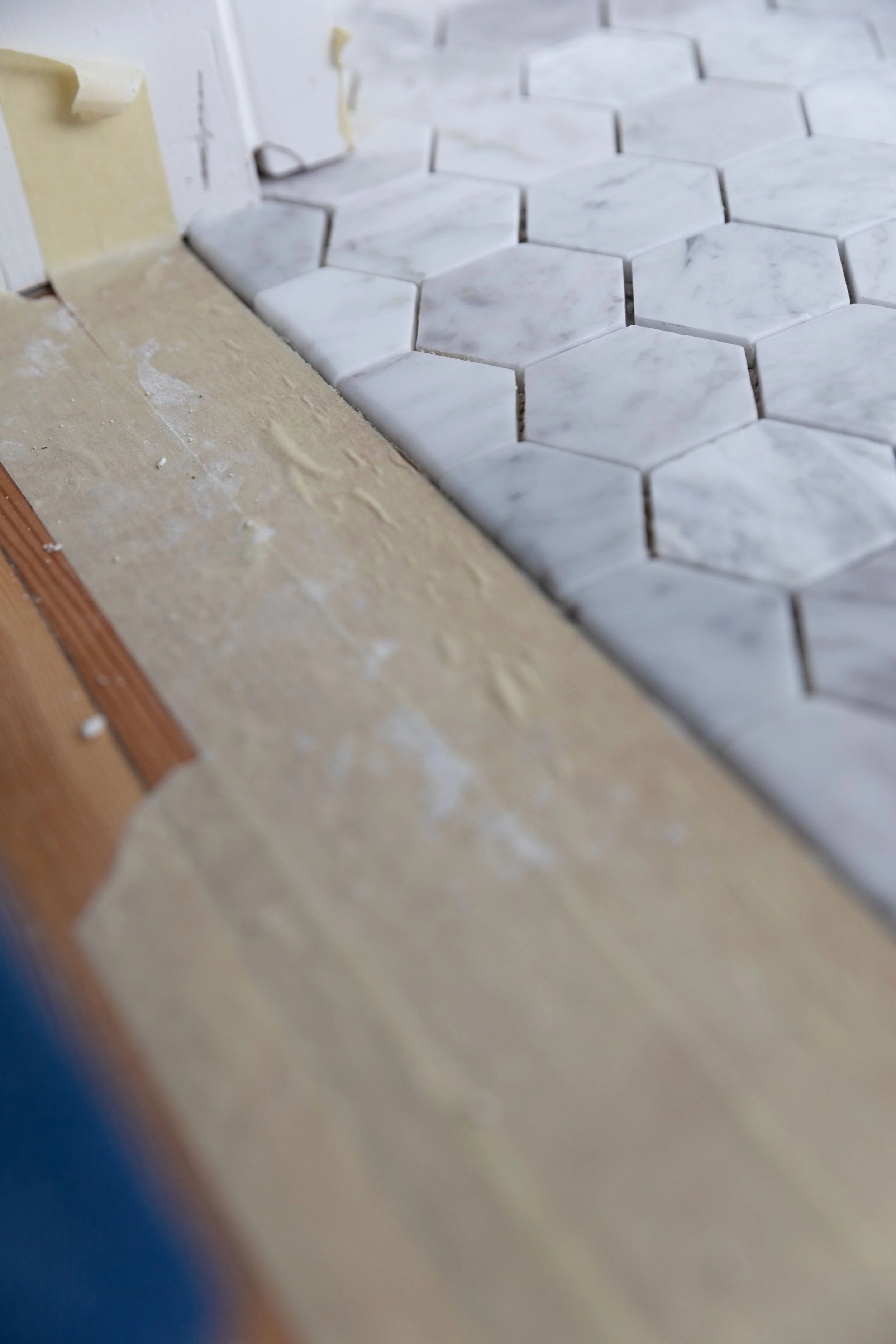
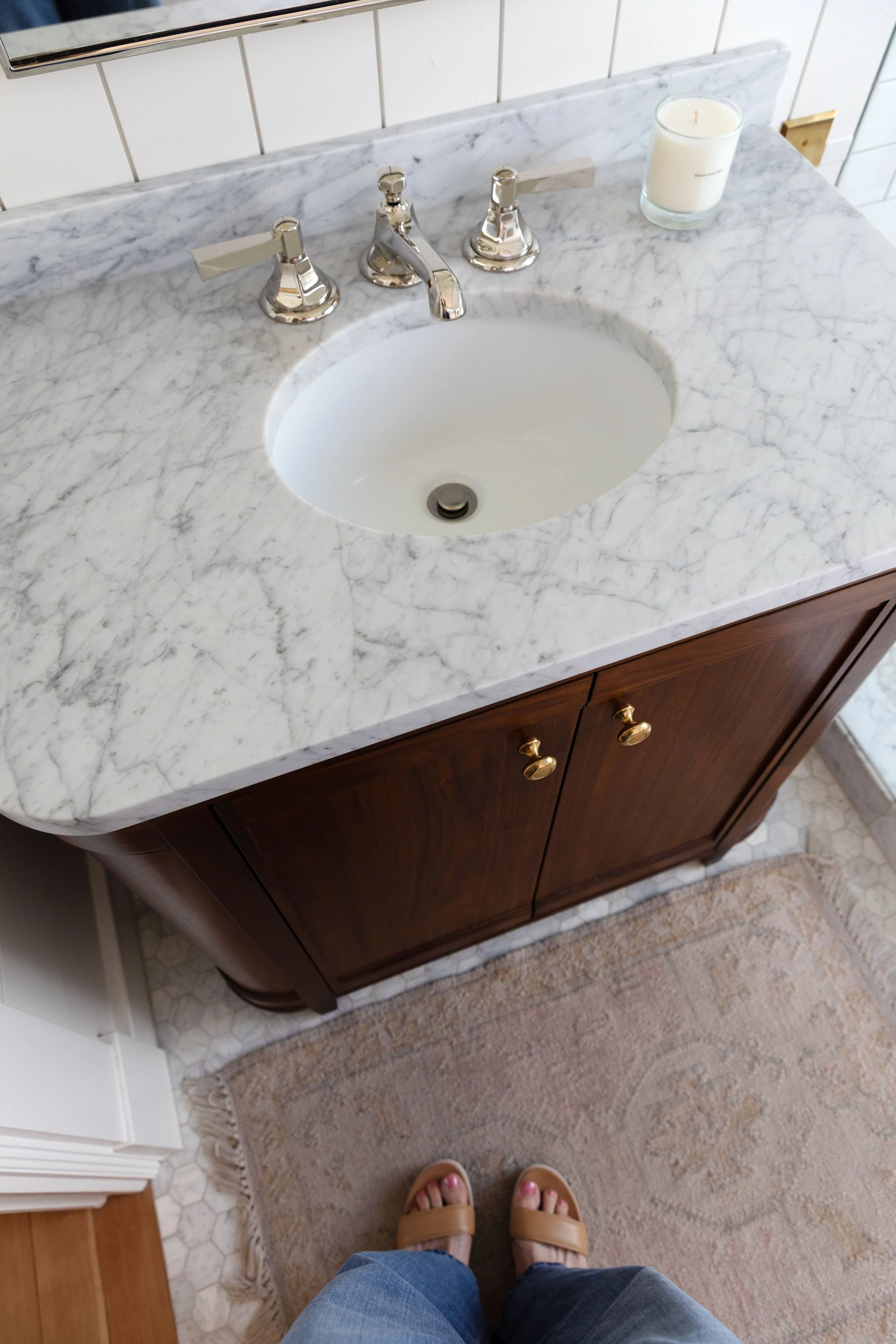
This is something I pay close attention to, because I really dislike awkward floor height transitions between rooms. Seriously, it’s one of my biggest pet peeves in old houses! In our ensuite bathroom, the finished tile floor ended up about 1/4 inch higher than the adjacent hardwoods, and Garrett softly rounded the edge of the marble tile on the threshold to make up the difference. It feels very old-house right and no one is going to notice the slight step in flooring height. I haven’t shared anything about the ensuite tiles yet so here’s a sneak peek…
In the hall bath, the tile ended up essentially level with the hardwood in the hallway. I think these tiles might be just a little bit thinner than the marble we used in the ensuite and that’s why there wasn’t a floor-height difference. But either way, the heated floors didn’t cause an issue with either threshold. Phew!
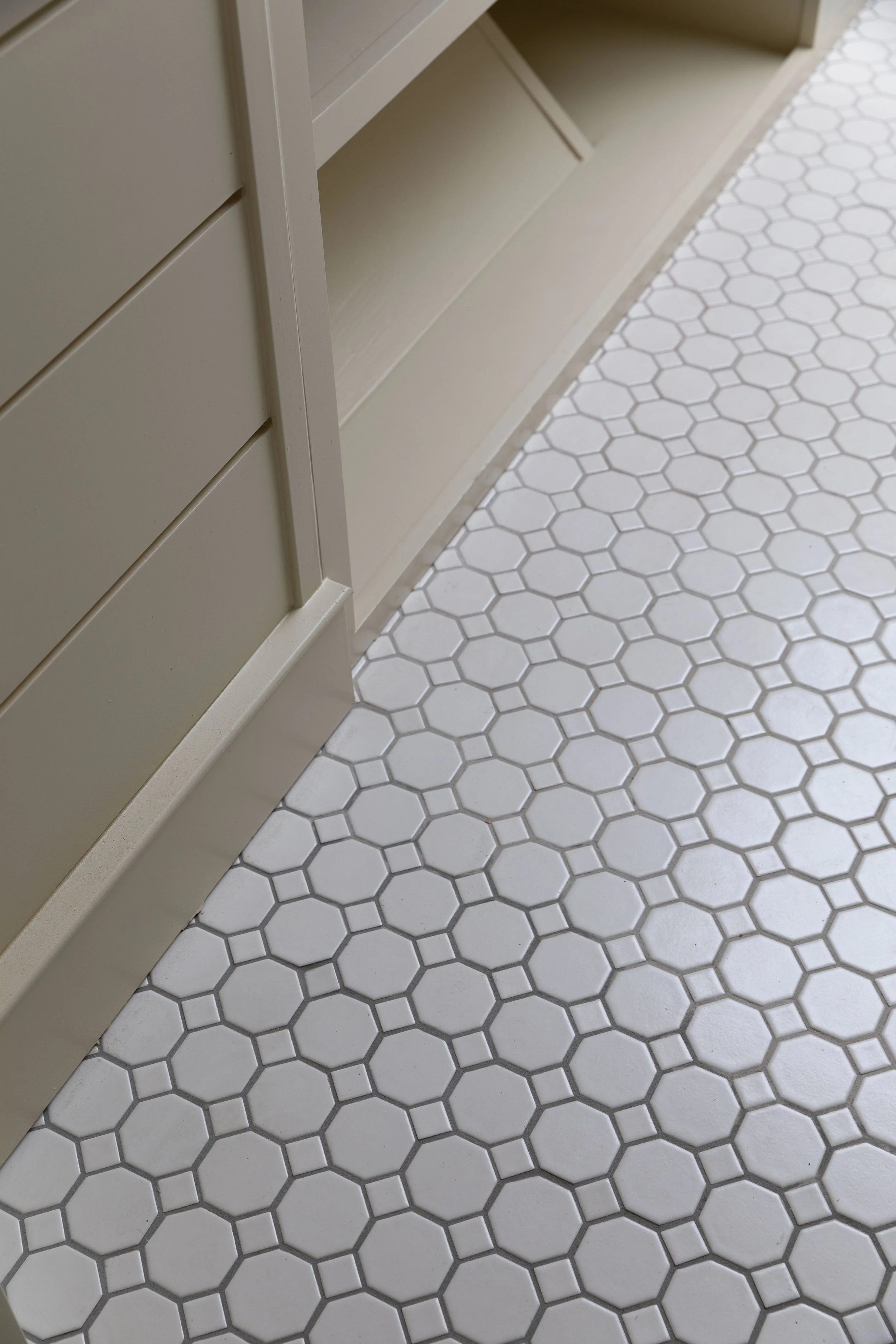
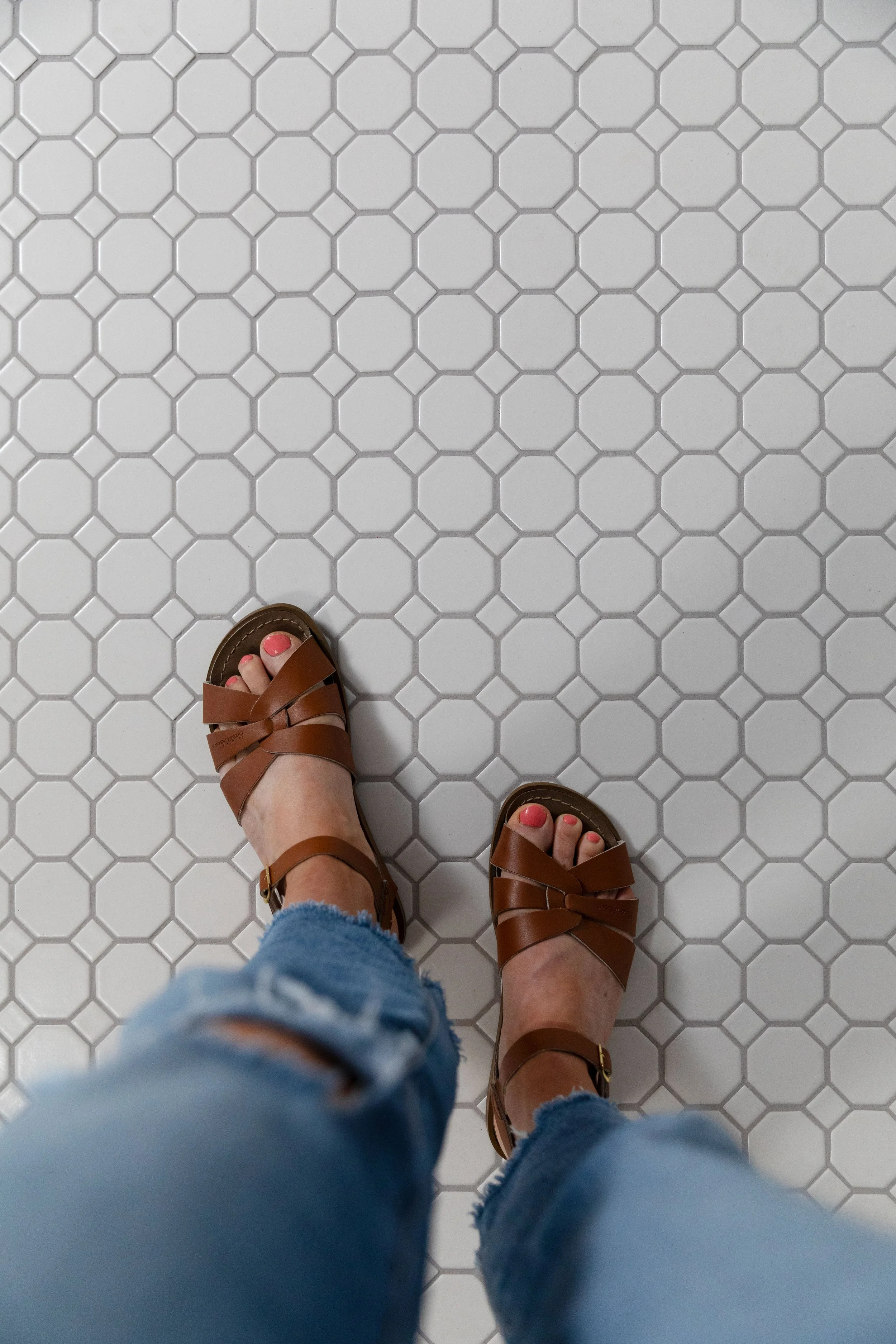
Octagon-and-dot mosaic tile in white
how and why the heated floors failed in the hall bathroom
This is the hard-learned part… the heated floors in our hall bathroom failed sometime after we installed them. Ugh. We went through all the effort of planning for and installing electric mats, finished the floors, and when we went to add the thermostat, they wouldn’t turn on.
So what happened? At some point between installing the mat and installing the thermostat, the line must have been damaged. The thermostat now shows a ground fault, which means something in the system likely got compromised during finish work. Our best guess is a nail that nicked the wire somewhere along the way, but who knows. .
It was a painful discovery. And I’m still disappointed.
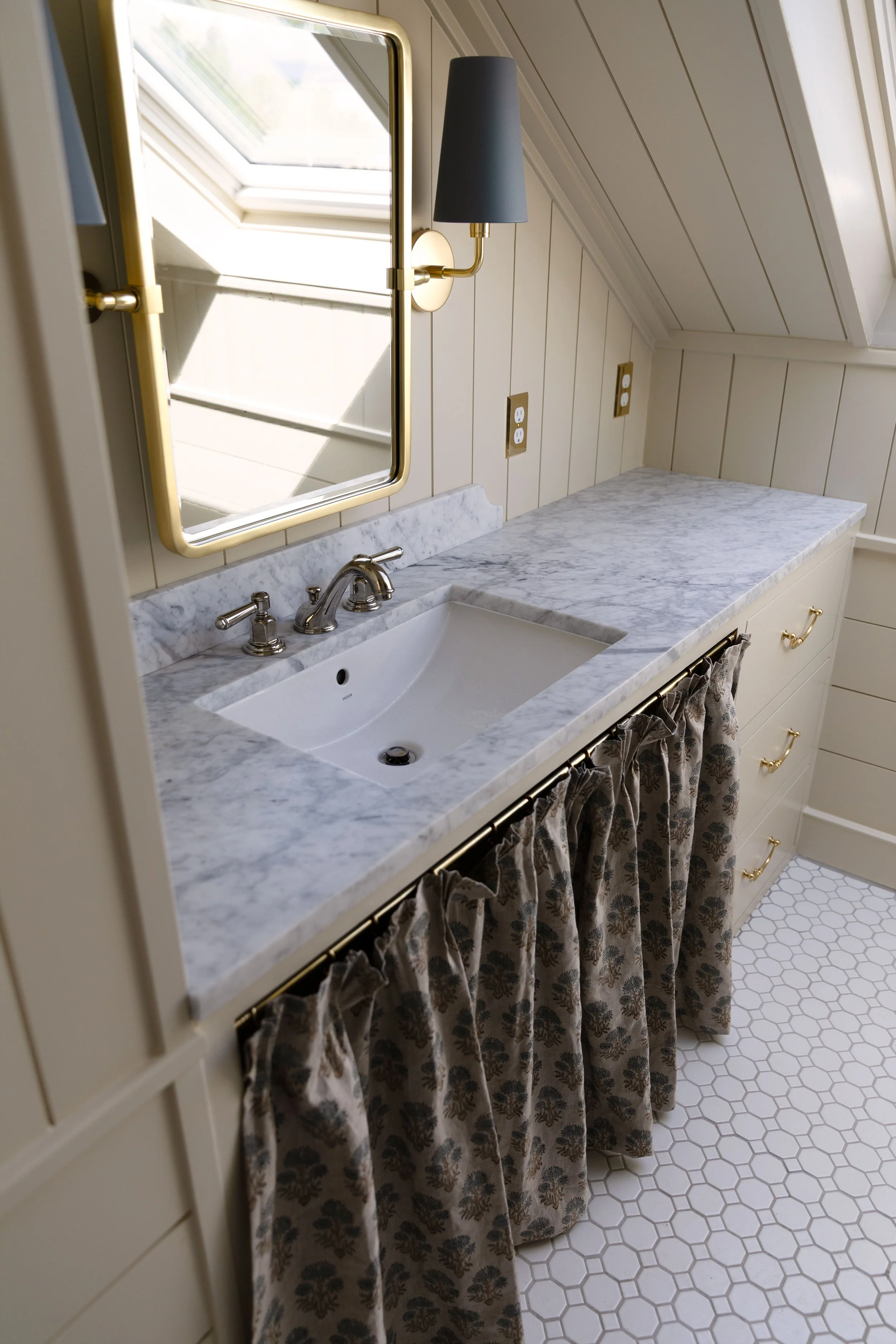
But I don’t regret adding heated floors and I’ll still add them every time they make sense (which for us, is basically every time). But Garrett is now much more serious about monitoring them during construction.
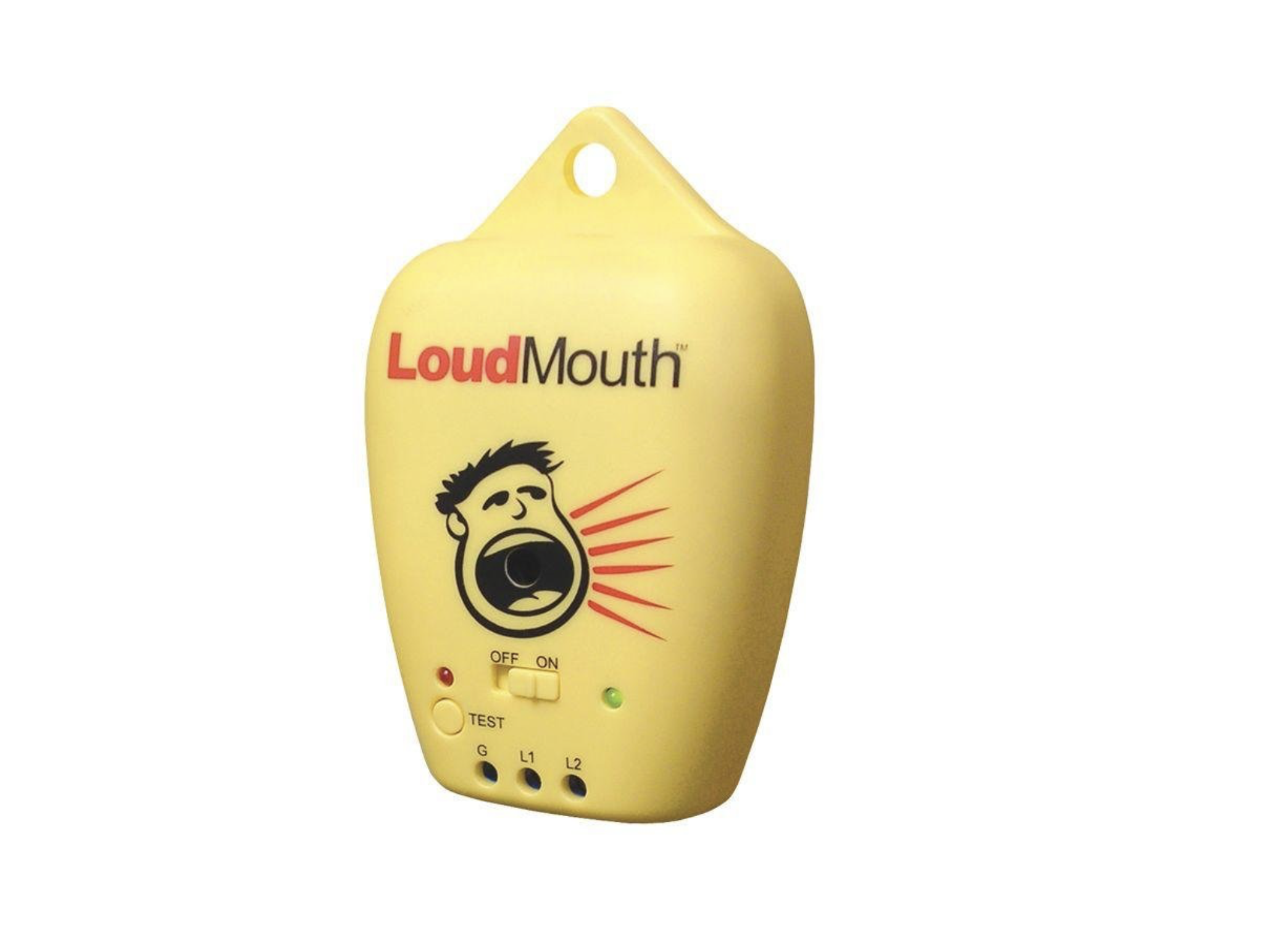
Monitoring device
Learn from our mistake and use this handy heated floor monitoring tool during construction!
SunTouch sells a monitoring device called the LoudMouth, which continuously monitors wire continuity during installation and alerts you if the cable is damaged. It’s exactly the tool Garrett wishes he had kept connected all the way through finish work. In our case, he removed the monitor and only reconnected things afterward, which meant we lost the chance to catch the failure right when it happened, before walls were closed when we could still find the issue without tearing into our finished work.
That is the big lesson.
There’s no happy ending here, this bathroom just won’t have heated floors despite the work and effort and money we put into having them.
What we’d do differently next time
When we do heated floors again, Garrett will keep the monitor connected all the way through finish work. Seriously, learn from us and don’t skip it - test and monitor until every part of the floor and surrounding finish work is done.
Because once tile is in and walls are closed, there’s not much you can do except feel sad and stare at your broken luxury.
So, are heated bathroom floors worth it? For us, way up here in Washington state, it’s an enthusiastic yes! Warm toes in winter? I’ll take them every time.





Every question you sent us, answered.