
The Return of Hand-Painted Interiors (And the Vintage Dresser That Started It for Us!)
THE HILL HOUSE
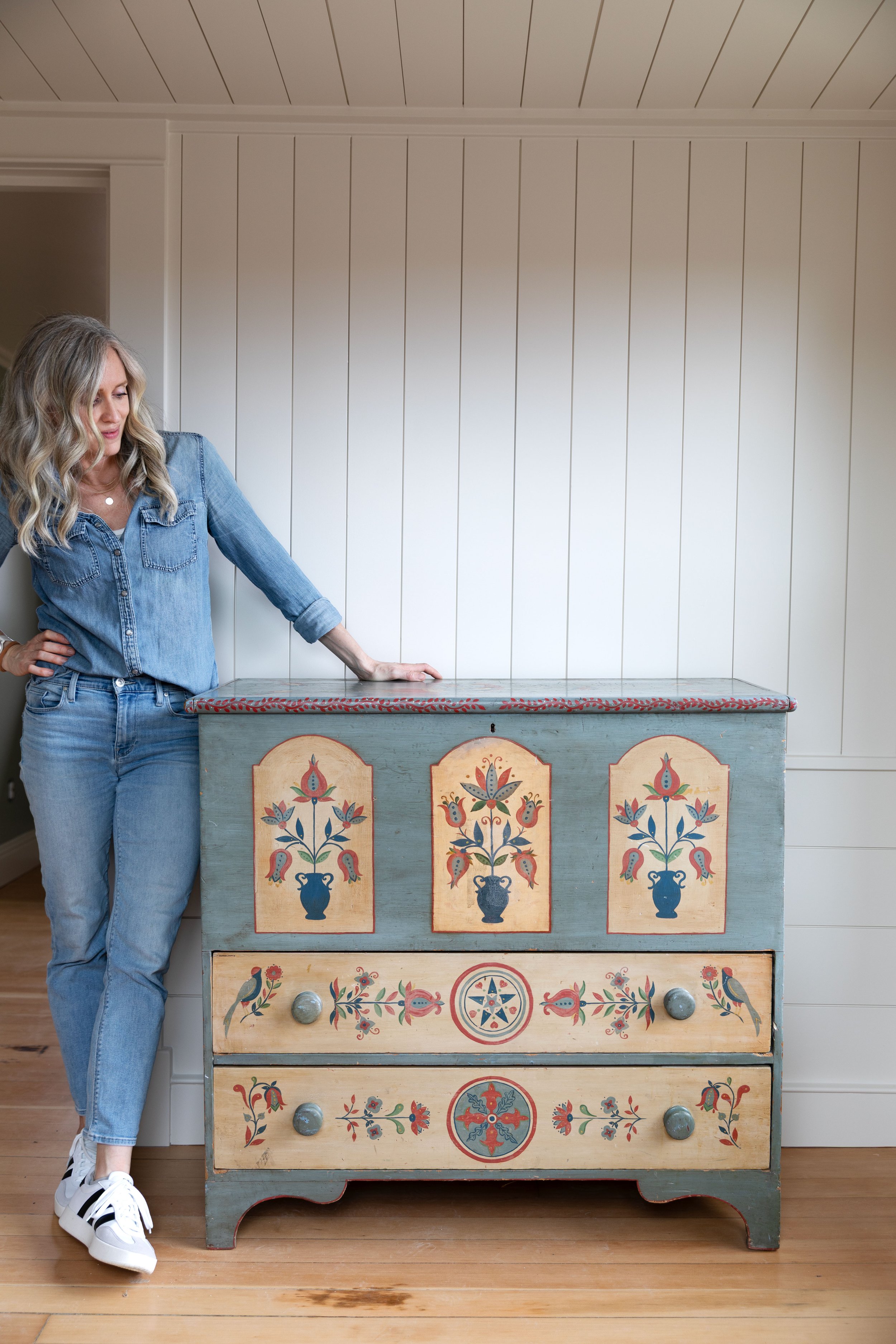
Something has been quietly returning to interiors lately, and I couldn’t love it more: hand-painted details! You’re starting to see them everywhere again - painted furniture, stair risers, decorative borders, painted tiles, even murals and floor details. But unlike a fast-moving design trend, this revival feels slower, more personal, and craft-driven. Which is why when this hand-painted dresser popped up on Facebook Marketplace, I didn’t hesitate. It felt like exactly the kind of piece that belongs in a house like the Hill House.
paint colors, floors, paneling
The Dresser That Felt Like It Belonged Here
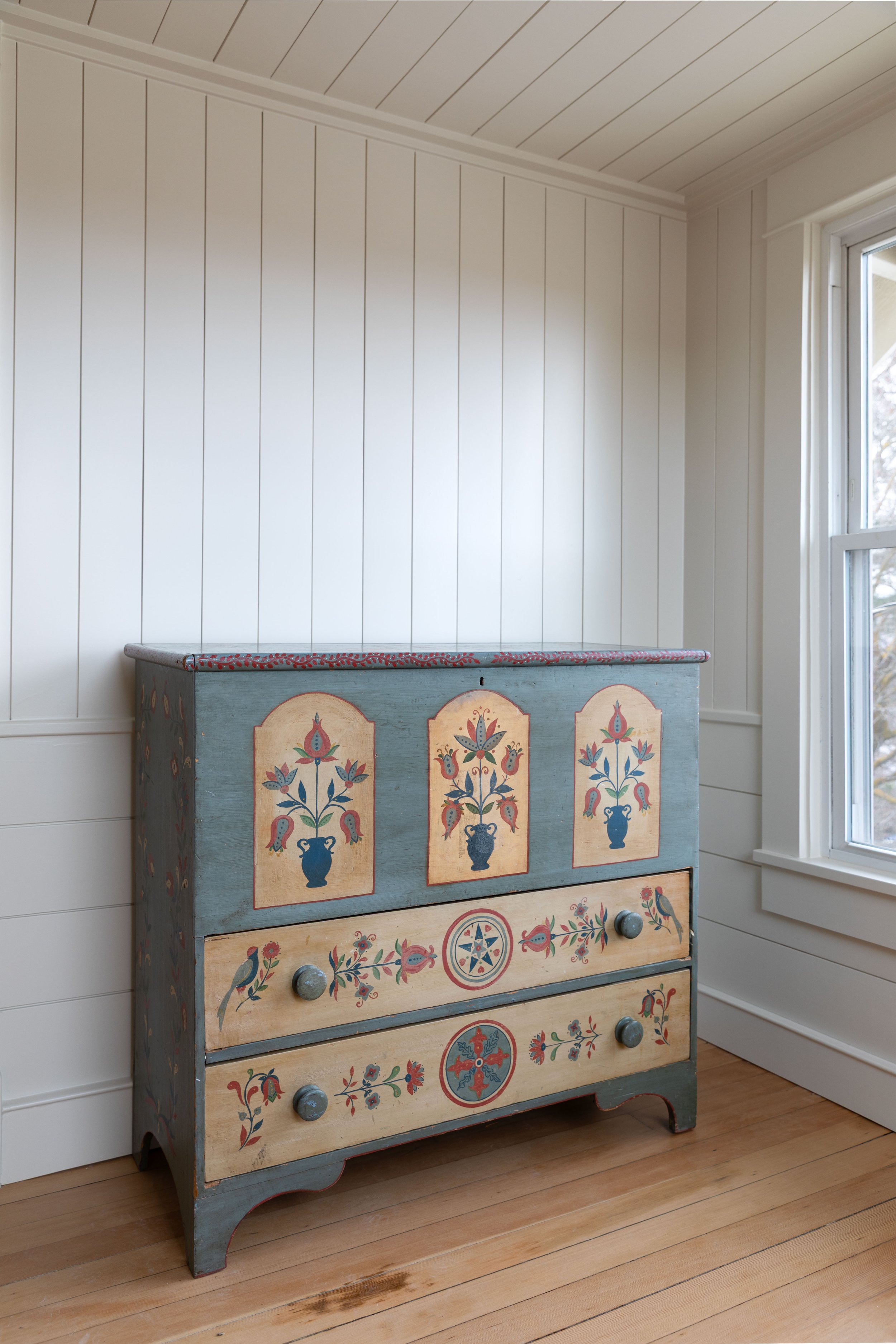
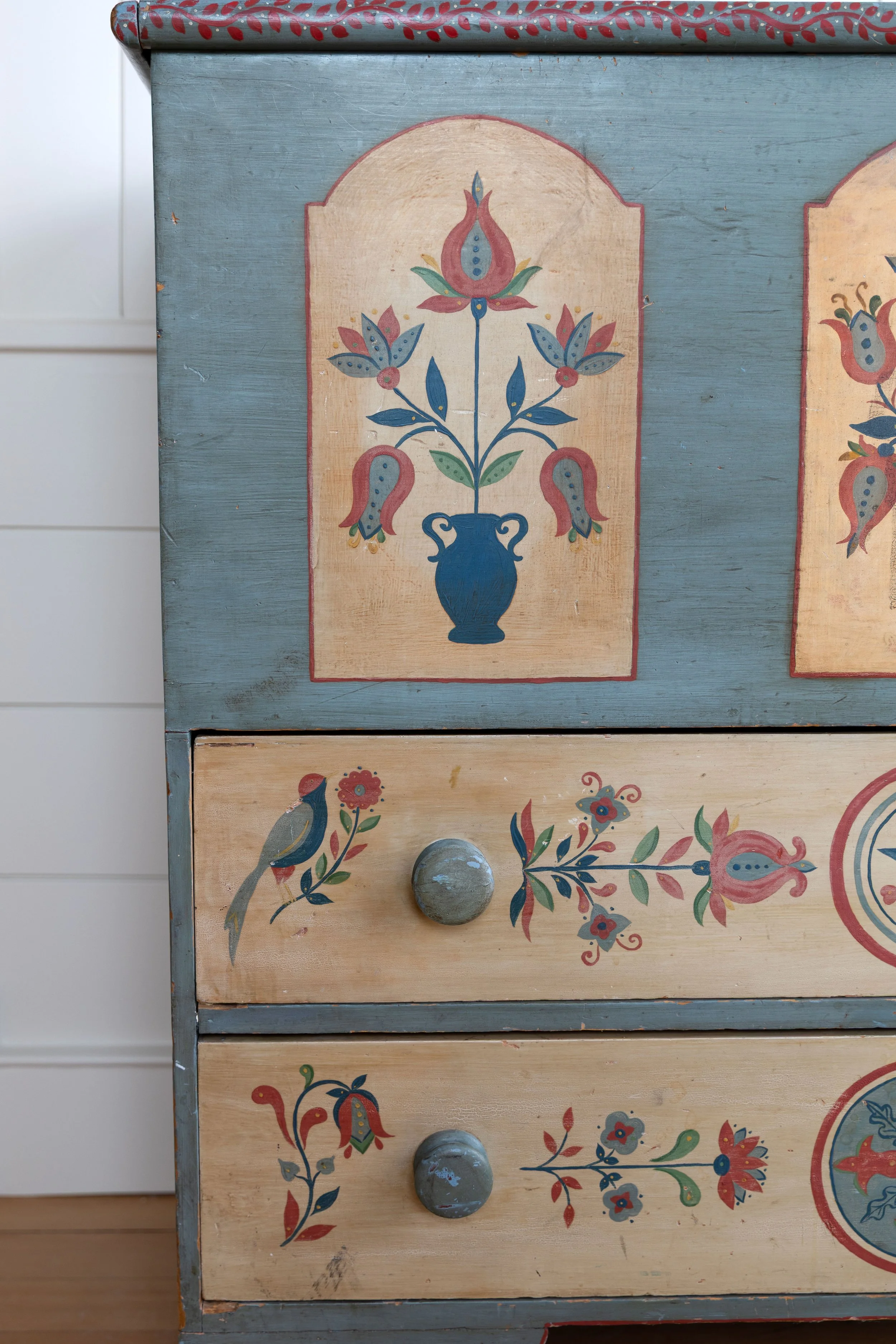
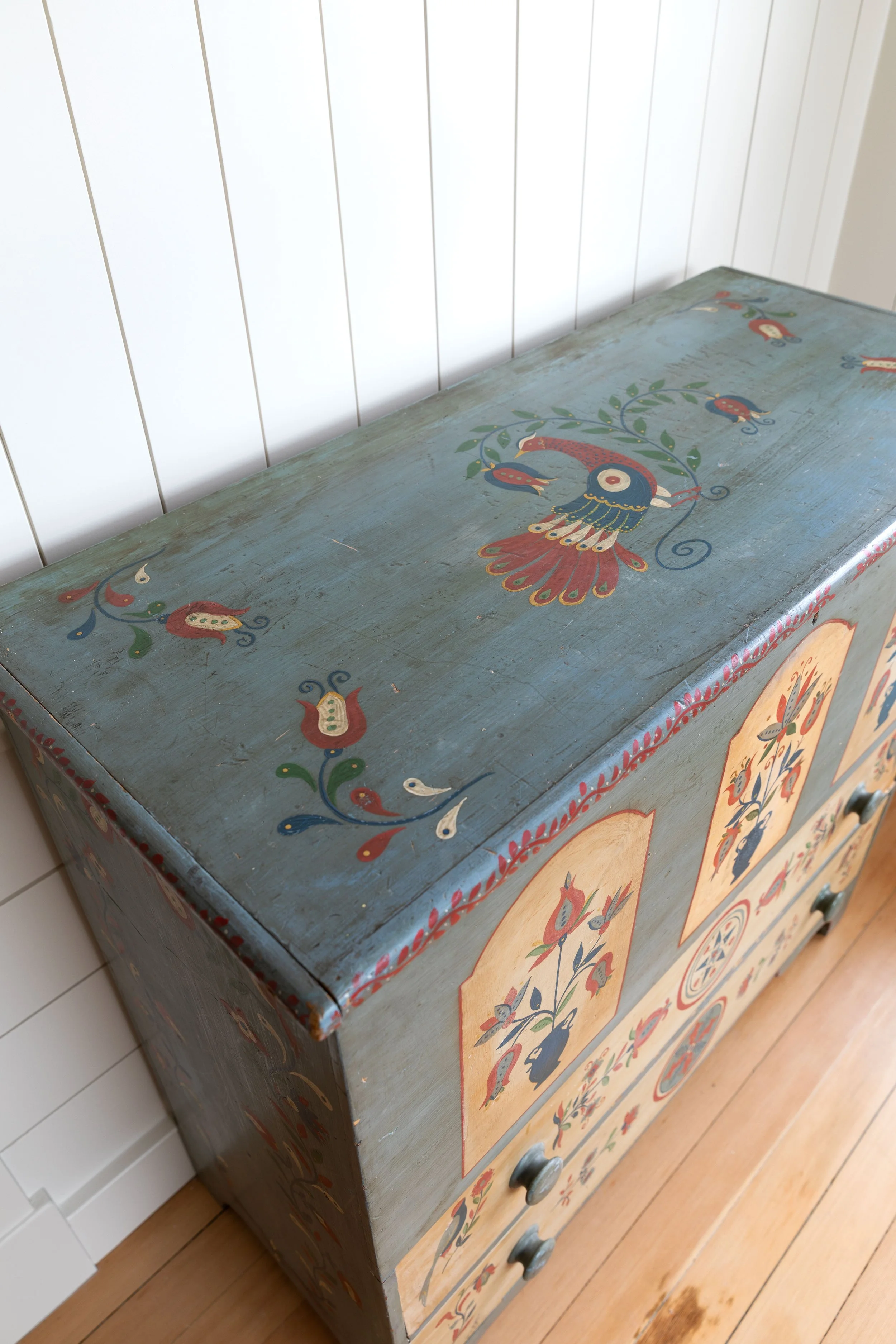
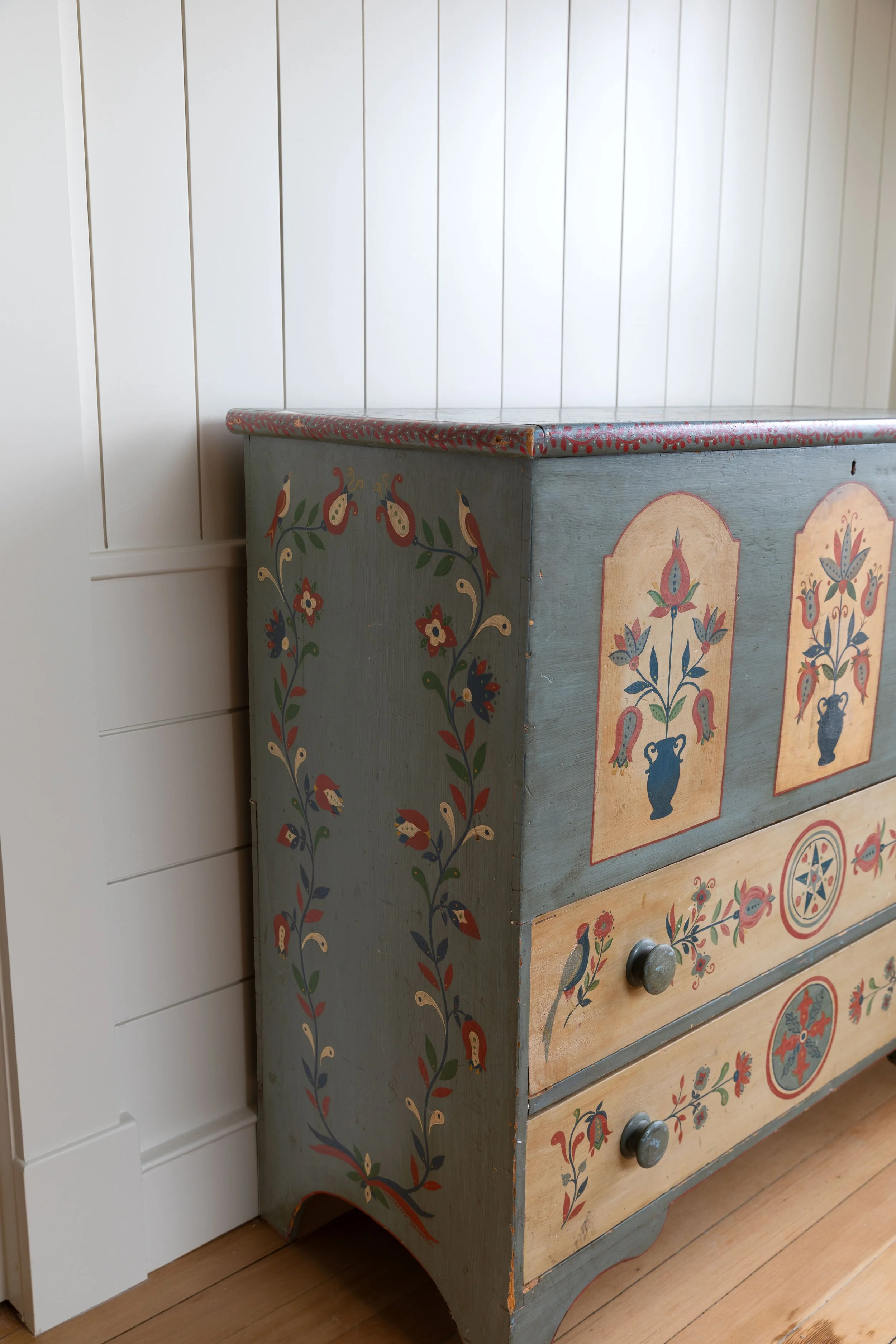
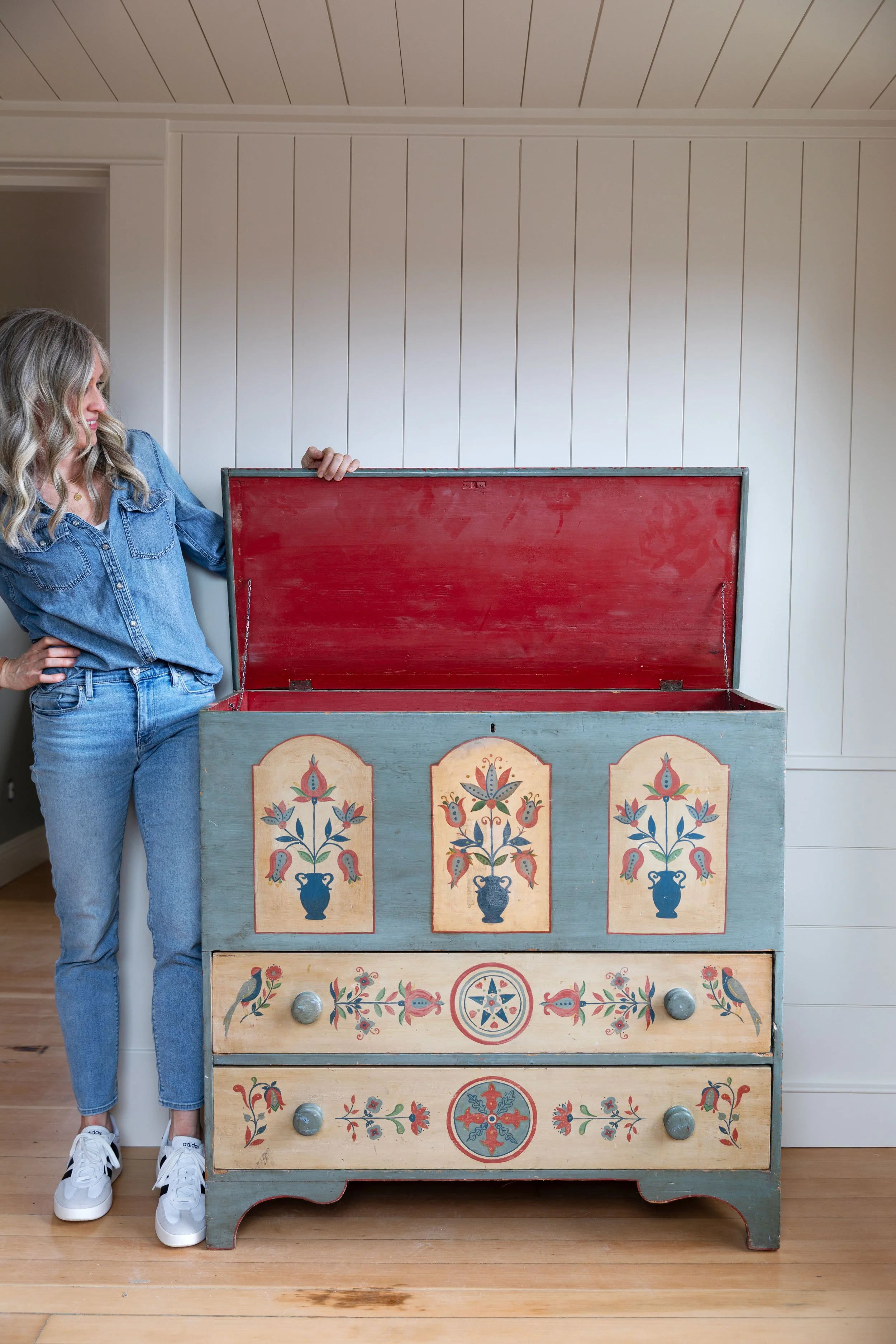
The dresser (well it’s technically half dresser, half chest) is covered in delicate painted motifs - floral panels, scrolling vines, and little birds that feel very storybook-esque. It was painted decades ago by a Pacific Northwest woman and when she died at 96, the piece passed down in the family until her nephew eventually listed it on FBMP. After a couple of messages back and forth, he offered to deliver it to us. It was a bit of a gamble buying the dresser sight unseen (the FBMP photos were admittedly not great), but sometimes you just have to take a gamble…
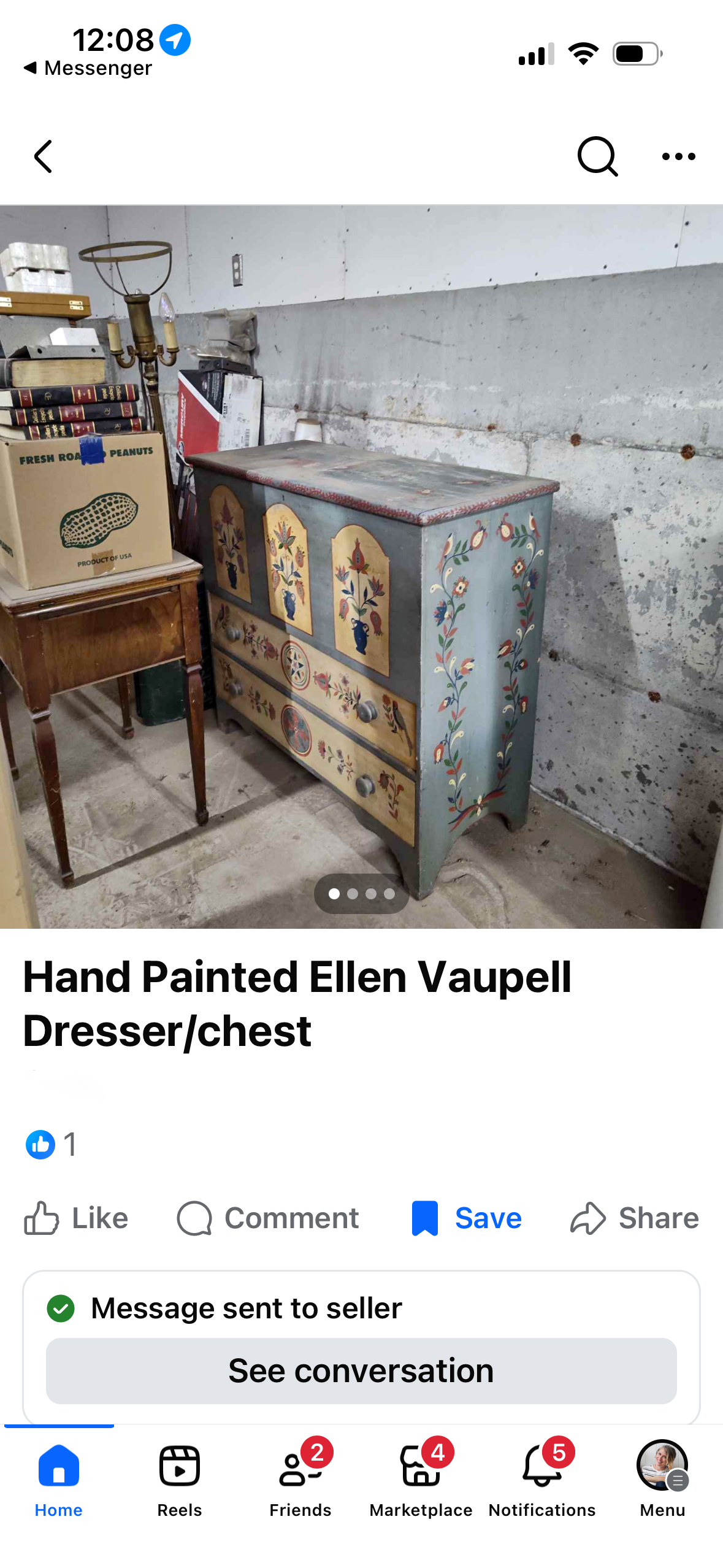
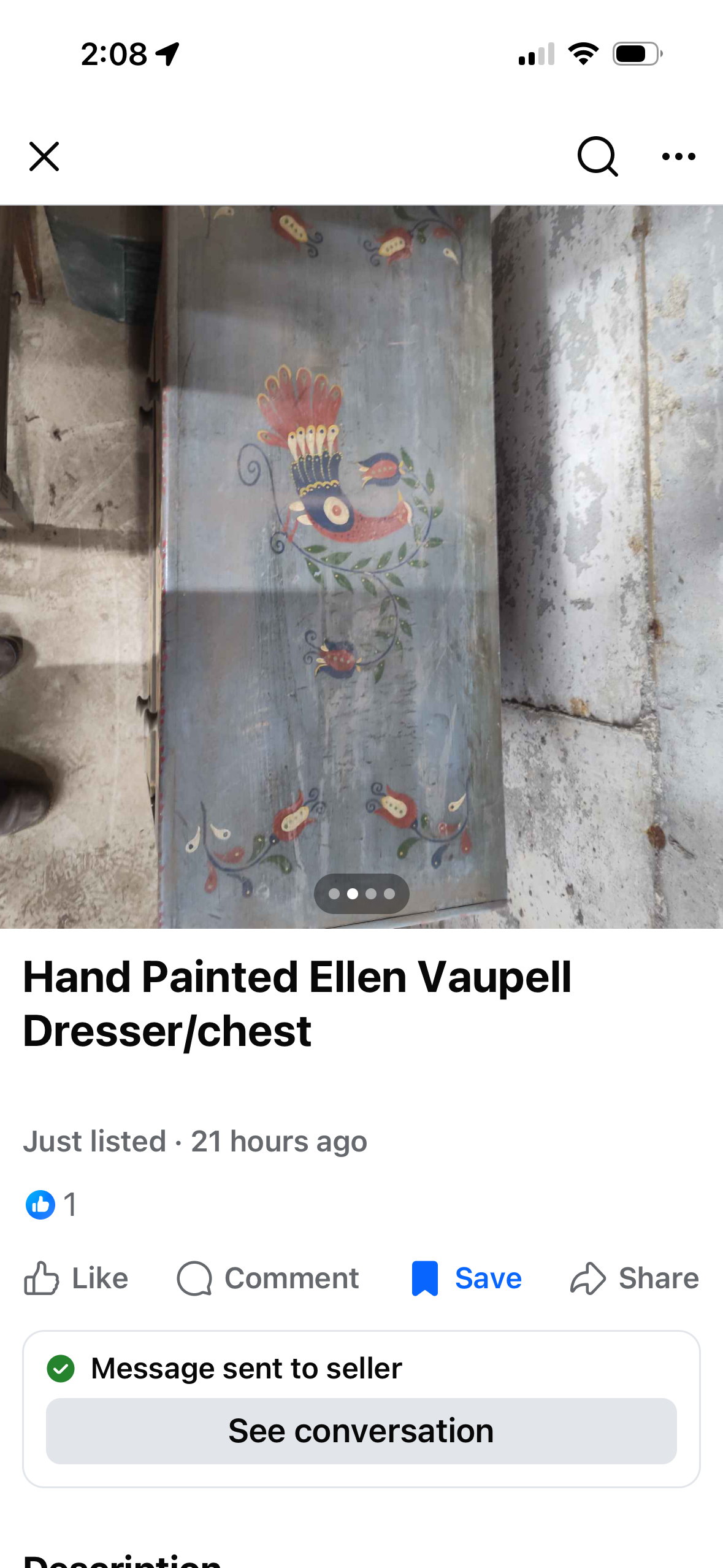
The seller shared some childhood memories of the dresser in his aunt’s home on Mercer Island, which made the piece even more special in my eyes. The paint is softly worn from years of use and the interior drawers are painted a bright red for an unexpected little surprise. It’s not perfect. It’s far from pristine. But it has patina and history and that’s exactly why I like it.
The Hill House was built in 1910, and homes like this don’t always feel their best when everything inside them is brand new and factory-perfect. Every space deserves something vintage layered in, something that adds history back into the house.
The Quiet Return of Hand-Painted Decoration
For the past couple of decades, interiors skewed very minimal. We saw smooth finishes, perfect surfaces, uniform materials, and white everything. But lately there’s been a noticeable shift back toward craft and individuality. You can see it in:
hand-painted furniture
decorative floor borders
detailed stair risers
hand-painted tiles
custom murals
painted embellishments on built-ins
Designers like Heidi Caillier, artist Tess Newall, and others have been leaning into this - adding small decorative moments that feel personal and handcrafted in beautiful homes.
Historic tradition
And interestingly, this isn’t a new idea at all. Historic homes were traditionally full of hand-painted decoration.
Before mass manufacturing made perfectly uniform finishes the norm, painted details were one of the most common ways people added personality and refinement to their homes. Floors were often painted with borders or geometric patterns. Walls might include stenciled motifs near the ceiling. Furniture was decorated with flowers, vines, birds, and scrollwork.
Much of this work falls into folk painting (i.e. decorative work created by self-taught artists, craftspeople, or homeowners rather than formally-trained painters) and it’s a category I just love. These traditions were often regional, passed through communities rather than design schools or books. Because of that, folk-painted pieces tend to have a certain warmth and individuality to them: brushstrokes are visible, patterns are slightly irregular, and colors soften over time.
Which is exactly what gives them their charm.
Our dresser sits in this lineage with its floral panels, cute birds, and scrolling vines. These would have been classic motifs found in painted furniture from Europe and early America - think Swedish cupboards and Pennsylvania Dutch chests.
Earlier this month when my sister and I were touring historic homes in Charleston, we saw even more examples of this decorative tradition at work. Many of the grand 18th and 19th century houses included hand-painted architectural details like elaborate friezes along the ceiling, painted trim work, and even plinth blocks painted to resemble marble (not my favorite look but wow! the craft).
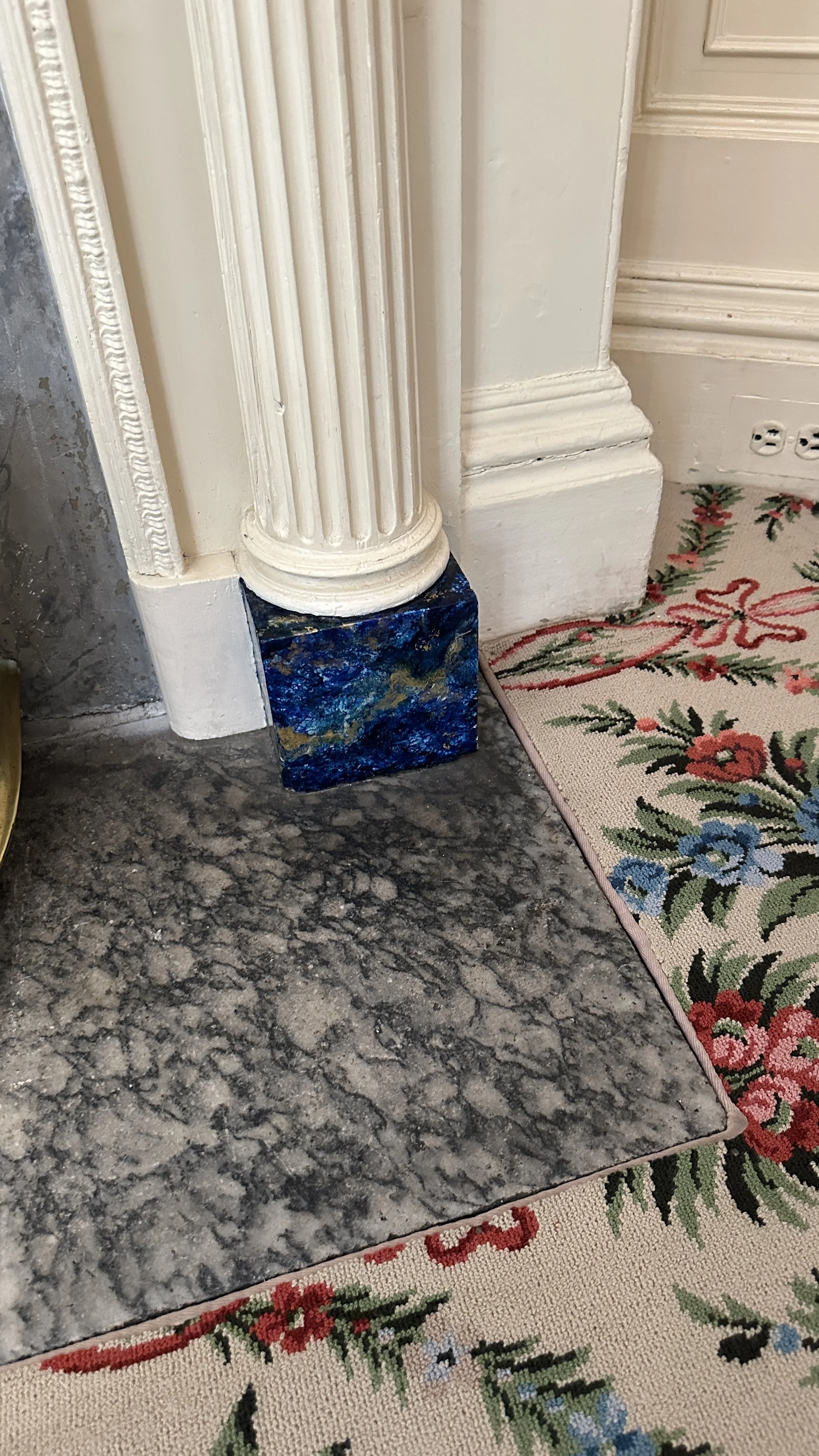
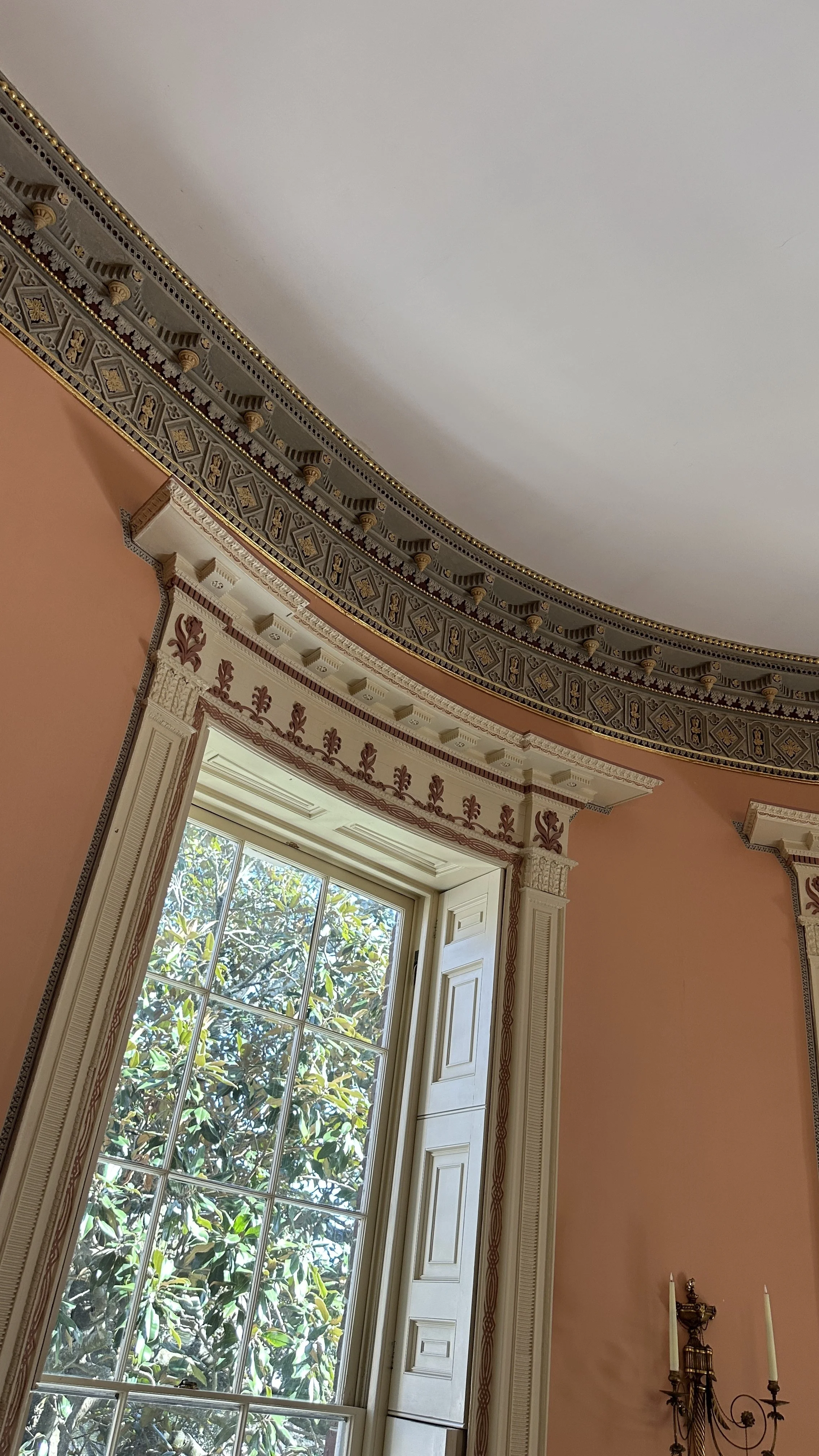
All that to say, what we’re seeing in design right now isn’t really a new trend. It’s a rediscovery of the decorative traditions that once made homes feel personal and expressive.
Why Hand-Painted Pieces Work So Well in Old Houses
When you’re renovating a character home, one challenge is balancing new construction with old soul. Even thoughtful renovations can leave spaces feeling a little too crisp or newly built.
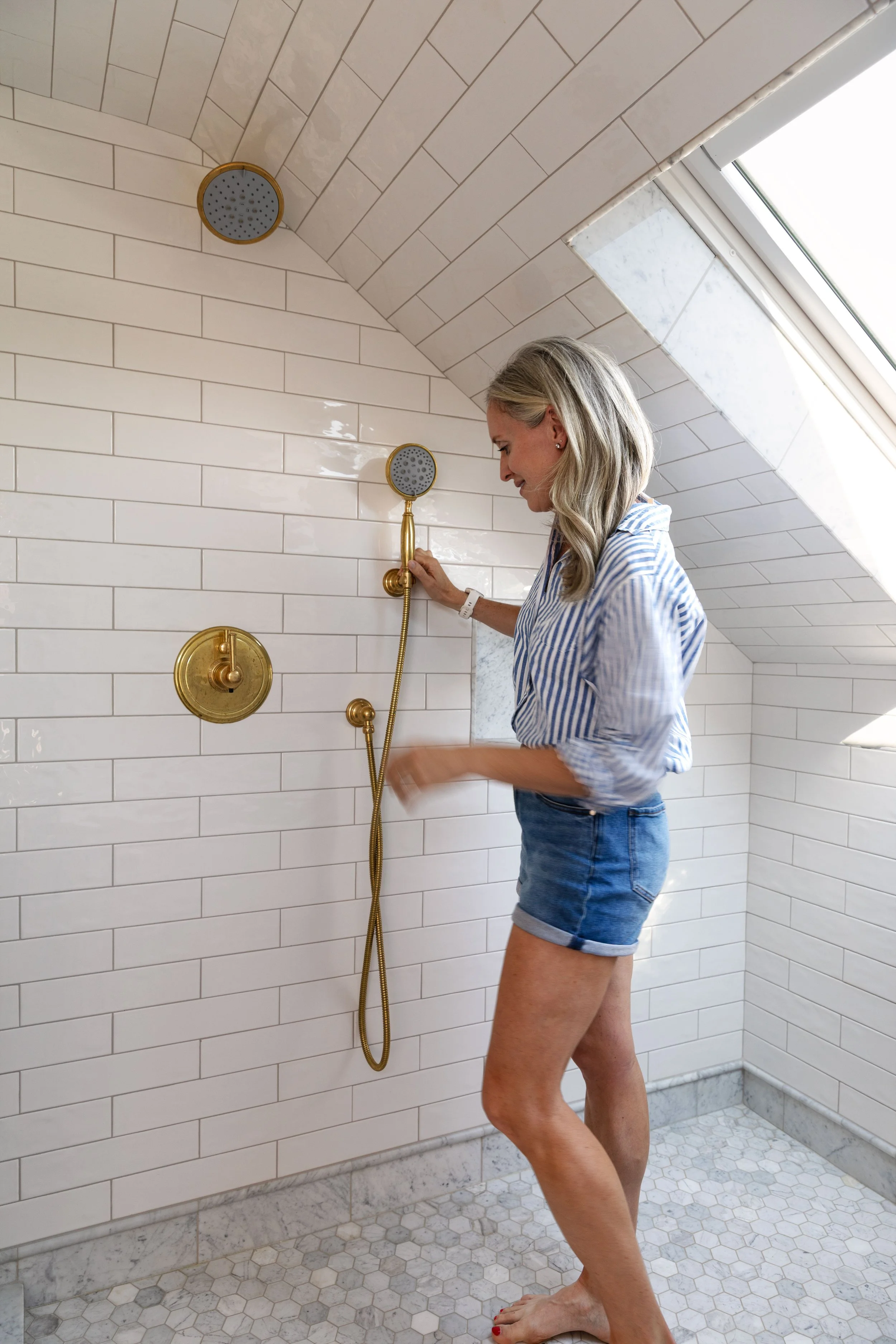
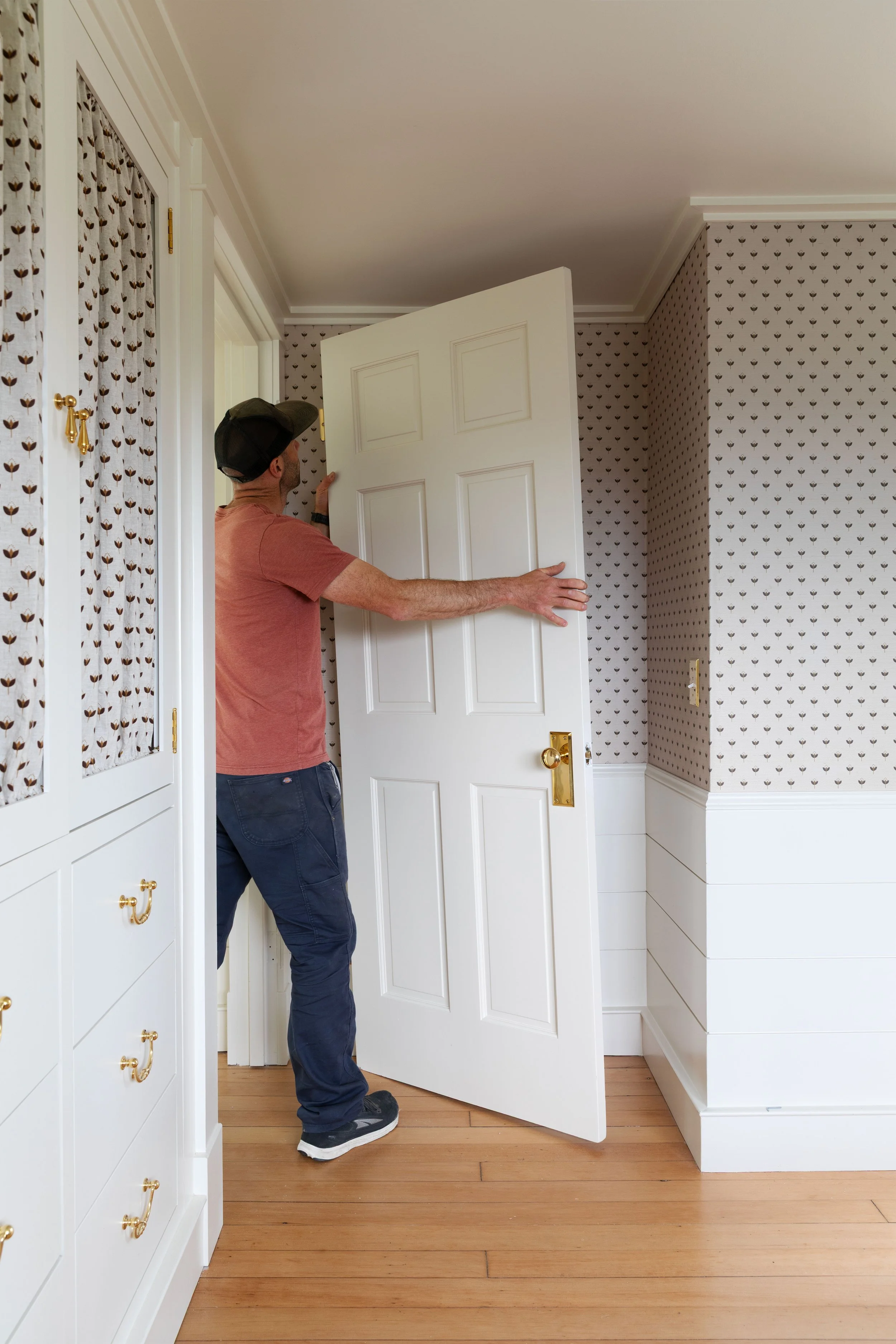
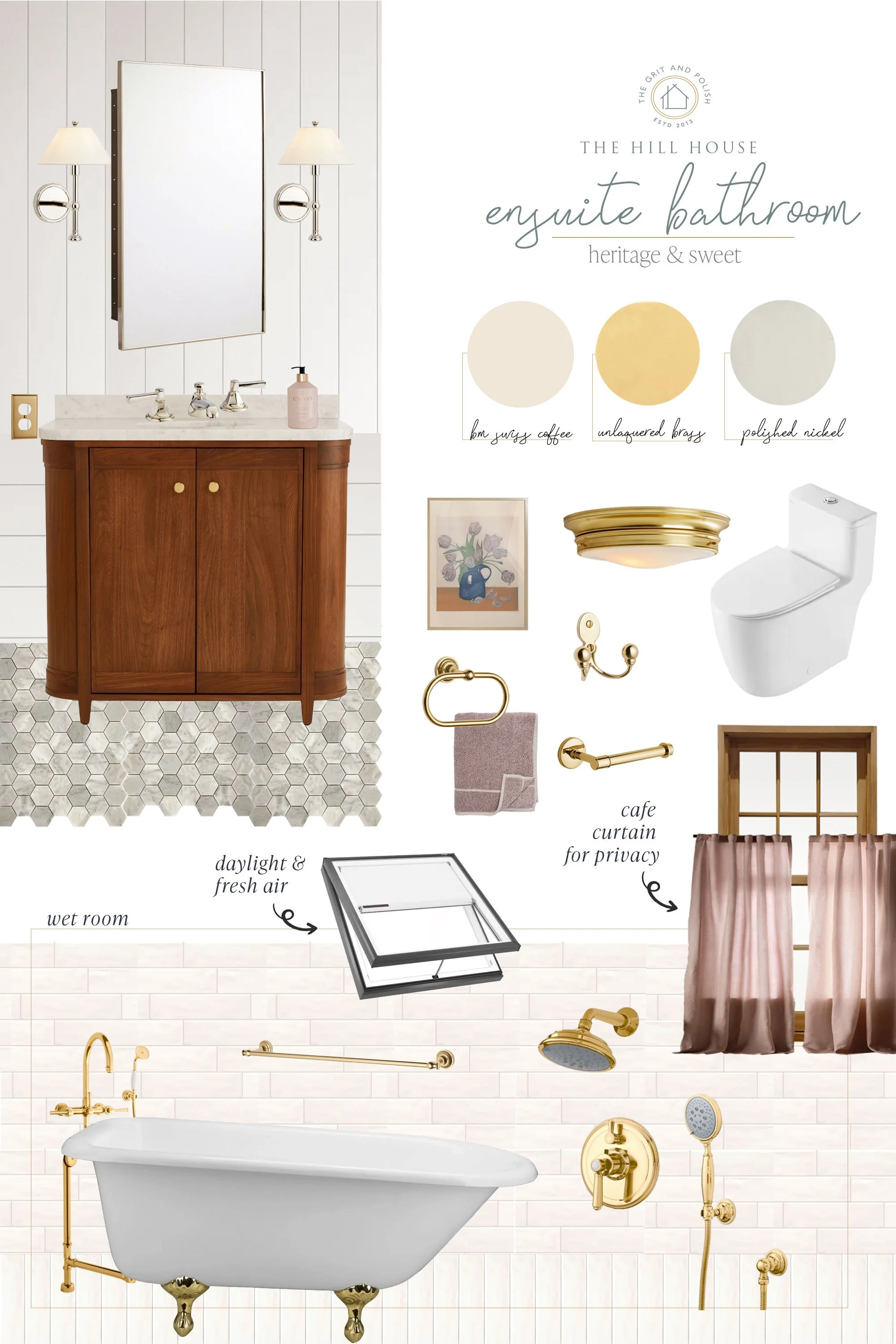
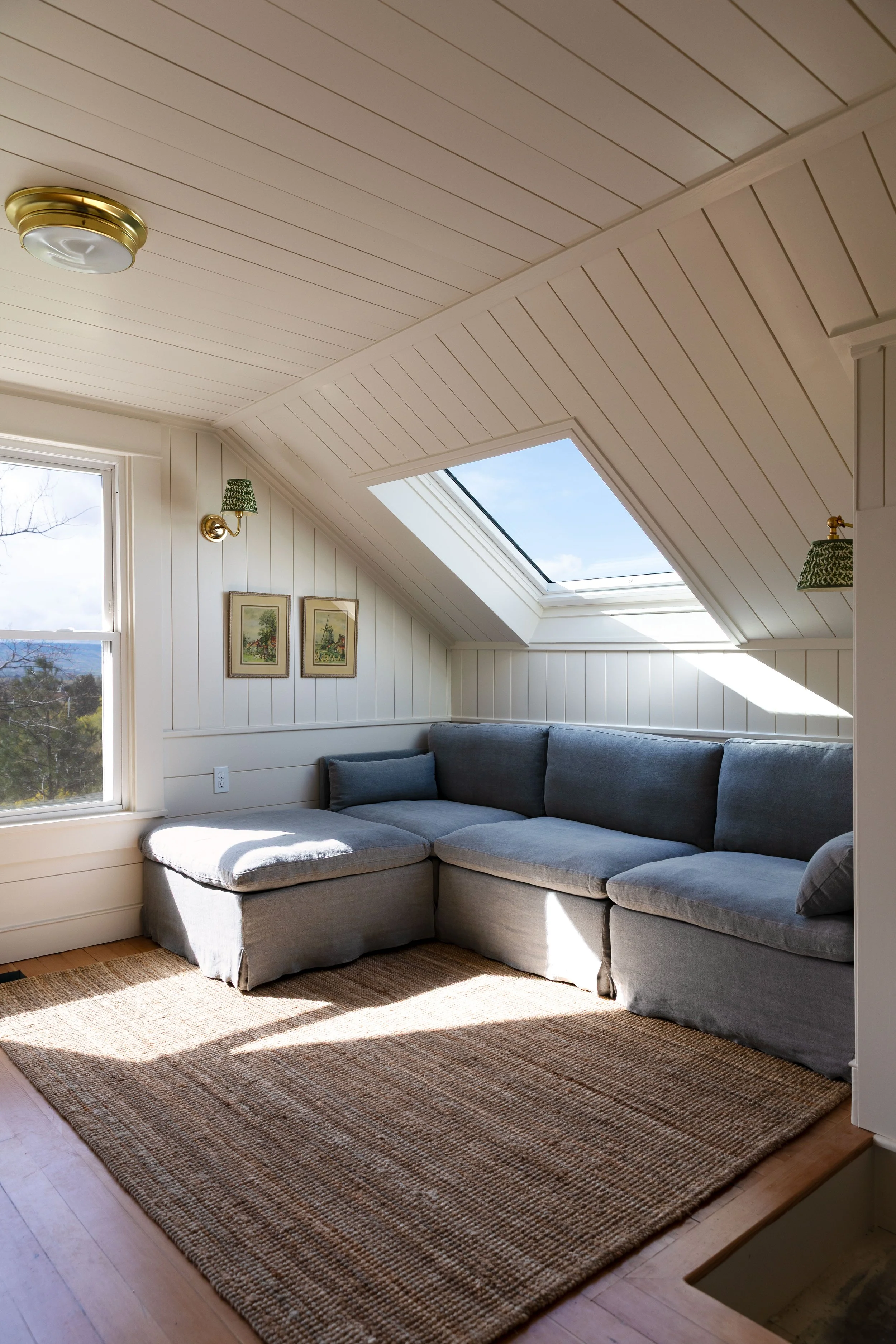
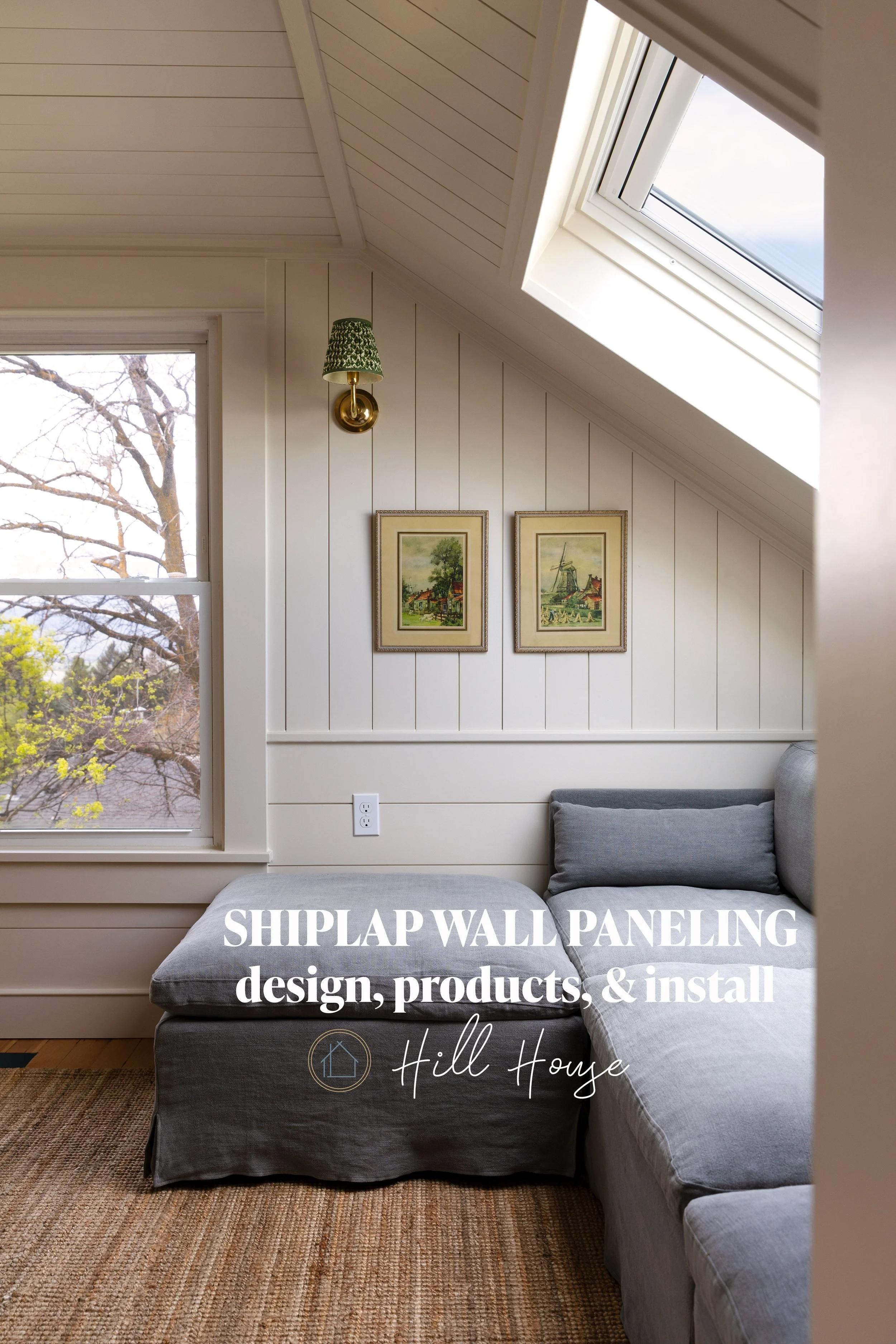
So much of the Hill House’s upstairs is new - new insulation, new skylights, new walls, new tile, fresh paint - and to compensate, we’re constantly looking to bring back the kinds of human touches historic houses were originally full of. So far we have the salvaged marble countertop in the bathroom, original fir floors, unlacquered brass hardware, handwoven grasscloth wallpaper, crafted paneling on the walls and ceilings, and now this little hand-painted dresser. These elements help bridge the gap between the old bones of the house and the new work we've added, keeping the renovation from feeling overly crisp or freshly manufactured. The effect is a house that feels layered, crafted, and deeply personal. At least that’s the goal!
How to Incorporate Hand-Painted Details in Your Own Home
You don’t need a full mural to bring this kind of character into your house. Something small can be impactful and a great way to start.
1. Painted Furniture
This is the easiest entry point. Watch FBMP for a vintage painted chest, small table, or bench. Kid’s dressers and desks are a great option, too. And of course there’s the DIY route - you can paint your own or ask someone to paint it for you! One piece can add personality to a room without overwhelming the space. And pairing it with era-appropriate materials like wood floors, paneling, and natural fabric feels just right. Artist Tess Newall is who I think of when I think of hand-painted furniture and you’ll see her beautiful work pop up again and again in hand-painted interiors.
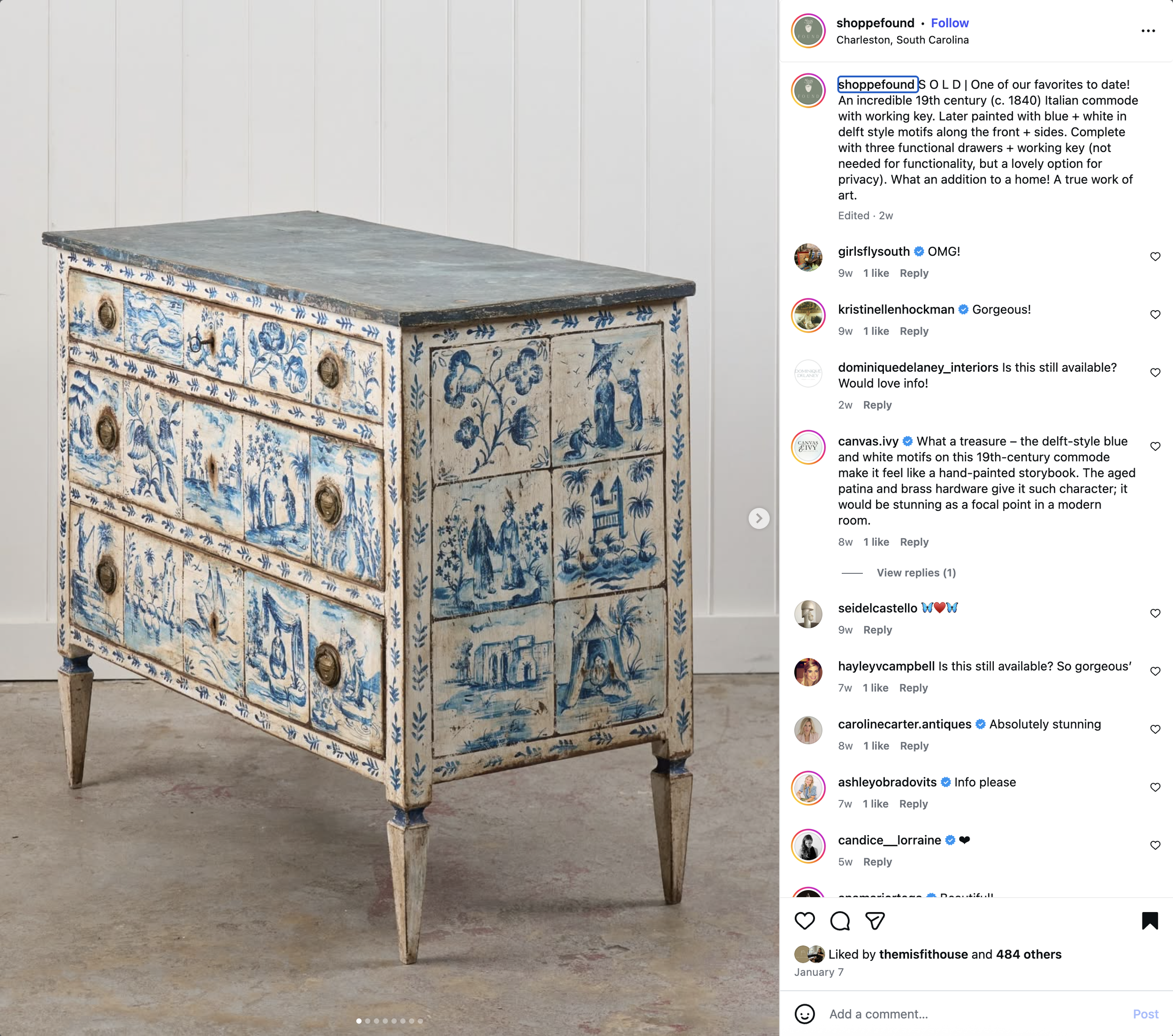
2. Painted Details on Built-Ins
This is something we’ve been noticing more in designer projects lately. Painted detailing on:
built-in beds
bookshelves
cabinet panels
closets
These subtle decorative touches can make built-ins feel custom and handcrafted rather than purely functional.
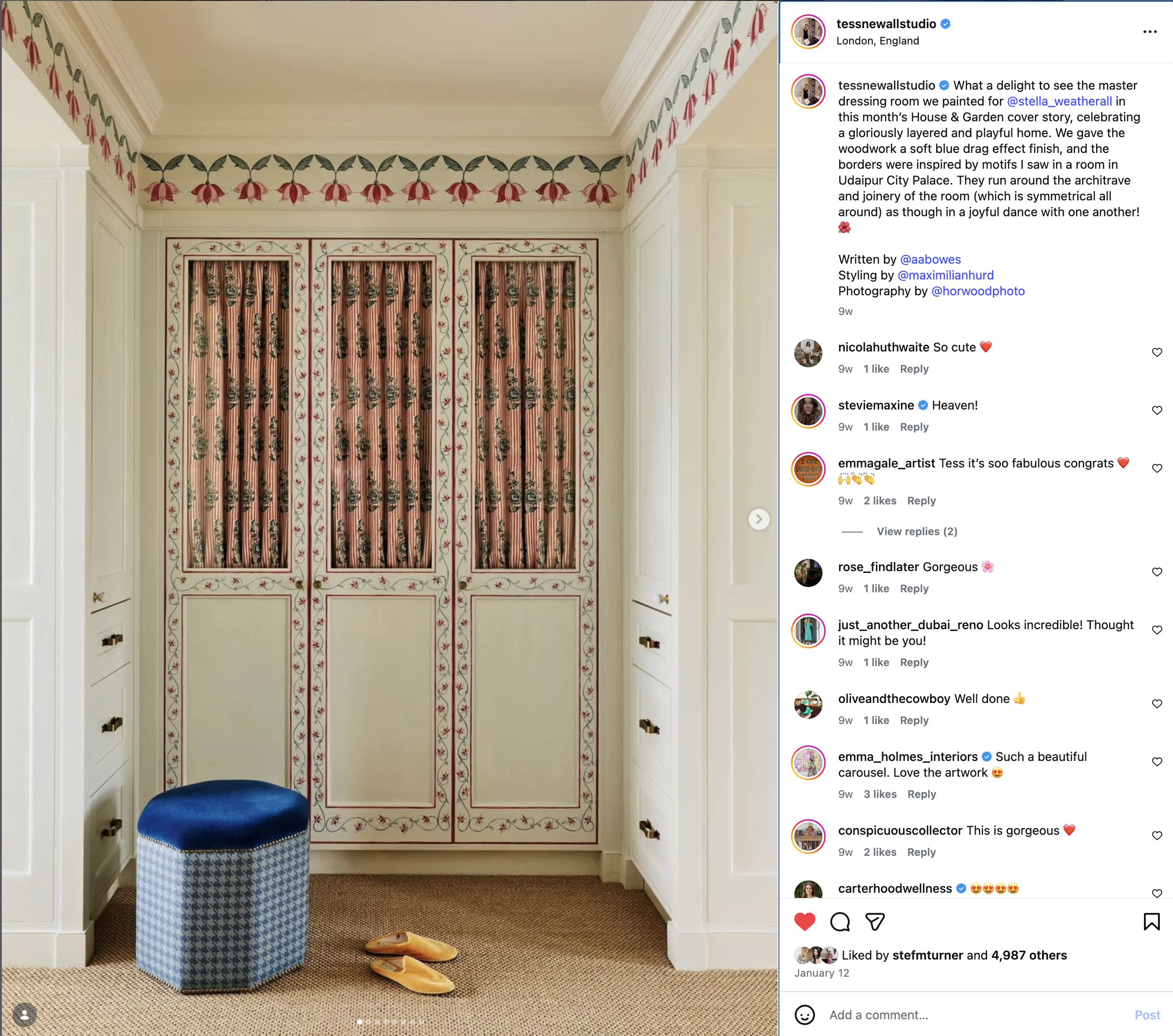
@tessnewallstudio | design: Stella Weatherall, photo: Chris Horwood
3. Decorative Floor or Stair Details
Historically, painted floors were incredibly common (and oh so beautiful!). I wanted to paint the farmhouse floors in a checkerboard pattern, but we never got around to that. Today we’re seeing painted flooring return in the form of:
• painted floor borders
• patterned stair risers
• simple geometric floor details
They add personality without requiring new flooring or additional materials.
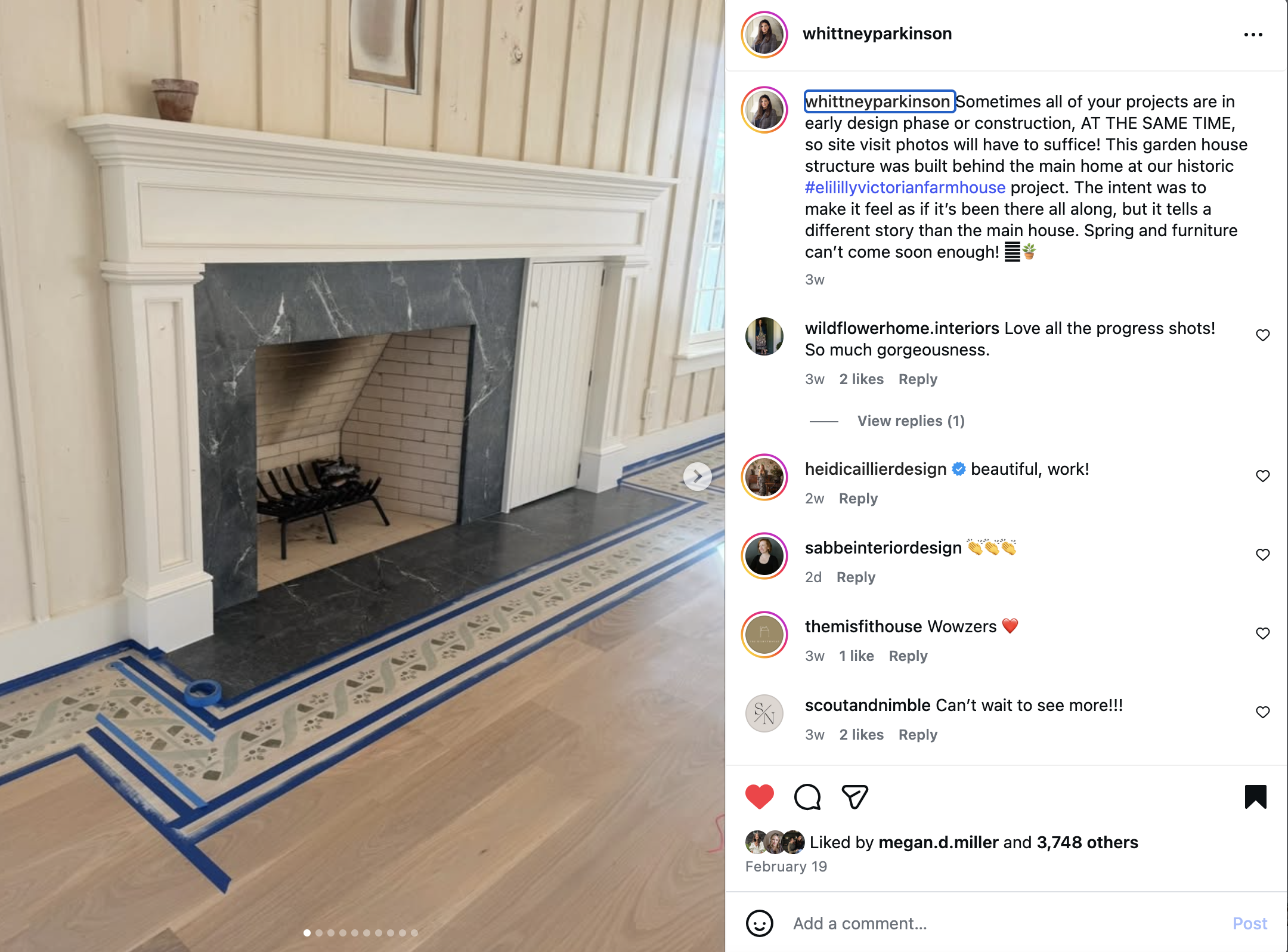
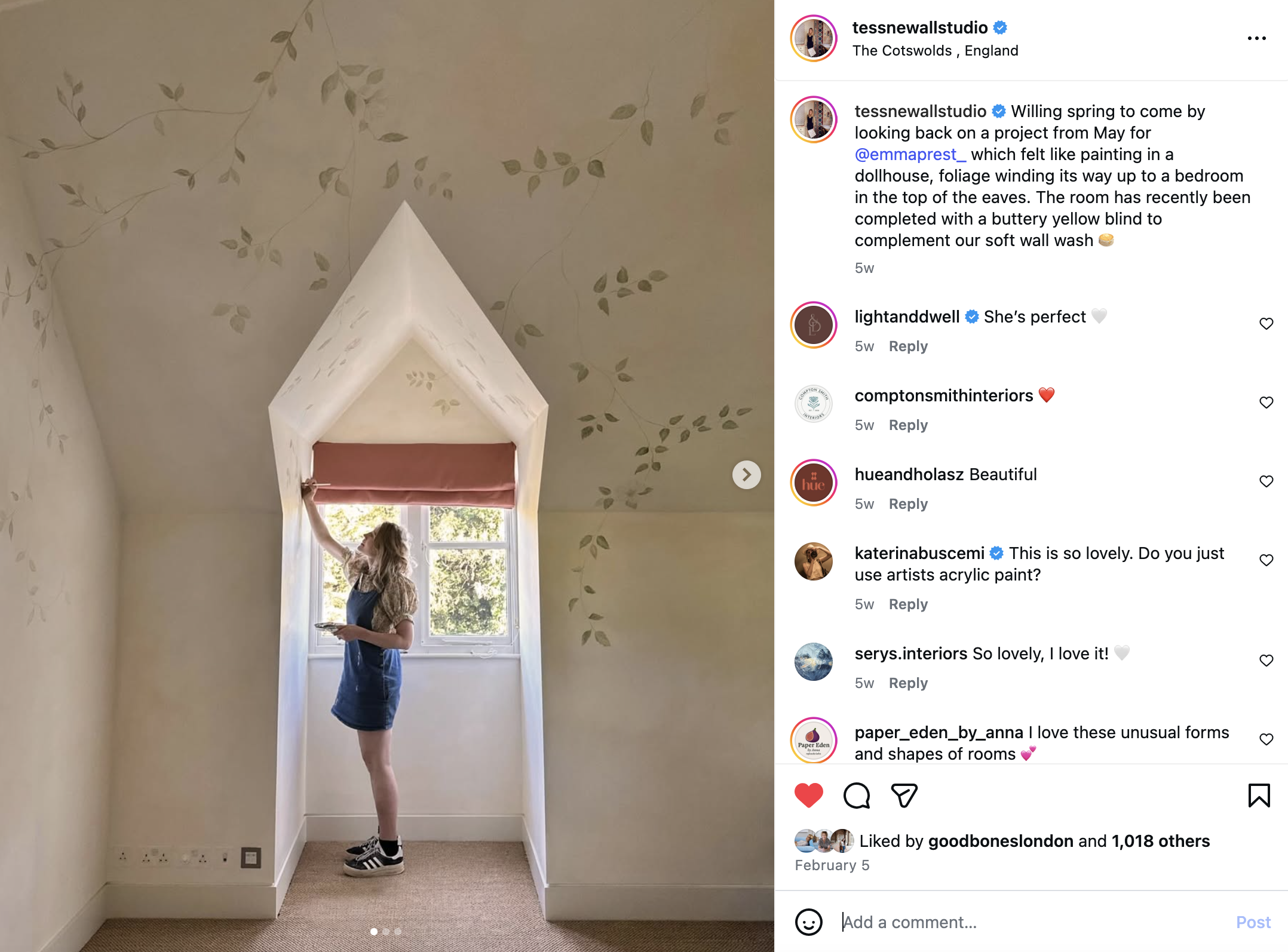
4. Hand-painted mural
Swap wallpaper for a hand-painted mural in a powder bath or bedroom. This can be such a fun way to introduce artistry into your home. It can be bold or subtle, colorful or neutral.
5. Tiles
Delft tiles are back in a big way and they come with a long tradition of hand painting. You can find vintage or replicas or even custom Delft tiles these days and I think they’re all beautiful.
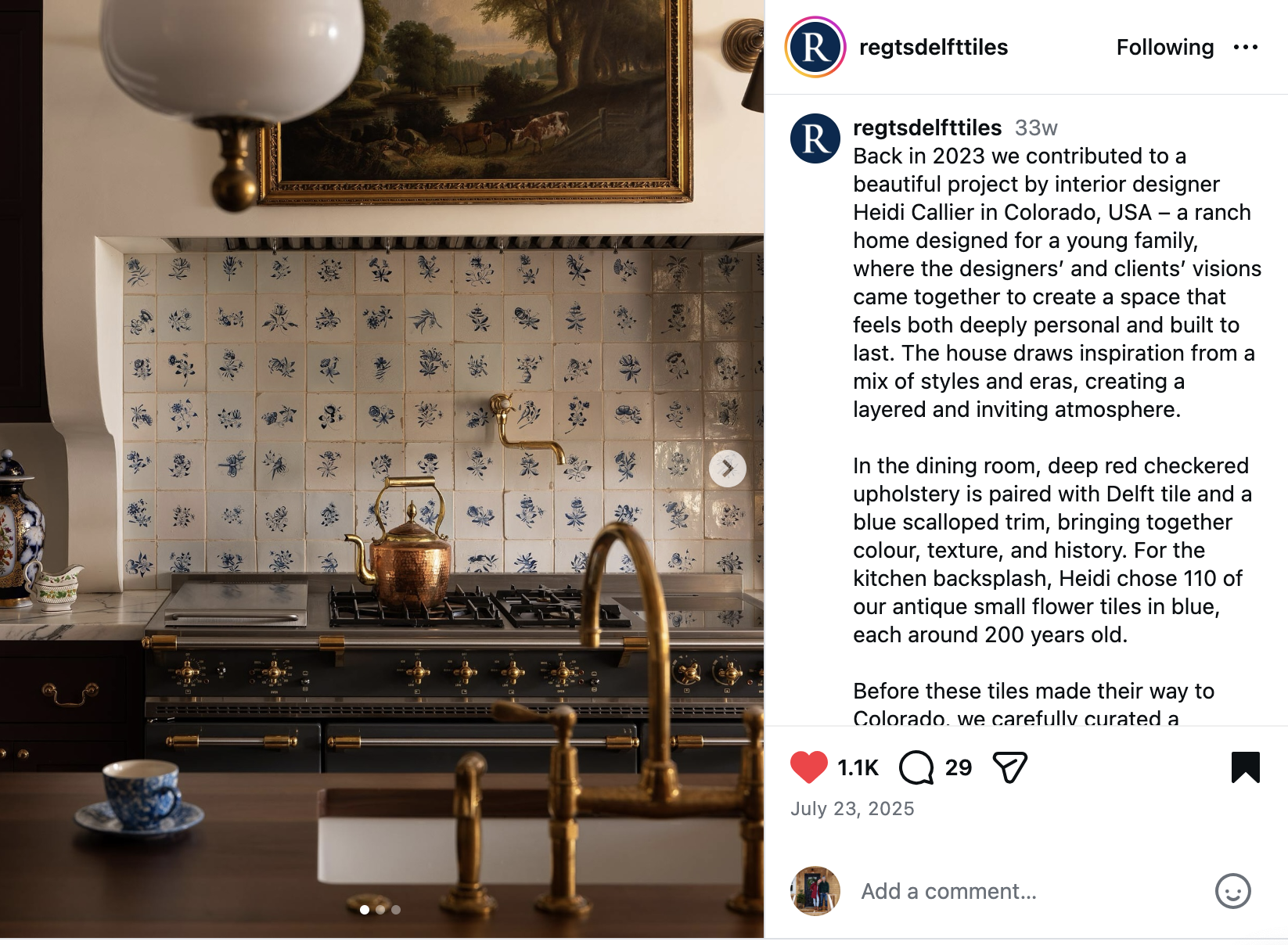
@regetsdelftiles (design Heidi Caillier)
5. Keep It as an Accent
The key to making hand-painted elements feel timeless instead of trendy is restraint. I think that’s true for so many things in life and style ;) In our case, the dresser will live on the upstairs landing (aka the snug) near a cozy couch, built-in bookcase, and skylight. It’s one expressive element layered into a mostly calm space. And that balance should keep the room feeling thoughtful rather than themed.
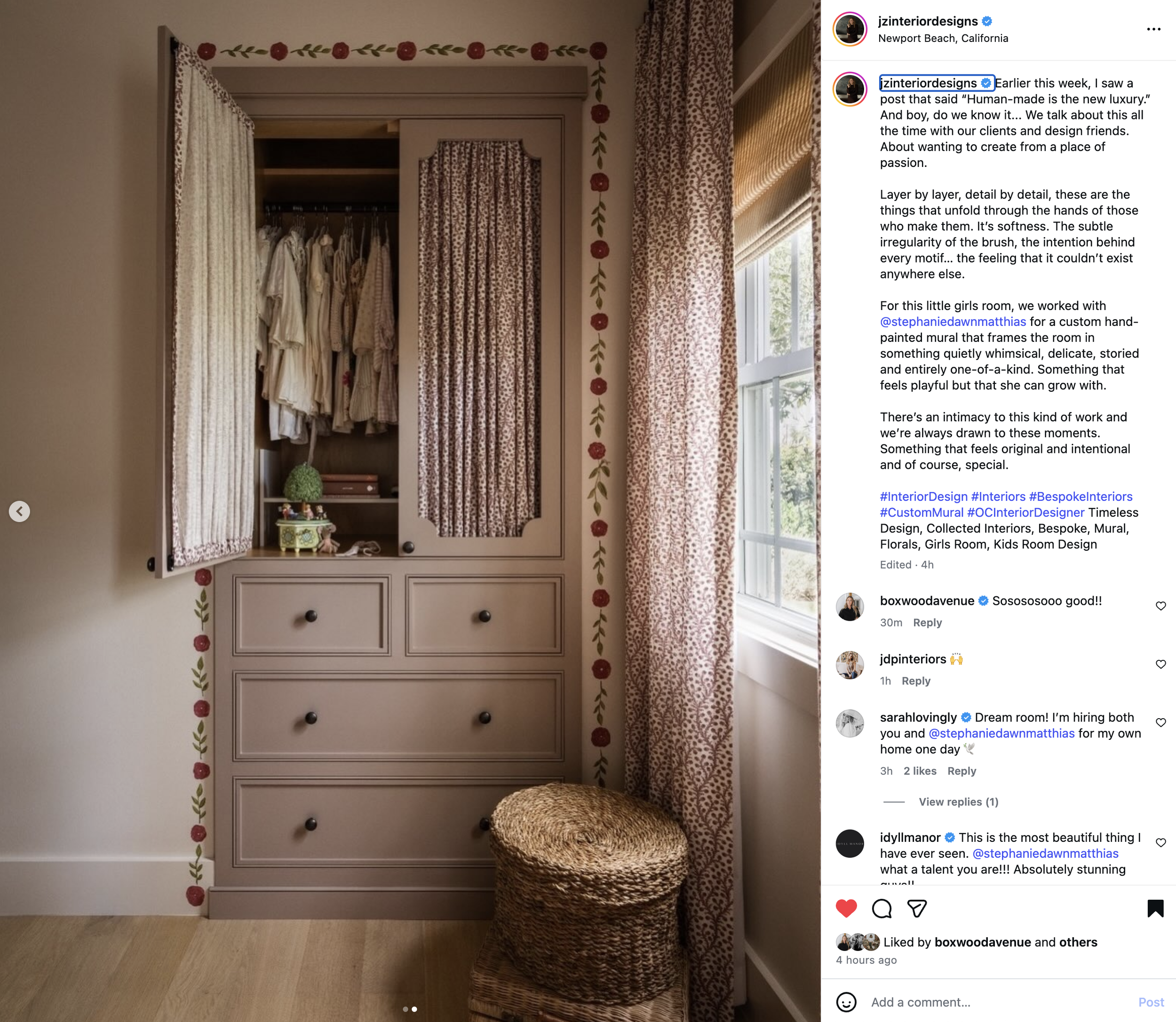
@jzinteriordesigns
We’ve been really drawn to craft, patina, texture at the Hill House - basically things with human touch. This house isn’t becoming a perfectly polished showpiece, rather something layered and personal and collected. And this little hand-painted dresser feels like a perfect addition to that story.
But here’s the funny bit…my boys hate the dresser. They have both told me that they think it’s ugly and asked if we’ll be repainting it. Ha! Hoping a little time will bring them around, but if not, that’s okay. Houses are meant to evolve and we can always find a new home for this piece ;)
xx
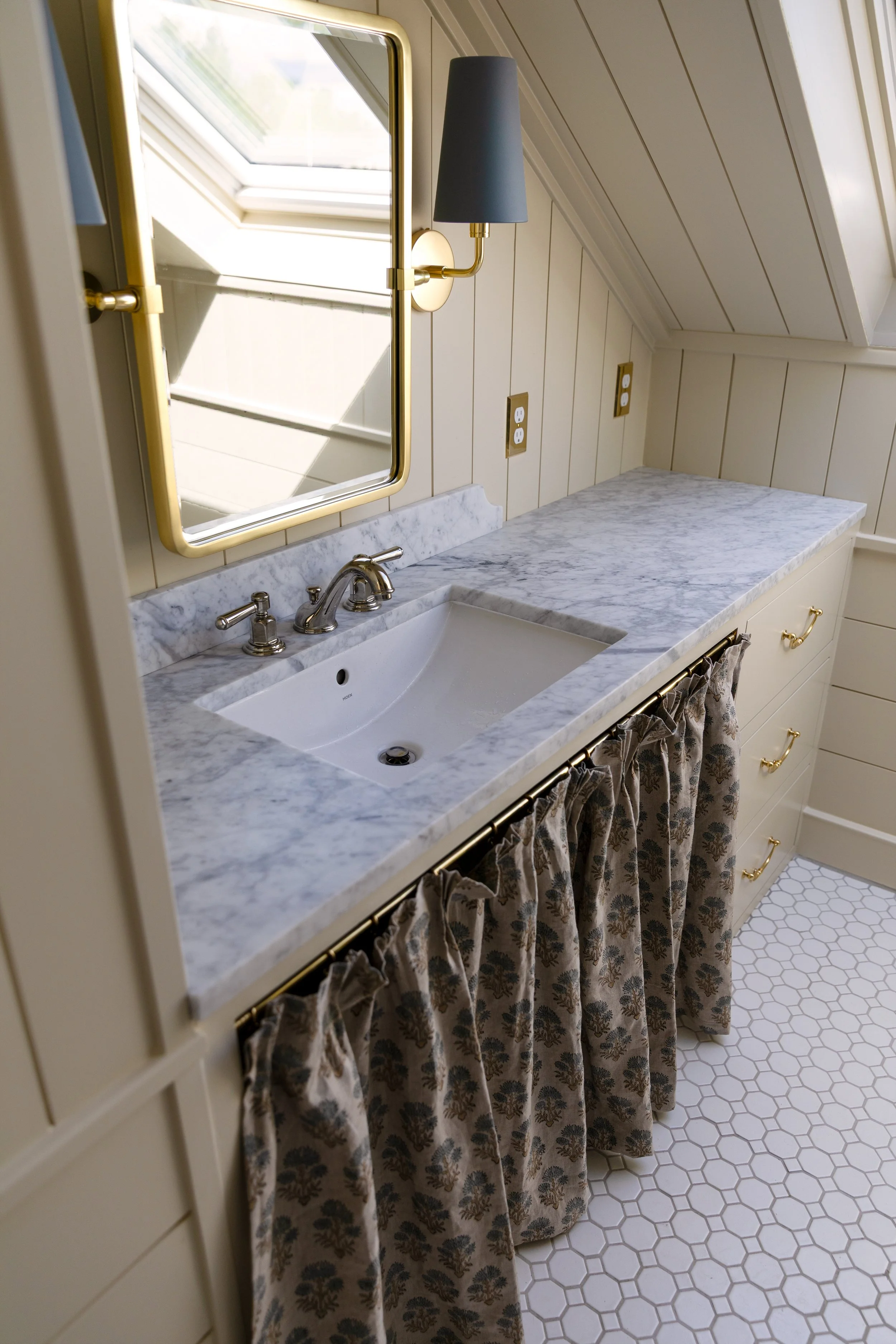
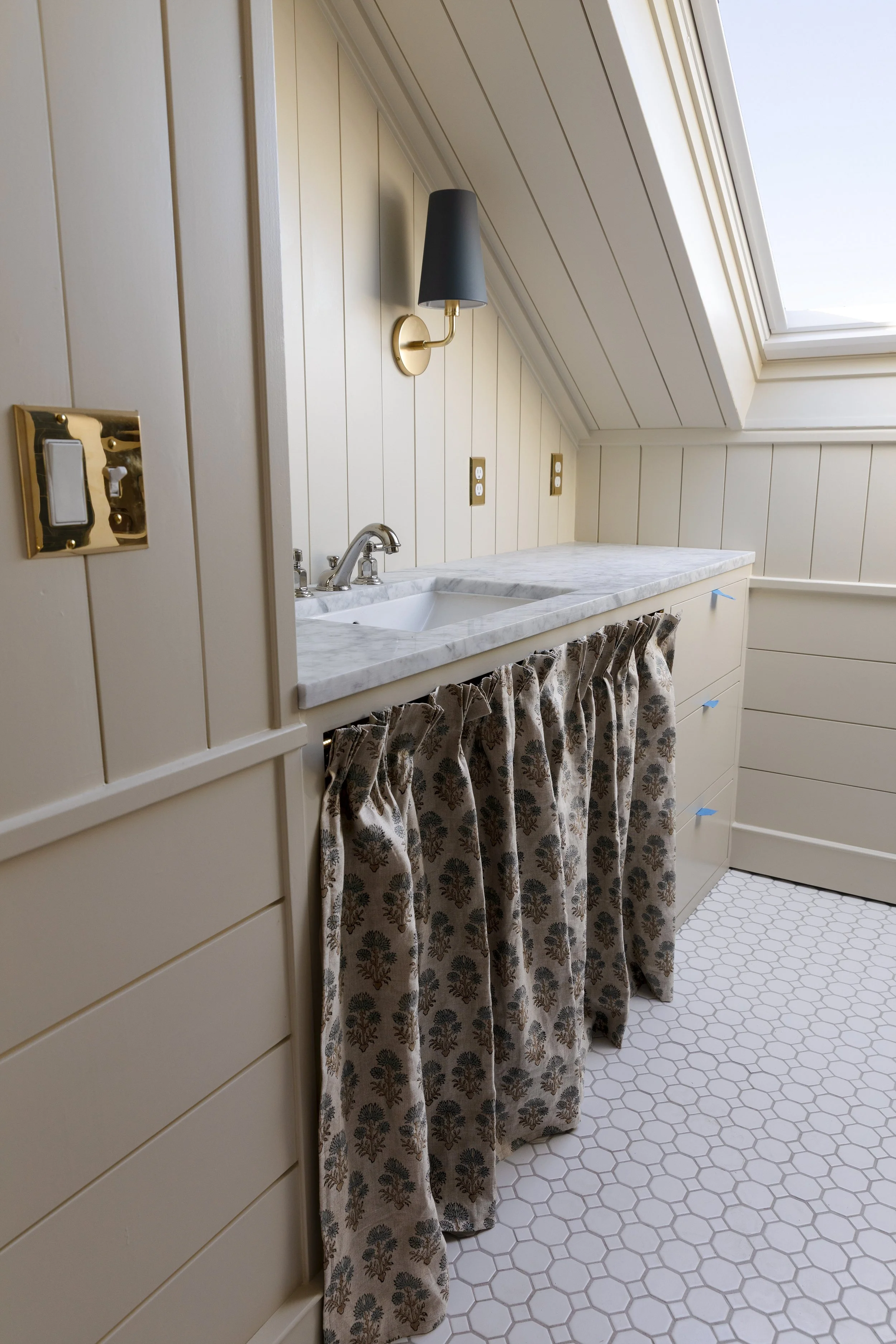

plus a peek at the ensuite bathroom’s vanity!